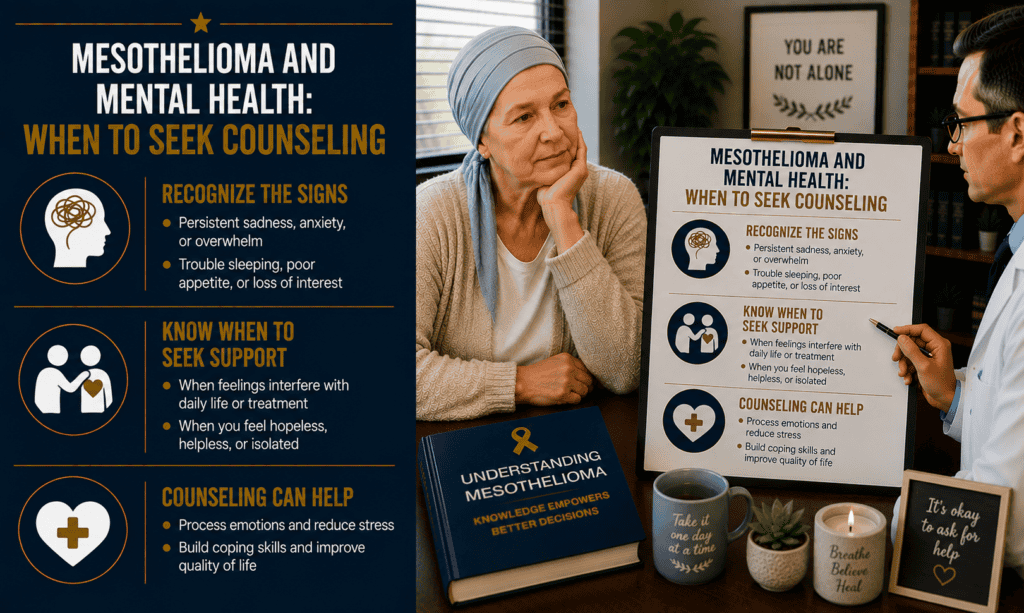
Mesothelioma and Mental Health: Emotional Support for Patients and Families
A mesothelioma diagnosis can bring emotional challenges as well as medical ones. This guide explains ways to recognize distress, find professional support, and communicate with loved ones without promising that any single coping strategy works for everyone.
Mental Health After a Mesothelioma Diagnosis
A mesothelioma diagnosis can affect mood, relationships, sleep, work, and a person’s sense of control. Anxiety, sadness, anger, numbness, and uncertainty may come and go. There is no single correct emotional response. Support can be useful from diagnosis through treatment, surveillance, and changes in care goals.
Emotional distress is not a sign that a patient is handling cancer incorrectly. A care team can ask about distress as routinely as pain or breathlessness and offer appropriate referrals. Mental health care complements—not replaces—oncology treatment.
| Experience | Possible effect | Support to discuss |
|---|---|---|
| Uncertainty | Persistent worry about scans or treatment | Clear follow-up plan, counseling |
| Loss of routine | Isolation or frustration | Social work, practical help |
| Physical symptoms | Sleep and mood disruption | Symptom management alongside emotional care |
Common Emotional Responses and When to Seek Help
People may feel frightened before a procedure, grieve changes in independence, or become irritable when exhausted. Feelings can change day to day. Persistent low mood, loss of interest, panic, hopelessness, or difficulty functioning deserve a conversation with a clinician; these symptoms can have several causes, including treatable depression, anxiety, medication effects, or uncontrolled physical symptoms.
Tell your team promptly if distress interferes with eating, sleeping, taking medications, attending appointments, or staying safe. If someone expresses intent to harm themselves or is in immediate danger, call emergency services. In the United States, call or text 988 for immediate crisis support.
| What you notice | Practical response |
|---|---|
| Worry around scan dates | Ask when results will arrive and plan support |
| Withdrawal from usual contacts | Invite low-pressure check-ins; mention it to the team |
| Thoughts of self-harm | Seek urgent crisis or emergency assistance |
How Pain, Breathlessness and Fatigue Affect Mood
Breathlessness can trigger fear, while anxiety can make breathing feel more difficult. Pain, fatigue, poor sleep, and medication side effects may also worsen distress. A clinician should assess new or worsening symptoms rather than assuming they are psychological. Supportive and palliative care teams can address symptoms alongside cancer-directed treatment at any stage.
Ask for a plan that covers what to do when symptoms worsen, whom to call after hours, and which treatments or rehabilitation services might help. Do not change prescribed medication doses without discussing the change with your care team.
| Concern | Care-team question |
|---|---|
| Pain interrupts sleep | Can we reassess pain control and medication timing? |
| Breathlessness causes fear | What symptoms need urgent evaluation and what can help? |
| Fatigue limits activity | Should we check for reversible contributors or adjust activity? |
Related information: exercise for mesothelioma patients and mesothelioma treatment options.
Counseling, Psychiatry and Support Groups
An oncology social worker can help with coping, practical needs, and referrals. A psychologist or counselor can teach skills for managing distress and communicating with loved ones. A psychiatrist or prescribing clinician can assess whether medication may be appropriate, including interactions with cancer treatment. Peer support can reduce isolation, but another person’s treatment experience may not predict yours.
Ask whether a group is moderated, whether it is intended for patients or caregivers, and how privacy is handled. If a group increases anxiety, it is reasonable to try a different format or individual support.
| Resource | Potential role | How to access |
|---|---|---|
| Oncology social worker | Emotional and practical support | Ask the cancer clinic |
| Therapist or psychologist | Structured coping strategies | Referral or insurance directory |
| Psychiatrist | Medication assessment when indicated | Referral from treating clinician |
| Peer group | Shared experience | Hospital or established cancer organization |
Everyday Coping Strategies Without False Promises
Small, flexible routines can create structure: set one manageable daily goal, make room for rest, and choose one person to update friends or relatives if repeating medical news is exhausting. Breathing or grounding exercises may help some people with stress, but they are not a substitute for evaluating shortness of breath or other medical symptoms.
Limit information searches when they become overwhelming; ask your care team for a reliable written summary of your own diagnosis. Keep a notebook for questions, symptoms, and decisions. Adapt activities to medical advice and energy levels rather than forcing yourself to stay positive.
| Situation | Small action | Limit |
|---|---|---|
| Overwhelming information | Write down three questions for next visit | Do not rely on online stories as personal prognosis |
| Low energy | Choose one achievable task | Rest when needed |
| Loneliness | Arrange a brief call or visit | Set boundaries on tiring conversations |
Family, Caregivers and Communication
Family members may experience their own anxiety, exhaustion, or disagreements about treatment. Patients can decide what information they want shared and who should join appointments. A family meeting with the clinical team can clarify the treatment plan, care preferences, and responsibilities without requiring everyone to feel the same way.
Caregivers need breaks and their own support. Ask a social worker about respite options, transportation, benefits counseling, or community services. Children and teenagers generally benefit from age-appropriate, truthful explanations and an opportunity to ask questions; a hospital social worker can help tailor conversations.
| Challenge | Conversation starter |
|---|---|
| Too many medical updates | “Can one person share updates with everyone else?” |
| Different care preferences | “Can we ask the team to explain the options together?” |
| Caregiver burnout | “Which tasks can someone else take this week?” |
See the broader mesothelioma support guide for practical assistance.
Mental Health During Treatment and Follow-Up
Appointments, side effects, changing treatment plans, and waiting for imaging results can create recurring stress. Ask the team what the next step is, when to expect results, and whom to contact about new symptoms. A distress screening questionnaire may help identify needs, but an open conversation is equally important.
For some patients, discussions about prognosis, advance care planning, or hospice are emotionally difficult. These conversations should be paced according to patient preferences and based on individual clinical circumstances. Palliative care can be provided alongside treatment and does not automatically mean hospice.
| Care phase | Common concern | Helpful request |
|---|---|---|
| Before treatment | Fear of side effects | Written expectations and contact number |
| During treatment | Fatigue and changed routines | Symptom and counseling referrals |
| After a scan | Uncertainty about results | Clear result and follow-up timeline |
For related context, read understanding mesothelioma prognosis.
A Practical Plan for Getting Mental Health Support
Start by telling your oncology nurse or physician what has changed: how long symptoms have lasted, whether they affect daily life, and whether you feel safe. Ask for an oncology social worker, mental health referral, and symptom review. Check insurance coverage and telehealth options if travel is difficult. If a referral is delayed, ask the clinic for interim support resources.
Seek urgent medical evaluation for sudden confusion, severe new breathlessness, chest pain, or other acute symptoms. For immediate mental health crisis support in the United States, call or text 988; call 911 for immediate danger. These services do not replace ongoing cancer care.
| Step | What to prepare | Who can help |
|---|---|---|
| Describe distress | Symptoms, timing, impact on daily life | Oncology nurse or doctor |
| Request a referral | Preference for individual or group support | Social worker or clinic |
| Plan follow-up | Next appointment and after-hours contact | Care coordinator |
Frequently Asked Questions
Is anxiety common after a mesothelioma diagnosis?
Anxiety can occur after a cancer diagnosis, but its intensity varies. Tell your care team if worry is persistent or interferes with daily life.
Does feeling depressed mean I am giving up?
No. Depression is a health concern that deserves assessment and support; it does not indicate a lack of determination.
Can palliative care help with emotional distress?
Yes. Palliative care teams can help address symptoms, emotional needs, and family concerns alongside cancer-directed treatment.
Should I join a mesothelioma support group?
A group may help some people feel less isolated. Individual counseling or another format may be preferable if group discussions increase distress.
Can medications help with anxiety or depression?
Sometimes. A qualified clinician can assess benefits, side effects, and possible interactions with cancer treatments.
What if breathlessness makes me panic?
Report new or worsening breathlessness to a clinician promptly; do not assume it is anxiety. Ask for a symptom action plan and emotional support.
How can family members help without overwhelming me?
Tell them which tasks are useful, what information you want shared, and when you need rest or privacy.
Where can I get immediate help if I feel unsafe?
In the United States, call or text 988 for crisis support. Call 911 or local emergency services if there is immediate danger.
Authoritative Mental Health and Cancer Resources
For further guidance, consult these established public health and cancer-care organizations. Verify the latest information and local service availability directly with each organization.
Get Help With Mesothelioma Questions
Call 800.291.0963. Live chat is available 24/7, 365 days a year. Submit Your Case using the form below. This contact service is not a crisis hotline or substitute for clinical care.
Legal & Medical Information Disclaimer
This article provides general educational information, not individualized medical or legal advice. Consult qualified healthcare and mental health professionals for diagnosis and treatment, and a qualified attorney for legal questions. For immediate danger, contact emergency services.