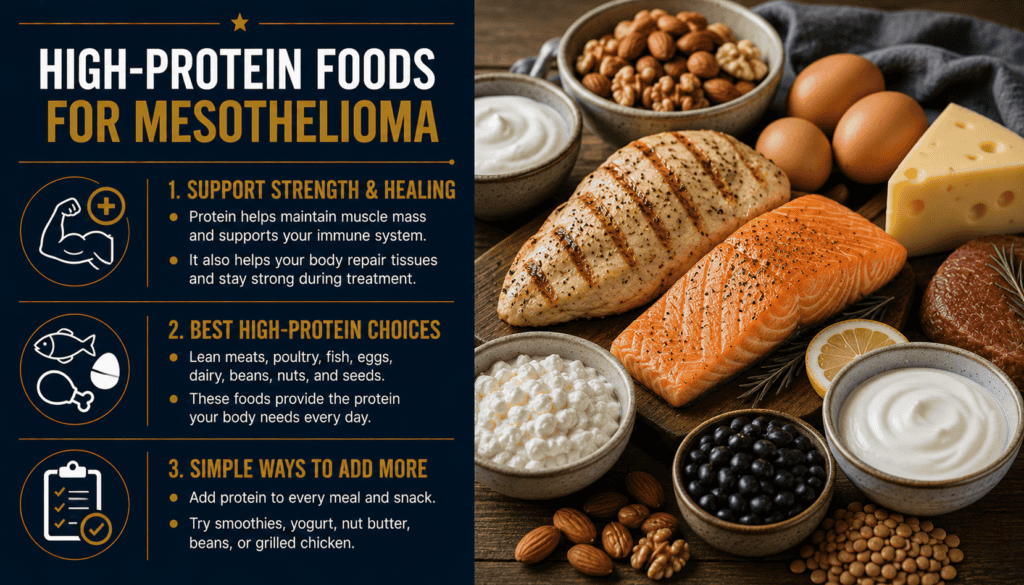
High-Protein Foods for Mesothelioma Patients
Food can become more challenging during mesothelioma treatment. This guide explains practical high-protein choices, meal ideas, symptom adjustments, and when to ask for personalized nutrition support. It is not a prescription for a particular diet or a substitute for cancer care.
🧭 On This Page
Why Protein Matters During Treatment
Protein helps the body maintain and repair tissues, preserve muscle, and support normal immune function. Mesothelioma and its treatments can make eating difficult because of fatigue, pain, nausea, early fullness, or changes in taste. Getting enough protein may be part of maintaining strength, but protein foods do not treat or cure cancer.
Nutrition needs vary with body size, kidney function, treatment, activity, and weight changes. Ask your oncology team for a referral to a registered dietitian experienced in cancer care rather than following a fixed protein target found online.
| Situation | Why it matters | What to discuss with your team |
|---|---|---|
| Unintentional weight loss | May indicate inadequate intake or other medical problems | Weight trend and dietitian referral |
| Reduced muscle strength | May affect mobility and daily tasks | Nutrition plus medically appropriate activity |
| Upcoming surgery | Recovery planning may include nutrition support | Individualized preoperative plan |
| Kidney disease or fluid restriction | Protein and fluid advice may need adjustment | Clinician-specific limits |
High-Protein Food Choices
Choose foods that are appealing, affordable, safe to prepare, and compatible with any dietary restrictions. Both animal and plant proteins can contribute. Exact protein amounts depend on portion size and brand; read labels when tracking intake.
| Food | Practical serving idea | Considerations |
|---|---|---|
| Eggs | Fully cooked scrambled eggs or egg salad made with safely handled ingredients | Cook thoroughly if infection risk is elevated |
| Greek yogurt or cottage cheese | Snack or smoothie base | Choose pasteurized dairy |
| Chicken, turkey, fish | Tender, thoroughly cooked portions | Moisten with sauce if swallowing is difficult |
| Beans, lentils, tofu | Soup, soft bowl, or blended dip | Plant-based alternatives; adjust texture |
| Nut butter | Stir into oatmeal or spread on toast | Avoid if allergic; use smooth texture when needed |
| Milk or fortified soy beverage | Add to cereal or smoothies | Check ingredients and dietary tolerance |
Easy Meals and Snacks
Smaller meals can be easier than three large plates. Pair a protein food with an energy source such as toast, rice, potatoes, or fruit when tolerated. If weight loss is occurring, ask whether calorie-dense additions are appropriate.
| Time | Simple option | Make it easier |
|---|---|---|
| Breakfast | Scrambled eggs with toast | Prepare ingredients the night before |
| Midmorning | Pasteurized Greek yogurt with fruit | Use a small bowl |
| Lunch | Lentil soup with soft bread | Freeze individual portions |
| Afternoon | Smoothie with pasteurized milk or fortified soy beverage and nut butter | Use a clean blender; refrigerate promptly |
| Dinner | Tender fish or tofu with rice | Add broth or sauce for moisture |
| Evening | Cottage cheese or another tolerated snack | Choose based on appetite and comfort |
Eating When Appetite Is Low
If meals feel overwhelming, start with a few bites of a protein-rich food, then return to it later. Keep convenient foods within reach and accept help with shopping or preparation. Avoid forcing meals or blaming yourself for appetite changes. Persistent poor intake, dehydration, or rapid weight loss deserves prompt medical attention.
| Barrier | Possible adjustment | When to call the team |
|---|---|---|
| Early fullness | Try small, frequent meals | Persistent fullness or worsening intake |
| Food smells are unpleasant | Try cooler foods or ask someone else to cook | Cannot tolerate most foods |
| Fatigue | Use ready-to-eat safe foods and meal assistance | Too exhausted to eat or drink |
| Weight keeps falling | Request urgent dietitian review | Unintentional or rapid weight loss |
Adjusting for Treatment Symptoms
Tell the care team about symptoms before changing diet substantially. They may offer medication, swallowing evaluation, oral care, or nutrition support. A new swallowing problem, repeated vomiting, or inability to keep fluids down should not be managed with food substitutions alone.
| Symptom | Food approach to ask about | Important caution |
|---|---|---|
| Nausea | Small bland meals; cooler foods | Ask about prescribed anti-nausea medicines |
| Sore mouth | Soft, moist foods; avoid irritating textures | Report sores and poor fluid intake |
| Taste changes | Try different seasonings or protein sources | Maintain food safety |
| Trouble swallowing | Request swallowing assessment and texture advice | Coughing or choking with meals needs evaluation |
| Constipation | Discuss fluids and fiber as appropriate | Check medication-related causes |
Food Safety and Special Diets
Some treatments can lower infection defenses. Follow the oncology team’s instructions, which may differ according to treatment and blood counts. Basic precautions include washing hands and produce, separating raw meat from ready-to-eat foods, cooking animal proteins thoroughly, refrigerating perishables promptly, and avoiding unpasteurized dairy. Do not assume every patient needs a restrictive “neutropenic diet”; ask for personalized advice.
| Practice | Safer approach | Avoidable risk |
|---|---|---|
| Dairy | Pasteurized products | Unpasteurized milk or cheese |
| Eggs | Cook thoroughly when advised | Raw-egg drinks or batter |
| Meat and fish | Cook to safe temperatures | Undercooked animal proteins |
| Leftovers | Refrigerate promptly; follow storage guidance | Food left at room temperature |
| Supplements | Review with oncology pharmacist or dietitian | Unapproved high-dose products or drug interactions |
Build a Personalized Protein Plan
A registered dietitian can estimate an appropriate protein and energy goal and adapt it to kidney health, swallowing ability, weight trends, cultural preferences, and budget. Ask whether an oral nutrition supplement would help; choose one with professional guidance if you have diabetes, kidney disease, or fluid restrictions.
| Step | Action | Record |
|---|---|---|
| 1 | Discuss recent weight and intake changes | Weight trend and appetite |
| 2 | Ask for a cancer dietitian referral | Appointment and questions |
| 3 | Identify three tolerated protein foods | Shopping list |
| 4 | Arrange meal preparation help | Family or caregiver schedule |
| 5 | Review symptoms and intake regularly | Changes to report |
Related Resources and Medical Sources
For broader nutrition guidance, read Healthy Foods for Mesothelioma. For coordinating meals and caregiver responsibilities, see Caregiver Support and Daily Planning. For balancing eating with activity and rest, see Building a Healthy Routine After Therapy.
Medical references to consult: National Cancer Institute: Nutrition in Cancer Care; American Cancer Society: Nutrition for People With Cancer; FoodSafety.gov: People With Cancer. Check the current guidance with your care team; linked pages and recommendations may change.
| Resource | Useful for | How to use |
|---|---|---|
| Oncology dietitian | Individual nutrition goals | Ask for referral |
| Oncology nurse | Symptom triage | Report nausea, swallowing issues, or poor intake |
| NCI nutrition guidance | Cancer-specific background | Prepare questions for appointments |
| FoodSafety.gov | Food handling basics | Review safe storage and cooking |
Frequently Asked Questions
How much protein does a person with mesothelioma need?
There is no single amount for everyone. A cancer dietitian can assess weight, treatment, kidney function, and other conditions and set an individualized goal.
Are protein shakes useful?
They can help when regular meals are difficult, but ingredients and suitability vary. Ask your dietitian which product, if any, fits your needs.
Can a high-protein diet cure mesothelioma?
No. Protein supports normal body functions and nutrition care; it is not a cancer treatment or cure.
What if meat tastes unpleasant?
Consider tolerated alternatives such as fully cooked eggs, pasteurized yogurt, beans, lentils, tofu, or nut butter.
What should I eat when I feel full quickly?
Try small, frequent portions and tell your team if early fullness persists or you are losing weight.
Should I avoid all raw fruits and vegetables during treatment?
Not automatically. Follow individualized oncology advice and wash produce thoroughly. Food restrictions depend on treatment and immune status.
Can I take protein powders or herbal supplements?
Review powders and supplements with your oncology team because ingredients, kidney needs, and interactions can matter.
When should I seek help for poor eating?
Contact your care team promptly for ongoing weight loss, inability to eat or drink adequately, repeated vomiting, or swallowing difficulty. Seek urgent help for severe dehydration, choking, or other acute symptoms.
Get Support for Your Family
Call 800.291.0963 · Live chat 24/7, 365 days a year.
Submit Your Case using the form below.
⚕️ Legal & Medical Information Disclaimer
This information is educational and is not medical, nutrition, or legal advice. Ask your oncology team or registered dietitian about your specific needs. For legal questions, consult a qualified attorney. No particular medical or legal outcome is promised.