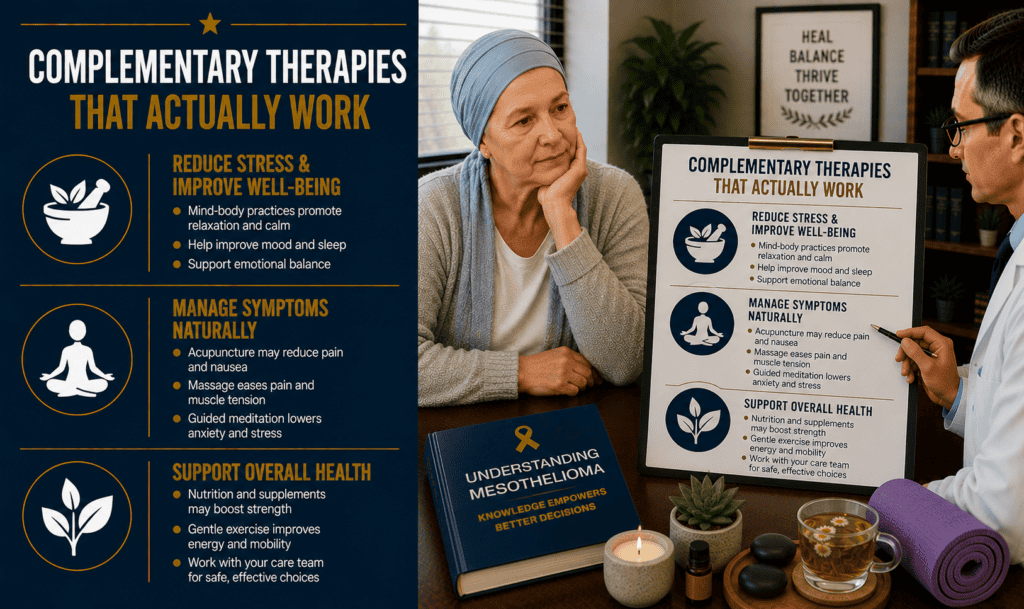
Complementary Therapies That Actually Help During Mesothelioma Treatment
Evidence-informed options for symptom relief, quality of life, and safer decisions alongside oncology care.
Key takeaway: Certain complementary approaches may ease nausea, pain, stress, fatigue or sleep problems for some people with cancer. They do not cure mesothelioma, shrink tumors reliably, or replace surgery, chemotherapy, immunotherapy, radiation or symptom-directed medical care. Most research includes patients with different cancers, so benefits cannot automatically be assumed for mesothelioma.
What complementary care can—and cannot—do
Complementary therapies are added to standard care; alternative therapies are used instead of it. Integrative oncology coordinates appropriately selected complementary practices with evidence-based cancer treatment. The aim is a defined outcome such as less nausea, reduced anxiety, improved coping, or greater comfort—not an unproven promise to treat the cancer itself.
Mesothelioma symptoms often have treatable medical causes. New breathlessness may reflect a pleural effusion, infection, anemia or a blood clot. Severe pain or weight loss also deserves clinical assessment. Do not substitute breathing exercises, supplements or massage for evaluation of these problems. Review the broader mesothelioma treatment options with your team.
| Term | Meaning | Example |
|---|---|---|
| Complementary | Used alongside oncology treatment | Acupuncture added to prescribed anti-nausea care |
| Alternative | Used in place of recommended treatment | Stopping chemotherapy for a supplement regimen |
| Integrative oncology | Coordinated conventional and supportive care | Oncologist and symptom-care team review risks together |
Which therapies have evidence for symptom relief?
The National Institutes of Health reports that some psychological and physical approaches may help cancer-related symptoms. The strength of evidence varies by symptom, intervention and cancer population. “May help” is not a guarantee of benefit, and evidence for mesothelioma specifically is limited.
| Approach | Potential symptom benefit | Important limitation |
|---|---|---|
| Acupuncture | May reduce treatment-related nausea, cancer pain or fatigue | Not a tumor treatment; needs bleeding and infection screening |
| Mindfulness-based programs | May improve stress, anxiety, fatigue and quality of life | Does not replace mental-health or medical care |
| Gentle yoga | May support fatigue, sleep and emotional well-being in some cancer populations | Much research is in breast cancer; modify for breathing and mobility |
| Massage | Possible short-term comfort and pain relief | Evidence inconsistent; pressure and positioning must be adjusted |
| Music or guided relaxation | May help coping or procedural anxiety | Individual response varies; not a cancer treatment |
| Herbal supplements | No established mesothelioma cure or reliable cancer-control benefit | Interactions, contamination and delayed treatment are concerns |
When judging a claim, ask whether it comes from controlled clinical research, which symptom was measured, how large the benefit was, and whether the study included people with mesothelioma. Testimonials and before-and-after stories cannot establish effectiveness.
Acupuncture and acupressure: possible benefits and precautions
Acupuncture uses fine needles placed by a trained practitioner; acupressure uses pressure rather than needles. Research across cancer populations suggests acupuncture may help with treatment-related nausea and vomiting, some pain, and fatigue. It is an addition to prescribed medications, not a reason to stop them.
Ask your oncology team first, especially if you have low platelets, take blood thinners, have a weakened immune system, an infection, lymphedema, or recent surgery. A qualified practitioner should use sterile single-use needles and avoid tumor sites, wounds, radiation-damaged skin and medical devices. A needle procedure near the chest deserves particular caution for a patient with pleural disease because of the risk of lung injury.
| Before booking | What to confirm |
|---|---|
| Medical clearance | Oncology team approves the procedure for current blood counts and treatment |
| Provider | Appropriate training, licensure where applicable, sterile single-use needles |
| Goals | Choose one symptom and a reasonable period for reassessment |
| Stop rules | Stop for worsening pain, dizziness, bleeding, fever or new breathing symptoms |
Mindfulness, relaxation and gentle movement
Mindfulness-based stress reduction, guided imagery, breathing awareness and relaxation can help some people manage distress and the emotional burden of treatment. A therapist or counselor may be especially useful when worry, panic, depression or insomnia disrupts daily life. These practices support coping; they do not imply that a patient caused or can reverse cancer through attitude.
Gentle stretching, seated movement or modified yoga may be suitable when cleared by a clinician. Avoid breath-holding, strenuous poses and exercise that provokes chest pain, dizziness or severe breathlessness. A rehabilitation specialist can adapt activity for oxygen equipment, surgery recovery and limited endurance. For more detailed movement guidance, see breathing exercises and pulmonary rehabilitation.
| Symptom or goal | Potential supportive approach | When to seek medical help |
|---|---|---|
| Stress before an appointment | Short guided relaxation or counseling | Persistent panic or inability to function |
| Difficulty sleeping | Regular routine, relaxation, review of medicines | Breathlessness, uncontrolled pain or severe insomnia |
| Fatigue | Gentle supervised movement with rest | Sudden worsening, dizziness or marked weakness |
| Breathlessness | Clinician-approved positioning and pacing | New, severe or rapidly worsening shortness of breath |
Need help now? Call 800.291.0963 / Live chat 24/7, 365 days a year / Submit Your Case.
Massage, music and other comfort-focused approaches
Gentle massage may improve comfort for some patients, but studies have limitations and results are not consistent. Choose a therapist experienced with oncology patients. Tell them about tumor locations, painful ribs, recent procedures, blood clots, bone weakness, ports, drains and radiation areas. Avoid deep pressure over affected regions and stop if pain or breathing worsens.
Music therapy, calming audio, supportive counseling and art-based activities can provide meaningful comfort and a sense of control. These approaches are often low-burden when tailored to the person, although they should not be described as proven mesothelioma treatments.
| Option | Practical adaptation | Avoid or reconsider when |
|---|---|---|
| Gentle massage | Light pressure; comfortable side-lying or seated position | Clot concern, fragile bones, open wound or painful tumor area |
| Music therapy | Patient-selected music or credentialed therapist | Sound increases distress or interferes with communication |
| Guided relaxation | Brief sessions with permission to stop | Technique worsens anxiety or breathlessness |
| Counseling | Oncology social worker or mental-health clinician | Never delay urgent assessment of severe distress |
Supplements, safety risks and claims to avoid
Natural does not mean safe. Herbs, high-dose vitamins and other products can interact with cancer medicines, affect bleeding, injure the liver, or create problems around surgery. The National Cancer Institute warns that some products can reduce the effectiveness of certain cancer drugs. Bring every supplement bottle or a complete ingredient list to your oncologist and oncology pharmacist before starting anything new.
Be cautious about “immune boosting,” detoxification, alkalizing diets, miracle cures and claims that clinicians are hiding a cure. No complementary approach has been shown to cure cancer. Do not stop prescribed treatment or postpone evaluation while testing an unproven regimen. See the related herbal medicines and medical cannabis articles for separate safety discussions.
| Red flag | Why it matters | Safer response |
|---|---|---|
| Guaranteed cure or tumor shrinkage | Not supported by reliable mesothelioma evidence | Ask for peer-reviewed human trials and discuss with oncologist |
| Stop all conventional treatment | Delaying effective care can be harmful | Seek an oncology second opinion instead |
| Secret ingredients or proprietary blend | Interactions and dose cannot be assessed | Do not take until ingredients are disclosed and reviewed |
| Very high upfront cost | Financial harm without proven benefit | Request itemized costs and evidence; consult social worker |
| “No side effects” promise | All interventions have possible risks | Ask about adverse effects and monitoring |
How to build a safe integrative care plan
Start with the symptom that matters most to you and ask the oncology team to assess its cause. For example, acupuncture might be considered for persistent nausea after the team reviews anti-nausea medications, while mindfulness may complement counseling for anxiety. Record a starting symptom score and agree on what improvement would justify continuing.
Ask whether your cancer center offers integrative oncology, palliative care, rehabilitation, dietitian services or behavioral health. Palliative care can be provided alongside cancer-directed treatment and is not the same as hospice. For problems such as pleural fluid or low oxygen, medical treatment comes first; read managing breathing problems and pleural effusion.
| Step | Action | Record |
|---|---|---|
| 1. Define goal | Choose pain, nausea, anxiety, sleep or fatigue | Symptom and severity |
| 2. Check cause | Review new or worsening symptoms with clinician | Assessment and current treatment |
| 3. Screen safety | Review medicines, blood counts, devices and procedures | Approval or restrictions |
| 4. Try cautiously | Choose qualified provider and reasonable duration | Dates, costs and reactions |
| 5. Reassess | Continue only if meaningful benefit outweighs burdens | Patient-reported outcome |
Questions for your oncology team and a practical checklist
Bring a written list to appointments and invite a trusted caregiver if you wish. Explain exactly which product or practice you are considering, why you want it, and whether you plan to pay for it. Ask the team to distinguish between symptoms that may respond to supportive approaches and symptoms requiring diagnostic tests or medical treatment.
| Ask your team | Why it matters |
|---|---|
| What is causing my symptom? | Treatable causes should not be missed |
| Could this therapy interact with my treatment? | Medication and procedural safety |
| Is there research for this symptom in cancer patients? | Separates evidence from advertising |
| What credentials should the provider have? | Training and infection prevention |
| What changes mean I should stop? | Creates a safety plan |
| How will we know if it is helping? | Prevents prolonged ineffective spending |
Appointment checklist
- List all medicines, vitamins, herbs, cannabis products and supplements with doses.
- Write down symptoms, onset, severity and recent changes.
- Bring your proposed practitioner’s name, technique and treatment plan.
- Ask about blood counts, anticoagulants, ports, drains, surgical wounds and infection risks.
- Agree on a measurable goal and a follow-up date.
- Seek urgent care for severe new breathlessness, chest pain, fainting or other emergency symptoms.
Frequently Asked Questions
Can complementary therapies cure mesothelioma?
No. No complementary health approach has been shown to cure cancer or cause remission. Use evidence-based mesothelioma treatment and discuss supportive options with your oncology team.
Which complementary therapy has the strongest evidence?
There is no single best option for every patient. Acupuncture has evidence for some cancer-related nausea, pain and fatigue; mindfulness may help distress. Evidence specific to mesothelioma is limited.
Is acupuncture safe during chemotherapy?
It may be appropriate for some people, but blood counts, infection risk, blood thinners, treatment sites and practitioner qualifications must be reviewed first.
Can yoga help mesothelioma fatigue?
Gentle modified movement may help some patients, but much of the research involves other cancers. Ask about safe activity limits, especially with breathlessness or recent surgery.
Should I take immune-boosting herbs or vitamins?
Do not start high-dose supplements or herbs without oncology and pharmacy review. Some products interact with treatment, and none has been proven to cure mesothelioma.
Can massage spread cancer?
There is no good evidence that appropriately performed gentle massage spreads cancer, but pressure over tumors, clots, wounds or fragile bones can cause harm. Obtain oncology clearance.
Does insurance pay for complementary care?
Coverage depends on the plan, provider and service. Ask about referrals, prior authorization, network rules and out-of-pocket charges before scheduling.
What if a complementary therapy is not helping?
Tell your team, reassess the symptom and stop an ineffective or burdensome approach. Do not delay evaluation of new or worsening symptoms.
Confirmed Primary Medical Sources
- NIH NCCIH: Cancer and Complementary Health Approaches — symptom evidence and safety.
- NIH NCCIH: Psychological or Physical Approaches for Cancer Symptoms — research overview.
- National Cancer Institute: Complementary and Alternative Medicine — definitions, risks and interactions.
- National Cancer Institute: CAM for Patients — questions to ask clinicians.
Research summarized in these resources includes many cancer types. The strength of evidence for a specific mesothelioma patient depends on the symptom, overall health and concurrent treatment.
Get Help Understanding Your Options
Call 800.291.0963. Live chat is available 24/7, 365 days a year. Submit Your Case.
Discuss medical decisions with your treatment team. Legal eligibility and compensation depend on individual circumstances; no result is guaranteed.
⚕️ Legal & Medical Information Disclaimer
This page provides general information, not medical or legal advice. Ask qualified clinicians about treatment and a licensed attorney about legal rights. Seek urgent medical attention for severe or rapidly worsening symptoms.