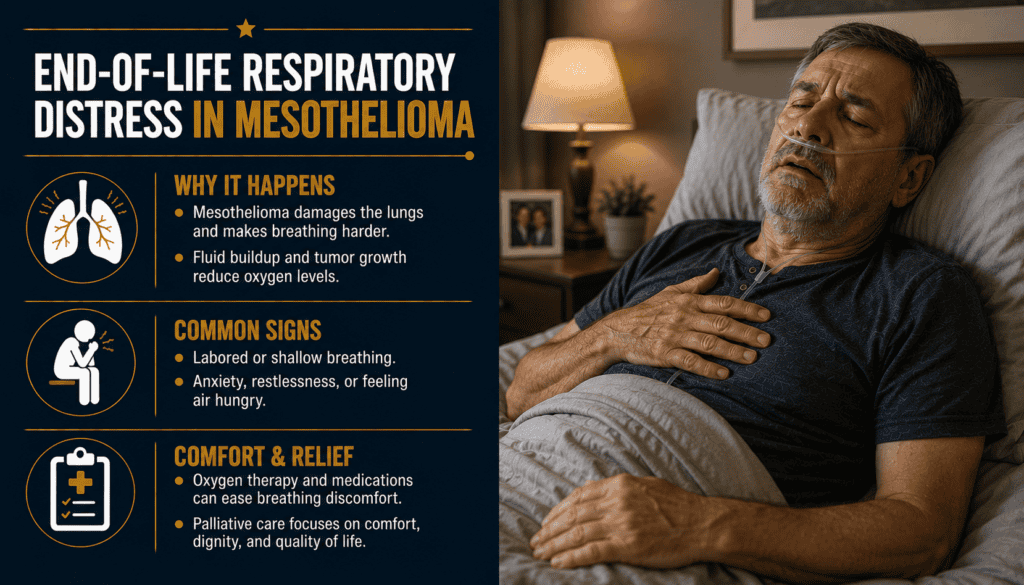
End-of-Life Respiratory Distress in Mesothelioma
🫁 What It Means, How It Happens & How Families Can Keep Patients Comfortable
Respiratory distress — severe difficulty breathing near the end stages of mesothelioma — is one of the most challenging and emotional symptoms for patients and families. As tumors grow and the lungs lose their ability to expand, breathing becomes increasingly labored. This can lead to episodes of rapid breathing, gasping, chest tightness, anxiety, and exhaustion.
Although end-of-life respiratory distress is most common in advanced pleural mesothelioma, it can also occur in peritoneal and pericardial mesothelioma when tumor spread or fluid buildup affects breathing.
This guide explains why respiratory distress happens, what symptoms to expect, how doctors identify the underlying cause, and the medical and supportive treatments that help keep patients comfortable, peaceful, and free from panic.
What Is Respiratory Distress?
Respiratory distress is a state in which a patient cannot breathe comfortably or effectively. It often includes:
-
Air hunger (feeling unable to get enough air)
-
Rapid, shallow breathing
-
Chest tightness
-
Gasping or grunting
-
Use of accessory muscles (neck/shoulder muscles) to breathe
-
High anxiety or panic
It may develop gradually or occur suddenly and is one of the clearest signs that a patient may be entering the final stage of mesothelioma.
Why Mesothelioma Causes Respiratory Distress Near the End of Life
End-of-life respiratory distress usually occurs because the disease has progressed to the point where the lungs and surrounding structures can no longer function normally.
Common causes include:
1️⃣ Tumor Growth Limiting Lung Expansion
Pleural tumors grow along the lining around the lungs, creating stiffness and restricting expansion. This leads to:
-
Restricted airflow
-
Severe breathlessness
-
A sensation of “tight lungs”
2️⃣ Pleural Effusion (Large Fluid Buildup)
💧 Fluid can accumulate in large amounts around the lungs in late-stage disease. This:
-
Compresses lung tissue
-
Reduces oxygen intake
-
Increases chest pressure and distress
3️⃣ Lung Collapse (Atelectasis)
Tumors or fluid can partially or completely collapse one or both lungs, making breathing far more difficult.
4️⃣ Chest Wall Invasion
When tumors invade the chest wall or diaphragm, normal breathing motion becomes painful, shallow, and limited.
5️⃣ Airway Obstruction
Tumors may press on:
-
The bronchi
-
The trachea
-
Major air passages
This can cause choking sensations, severe coughing, or airflow blockage.
6️⃣ Low Oxygen Levels (Hypoxia)
Falling oxygen saturation can lead to:
-
Confusion
-
Anxiety
-
Agitation
-
Rapid breathing
7️⃣ Weakness of Respiratory Muscles
Severe fatigue and muscle wasting weaken the muscles that power breathing.
8️⃣ Terminal Decline
In the final phase of mesothelioma, overall body systems slow down. Breathing becomes shallow and less effective as part of the natural dying process.
Symptoms of End-of-Life Respiratory Distress
Patients may show a combination of physical, emotional, and visible changes.
🫁 Breathing Changes
-
Rapid, shallow or irregular breathing
-
Gasping or labored breaths
-
Prolonged pauses (Cheyne-Stokes breathing)
😣 Physical Discomfort
-
Chest tightness or heaviness
-
Restlessness or constant repositioning
-
Grunting with each breath
🧠 Mental & Emotional Signs
-
Anxiety or fear
-
Confusion or agitation
-
Feeling “like I can’t catch my breath”
🎧 Audible Signs
-
Noisy breathing
-
Gurgling or “rattling” from secretions
-
Wheezing
🧊 Skin Changes
-
Pale or bluish lips and fingertips
-
Cool, clammy skin
These symptoms can be very distressing to witness, but many can be controlled with the right comfort-focused care.
How Doctors Diagnose the Cause of Respiratory Distress
Doctors first determine whether distress is caused by:
-
Fluid buildup
-
Tumor burden or spread
-
Infection
-
Airway obstruction
-
Lung collapse
-
Overall end-stage decline
Tools may include:
1️⃣ Physical Examination
🩺 Doctors assess:
-
Breathing pattern
-
Use of accessory muscles
-
Chest expansion
-
Oxygen levels
2️⃣ Imaging Tests
📸 Used to locate the underlying cause.
-
Chest X-ray – Identifies fluid, lung collapse, or major compression
-
CT scan – Shows tumor spread, airway narrowing, and pleural thickening
3️⃣ Pulse Oximetry
🫁 Measures oxygen saturation and helps evaluate the severity of breathlessness.
4️⃣ Blood Tests
🩸 Used to look for:
-
Infection
-
Carbon dioxide buildup
-
Organ function decline
These results help guide comfort-oriented treatment decisions.
Medical Treatments That Reduce Respiratory Distress
At the end of life, the primary goal is comfort, calmness, and relief from panic — not aggressive, burdensome treatment. Many interventions can provide meaningful relief.
1️⃣ Oxygen Therapy
💨 Supplemental oxygen:
-
Increases oxygen levels
-
Reduces the sensation of air hunger
-
Provides quick comfort for many patients
2️⃣ Opioids for Breathlessness (Not Just for Pain)
💊 Low-dose opioids like morphine can significantly reduce the feeling of suffocation or air hunger, even when pain is minimal. They can:
-
Slow breathing just enough to feel more controlled
-
Reduce panic and anxiety
-
Help each breath feel deeper and more effective
This is a cornerstone of end-of-life symptom relief.
3️⃣ Anti-Anxiety Medications
🧠 Medications such as lorazepam (Ativan) can:
-
Calm fear and panic
-
Help patients relax
-
Improve the effectiveness of other treatments
4️⃣ Thoracentesis (Fluid Drainage)
💧 When fluid buildup is causing severe compression, draining fluid can provide rapid relief, even in late-stage disease. Some families choose to continue drainage; others opt to focus solely on non-invasive comfort care.
5️⃣ Nebulizers & Inhaled Medications
🌫️ These can help when airway irritation or bronchospasm worsen breathing.
6️⃣ Antisecretory Medications
💊 Drugs like glycopyrrolate or atropine drops reduce excessive throat and chest secretions — often called the “death rattle” — making breathing quieter and more peaceful.
7️⃣ Positioning
🛏️ Simple changes can make a big difference:
-
Raising the head of the bed
-
Slightly turning the patient to one side
-
Supporting the chest and shoulders with pillows
These help open the airway and reduce effort.
8️⃣ Fan Therapy
❄️ A small fan blowing gently across the face can stimulate nerve fibers and reduce the sensation of air hunger — a surprisingly effective and evidence-supported technique.
9️⃣ Comfort-Focused Palliative & Hospice Care
🏥 Palliative and hospice teams specialize in:
-
Managing breathlessness
-
Relieving anxiety and pain
-
Supporting families emotionally
Their involvement often transforms the quality of a patient’s final days.
How Families Can Help During Respiratory Distress
Loved ones can offer powerful comfort through simple, compassionate actions.
-
✔️ Stay calm – Patients often mirror the emotional tone of the room.
-
✔️ Speak softly and slowly – Reassuring words can reduce panic.
-
✔️ Keep the room cool – Use fans or cool cloths to ease distress.
-
✔️ Raise the head and upper body – Helps lungs expand more easily.
-
✔️ Reduce noise and stimulation – Calm environments help breathing settle.
-
✔️ Offer small sips only if safe – Never force food or drink during intense distress.
-
✔️ Use gentle touch – Holding hands or light touch can lower fear and anxiety.
When Respiratory Distress Becomes an Emergency
Seek urgent medical or hospice support if:
-
Breathing becomes extremely rapid or labored
-
The patient becomes confused, unresponsive, or very agitated
-
Lips or face turn blue
-
Chest pain suddenly worsens
-
The patient collapses
Even in hospice or home settings, additional help may be needed to restore comfort.
Legal Importance of Respiratory Distress in Mesothelioma Claims
End-of-life respiratory distress is a powerful indicator of disease severity in asbestos-related cases.
💰 Increases Pain & Suffering Compensation
Severe breathlessness affects:
-
Comfort
-
Independence
-
Daily functioning
-
End-of-life dignity
These factors significantly increase pain & suffering damages.
📑 Strengthens Medical Evidence
Documented respiratory decline provides:
-
Clear proof of mesothelioma progression
-
Evidence tying disease burden to asbestos exposure
-
Strong support for higher-value settlements or verdicts
🚀 May Qualify for Fast-Track Claims
Terminal or end-of-life patients often qualify for:
-
Expedited lawsuit timelines
-
Accelerated asbestos trust fund processing
-
Priority handling in many jurisdictions
🏭 Supports Occupational Exposure History
Severe pleural respiratory symptoms strongly support asbestos exposure from:
-
Shipyards and Navy vessels
-
Construction and insulation work
-
Pipefitting and mechanical trades
-
Power plants and industrial sites
Attorneys often use symptom progression to link disease to specific job sites and products.
🚨 Urgent: Get Legal Help for Mesothelioma or Asbestos Lung Cancer
If your loved one is experiencing severe breathing problems or end-of-life respiratory distress from mesothelioma or asbestos-related lung cancer, do not wait.
You may be entitled to significant financial compensation, but strict legal deadlines apply.
⚖️ What Our Legal Team Can Do Right Now
-
🏭 Pinpoint where asbestos exposure occurred
-
🧾 File asbestos trust fund claims worth millions
-
💼 Pursue lawsuits against responsible companies
-
🚀 Fast-track your case due to terminal or end-stage illness
-
💰 Recover compensation for medical care, hospice, and pain & suffering
⏳ Time matters — your rights and benefits may depend on acting quickly.
📞 Call Now for Immediate Legal Help: 800.291.0963
Your case review is free, confidential, and available 24/7 for families facing end-of-life mesothelioma decisions.
⚠️ Disclaimer
This article is for informational purposes only and does not provide medical or legal advice.
If a patient is in respiratory distress, contact a licensed physician, hospice nurse, or emergency medical provider immediately.
For questions about compensation, liability, or legal rights related to asbestos exposure, speak with a qualified attorney.
Nothing in this guide replaces professional medical or legal evaluation.