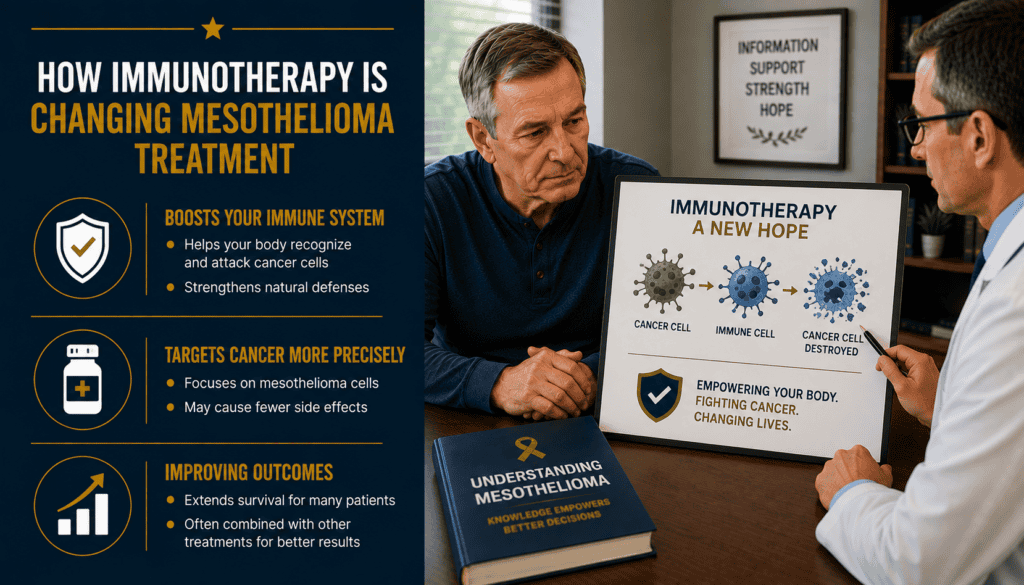
How Immunotherapy Is Changing Mesothelioma Treatment
A patient-friendly guide to checkpoint inhibitors, combination regimens, safety, and informed treatment decisions.
Immunotherapy has expanded the treatment choices available to some people with malignant pleural mesothelioma. It does not work for everyone, and the right plan depends on an individualized oncology assessment. This guide explains the changes without promising a particular outcome.
What Immunotherapy Does
Immune checkpoint inhibitors help immune cells recognize and attack cancer by blocking signals that suppress immune responses. They are systemic cancer treatments, not vaccines, dietary supplements, or guaranteed cures. Mesothelioma is a complex disease; benefits differ by patient, tumor type, stage, and treatment history.
Immunotherapy at a glance
| Question | Practical answer |
|---|---|
| What does it target? | Immune checkpoints that can restrain immune-cell activity. |
| Does it cure mesothelioma? | No cure can be promised; response varies. |
| How is it given? | Usually IV infusions on a regimen-specific schedule. |
Immunotherapy Options Used in Mesothelioma
For some adults with unresectable malignant pleural mesothelioma, nivolumab plus ipilimumab is an established first-line option. Pembrolizumab combined with pemetrexed and platinum chemotherapy is another first-line option for unresectable advanced or metastatic malignant pleural mesothelioma in the United States. These are distinct regimens, and neither is automatically right for every patient. The oncology team should verify current prescribing information, eligibility, and coverage.
Examples of treatment approaches
| Approach | Clinical context |
|---|---|
| Nivolumab plus ipilimumab | First-line option for certain unresectable malignant pleural mesothelioma cases. |
| Pembrolizumab plus pemetrexed and platinum chemotherapy | First-line option for unresectable advanced or metastatic malignant pleural mesothelioma. |
| Clinical trials | May study new drugs, combinations, or treatment sequences. |
Who May Benefit and How Doctors Decide
A specialist reviews the exact diagnosis and pathology, whether surgery is feasible, prior treatment, functional status, other illnesses, medications, and patient goals. Histologic subtype may affect the discussion of expected benefit and alternatives. Preexisting autoimmune disease, an organ transplant, or certain lung conditions may change the risk-benefit assessment. Ask whether a mesothelioma multidisciplinary team has reviewed the case.
Factors reviewed
| Factor | Why it matters |
|---|---|
| Confirmed pathology | Verifies cancer type and subtype. |
| Extent and resectability | Shapes surgery and systemic therapy choices. |
| Autoimmune disease or transplant | May raise immune-related safety concerns. |
| Patient preferences | Helps align care with personal goals. |
Read more about immunotherapy for mesothelioma and other treatment approaches before discussing options with your care team.
What Clinical Research Has Changed
Randomized studies have shown that certain immunotherapy-based first-line regimens improve outcomes for groups of patients with unresectable pleural mesothelioma compared with chemotherapy alone. This is a population-level finding, not a prediction for any one person. Some tumors shrink, some remain stable, and some progress despite treatment. The size and duration of benefit vary, and studies of additional combinations continue.
Interpreting treatment results
| Term | Meaning |
|---|---|
| Response | Tumor burden decreases on assessment. |
| Stable disease | No clear progression under the assessment criteria. |
| Progression | Cancer worsens despite the treatment. |
Research findings should be interpreted with the help of your oncologist. A trial result for unresectable pleural disease should not automatically be applied to peritoneal mesothelioma or to a different stage or treatment setting.
Side Effects and When to Call the Care Team
Checkpoint inhibitors can trigger inflammation in healthy organs. Symptoms may include diarrhea, cough or shortness of breath, rash, unusual fatigue, headache, jaundice, or changes in urination. Immune-related problems can involve the lungs, bowel, liver, thyroid and other hormone glands, kidneys, heart, or nervous system. New or worsening symptoms need prompt assessment; severe breathing trouble, chest pain, confusion, or rapidly worsening symptoms require urgent medical care. Do not stop or start medicines without clinical guidance.
Symptoms to report
| Possible symptom | Action |
|---|---|
| New diarrhea, rash, unusual fatigue | Contact the oncology team promptly. |
| New cough or worsening breathing | Urgent clinical assessment; severe symptoms need emergency care. |
| Chest pain, confusion, severe weakness | Seek emergency care. |
What to Expect During Treatment
Before treatment, clinicians typically review baseline symptoms, blood tests, imaging, and medication history. Treatment is usually administered by intravenous infusion on a regimen-specific schedule. The team checks symptoms and laboratory results throughout treatment and may order scans to assess response. Some side effects occur after treatment has ended, so patients should tell every clinician they have received checkpoint inhibitors.
Treatment visit checklist
| Before the visit | During or after |
|---|---|
| Bring medication and symptom lists | Report every new symptom. |
| Confirm infusion and transport details | Keep after-hours contact information. |
| Ask about planned labs and imaging | Record the next follow-up date. |
For broader context, see your mesothelioma care team and managing fatigue during treatment. Ask your own team which advice applies to your regimen.
Questions, Access, and Costs
Patients can ask why a particular regimen was chosen, whether chemotherapy or surgery is also appropriate, how response will be measured, what symptoms require a same-day call, and how to contact the team after hours. Insurance approval, infusion charges, travel, and management of side effects can create costs. Request an itemized estimate and ask the hospital financial counselor about coverage and assistance. Clinical trial participation is voluntary and requires a careful discussion of eligibility and potential risks.
Financial planning
| Expense | Question to ask |
|---|---|
| Drug and infusion | What does my insurance cover? |
| Travel and lodging | Are support programs available? |
| Side-effect treatment | What might be billed separately? |
Our related guide to mesothelioma treatment costs explains other planning considerations. Financial assistance is not guaranteed.
Living With Immunotherapy and Related Resources
Keep a written symptom log, an updated medication list, and contact details for the oncology team. Plan transportation and caregiver support for infusion days. Maintain nutrition and activity as tolerated, and ask about palliative care for symptom relief alongside anticancer treatment. Immunotherapy does not replace treatment for pain, breathlessness, anxiety, or fluid buildup. Decisions about complementary products should be reviewed with the care team because interactions and immune effects are possible.
Daily support plan
| Need | Possible action |
|---|---|
| Symptoms | Keep a dated log and call as directed. |
| Appointments | Use a shared calendar with permission. |
| Comfort | Request palliative care and rehabilitation referrals when appropriate. |
Explore multimodal treatment, breathing and pleural effusion support, and nutrition and exercise during treatment. These resources support conversations with your clinicians; they are not substitutes for personalized care.
Frequently Asked Questions
Is immunotherapy chemotherapy?
No. Checkpoint inhibitors act on immune signaling; chemotherapy directly interferes with rapidly dividing cells. Some approved regimens combine both.
Can immunotherapy cure mesothelioma?
It may control cancer for some patients, but it cannot be described as a guaranteed cure. Ask your oncologist about realistic goals for your specific case.
Is immunotherapy used for every mesothelioma type?
No. Established approvals and evidence differ by disease site, stage, and treatment setting. The specific diagnosis matters.
How long does treatment last?
Duration depends on the regimen, response, adverse effects, and clinician guidance. Ask for the exact schedule and stopping criteria.
How will I know whether it works?
Your team combines imaging, symptoms, examination, and other findings. One symptom alone cannot reliably establish response.
What if I have an autoimmune condition?
Tell your oncologist before treatment. Immune checkpoint inhibitors may worsen some autoimmune conditions, so individual assessment is essential.
Can side effects appear after treatment ends?
Yes. Immune-related adverse effects can emerge or persist after the last infusion. Always tell clinicians about prior immunotherapy.
Should I stop other medicines or supplements?
Do not change prescribed medicines on your own. Bring a complete list of prescriptions, over-the-counter products, and supplements for review.
Confirmed Primary Medical Sources
Consult current official prescribing information and treatment guidance with your oncology team. The following authoritative resources provide context; drug indications and safety language can change.
Get Help Understanding Your Options
Call 800.291.0963 to discuss possible asbestos-related legal questions. Live chat is available 24/7, 365 days a year. Submit Your Case.
Eligibility and compensation depend on individual facts; no recovery or outcome is guaranteed.
⚕️ Legal & Medical Information Disclaimer
This article is general information, not medical or legal advice. Immunotherapy can cause serious adverse reactions. Consult your oncology team for treatment decisions and a qualified attorney for legal questions.