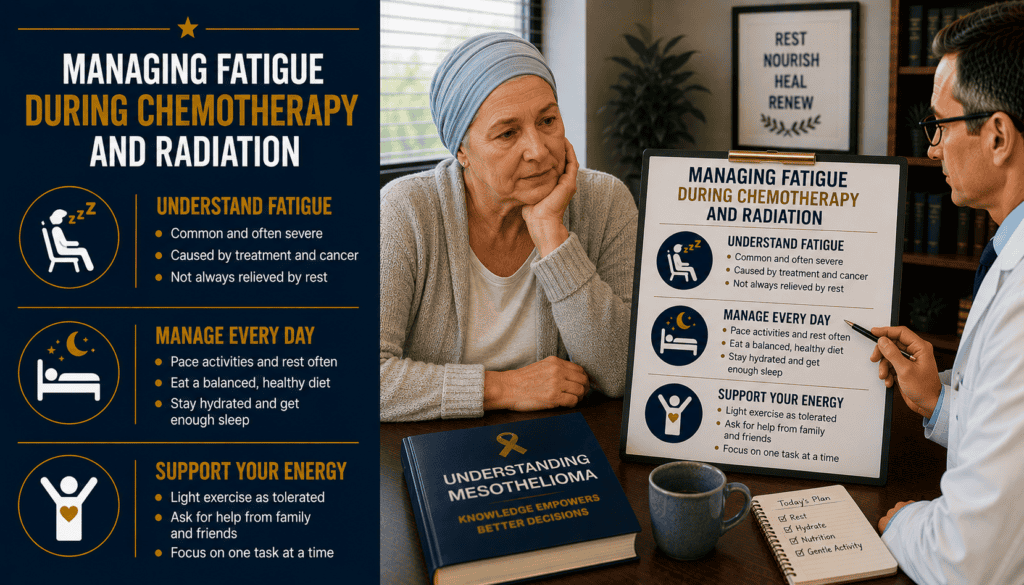
Managing Fatigue During Chemotherapy and Radiation for Mesothelioma
A patient and caregiver guide to identifying treatable causes of exhaustion, conserving energy and knowing when symptoms need urgent attention.
Key point: Cancer-related fatigue can persist despite rest. Do not assume severe or rapidly worsening exhaustion is simply an expected side effect. Tell your oncology team so they can look for treatable problems such as anemia, infection, dehydration, pain, sleep disruption or breathing difficulties.
Understanding Fatigue During Mesothelioma Treatment
Fatigue is more than ordinary sleepiness: it can feel like heavy limbs, low stamina, difficulty concentrating or exhaustion after minor activities. Chemotherapy and radiation can contribute, but the cancer itself and other medical conditions can also play a role. The experience differs from patient to patient; one person may have a difficult day after an infusion while another notices fatigue building over several weeks of radiation.
Fatigue is real even when a person looks well. Describe what you cannot do—such as showering, preparing food or walking to the bathroom—rather than reporting only that you feel tired. The care team can track changes and adapt the plan.
| What to record | Useful detail |
|---|---|
| Severity | Rate fatigue from 0 (none) to 10 (worst imaginable). |
| Timing | Note treatment dates and the hours or days fatigue is worst. |
| Daily impact | Record missed meals, falls, inability to bathe or reduced walking. |
| Other symptoms | Include fever, breathlessness, dizziness, pain, poor intake and sleep changes. |
Why Fatigue Happens With Chemotherapy and Radiation
There may be several causes at once. Chemotherapy can affect blood-cell production; radiation can cause fatigue that accumulates over a treatment course. Mesothelioma-related breathlessness, pleural fluid, pain and the work of breathing can further limit stamina. Medicines, anxiety, poor sleep and difficulty eating can contribute too.
| Possible contributor | What the oncology team may assess |
|---|---|
| Treatment effects | Relationship to chemotherapy cycles or radiation schedule. |
| Anemia | Blood count and symptoms such as dizziness or exertional breathlessness. |
| Infection | Temperature, symptoms, examination and tests as indicated. |
| Dehydration or low intake | Fluid and food intake, vomiting or diarrhea, weight changes. |
| Breathing problems | Oxygen levels, new respiratory symptoms and possible pleural fluid. |
| Pain or medicines | Pain control, sedating drugs and sleep quality. |
Do not start iron, high-dose vitamins, stimulants or herbal products on your own. They may not address the cause and can interfere with treatment or create new risks.
When to Ask for a Medical Check
Report fatigue that is new, persistent, worsening or interfering with essential activities. Your team may ask about symptoms and medicines, examine you, and order blood tests or other investigations based on the findings. Anemia is one possible explanation, not an automatic diagnosis; treatment depends on its cause and severity.
| Question to ask | Why it matters |
|---|---|
| Could my blood counts explain this? | Anemia or other blood-count changes may need assessment. |
| Could my breathing or fluid buildup be contributing? | Mesothelioma-related chest problems may require separate evaluation. |
| Should we review my medications? | Some medicines can cause drowsiness or disturb sleep. |
| Would a dietitian or physical therapist help? | Tailored nutrition and activity support may improve function. |
Never stop, skip or reduce prescribed chemotherapy or radiation without discussing the decision with your treating team. They can explain whether any treatment adjustment is appropriate.
A Practical Daily Energy Plan
Energy conservation means using available strength for what matters most—not remaining in bed all day. Identify your most important task, schedule it during your best hours and split it into smaller steps. Sit for grooming or meal preparation if safe, place commonly used items within reach and accept help with driving, shopping and chores.
| Time | Example plan to personalize |
|---|---|
| Morning | Check symptoms; eat breakfast; do one priority activity during best-energy hours. |
| Midday | Have a small meal, drink fluids if permitted and take a planned short rest. |
| Afternoon | Try clinician-approved gentle movement; delegate errands and heavy chores. |
| Evening | Prepare medications and tomorrow’s questions; keep a regular bedtime. |
Need help now? Call 800.291.0963 / Live chat available 24/7, 365 days a year / Submit Your Case.
Balancing Movement, Rest and Sleep
For many people receiving cancer treatment, appropriately tailored activity such as short walks can help reduce fatigue. Ask your oncologist or physical therapist what is safe given your breathing, blood counts, balance and treatment status. Start below your limit, take breaks and stop if you develop concerning symptoms. Someone with marked breathlessness or dizziness should be assessed before attempting exercise.
Plan rest periods and maintain a regular sleep schedule when possible. Short daytime naps may help, but long or frequent naps can make nighttime sleep harder. Discuss persistent insomnia, uncontrolled pain or medication-related drowsiness with your care team.
| Do | Avoid |
|---|---|
| Ask for an individualized movement plan. | Pushing through severe weakness or breathlessness. |
| Use a chair for tasks and a mobility aid if prescribed. | Walking alone when dizzy or at risk of falling. |
| Take short planned breaks. | Spending all day in bed without medical reason. |
| Keep sleep and wake times reasonably consistent. | Using sleep medicines or stimulants without clinician advice. |
Food, Fluids and Maintaining Strength
Reduced appetite, nausea, taste changes or swallowing discomfort can make it difficult to meet nutrition needs. Tell the team about unintentional weight loss, vomiting or inability to drink. A registered dietitian can suggest meals and supplements appropriate to your medical conditions and treatment. Small, frequent meals may be easier than three large ones.
Drink fluids according to your medical team’s advice; people with certain heart, kidney or fluid-balance conditions may have restrictions. Ask about prescribed anti-nausea medicines rather than relying on unverified supplements.
| Problem | Discussion point |
|---|---|
| No appetite | Ask about small, nutrient-dense meals and dietitian referral. |
| Nausea | Review prescribed anti-nausea plan and timing. |
| Difficulty drinking | Report promptly; ask about dehydration assessment. |
| Weight loss | Request nutrition screening and follow-up. |
When to Call Your Care Team or Seek Emergency Help
Call your cancer care team promptly if fatigue is worsening, prevents usual activities, or leaves you unable to get out of bed for about 24 hours. Also report fever or other possible infection symptoms using the temperature threshold your oncology team has given you; chemotherapy-related infection can be urgent.
Call 911 or seek emergency care for shortness of breath at rest, new confusion, fainting, a serious fall, chest pain or other immediately dangerous symptoms. Do not drive yourself when faint or severely breathless. Ask the oncology team for its after-hours contact number before problems arise.
| Situation | Action |
|---|---|
| Fatigue gradually worsening or disrupting daily life | Contact oncology team for assessment. |
| Unable to get out of bed for 24 hours | Call care team promptly. |
| Fever during chemotherapy | Follow your team’s urgent fever instructions immediately. |
| Breathlessness at rest, confusion, fainting or serious fall | Emergency services / emergency department. |
Caregiver Checklist and Questions for the Next Visit
Family and friends can help without taking away the patient’s independence. Ask which activities matter most to the patient; offer concrete support such as rides, groceries, meal preparation, a symptom log or help organizing medication questions. Bring the patient’s permission and preferences into conversations with clinicians.
| Before the appointment | During or after the appointment |
|---|---|
| Bring treatment dates and a 0–10 fatigue diary. | Ask which symptoms suggest a treatable cause. |
| List medicines, supplements and recent changes. | Confirm which tests or referrals are planned. |
| Record food, fluids, weight changes and falls. | Get written instructions for urgent symptoms and after-hours calls. |
| Choose two or three priority questions together. | Write down who to contact if fatigue worsens. |
For related information, see Mesothelioma Treatments, Your Mesothelioma Care Team, Managing Breathing Problems and Pleural Effusion, and Traveling for Mesothelioma Treatment.
Frequently Asked Questions
Is extreme tiredness normal during mesothelioma chemotherapy?
Fatigue is common, but severe or worsening fatigue still needs assessment. Anemia, infection, dehydration and other treatable conditions may contribute.
Does radiation fatigue get worse over time?
It can build during a course of radiation, although timing and severity vary. Tell your radiation team about changes rather than assuming they are expected.
Will sleeping more make cancer fatigue go away?
Rest can help, but cancer-related fatigue often does not fully resolve with sleep. A balanced plan may include treating causes, tailored activity and planned rest.
Can I exercise while receiving chemotherapy or radiation?
Some people benefit from gentle activity, but your team should tailor it to breathing, balance, blood counts and other medical factors.
Could anemia be causing my fatigue?
Yes. Anemia is one possible contributor and may be assessed with blood tests. Do not take iron or other treatments unless recommended for your situation.
What if I am too tired to eat or drink?
Contact your oncology team, especially if intake is poor, you are vomiting, losing weight or becoming dizzy. A dietitian and symptom-control plan may help.
When is fatigue an emergency?
Breathlessness at rest, new confusion, fainting, chest pain or a serious fall warrants emergency evaluation. Follow your team’s urgent instructions for fever during chemotherapy.
How can family members help without overdoing it?
Ask the patient which tasks they want help with, share practical chores, keep a symptom diary if invited and help relay specific concerns to the care team.
Medical Sources and Further Reading
Get Help With Mesothelioma Questions
Call 800.291.0963 for assistance. Live chat is available 24/7, 365 days a year. Submit Your Case to learn about possible next steps. Compensation and outcomes are not guaranteed.
⚕️ Legal & Medical Information Disclaimer
This page is general information, not medical or legal advice. Your oncology team should assess fatigue and urgent symptoms; consult a qualified attorney for case-specific legal questions. Seek emergency care for emergency warning signs.