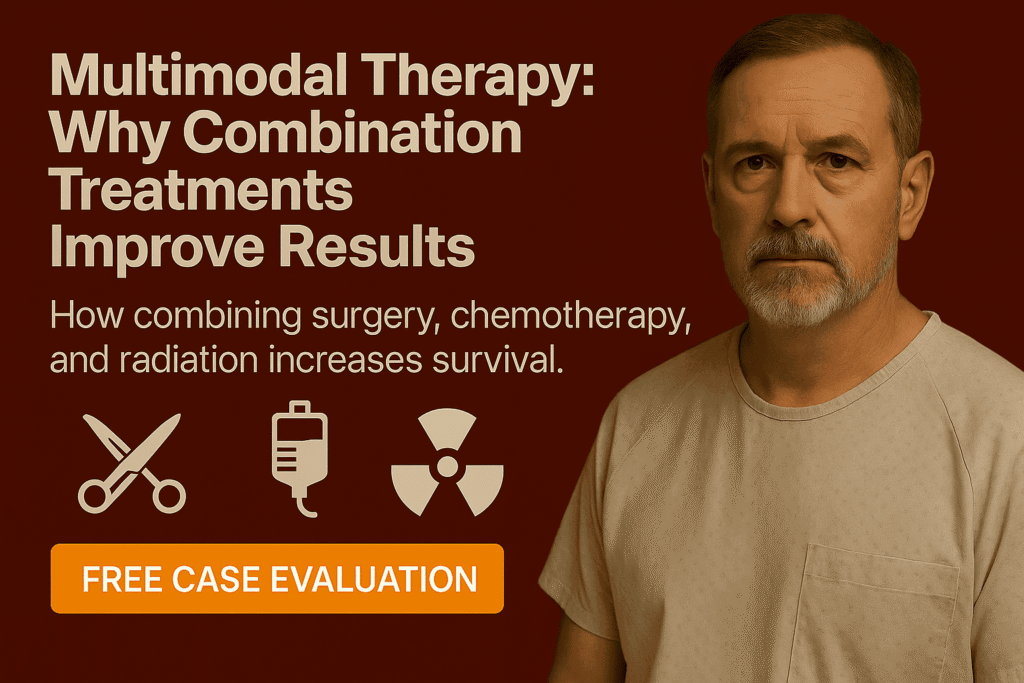
💠 Multimodal Therapy: Why Combination Treatments Improve Results
Mesothelioma treatment often works best when multiple therapies are combined. Known as multimodal therapy, this approach blends surgery, chemotherapy, and radiation to attack cancer from every angle — improving survival, reducing recurrence, and helping doctors design personalized treatment plans.
By understanding how these therapies work together, you can make informed decisions, set realistic expectations, and take an active role in your care.
📞 Need help right now? Call 800.291.0963 for free answers and guidance today.
🎯 Step 1: What Is Multimodal Therapy?
Multimodal therapy means using two or more treatment types in a coordinated plan to achieve the best possible outcome.
Typical combinations include:
-
🩺 Surgery + Chemotherapy + Radiation Therapy
-
💉 Chemotherapy + Immunotherapy
-
☢️ Surgery + Radiation Therapy
Each therapy targets cancer differently, creating a more complete and effective treatment strategy.
🩻 Step 2: How It Improves Results
When used together, treatments enhance each other’s effectiveness.
Key benefits:
-
⚔️ Comprehensive attack: Surgery removes visible tumors, while chemotherapy and radiation destroy microscopic cells.
-
🕊️ Reduced recurrence risk: Fewer cancer cells remain to grow back.
-
💪 Improved survival: Studies show patients who receive multimodal treatment often live longer.
-
🧬 Personalized care: Doctors tailor therapy combinations to each patient’s cancer type and health profile.
Example:
A patient may undergo pleurectomy/decortication surgery followed by cisplatin-pemetrexed chemotherapy and radiation to eliminate remaining cells and prevent regrowth.
🧠 Step 3: Surgery’s Role in Multimodal Therapy
Surgery forms the foundation for many multimodal treatment plans.
Types of surgery used:
-
🫁 Pleurectomy/Decortication (P/D): Removes tumors while preserving the lung.
-
⚕️ Extrapleural Pneumonectomy (EPP): Removes the lung and surrounding tissue for more advanced cases.
After surgery, adjuvant therapies (like chemo or radiation) target any remaining microscopic disease to increase success rates.
Why it matters:
-
Reduces tumor load for better chemo and radiation effectiveness.
-
Provides tissue samples for precise diagnosis.
-
Can significantly extend survival in early-stage cases.
💉 Step 4: Chemotherapy in Combination Therapy
Chemotherapy attacks cancer cells that surgery can’t reach.
Common drugs:
-
Cisplatin
-
Pemetrexed
-
Carboplatin
How it helps:
-
Shrinks tumors before surgery (neoadjuvant) or kills residual cells after surgery (adjuvant).
-
Prevents microscopic spread to other organs.
-
Enhances the effectiveness of radiation and immunotherapy.
Side effects: Fatigue, nausea, and temporary hair loss — usually manageable with medication and supportive care.
☢️ Step 5: Radiation Therapy’s Role
Radiation therapy uses high-energy beams to target residual cancer cells.
How it complements other treatments:
-
After surgery: Prevents local recurrence near the surgical site.
-
Before surgery: Shrinks tumors for easier removal.
-
Alongside chemo: Controls symptoms and slows progression.
Modern techniques:
-
IMRT (Intensity-Modulated Radiation Therapy) for precise targeting.
-
Proton Therapy to minimize damage to healthy tissue.
Benefits:
-
Pain reduction.
-
Local disease control.
-
Improved overall quality of life.
🧬 Step 6: The Growing Role of Immunotherapy and Clinical Trials
Immunotherapy — often added to multimodal treatment — trains your body’s immune system to fight cancer.
Common drugs:
-
Nivolumab (Opdivo)
-
Pembrolizumab (Keytruda)
Why it’s important:
-
Can be combined with chemo or radiation for improved outcomes.
-
Clinical trials are exploring how to integrate immunotherapy safely with surgery-based regimens.
Tip: Ask your oncologist about current clinical trials offering multimodal or immunotherapy-based protocols.
💙 Step 7: Benefits of a Multidisciplinary Care Team
A multimodal approach requires coordination between:
-
🩺 Surgeons
-
💉 Oncologists
-
☢️ Radiation specialists
-
🧠 Pulmonologists
-
💬 Counselors and rehabilitation therapists
Why it matters:
Collaboration ensures your treatment is safe, efficient, and adjusted to your body’s response at each stage.
🕒 Step 8: Typical Treatment Timeline
-
🧪 Diagnostic Phase – Biopsies, imaging, and staging.
-
🩻 Neoadjuvant Chemotherapy – Shrinks tumors before surgery.
-
🫁 Surgery (P/D or EPP) – Removes visible disease.
-
☢️ Adjuvant Radiation – Targets residual cells.
-
💉 Immunotherapy or Clinical Trials – Enhances long-term response.
Each patient’s timeline varies, depending on stage, health, and therapy response.
🤝 Where to Get Help
If you or a loved one has been diagnosed with mesothelioma, expert help is available today.
We connect patients with specialized treatment centers, experienced doctors, and legal options to help cover costs.
📞 Call 800.291.0963 to speak with a Mesothelioma Help Center advocate now.
🧭 Summary
Multimodal therapy offers the most effective approach for many mesothelioma patients. By combining surgery, chemotherapy, radiation, and immunotherapy, doctors can target the disease from multiple directions — improving survival rates and reducing recurrence.
You are not alone — expert guidance and support are only a call away.
800.291.0963