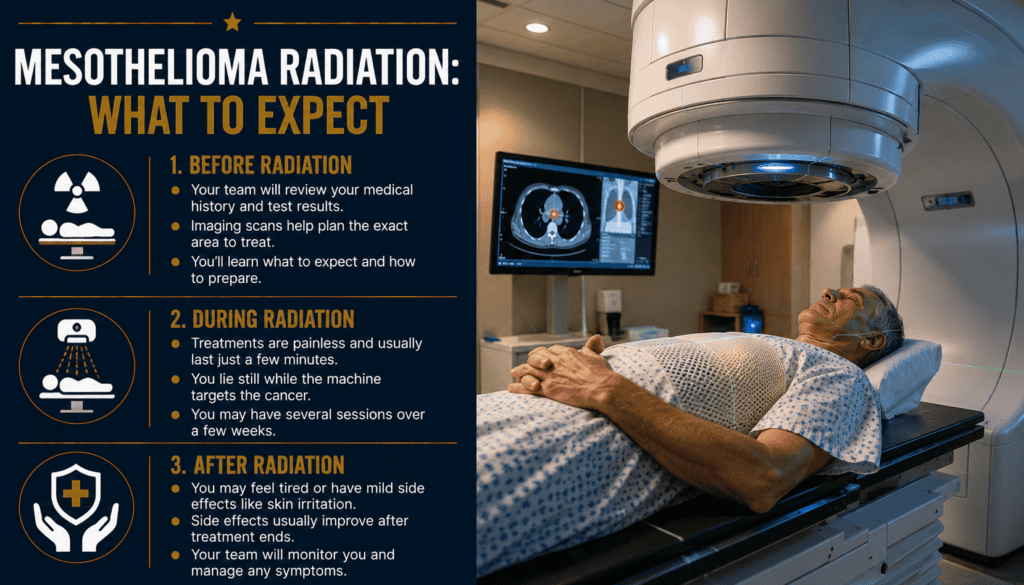
Mesothelioma Radiation: What to Expect
(1,200+ Words • Icons Included • Medical + Legal Tone)
Radiation therapy is one of the most widely used treatments for mesothelioma. It helps shrink tumors, relieve pain, improve breathing, and destroy cancer cells that cannot be removed surgically. While radiation cannot cure mesothelioma on its own, it significantly improves symptom control and often extends survival when used alongside chemotherapy, immunotherapy, or surgery.
This guide explains how radiation works, who qualifies, what to expect before and after treatment, detailed side effects, safety considerations, and how radiation treatment impacts legal claims.
🌟 What Radiation Therapy Is
Radiation therapy uses focused beams of high-energy particles or waves — such as X-rays or protons — to damage and destroy cancer cells. Modern radiation machines shape and direct these beams to minimize harm to healthy tissues while targeting tumors with precision.
🔬 How Radiation Works for Mesothelioma
Mesothelioma tumors tend to spread across large surfaces, such as the lung lining or abdominal lining. Because of this pattern, radiation must be carefully planned to avoid damaging vital organs.
Radiation helps by:
-
Damaging cancer cell DNA
-
Preventing cancer cells from dividing
-
Shrinking tumors
-
Slowing progression
-
Reducing pain and pressure
Radiation is used:
-
After surgery (kills remaining cancer cells)
-
Before surgery (shrinks tumors)
-
As palliative care (reduces symptoms)
-
When surgery is not possible
📡 Types of Radiation Therapy for Mesothelioma
Below are the main types of radiation used for pleural and peritoneal mesothelioma, explained clearly and simply.
1️⃣ External Beam Radiation Therapy (EBRT)
Icon: 🎯
The most common form of radiation. A machine outside the body delivers high-energy beams directly at the tumor.
Benefits
-
Non-invasive
-
Short treatment sessions
-
Effective for pain and symptom relief
2️⃣ Intensity-Modulated Radiation Therapy (IMRT)
Icon: 🔦
An advanced EBRT technique using computer-guided precision to shape the radiation beams.
Benefits
-
Protects surrounding organs
-
Ideal after lung-sparing surgery (P/D)
-
Targets complex tumor shapes
3️⃣ Proton Therapy
Icon: ⚛️
Uses proton particles that stop at a specific depth, lowering damage to healthy tissues behind the tumor.
Benefits
-
Reduces exposure to heart and lungs
-
Good for recurrent tumors
-
Safer for patients with prior radiation
Limitations
-
Not widely available
-
Typically more expensive
4️⃣ Brachytherapy (Internal Radiation)
Icon: 💠
Involves placing a small radioactive seed inside the body near the tumor.
Benefits
-
Extremely targeted radiation
-
Reduced exposure to surrounding organs
Limitations
-
Rarely used for mesothelioma
-
Used mainly during surgery for select cases
🧑⚕️ Who Qualifies for Radiation Therapy
Radiation is commonly recommended for patients who:
-
Have localized tumors
-
Need pain or symptom relief
-
Have good lung function (pleural cases)
-
Cannot undergo surgery
-
Need post-surgical control of remaining cancer cells
May NOT qualify
-
Widespread metastasis
-
Severe frailty
-
Heart or lung instability
-
Large fluid buildup
-
Too much previous radiation
A mesothelioma specialist determines eligibility.
🎯 Why Radiation Is Used in Mesothelioma
Radiation supports mesothelioma care in several ways:
1. Curative or Combined Therapy
Radiation works alongside chemotherapy, immunotherapy, or surgery.
2. Post-Surgery (Adjuvant Radiation)
Destroys cancer cells left after P/D or EPP.
3. Pre-Surgery (Neoadjuvant Radiation)
Shrinks tumors before surgery.
4. Palliative Radiation
Helps relieve:
-
Chest pain
-
Breathlessness
-
Bone pain
-
Nerve compression
-
Tumor pressure
🧪 What to Expect Before Radiation
Pre-treatment steps include:
-
CT or PET scans
-
Radiation simulation appointment
-
Skin markings or tattoos
-
Breathing instructions
-
Nutrition assessment
-
Bloodwork
-
Lung function testing (for pleural cases)
Radiation Mapping (“Simulation”)
A special CT scan maps your exact treatment plan. Tiny markings help ensure precise delivery each session.
Preparing for Treatment
-
Remove all jewelry
-
Wear comfortable clothing
-
Follow hydration guidelines
-
Eat light meals
🔦 What Happens During Radiation Treatments
Radiation is painless.
During treatment:
-
You lie on a table
-
The machine rotates around you
-
No contact, no heat, no burning sensations
-
You must stay still
-
Treatments last 10–20 minutes
Frequency
Most patients receive radiation:
-
5 days per week
-
For 2–6 weeks
⚠️ Detailed Side Effects of Radiation (12 Key Effects)
(Each with explanations + management tips)
Side effects vary based on whether radiation targets the chest or abdomen.
1️⃣ Fatigue
Icon: 💤
The most common effect, worsening over time.
Management: hydration, small meals, light activity.
2️⃣ Skin Irritation (Radiation Dermatitis)
Icon: 🧴
Redness, peeling, itching.
Management: fragrance-free lotions, avoid hot showers.
3️⃣ Difficulty Swallowing (Dysphagia)
Icon: 🍲
Occurs with chest radiation.
Management: soft foods, smoothies, marshmallow root tea.
4️⃣ Nausea & Vomiting
Icon: 🤢
More common with abdominal radiation.
Management: anti-nausea medication, ginger tea, small meals.
5️⃣ Loss of Appetite
Icon: 🍽️
Radiation disrupts hunger signals.
Management: high-calorie shakes, small meals.
6️⃣ Cough or Shortness of Breath
Icon: 🫁
From lung irritation.
Management: breathing therapy, humidifiers.
7️⃣ Chest Pain or Tightness
Icon: ❤️
Due to inflammation of chest tissues.
8️⃣ Diarrhea
Icon: 🚽
Common with abdominal radiation.
Management: oral rehydration solutions, bananas, rice.
9️⃣ Abdominal Cramping
Icon: 🤰
Radiation may irritate the bowel.
🔟 Low Blood Counts
Icon: 🩸
Radiation can affect the bone marrow.
1️⃣1️⃣ Hair Loss (Treatment Area Only)
Icon: 🧑🦲
Occurs only where radiation beams hit.
1️⃣2️⃣ Long-Term Effects
Icon: ⏳
May include lung fibrosis or scar tissue — rare with modern technology.
🛡️ Safety for Family Members
Radiation does not make patients radioactive.
It is safe to:
-
Hug family
-
Hold children
-
Share food
-
Be in close contact
Only brachytherapy (rare in mesothelioma) requires short-term precautions.
🏡 Daily Life During Radiation
Most patients can:
-
Maintain light exercise
-
Complete household tasks
-
Drive themselves to treatment
-
Spend time with friends and family
Fatigue may increase as treatment progresses.
🚨 When Radiation Side Effects Become an Emergency
Seek immediate help if you experience:
-
Severe trouble breathing
-
Sudden chest pain
-
High fever
-
Repeated vomiting
-
No urination
-
Confusion
-
Fainting
-
Swelling of face or throat
⚖️ Legal Relevance of Radiation Treatment
Radiation therapy provides powerful medical documentation showing:
-
Disease severity
-
Treatment burden
-
Pain & suffering
-
Loss of daily function
-
Long-term medical needs
Records such as:
-
Radiation plans
-
Imaging
-
Toxicity notes
-
Symptom logs
all strengthen compensation claims.
Patients undergoing radiation typically qualify for higher compensation because their treatment proves significant harm caused by asbestos exposure.
📞 🚨 Urgent: Get Legal Help for Mesothelioma or Asbestos Lung Cancer
If you or a loved one is losing sleep, struggling to breathe, or suffering because of mesothelioma or asbestos-related lung cancer, do not wait.
You may qualify for significant financial compensation — but deadlines apply.
⚖️ What Our Legal Team Can Do Right Now
- 🏭 Pinpoint where asbestos exposure occurred
- 🧾 File asbestos trust fund claims worth millions
- 💼 Pursue lawsuits against responsible companies
- 🚀 Fast-track your case due to severe symptoms
- 💰 Recover compensation for treatment, bills & pain
⏳ Time matters. Your rights may depend on acting quickly.
📞 Call Now for Immediate Legal Help: 800.291.0963
Your case review is free, confidential, and available 24/7.
🛑 Disclaimer:
This 50-page guide provides general information only. It should not be used as medical or legal advice. If you suspect mesothelioma or have related symptoms, seek medical evaluation right away. For legal concerns, including asbestos exposure and compensation, consult a licensed attorney.