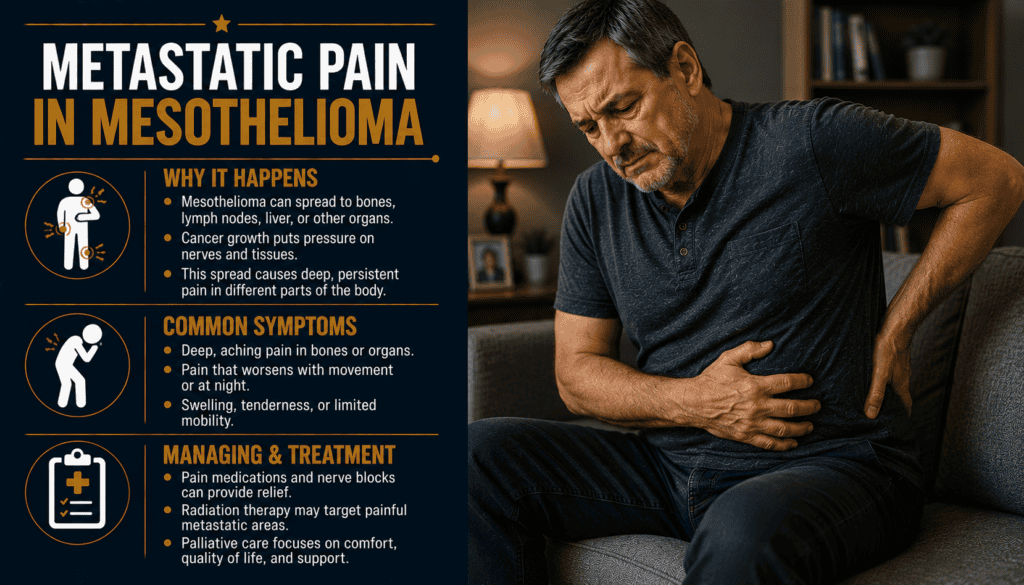
Metastatic Pain in Mesothelioma
🔥 Why It Happens, Where It Spreads & How to Ease Severe Cancer Pain
Metastatic pain is one of the most intense and life-altering symptoms mesothelioma patients may experience. It develops when mesothelioma spreads beyond its original site and invades other organs, bones, nerves, or soft tissues. This pain can be sharp, deep, burning, crushing, or radiating—and it often becomes more severe over time.
Because metastatic pain signals disease progression, it can be emotionally and physically overwhelming. It may limit mobility, disrupt sleep, reduce appetite, and profoundly affect quality of life. The good news: there are multiple effective treatments and comfort strategies that can dramatically reduce suffering and improve daily function.
This guide explains why metastatic pain occurs, where it spreads, how doctors identify the source, and which treatments provide meaningful relief.
📘 What Is Metastatic Pain in Mesothelioma?
Metastatic pain refers to severe pain caused by mesothelioma spreading to other parts of the body. Once mesothelioma metastasizes, it can affect:
-
Bones
-
Liver
-
Spine
-
Chest wall
-
Diaphragm
-
Abdomen
-
Lymph nodes
-
Nerves
-
Soft tissues
Metastatic pain is often more intense than early-stage pain because:
-
Tumors grow near or around nerves
-
Bones weaken or fracture
-
Organs swell or become compressed
-
Inflammation increases
-
Tissue damage accelerates
Patients describe metastatic pain as:
-
“A deep, drilling pain”
-
“A burning nerve pain shooting down my back”
-
“Pain that never lets up”
-
“Pressure that feels unbearable”
🔥 Why Mesothelioma Causes Metastatic Pain
Metastatic pain occurs when mesothelioma spreads beyond the pleura, peritoneum, or pericardium. Cancer cells can travel through the bloodstream or lymphatic system and invade:
-
Bones
-
Lymph nodes
-
Abdominal organs
-
Spine
-
Chest wall
-
Soft tissue
-
Diaphragm
1️⃣ Tumor Invasion of Nerves
🧠 One of the most painful forms of metastasis.
Tumors may compress or damage:
-
Spinal nerves
-
Brachial plexus
-
Intercostal nerves
-
Peripheral nerves
This leads to:
-
Shooting pain
-
Burning sensations
-
Numbness
-
Weakness
-
Tingling
Nerve pain is often relentless and requires specialized treatment.
2️⃣ Bone Metastasis
🦴 When mesothelioma spreads to bones—especially the spine, ribs, pelvis, shoulders, or hips—patients may experience:
-
Deep, constant pain
-
Sharp pain with movement
-
Increased fracture risk
-
Possible spinal cord compression
Bone metastasis often causes some of the most intense cancer-related pain.
3️⃣ Organ Compression
🔥 Tumors pressing on organs can cause:
-
Abdominal pain
-
Lower back pain
-
Pelvic pressure
-
Rib cage discomfort
Examples:
-
Liver metastasis: right-sided abdominal and back pain
-
Diaphragm involvement: chest, shoulder, and rib pain
4️⃣ Chest Wall Invasion
🫁 When tumors infiltrate the chest wall, patients may feel:
-
Sharp, stabbing pain
-
Pain with breathing or coughing
-
Tenderness along the ribs
This is common in advanced pleural mesothelioma.
5️⃣ Inflammation & Tissue Damage
🔥 Metastasis triggers widespread inflammation:
-
Increases sensitivity to pain
-
Worsens existing discomfort
-
Contributes to ongoing soreness and burning
6️⃣ Fluid Buildup from Advanced Disease
💧 Large pleural effusions or ascites increase pressure and pain in:
-
Abdomen
-
Chest
-
Lower back
📍 Where Metastatic Pain Appears Most Often
Mesothelioma metastasis can occur in many areas, but metastasis-related pain most often affects:
🦴 1. Bones
Common sites:
-
Spine
-
Ribs
-
Pelvis
-
Shoulders
-
Hips
Pain tends to be:
-
Deep and aching
-
Worse with movement or weight-bearing
-
Persistent, even at rest
🧠 2. Nerves
Nerve involvement can cause:
-
Shooting or electric shock–like pain
-
Burning sensations
-
Numbness or tingling
-
Weakness in arms or legs
🫁 3. Chest Wall
Pain often worsens with:
-
Deep breathing
-
Coughing
-
Twisting or bending
🔥 4. Abdominal Organs
Metastasis to abdominal structures can cause:
-
Abdominal or pelvic pain
-
Back or flank pain
-
Pressure or fullness
🧘 5. Soft Tissue
Tumors in muscle or connective tissue may cause:
-
Localized tenderness
-
Swelling
-
Soreness on touch or movement
🔍 Symptoms That Indicate Metastatic Pain
Doctors look at pain patterns and associated symptoms to determine whether pain is metastatic.
🔥 Pain Characteristics
-
Intense, unrelenting pain
-
Pain that worsens at night
-
Deep bone pain with movement
-
Burning or electric shock–like nerve pain
-
Radiating pain down arms or legs
🧠 Neurological Symptoms
-
Numbness or tingling
-
Muscle weakness
-
Loss of balance
-
Difficulty walking
-
Loss of bladder or bowel control (emergency)
🦴 Bone-Related Symptoms
-
Pain when standing or walking
-
Sudden worsening pain
-
Swelling or tenderness over bones
-
Fractures after minor injury
🔥 Organ-Related Symptoms
-
Abdominal swelling or fullness
-
Pelvic pressure
-
Rib cage or flank pain
🩺 How Doctors Diagnose Metastatic Pain
1️⃣ Physical Examination
🩺 Doctors assess:
-
Exact pain location
-
Tenderness over bones or soft tissue
-
Neurologic changes (weakness, reflexes, sensation)
-
Posture and gait
2️⃣ Imaging Tests
📸 Imaging is essential for identifying metastasis:
-
CT Scan – detects tumor spread and organ involvement
-
MRI – best for nerve compression and spinal metastasis
-
Bone Scan – shows bone metastases across the body
-
X-rays – detect fractures or bone erosion
3️⃣ Blood Tests
🩸 Used to check for:
-
Inflammation
-
Bone breakdown
-
Liver involvement
-
Infection
4️⃣ Neurological Evaluation
🧠 Examines:
-
Reflexes
-
Muscle strength
-
Sensory changes
5️⃣ Biopsy (If Needed)
Confirms metastatic spread in uncertain areas.
💉 Medical Treatments for Metastatic Pain
Metastatic pain requires strong, comprehensive pain management. The goal is to reduce pain quickly and improve function.
1️⃣ Strong Pain Medications
⚡ Often necessary to control advanced pain.
Common options:
-
Morphine
-
Oxycodone
-
Hydromorphone
-
Fentanyl patches
Doses are adjusted carefully based on each patient’s needs.
2️⃣ Nerve Pain Medications
🧠 Extremely helpful for burning, shooting, or electrical pain:
-
Gabapentin
-
Pregabalin
-
Duloxetine
-
Amitriptyline
These target nerve-related pain rather than standard aches.
3️⃣ Radiation Therapy
🔦 One of the most effective treatments for metastatic pain.
Radiation can:
-
Shrink tumors
-
Relieve nerve compression
-
Strengthen bones
-
Reduce chest wall or spine pain
Relief often appears within 1–2 weeks.
4️⃣ Steroids
💊 Steroids reduce:
-
Swelling around nerves
-
Brain or spine inflammation
-
Organ-related pressure
They often provide rapid relief.
5️⃣ Nerve Blocks
🧠 Targeted injections that can:
-
Block pain signals
-
Provide strong pain control
-
Help in chest wall, abdominal, or nerve-based pain
Relief may last days to months.
6️⃣ Bone-Strengthening Medications
🦴 Drugs such as bisphosphonates or denosumab can:
-
Reduce bone pain
-
Lower fracture risk
-
Slow bone damage
7️⃣ Chemotherapy & Immunotherapy Adjustments
📉 When effective, systemic treatments can:
-
Shrink metastatic tumors
-
Reduce nerve or bone pressure
-
Decrease inflammation-related pain
8️⃣ Palliative Care
🏥 Palliative specialists focus on:
-
Aggressive pain control
-
Symptom management
-
Emotional and spiritual support
Their involvement often dramatically improves comfort and quality of life.
🏠 At-Home Strategies for Metastatic Pain Relief
Practical comfort strategies can complement medical care.
✔️ Heating pads for muscle-related or stiff areas
✔️ Ice packs for nerve or inflammation-related pain
✔️ Supportive pillows for spine, rib, or shoulder support
✔️ Gentle stretching to reduce stiffness, if approved by doctors
✔️ Avoid heavy lifting to protect fragile bones
✔️ Use mobility aids (canes, walkers, braces) to prevent falls
Always check with your medical team before starting new physical activities.
🚨 When Metastatic Pain Is an Emergency
Seek immediate medical help if metastatic pain is accompanied by:
-
Sudden inability to walk
-
Loss of bladder or bowel control
-
New or severe back pain
-
Numbness or weakness in the legs
-
High fever or confusion
-
Sudden swelling in one arm or leg
-
Severe chest pain or shortness of breath
These may indicate:
-
Spinal cord compression
-
Blood clot
-
Sepsis or serious infection
-
Fracture of a weakened bone
-
Life-threatening progression
⚖️ Legal Importance of Metastatic Pain in Mesothelioma Claims
Metastatic pain is strong evidence of advanced, severe disease and plays a major role in legal claims.
💰 Higher Pain & Suffering Compensation
Metastatic pain affects:
-
Mobility and independence
-
Ability to sleep and rest
-
Work capacity
-
Emotional stability
-
Overall quality of life
These factors significantly increase non-economic damages (pain and suffering).
📑 Medical Records Strengthen the Case
Imaging, pain reports, and treatment notes document:
-
Tumor progression
-
Organ and bone involvement
-
Nerve compression
-
Long-term physical decline
This documentation helps attorneys prove the full impact of asbestos exposure.
🏭 Evidence of Asbestos Exposure Harm
Metastatic mesothelioma strongly supports claims tied to:
-
Naval and shipyard work
-
Power plants and industrial sites
-
Construction and insulation work
-
Refineries and heavy manufacturing
-
Mechanical and boiler work
🚨 Urgent: Get Legal Help for Metastatic Mesothelioma Pain
If you or a loved one is experiencing severe metastatic pain from mesothelioma or asbestos-related cancer, do not wait.
You may qualify for significant financial compensation, but strict legal deadlines apply.
⚖️ What Our Legal Team Can Do Right Now
-
🏭 Identify where asbestos exposure occurred
-
🧾 File asbestos trust fund claims that may be worth millions
-
💼 Pursue lawsuits against responsible manufacturers and companies
-
🚀 Fast-track your case due to advanced, metastatic disease
-
💰 Seek compensation for medical care, home support, and pain & suffering
⏳ Time is critical — your rights may depend on acting quickly.
📞 Call Now for Immediate Legal Help: 800.291.0963
Your case review is free, confidential, and available 24/7.
⚠️ Disclaimer
❗ This article is for informational purposes only and does not provide medical or legal advice. Always consult a licensed physician for medical questions and a qualified attorney for legal guidance regarding mesothelioma or asbestos-related claims.