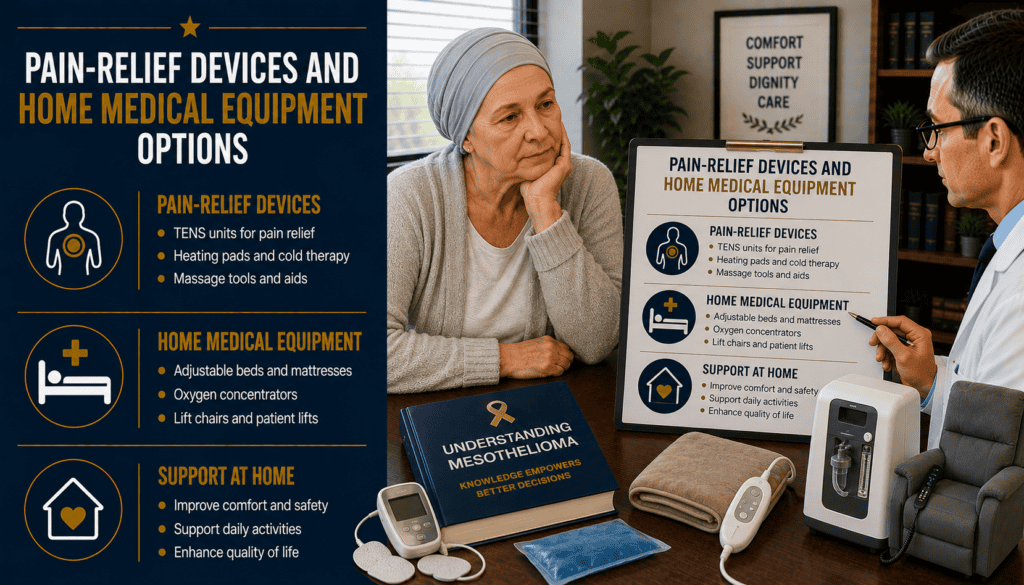
Pain Relief Devices and Home Medical Equipment Options for Mesothelioma
A practical guide to comfort, safe movement, specialized pain treatment and arranging equipment at home.
Mesothelioma can cause pain in the chest, abdomen, back or other areas. Surgery and other cancer treatments may also cause discomfort. A well-chosen device can make sitting, sleeping, moving or taking medicine easier, but equipment cannot replace evaluation of new pain or treatment of the underlying cause. Ask your oncology or palliative care team to tailor the plan to your symptoms and abilities.
1. Start with the source of pain
Describe where pain occurs, how it feels, its severity, whether it changes with breathing or movement, and what makes it better or worse. Pain may come from a tumor, fluid buildup, an incision, nerve injury, muscle strain or an unrelated condition. The cause determines whether a cushion, mobility aid, medication adjustment or procedure is appropriate. A device that helps one kind of pain may worsen another.
| What you notice | What to discuss | Possible equipment role |
|---|---|---|
| Pain when changing position | Incision, weakness or joint problems | Bed rail or transfer aid only after safety assessment |
| Pain while sitting | Pressure, posture or abdominal discomfort | Fitted support cushion or adjustable chair |
| Pain with walking | Weakness, balance or neuropathy | Clinician-fitted walker or wheelchair |
| Persistent or rapidly worsening pain | New complication or inadequately controlled pain | Prompt medical assessment; do not rely on a device |
Keep a short symptom diary noting pain location, 0–10 severity, medicine taken and its effect, and problems with daily activities. Share it with the team rather than buying equipment based on a product advertisement.
2. Cushions, beds and positioning aids
Positioning may reduce strain and make rest more comfortable. Ask a nurse, occupational therapist or physical therapist to check fit, skin condition and safe transfers. An adjustable hospital bed may be useful when frequent repositioning or specific medical positioning is needed, but it is not automatically necessary for everyone with mesothelioma.
| Option | Potential use | Important caution |
|---|---|---|
| Support pillows or wedges | Support a comfortable, prescribed position | Avoid positions that worsen breathing or compress the chest |
| Pressure-redistributing mattress or overlay | Reduce prolonged pressure for people with limited movement | Does not replace skin checks and repositioning |
| Adjustable bed | Assist positioning and caregiving when medically appropriate | Check entrapment risks, brakes and transfer height |
| Supportive chair or cushion | Improve posture during meals or rest | Ensure feet are supported and transfers remain safe |
Do not assume that elevating the head treats every breathing problem. If breathlessness is new, severe or worsening, contact the care team promptly. A pressure-relieving surface does not eliminate the need for a personalized skin-care plan.
3. Mobility aids and safer daily activities
Fatigue, neuropathy, dizziness and pain can make falls more likely. A physical or occupational therapist can assess whether a cane, walker, wheelchair, shower chair, raised toilet seat or grab bar is appropriate and teach correct use. Equipment should match the person’s strength, balance, home layout and caregiver support.
| Equipment | When it may help | Fit or setup check |
|---|---|---|
| Walker or cane | Walking support when recommended | Correct height, grip and gait training |
| Wheelchair or transport chair | Long distances or limited endurance | Seat fit, brakes, transfers and caregiver capacity |
| Shower chair and grab bars | Safer bathing | Secure installation and slip-resistant surfaces |
| Bedside commode | Shorter distance to the toilet | Stable placement, clear route and safe transfers |
Do not use a rolling walker as a stationary stand to pull yourself upright unless a clinician has specifically taught a safe technique; brakes and frame design vary. Keep walkways clear, provide good lighting and avoid loose rugs or cords.
4. Devices managed by pain specialists
For pain that remains difficult to control, an oncology, pain or palliative care specialist may discuss treatments beyond standard pills. These are medical interventions—not do-it-yourself home purchases. Their suitability depends on the pain mechanism, overall condition and goals of care.
| Approach | How it may be used | Who supervises it |
|---|---|---|
| Patient-controlled analgesia pump | Preset medication doses in selected clinical or home-care situations | Prescribing clinician and trained care team |
| Implanted or external drug-delivery system | Selected cases of refractory pain | Specialist pain or palliative care service |
| Nerve block | Targets certain localized pain pathways | Trained procedural specialist |
| TENS unit | Electrical stimulation sometimes used for selected pain | Discuss first with treating clinician; evidence for cancer pain varies |
Do not apply electrical stimulation over a tumor, damaged or irradiated skin, or near implanted electrical devices without specific professional clearance. Never change pump settings, medication doses or oxygen flow on your own. Ask for written instructions and a 24-hour troubleshooting number for any prescribed device.
Need help now? Call 800.291.0963 / Live chat available 24/7, 365 days a year / Submit Your Case.
5. Safety precautions and when to seek help
Heating pads, cold packs and massage devices may seem simple, but cancer treatment can alter skin sensitivity and healing. Ask your team before using heat or cold; protect skin with a cloth, avoid areas with poor circulation or reduced sensation, and never place heat on recently irradiated skin. Avoid massage directly over a tumor, a clot, an incision or a painful unexplained swelling. Stop any device that increases pain, dizziness or breathlessness.
| Situation | Action |
|---|---|
| Sudden severe breathlessness, chest pain, fainting or new confusion | Seek emergency medical help immediately |
| New severe pain, fever, new weakness or rapidly increasing swelling | Contact your clinical team urgently; follow its emergency instructions |
| New skin redness, blistering or pressure injury | Stop pressure or heat exposure and contact the care team |
| Pain remains uncontrolled despite the prescribed plan | Call the prescribing team for reassessment; do not self-increase medication |
Keep emergency contacts visible and make sure caregivers know which equipment requires training. Do not delay urgent assessment because a device briefly improves comfort.
6. Prescriptions, insurance and out-of-pocket costs
Ask whether the equipment is medically necessary, requires a prescription, must come from an in-network supplier, or is rented rather than purchased. Medicare, Medicaid, private insurance, VA benefits and hospice arrangements have different rules. Coverage varies by plan, clinical documentation and supplier. Confirm approval and patient responsibility before delivery.
| Question for supplier or insurer | Why it matters |
|---|---|
| Is this item covered for my diagnosis and functional need? | Coverage may require specific documentation |
| Do I need prior authorization or an in-network supplier? | Avoid unexpected denials |
| Is it rental or purchase, and who handles repairs? | Clarifies ongoing responsibilities |
| What will I pay for delivery, supplies and pickup? | Captures costs beyond the advertised price |
| Who teaches safe use and whom do I call after hours? | Prevents unsafe setup and gaps in support |
Request a written estimate and keep prescriptions, authorizations, receipts and delivery records. A hospital social worker or case manager can help coordinate equipment and possible assistance; no reimbursement or financial assistance is guaranteed.
7. Build a coordinated home equipment plan
Begin with the oncology team’s symptom assessment, then ask for palliative care, physical therapy, occupational therapy, respiratory therapy or home health referrals as appropriate. Clarify who orders each item, who delivers and fits it, who trains the caregiver and when the plan will be reassessed. A caregiver should not be expected to lift or transfer someone without appropriate training.
| Team member | Useful contribution |
|---|---|
| Oncology or palliative care clinician | Assess pain and prescribe or refer |
| Physical therapist | Walking, transfer and mobility assessment |
| Occupational therapist | Bathing, dressing and home setup |
| Nurse or home health team | Skin checks, medication and equipment teaching |
| Social worker or case manager | Supplier coordination and coverage questions |
Review equipment after surgery, hospital discharge, a fall, a major change in breathing or a decline in strength. An item that was appropriate last month may need adjustment today.
8. Questions to ask and a take-home checklist
Bring a current medication list and a description of the most difficult daily tasks. Ask your team to explain what improvement is realistic and how to tell whether the device is helping.
| Ask your clinician | Write down the answer |
|---|---|
| What is causing this pain, and is any testing needed? | Diagnosis or next step |
| Which device, if any, addresses this specific problem? | Exact item and intended benefit |
| Who will fit it and teach us? | Name and contact |
| What are the risks or situations when we should stop using it? | Written safety instructions |
| When should we call back or seek emergency help? | Action plan and phone number |
Before equipment arrives: confirm the order and supplier; measure doorways and bed access; remove trip hazards; identify an outlet if needed; ask about cleaning and maintenance; and schedule a demonstration with the patient and caregiver. After delivery: check fit and comfort, practice safe transfers, record any new symptoms and arrange follow-up.
Related reading: Mesothelioma treatment options, Managing breathing problems and pleural effusion, Oxygen therapy and breathing rehabilitation, and Your mesothelioma care team.
9. Frequently Asked Questions
Can a device treat mesothelioma itself?
Most home comfort and mobility devices manage symptoms or make daily activities safer; they do not treat the underlying cancer. Cancer treatment requires a separate oncology plan.
Is a hospital bed necessary for every patient?
No. It may help when medically indicated for positioning, transfers or caregiving. A clinician should assess the need and safety.
Can I buy a TENS unit without talking to my doctor?
Discuss it first. TENS may be inappropriate with certain implanted devices, skin problems or treatment sites, and its benefit for cancer pain is uncertain.
Are heating pads safe after radiation?
Do not apply heat to recently irradiated or damaged skin. Ask the radiation or oncology team before using heat or cold anywhere affected by treatment.
Will insurance pay for a walker or hospital bed?
Coverage depends on the plan, medical necessity, documentation and supplier rules. Confirm the exact item and patient cost before ordering.
What if pain is still severe with equipment?
Contact the care team promptly for reassessment. Do not increase prescribed medicines or adjust a medical pump without instructions.
Can caregivers install grab bars or bed rails themselves?
Professional assessment and secure installation are important. Bed rails can create entrapment and fall risks, and a poorly installed grab bar can fail.
When is new pain an emergency?
Sudden severe chest pain or breathlessness, fainting, new confusion or other rapidly worsening symptoms require emergency evaluation. Follow your team’s specific instructions.
Medical sources and further reading
- National Cancer Institute: Pain and Cancer — individualized cancer pain plans and reporting new pain.
- National Cancer Institute: Cancer Pain (Patient Version) — medication and specialist procedures.
- American Cancer Society: Home Care — equipment providers and home-care planning.
- National Cancer Institute: Cancer Pain Control — non-drug approaches and heat/cold precautions.
Get Help Understanding Your Options
Call 800.291.0963. Live chat is available 24/7, 365 days a year. Submit Your Case.
We can help you explore possible legal resources related to asbestos exposure. Compensation is not guaranteed, and contacting us does not replace medical care.
⚕️ Legal & Medical Information Disclaimer
This page provides general education, not individual medical or legal advice. Consult your treating clinicians before using medical equipment or changing a pain plan; consult a qualified attorney about legal questions. Seek emergency help for urgent symptoms.