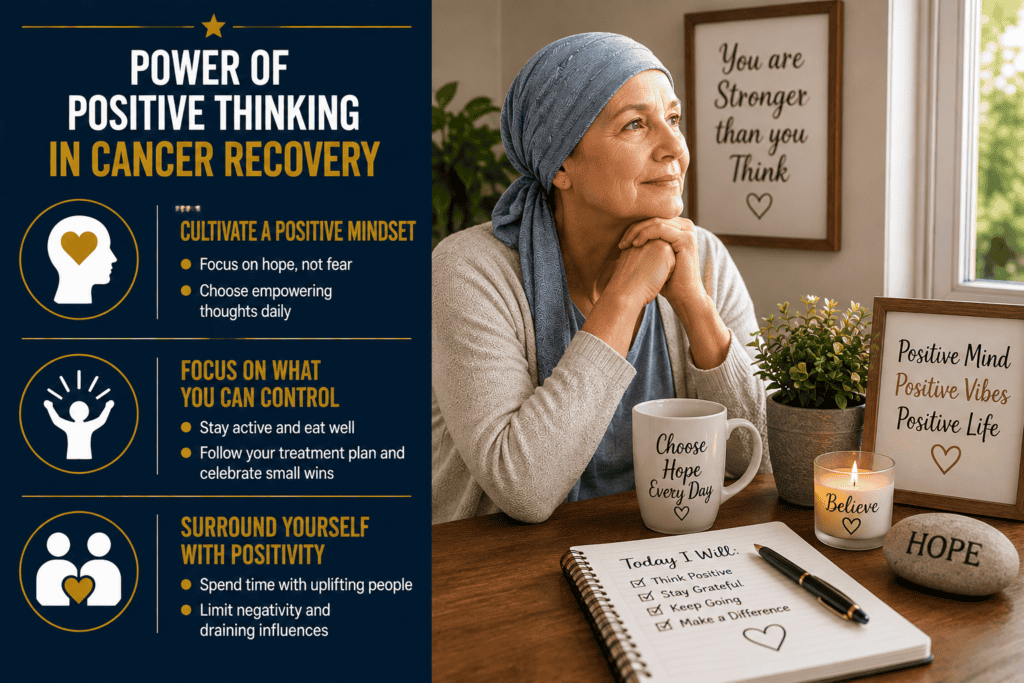
The Power of Positive Thinking in Cancer Recovery: Hope Without Pressure
A compassionate, evidence-based guide to emotional well-being during mesothelioma treatment.
A mesothelioma diagnosis can change daily life overnight. Some patients find encouragement in optimism, while others feel frightened, angry, exhausted or uncertain. All of these responses can coexist. Positive thinking is best understood as an optional coping tool—not a requirement, a cancer treatment or a test of personal strength.
Key takeaway: Supportive attitudes and practical coping strategies may improve quality of life, but research has not established that thinking positively cures mesothelioma or reliably extends survival. You do not cause your cancer to worsen by feeling sad or afraid.
What positive thinking can—and cannot—mean
Healthy optimism does not require pretending everything is fine. It can mean noticing one manageable next step, identifying what still matters, or accepting help on a difficult day. A person can hope for meaningful time, effective symptom relief or a helpful conversation without assuming that every treatment will succeed.
| Realistic hope | Pressure to be positive |
|---|---|
| “I can ask about ways to control this symptom.” | “I must never admit that I am scared.” |
| “I can enjoy today even when the future is uncertain.” | “My attitude will determine whether treatment works.” |
| “I can choose whom to talk to.” | “I must protect everyone else from my feelings.” |
The word recovery can mean different things: recovering from surgery, regaining function after treatment, stabilizing symptoms or adapting to life with cancer. Your medical team can clarify which goals are realistic for your situation.
What research says about attitude and cancer outcomes
The American Cancer Society explains that research has not shown a positive attitude changes how long someone lives with cancer. The National Cancer Institute (NCI) recognizes hope as one possible way to cope, while encouraging patients to express difficult feelings rather than forcing cheerfulness.
Some observational research reports associations between well-being and survival across mixed cancer populations. Such findings cannot prove that changing one’s thoughts causes longer survival, and they do not establish a mesothelioma-specific survival benefit. Cancer type, treatment, physical health and access to care can all complicate interpretation.
| Question | Evidence-based answer |
|---|---|
| Can optimism improve day-to-day well-being? | It may help some people; benefits vary by person. |
| Does a positive attitude cure mesothelioma? | No evidence establishes this. |
| Does sadness cause treatment failure? | No; patients should not be blamed for their emotions. |
| Can counseling reduce distress? | Yes, psychosocial support can help many patients manage anxiety and other symptoms. |
Use hopeful practices because they are useful to you, not because you have been told they are medically necessary.
Making room for fear, grief, anger and uncertainty
There is no correct emotional reaction to mesothelioma. Feelings may shift before a scan, during chemotherapy, after a hospitalization or while waiting for pathology results. Emotional honesty can make it easier to tell clinicians about pain, insomnia or anxiety that deserves treatment.
| Feeling or experience | Supportive response |
|---|---|
| Fear before scans | Ask when results will arrive and who will call; plan a supportive activity while waiting. |
| Anger about asbestos exposure | Talk with a trusted person or counselor; ask for legal information separately if wanted. |
| Sadness or grief | Allow time to grieve; request support if sadness persists or disrupts daily life. |
| Feeling overwhelmed | Ask the care team to identify the next one or two decisions. |
Someone who does not feel optimistic has not failed. Family members should avoid suggesting that a patient must smile, fight harder or believe more strongly to recover.
Practical ways to build realistic hope
Choose one or two approaches that fit your energy, preferences and medical restrictions. Short, repeatable actions often feel more manageable than an ambitious daily routine.
| Approach | Small starting point | Important limitation |
|---|---|---|
| A daily priority | Choose one achievable task or enjoyable moment. | Rest may be the priority on treatment days. |
| Mindfulness or relaxation | Try a brief guided exercise if comfortable. | Stop if it increases distress; seek professional guidance. |
| Journaling | Write one worry and one question for the care team. | There is no obligation to write positive statements. |
| Pleasant activity | Call a friend, listen to music or spend time outdoors if safe. | Adjust activities to symptoms and clinician advice. |
| Information planning | Write down the next appointment and what it will address. | Avoid endless searching when it increases anxiety. |
Need help now? Call 800.291.0963 / Live chat available 24/7, 365 days a year / Submit Your Case.
Counseling, support groups and professional help
Ask your oncologist about oncology social workers, psycho-oncology clinicians, palliative care teams, counselors or patient navigators. These professionals can address emotional distress alongside practical issues such as transportation and financial strain. Palliative care can be offered during active cancer treatment; it is not limited to hospice.
| Resource | What it may help with |
|---|---|
| Oncology social worker | Practical needs, family conversations, community referrals and financial navigation. |
| Psychologist or counselor | Anxiety, depression, coping strategies and adjustment to illness. |
| Support group | Shared experiences and reduced isolation when a group feels comfortable. |
| Palliative care team | Pain, breathlessness, other symptoms and goals-of-care conversations. |
The NCI describes evidence that psychosocial interventions can help people experiencing cancer-related distress. Ask for an assessment if anxiety, low mood, panic or sleep disruption interferes with everyday life. If there is immediate danger or a mental health crisis in the United States, call 911 for immediate danger or call/text 988 for crisis support.
How family and friends can offer hope without pressure
Well-intended encouragement can sometimes feel like a demand to hide fear. Instead of saying “You must stay positive,” ask what kind of support the person wants today. Listen before offering solutions, and respect their choice not to discuss the illness.
| Instead of saying | Consider saying |
|---|---|
| “You have to stay positive.” | “You can tell me how you really feel.” |
| “Everything will be fine.” | “I’m here with you while we learn what comes next.” |
| “Other patients had it worse.” | “What feels hardest today?” |
| “Let me know if you need anything.” | “Would it help if I drove you Tuesday or picked up groceries?” |
Caregivers also need rest and support. Sharing tasks, accepting respite and asking a social worker for resources are practical ways to sustain care.
Hope should work alongside evidence-based medical care
Emotional support can complement—not replace—treatment decisions made with mesothelioma specialists. Ask what surgery, systemic therapy, radiation, clinical trials or symptom-focused care may offer for your specific diagnosis. If treatment is not controlling the cancer, hope may shift toward comfort, connection or personal priorities.
| Care conversation | Useful question |
|---|---|
| Treatment goals | Is the goal to control cancer, relieve symptoms or both? |
| Side effects | Which symptoms should I report promptly? |
| Decision-making | What are the benefits, risks and alternatives? |
| Supportive care | Can I see palliative care or an oncology social worker now? |
Explore the mesothelioma treatment overview, your mesothelioma care team and emotional resilience and faith during treatment for related guidance.
A flexible seven-day coping plan
This is a menu, not a prescription. Skip any step that is tiring, uncomfortable or inconsistent with medical advice. You can repeat one useful activity rather than completing the entire week.
| Day | Optional small action |
|---|---|
| 1 | Write one question for your clinician. |
| 2 | Ask a trusted person to listen without trying to fix anything. |
| 3 | Choose a comforting activity that fits your energy. |
| 4 | Request help with one practical task. |
| 5 | Ask your care team about counseling or symptom support if needed. |
| 6 | Notice what made the day easier or harder. |
| 7 | Keep, change or abandon the plan based on what actually helped. |
If positive-thinking exercises feel burdensome, you may stop. A useful plan respects your feelings and your changing health.
Frequently Asked Questions
Can positive thinking cure mesothelioma?
No. There is no established evidence that positive thinking cures mesothelioma. Medical treatment and symptom care should be guided by qualified clinicians.
Will a negative attitude make my cancer worse?
Research does not establish that sadness or fear causes cancer progression or treatment failure. Tell your care team if distress is affecting your quality of life.
Does optimism help patients live longer?
A survival benefit caused by deliberately adopting optimism has not been established. Some observational studies find associations, but these cannot demonstrate cause and effect or a mesothelioma-specific benefit.
What if I cannot feel hopeful?
You do not have to. Start with practical support, symptom relief or one manageable next step. Ask for counseling if distress feels unmanageable.
Are support groups worth trying?
They can reduce isolation and provide coping ideas for some people. You may prefer individual counseling or support from family instead.
Can mindfulness or meditation replace treatment?
No. These may help some patients manage stress but should complement rather than replace oncology care.
How can caregivers encourage someone without pressuring them?
Listen, validate feelings, offer specific help and ask what kind of encouragement the patient wants.
When should I ask for mental health support?
Ask whenever fear, sadness, anxiety or sleep problems interfere with daily life, relationships or care. Seek urgent help for immediate safety concerns.
Confirmed Medical Sources and Further Reading
- National Cancer Institute: Emotions and Cancer
- National Cancer Institute: Stress and Cancer
- National Cancer Institute: Adjustment to Cancer
- American Cancer Society: Do Feelings and Attitudes Have an Effect on Cancer?
Sources address cancer patients broadly; they do not establish that attitude changes survival in mesothelioma specifically.
Get Help With Mesothelioma Questions
Call 800.291.0963. Live chat is available 24/7, 365 days a year. Submit Your Case.
Legal options and compensation depend on individual circumstances. No outcome or compensation is guaranteed.
⚕️ Legal & Medical Information Disclaimer
This page provides general information, not individualized medical or legal advice. Consult your oncology team for treatment and mental health concerns and a qualified attorney for legal questions.