Understanding Hospice and Palliative Care Differences for Mesothelioma
A practical comparison of care goals, treatment options, timing, costs and family support.
Hospice vs. Palliative Care at a Glance
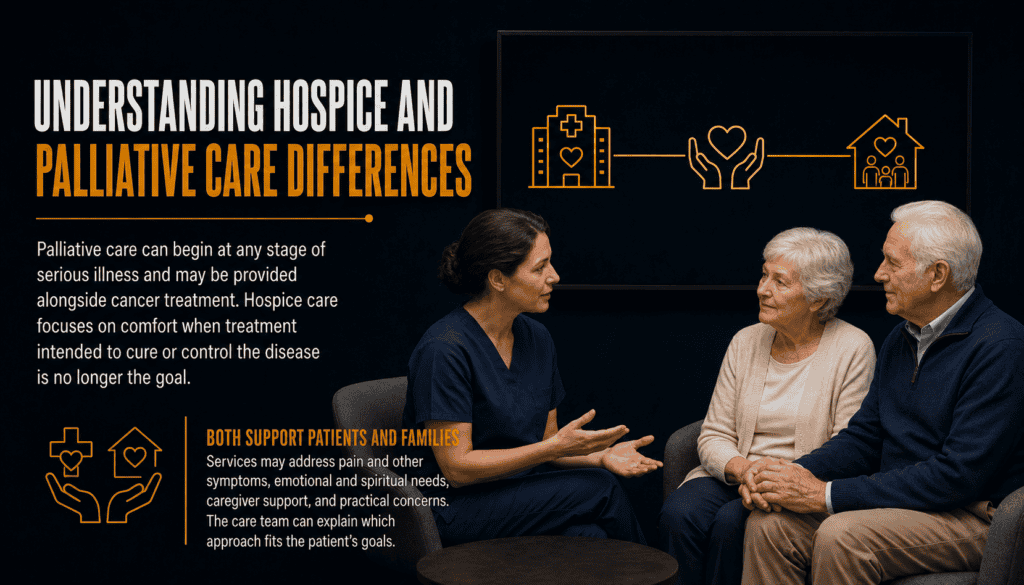
The key difference: Palliative care can begin at any stage of mesothelioma and can be provided alongside cancer treatment. Hospice is a form of comfort-focused care generally used when a person is approaching the end of life and treatment aimed at curing the terminal illness is no longer the goal. Both approaches address symptoms, quality of life and family needs.
These terms are often confused because they share many tools and professionals. The distinction is primarily when care is appropriate and what the patient wants treatment to accomplish—not whether the patient deserves medical attention.
| Question | Palliative care | Hospice care |
|---|---|---|
| Main goal | Relieve symptoms and improve quality of life | Comfort-focused care near the end of life |
| When available | At any stage of serious illness | When eligibility and goals align with end-of-life care |
| Cancer treatment | Can accompany disease-directed treatment | Generally replaces treatment intended to cure the terminal illness under the Medicare hospice benefit |
| Care locations | Clinic, hospital, home or facility | Home, residential setting or inpatient setting when appropriate |
What Palliative Care Means
Palliative care is specialized support for people living with serious illness. A mesothelioma patient can request it soon after diagnosis, during chemotherapy or immunotherapy, after surgery, or when treatment plans change. The palliative team works with the oncologist rather than automatically replacing that clinician.
Its work may include assessing pain, breathlessness, sleep, nausea, anxiety, communication and caregiver strain. For example, a person receiving treatment may need a plan for recurring fluid-related breathing problems; see managing breathing problems and pleural effusion. Palliative care does not itself mean cancer treatment has stopped.
| Need | Examples of palliative support |
|---|---|
| Physical symptoms | Pain, shortness of breath, fatigue and nausea |
| Emotional concerns | Anxiety, uncertainty and distress |
| Practical concerns | Care coordination and treatment decisions |
| Family needs | Caregiver education and support |
What Hospice Care Means
Hospice brings coordinated medical, emotional and practical services to people whose care is focused on comfort near the end of life. It is not simply a building: services are frequently provided where the patient lives, with inpatient care arranged when medically appropriate. The patient and family develop an individualized care plan with the hospice team.
Hospice staff visit and remain available for guidance, but family members or other caregivers often provide much of the day-to-day assistance at home. Ask the provider exactly what visits, supplies, after-hours support and respite arrangements are included. For planning considerations, read planning for hospice and palliative care options.
| Hospice team member | Typical contribution |
|---|---|
| Nurse | Symptom monitoring and medication education |
| Physician or nurse practitioner | Medical oversight and comfort-focused treatment |
| Social worker | Practical and emotional support |
| Aide, counselor or chaplain | Personal-care help and optional emotional or spiritual support |
Cancer Treatment and Care Goals
Mesothelioma treatment decisions are individual. A patient may receive surgery, systemic treatment or radiation to control disease, relieve symptoms or both. A palliative-care referral can occur while those treatments continue. Before a treatment decision, ask the oncologist to explain its specific goal and likely burden for this patient.
Under the standard Medicare hospice benefit, a patient elects comfort-focused care rather than Medicare-covered treatment intended to cure the terminal illness and related conditions. Some interventions may still be appropriate for symptom relief when arranged within the hospice plan; do not assume every procedure or cancer-directed medication is automatically covered or prohibited. Ask the hospice and oncology teams to review the actual treatment proposal and coverage before proceeding.
For a treatment overview, see comparing surgery, chemotherapy and radiation options.
| Care question | What to clarify with the team |
|---|---|
| Chemotherapy or radiation | Is the intent tumor control, symptom relief or both? |
| Procedures for fluid buildup | Will they improve comfort, and who will arrange them? |
| Medication changes | Which medicines continue, stop or change? |
| Hospital visits | Who should the family call before seeking nonemergency care? |
Eligibility and Timing
There is no minimum disease stage or six-month prognosis requirement for a palliative-care consultation. A patient can ask for help whenever symptoms, decisions or stress are difficult.
For Medicare hospice eligibility, a hospice physician and the patient’s regular physician, if there is one, certify a prognosis of six months or less if the illness follows its usual course. The patient elects hospice and receives care through a Medicare-approved provider. Six months is an eligibility estimate, not a fixed deadline: hospice may continue beyond that period when eligibility is recertified. A patient can also revoke the hospice election and discuss other treatment choices.
Do not use a website or a single symptom to determine an individual prognosis. Ask the treating clinicians for a personalized explanation.
| Situation | Useful next step |
|---|---|
| New diagnosis with troublesome symptoms | Ask oncology for palliative-care referral |
| Treatment is continuing but burdensome | Request a goals-of-care meeting |
| Treatment no longer meets patient goals | Discuss hospice eligibility and services |
| Condition changes after enrollment | Ask the team about reassessment and care options |
Services and Care Settings
Palliative services may be delivered through a hospital consultation team, outpatient clinic, home-based program or other facility. Availability varies by area and health system. Hospice commonly operates at home or in a residential facility, with short-term inpatient care when specific needs warrant it.
Both models can address pain and shortness of breath, help families communicate, and offer social or spiritual support according to patient preferences. Neither means a patient must endure uncontrolled symptoms. If pain is difficult to manage, see helping a loved one manage mesothelioma pain.
| Setting | What families should ask |
|---|---|
| Patient’s home | Who provides daily hands-on care between hospice visits? |
| Assisted living or nursing facility | Which room-and-board charges remain? |
| Hospital or inpatient hospice | What clinical criteria and arrangements apply? |
| Outpatient palliative clinic | How are urgent symptoms handled between visits? |
Medicare, Insurance and Costs
Payment rules depend on the service, insurer and location. Palliative-care consultations may be covered as medical services by Medicare or private insurance, but deductibles, copayments and provider networks can differ. Ask for an itemized explanation of what your plan covers.
Medicare Part A covers eligible hospice care through a Medicare-approved hospice. Covered services related to the terminal illness may include nursing, symptom-management medications and necessary equipment. Certain copayments or other costs can still apply. Room and board in a nursing home or other residential facility and privately hired round-the-clock caregivers generally are not automatically paid for by the hospice benefit. Confirm details directly with the insurer and hospice before committing to a setting or service.
| Coverage issue | Practical question |
|---|---|
| Palliative consultation | Which specialists and visits are covered by this plan? |
| Medicare hospice benefit | Is the hospice Medicare-approved and what is included? |
| Prescriptions and supplies | Which drugs, equipment and supplies are related to the terminal illness? |
| Residential care | Are room and board or private caregivers excluded? |
Family Planning and Next Steps
Begin with the patient’s priorities: What makes a good day? Where would they prefer to receive care? Which treatments feel worthwhile, and which burdens do they want to avoid? Include the patient as fully as they wish and are able to participate. Ask the oncology team for a meeting with palliative care, and request a hospice informational visit if the patient wants to explore that option.
Write down the emergency and after-hours contact plan, current medications, decision-maker information and caregiving schedule. A family plan should also include rest and backup help for the primary caregiver. See building a family care plan and coordinating family schedules during treatment.
Need help now? Call 800.291.0963 / Live chat 24/7, 365 days a year / Submit Your Case.
| Family task | Person responsible / information to record |
|---|---|
| Confirm patient preferences | Patient and chosen decision-maker |
| List contacts | Oncologist, palliative team, hospice and pharmacy |
| Document symptom plan | When to call, whom to call and medication instructions |
| Plan caregiving shifts | Primary caregiver, backup and respite options |
Frequently Asked Questions
These answers explain general care distinctions. Eligibility, treatment arrangements and insurance coverage must be confirmed with the patient’s clinicians and plan.
Is palliative care the same as hospice?
No. Both prioritize comfort, but palliative care is available throughout a serious illness and can accompany cancer treatment. Hospice focuses on comfort near the end of life.
Can I receive chemotherapy while getting palliative care?
Yes. Palliative specialists can work alongside the oncology team while chemotherapy or other cancer-directed treatments continue.
Does choosing hospice mean all medical care stops?
No. Hospice provides active medical care for comfort, symptoms and family support. Treatment intended to cure the terminal illness is generally not covered under the Medicare hospice election.
Must someone have only six months to live to receive palliative care?
No. The six-month prognosis criterion applies to Medicare hospice eligibility, not ordinary palliative-care consultation.
What happens if a hospice patient lives longer than six months?
Hospice can continue when the patient remains eligible and the hospice physician recertifies the terminal condition.
Does Medicare hospice cover a nursing-home room or a 24-hour private caregiver?
Generally not automatically. Hospice covers eligible hospice services, but residential room and board and privately hired continuous caregivers may be separate expenses.
Can someone leave hospice and restart cancer treatment?
A patient may revoke a Medicare hospice election and discuss treatment with their oncology team. Coverage and future hospice eligibility should be reviewed with the plan and provider.
Who should our family contact first?
Ask the treating oncologist for a palliative-care referral or a hospice informational discussion. For urgent new symptoms, follow the clinician’s emergency instructions rather than waiting for a routine appointment.
Primary Medical and Medicare Sources
These official resources explain the general distinctions and Medicare rules. Check the current terms of an individual insurance plan before relying on a coverage decision.
Get Help Understanding Your Options
Call 800.291.0963. Live chat is available 24/7, 365 days a year. Submit Your Case.
Submitting information does not guarantee compensation or establish eligibility for any benefit.
⚕️ Legal & Medical Information Disclaimer
This article provides general information, not individualized medical, legal or insurance advice. Discuss care choices with licensed clinicians, and confirm coverage with the relevant plan. Consult a qualified attorney for legal questions.