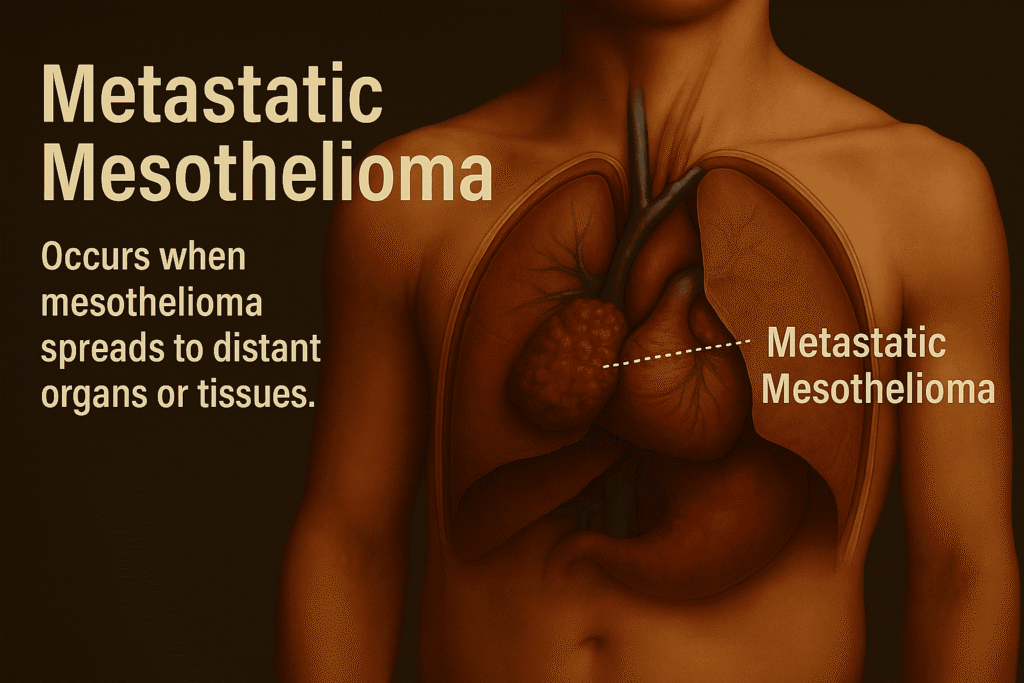
🧬 What Is Metastatic Mesothelioma?
Understanding Metastatic Mesothelioma: From Localized Spread to Whole-Body Impact
Metastatic mesothelioma refers to mesothelioma that has spread from its original site to distant organs or tissues. While mesothelioma begins in the lining of the lungs, abdomen, heart, or testes, it can eventually invade the lymph nodes, liver, bones, brain, or other areas. This advanced stage is more difficult to treat and typically marks a shift in focus from curative to palliative care.
Source: American Cancer Society
🛠️ When Does Mesothelioma Become Metastatic? (Progression & Spread)
Metastasis occurs when cancer cells break away from the original tumor and travel through the body.
Here’s how mesothelioma spreads:
Local invasion begins
Tumor cells grow beyond the pleura or peritoneum and invade nearby tissues like the lungs, chest wall, or diaphragm.
Lymphatic spread
Cells enter the lymph nodes and travel to other parts of the body through the lymphatic system.
Distant organ metastasis
Cancer reaches faraway sites like the liver, brain, bones, or adrenal glands—making treatment more complex.
Symptoms increase
As more organs are affected, patients often experience pain, fatigue, and multiple system complications.
Prognosis worsens
Survival rates decrease significantly after metastasis, requiring a shift to symptom management and quality-of-life care.
📊 Common Sites of Mesothelioma Metastasis
While mesothelioma spreads less aggressively than some cancers, advanced disease may involve:
-
Lymph nodes – often the first site of spread
-
Lungs – if originating in the pleura
-
Liver – common in both pleural and peritoneal cases
-
Bones – may cause intense localized pain
-
Brain – rare but devastating when present
-
Adrenal glands, kidneys, and spleen – possible in late stages
The extent and location of metastasis help guide treatment decisions.
⚠️ Symptoms of Metastatic Mesothelioma
Symptoms intensify and vary based on organs affected:
-
Worsening chest or abdominal pain
-
Shortness of breath and low oxygen levels
-
Fatigue and muscle weakness
-
Swelling in the face, arms, or legs
-
Neurological changes (if brain is involved)
-
Bone pain or fractures
-
Weight loss and poor appetite
These symptoms typically signal Stage 4 mesothelioma and require palliative interventions.
🧪 How Is Metastatic Mesothelioma Diagnosed?
Doctors use several tools to confirm metastatic spread:
-
Imaging: PET scans, MRIs, and CT scans detect distant tumor growth
-
Biopsy: Confirms cancer presence in new sites
-
Blood Tests: Monitor organ function and cancer biomarkers
-
Staging Workup: Determines if cancer has reached Stage 4
-
Symptom Assessment: Helps identify possible new metastasis sites
Diagnosis helps set realistic goals for treatment and symptom control.
Source: National Cancer Institute
📈 Prognosis & Survival With Metastatic Mesothelioma
Once mesothelioma becomes metastatic, the focus often shifts to life extension and comfort:
-
Average survival: 6–12 months (with treatment)
-
Without treatment: 4–8 months
-
Better outcomes in epithelioid subtype
-
Palliative care improves quality of life
-
Some clinical trial therapies may extend survival
Source: American Cancer Society
💉 Treatment Options for Metastatic Mesothelioma
Though no cure exists, several treatments may help manage metastatic disease:
Chemotherapy:
Used to slow tumor growth systemically. Pemetrexed + Cisplatin is standard.
Immunotherapy:
Checkpoint inhibitors like Opdivo + Yervoy are FDA-approved for pleural cases and may extend life.
Radiation Therapy:
Targets painful areas like bones or nerves to reduce discomfort.
Palliative Surgery:
May be used to remove fluid buildup or relieve pressure, but curative surgery is rarely offered.
Clinical Trials:
May provide access to gene therapy, novel drugs, or immunotherapy combinations.
💰 Cost of Treating Metastatic Mesothelioma
Advanced-stage treatment often involves complex, ongoing care:
-
Chemotherapy & Immunotherapy: $100K–$250K+ annually
-
Radiation or pain management procedures: $20K–$60K
-
Palliative surgeries or hospital stays: $30K–$100K
-
Home care, hospice, and travel: Additional $10K–$50K
Legal compensation may help cover uncovered costs and supportive care expenses.
⚖️ Legal Help for Metastatic Mesothelioma Patients
Even in late stages, patients may pursue legal claims related to asbestos exposure:
-
Asbestos Trust Funds – Over $30 billion in available funds
-
Lawsuits or Settlements – Compensation often ranges from $1M–$2.5M
-
VA Claims – Veterans can access treatment and compensation through the VA
-
Wrongful Death Claims – For families who lose loved ones to metastatic mesothelioma
MesotheliomaHelp.org – Legal Guide
📚 Lawsuit Examples Involving Metastatic Mesothelioma
Shipyard Welder — $10.6 Million Verdict (2022)
Details: Diagnosed with metastatic pleural mesothelioma that spread to the liver and bones.
Outcome: Jury awarded damages against asbestos supplier.
Source: Bloomberg Law
Power Plant Worker — $8.9 Million Settlement (2021)
Details: Widespread metastasis after 30+ years of exposure to asbestos-insulated equipment.
Outcome: Settlement reached with multiple manufacturers.
Source: Mealey’s Litigation Report
Auto Mechanic — $7.2 Million Verdict (2020)
Details: Diagnosed after brake dust exposure; mesothelioma spread to spine and adrenal glands.
Outcome: Jury found manufacturer liable.
Source: VerdictSearch
Veteran Pipefitter — $9.5 Million Settlement (2019)
Details: Non-epithelioid mesothelioma metastasized rapidly post-diagnosis.
Outcome: Combined VA and civil claims secured full compensation.
Source: HarrisMartin Publishing
Hospital Maintenance Tech — $6.4 Million Verdict (2018)
Details: Exposed in hospital boiler rooms. Tumor spread to peritoneum and bones.
Outcome: Contractor held accountable.
Source: National Law Review
🔬 Research and Ongoing Studies on Metastatic Mesothelioma
-
Checkpoint Inhibitor Trials: Exploring effectiveness in metastatic sarcomatoid cases
-
Gene Therapy Studies: Targeting mutations driving late-stage spread
-
Tumor Vaccine Research: Boosting immune response after metastasis
-
Liquid Biopsy Development: Catching metastatic spread earlier
Explore current trials at: ClinicalTrials.gov
📍 Final Prognosis
Metastatic mesothelioma is difficult to treat, but patients may still benefit from immunotherapy, chemotherapy, radiation, or clinical trials. While the goal is no longer a cure, supportive care can improve comfort and extend meaningful time with loved ones.
Legal and financial support are essential during this advanced stage.
👨⚖️ How a Mesothelioma Lawyer Can Help
A qualified asbestos attorney can:
-
Investigate your asbestos exposure sources
-
File claims for treatment costs, home care, or hospice expenses
-
Assist families with wrongful death or survivor claims
-
Navigate trust funds, VA benefits, and deadlines
-
Work on contingency—no fees unless you win
📞 Free Legal Help for Metastatic Mesothelioma Patients
If you or a loved one have been diagnosed with metastatic mesothelioma due to asbestos exposure, financial compensation may still be available to help with treatment and care.
Call Now: 800.291.0963
• No upfront fees
• No cost unless we win
• Supportive care review included
• Help for veterans, workers, and families
Or request help online 24/7