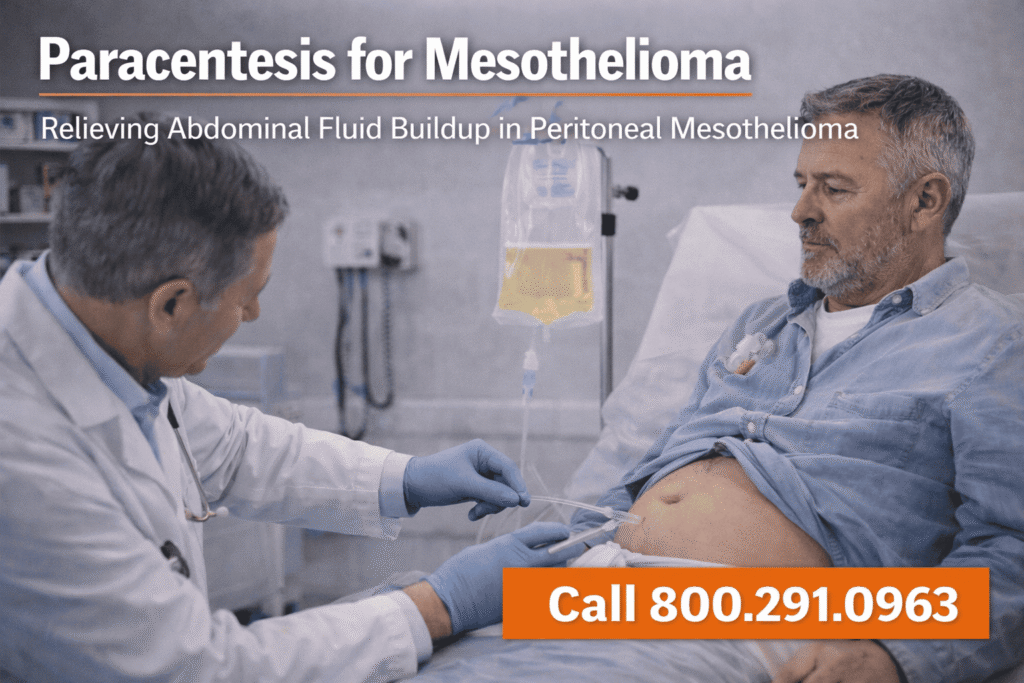
💧 What Is Paracentesis for Mesothelioma?
Relieving Abdominal Fluid Buildup in Peritoneal Mesothelioma
Paracentesis is a medical procedure used to drain excess fluid (ascites) from the abdomen in patients with peritoneal mesothelioma. Fluid buildup in the peritoneal cavity puts pressure on internal organs, causing pain, bloating, difficulty eating, and shortness of breath. Paracentesis offers temporary relief and improves comfort.
This palliative procedure involves inserting a thin needle or catheter through the abdominal wall to remove the fluid safely.
Source: Mayo Clinic
🩺 How Paracentesis Works
Paracentesis is usually done as an outpatient procedure:
-
Preparation and imaging
Doctors use ultrasound to locate the safest area to insert the needle. -
Needle or catheter insertion
A local anesthetic is used. A small needle or flexible tube is inserted into the abdominal cavity. -
Fluid drainage
A container is attached to collect the ascitic fluid. Several liters can be drained in one session. -
Post-procedure care
Once the fluid is removed, the needle is withdrawn, and the area is bandaged. Patients are monitored briefly for side effects.
🎯 Why Paracentesis Is Performed
Doctors recommend paracentesis when:
-
Abdominal fluid buildup becomes painful or severe
-
Patients experience bloating, nausea, or early satiety (feeling full quickly)
-
There’s shortness of breath due to diaphragm pressure
-
Fluid buildup causes mobility or sleep issues
-
Other treatments like surgery or chemotherapy are not an option
Paracentesis provides immediate symptom relief but does not treat the underlying cancer.
✅ Benefits of Paracentesis
-
Quick relief from abdominal discomfort
-
Improves breathing and appetite
-
Minimally invasive and repeatable
-
Outpatient or bedside procedure
-
Enhances quality of life for advanced mesothelioma patients
Some patients may require paracentesis regularly, depending on how fast fluid returns.
⚠️ Risks and Considerations
Paracentesis is generally safe but comes with potential risks:
-
Infection or bleeding at the insertion site
-
Low blood pressure if too much fluid is removed quickly
-
Leakage from the needle site
-
Temporary relief, as fluid may return within days or weeks
-
Discomfort during or after the procedure
Doctors monitor fluid levels to determine how often drainage is needed.
📊 Recovery After Paracentesis
-
Most patients go home the same day
-
Mild soreness or fatigue may occur
-
Patients are advised to rest and hydrate
-
Follow-up appointments may be scheduled for additional sessions
-
Nutrition may improve as abdominal pressure is reduced
🔬 Paracentesis in Research
Emerging developments include:
-
Indwelling peritoneal catheters to allow at-home fluid drainage
-
Use of anti-VEGF agents (like bevacizumab) to reduce fluid formation
-
Genetic and cytology testing of drained fluid to guide treatment
-
AI-assisted fluid analysis for early detection of recurrence
Research aims to reduce how often patients need paracentesis.
💵 Cost and Financial Help
The average cost of paracentesis ranges from $2,000 to $5,000 per procedure depending on:
-
Facility type (hospital vs. clinic)
-
Volume of fluid removed
-
Need for imaging or sedation
-
Repeat procedures and follow-up care
Legal claims related to asbestos exposure can help cover these recurring costs.
👨⚖️ How a Mesothelioma Lawyer Can Help
A skilled asbestos attorney can:
-
Identify exposure history tied to asbestos-based products
-
File claims for ongoing palliative care costs
-
Help secure compensation for peritoneal mesothelioma patients
-
Assist families in wrongful death claims if needed
-
Charge no legal fees unless successful
📞 Free Legal Help for Peritoneal Mesothelioma Patients
If you or a loved one receives paracentesis for mesothelioma, you may be eligible for compensation.
Call Now: 800.291.0963
• No upfront cost
• No legal fees unless we win
• Exposure product identification included
• Help for families, veterans, and patients nationwide
Or request help online 24/7