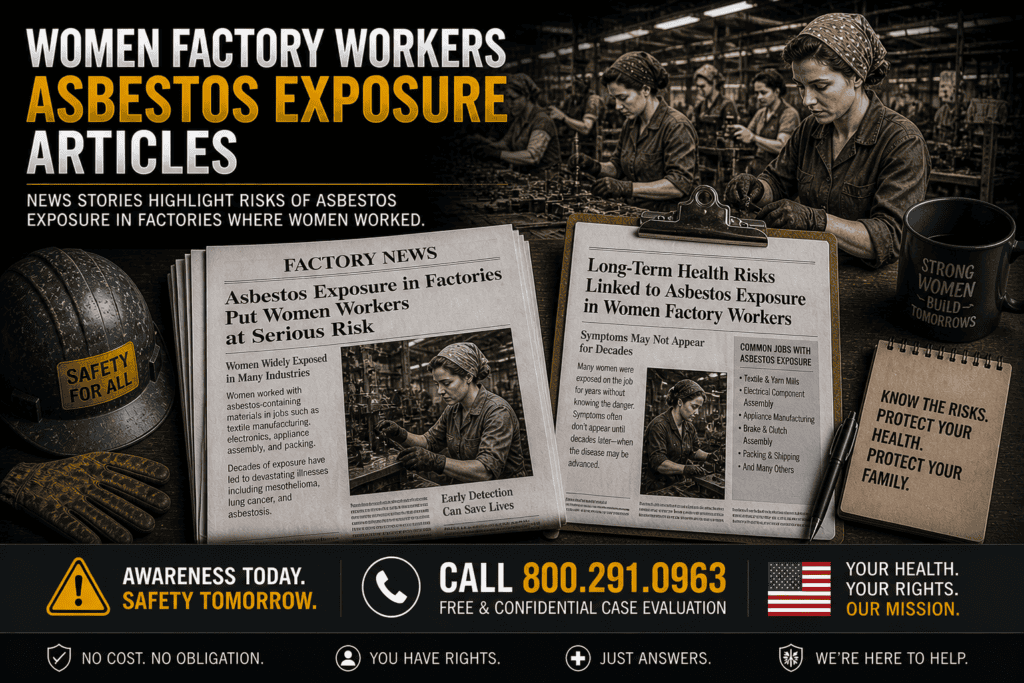
🏭 Women Factory Workers Asbestos Exposure Lawsuit
Manufacturing jobs exposed women to asbestos-containing machinery, insulation, and materials.
For much of the 20th century, women worked in factories across the United States in roles involving assembly, packaging, inspection, textiles, electronics, automotive parts, and industrial manufacturing. Many of these facilities relied heavily on asbestos-containing materials to insulate equipment, prevent fires, and protect against heat and friction.
Women working on factory floors were often exposed daily and repeatedly, even when their job duties were not considered “industrial.” Over time, this exposure led to mesothelioma, lung cancer, ovarian cancer, and other asbestos-related diseases, often diagnosed decades after employment ended.
🧱 Why Asbestos Was Widely Used in Factories
Manufacturers used asbestos because it was cheap, durable, and effective in high-heat environments.
Asbestos was commonly used in factories for:
-
🔥 Heat resistance in machinery and production lines
-
❄️ Thermal insulation for pipes, boilers, and furnaces
-
⚙️ Friction control in brakes, clutches, and belts
-
🧱 Fireproofing of walls and ceilings
-
🔇 Noise reduction around heavy equipment
Women were rarely warned that these materials were hazardous.
🚧 How Women Factory Workers Were Exposed to Asbestos
Exposure occurred through routine manufacturing activities.
⚙️ Machinery Operation and Proximity
Women worked near asbestos-insulated equipment such as:
-
Presses and stamping machines
-
Ovens and furnaces
-
Conveyor systems
-
Textile and weaving machines
Vibration and heat released fibers into the air.
🔧 Maintenance and Equipment Repairs
Even when women were not performing repairs, asbestos was disturbed during:
-
Belt changes
-
Machine servicing
-
Insulation replacement
Dust often spread throughout the factory floor.
🧹 Cleaning and Production Support Tasks
Sweeping, wiping down machines, and cleaning workstations disturbed settled asbestos dust, increasing inhalation risk.
🏗️ Types of Factories Where Women Faced Asbestos Exposure
Women worked in many asbestos-heavy manufacturing environments.
🚗 Automotive and Parts Manufacturing
-
Brake and clutch assembly
-
Gasket and seal production
🧵 Textile and Fabric Plants
-
Asbestos-containing looms
-
Fire-resistant fabrics
⚡ Electronics and Electrical Manufacturing
-
Insulated wiring
-
Heat-resistant components
🏭 General Industrial Manufacturing
-
Boilers and steam systems
-
Fireproofed structures
Exposure often occurred for years or decades.
👩 Women Most at Risk from Factory Asbestos Exposure
Women commonly affected include:
-
👩🏭 Assembly line workers
-
👩🔧 Machine operators
-
👩💼 Quality control and inspection staff
-
👩🔬 Packaging and production support workers
Even indirect exposure—working near asbestos materials—was dangerous.
🩺 Health Risks Linked to Factory Asbestos Exposure in Women
Asbestos fibers embed permanently in lung or abdominal tissue.
⚠️ Asbestos-Related Diseases in Women
-
Mesothelioma (pleural and peritoneal)
-
Asbestos-related lung cancer
-
Ovarian cancer (linked to asbestos exposure)
-
Pleural plaques and thickening
Factory exposure is one of the most common occupational causes of mesothelioma in women.
⏳ Why Symptoms Appear Long After Factory Work
Asbestos causes slow, cumulative damage.
-
⏱️ Latency period: 20–50 years
-
Early symptoms often dismissed
-
Diagnosis commonly occurs after retirement
Many women do not connect illness to factory work without investigation.
⚖️ Legal Options for Women Factory Workers
Women harmed by factory asbestos exposure may qualify for compensation.
🧾 Available Compensation Paths
-
⚖️ Mesothelioma lawsuits against manufacturers
-
🏦 Asbestos trust fund claims
-
👨👩👧 Wrongful death lawsuits for families
-
🎖️ VA-related claims for women veterans
Claims focus on manufacturers of asbestos products, not employers.
🧑⚖️ How a Mesothelioma Lawyer Can Help Women
Factory exposure cases require product and site identification. An experienced asbestos lawyer can:
-
🔍 Identify asbestos materials used in specific factories
-
📂 Match job duties to known asbestos products
-
🏦 File claims with multiple asbestos trust funds
-
⚖️ Pursue lawsuits in favorable jurisdictions
-
👨👩👧 Handle wrongful death and survivor claims
Most cases are handled on a contingency basis — no upfront cost.
⌛ Statute of Limitations for Factory Asbestos Claims
Deadlines vary by state and usually begin:
-
🩺 At medical diagnosis, or
-
⚰️ At death for wrongful death claims
Prompt legal review preserves all available options.
❓ Frequently Asked Questions (FAQs)
❓ Can factory work cause mesothelioma even without direct asbestos handling?
Yes. Proximity exposure is legally recognized.
❓ Do women need proof of specific products?
Not always. Lawyers can identify products by industry and era.
❓ Are employers sued?
No. Claims target asbestos product manufacturers.
❓ Can family members file claims?
Yes. Wrongful death claims are common.
❓ Is it too late to file?
Often no. Most claims begin at diagnosis.
📞 Get Help for Women Exposed to Asbestos in Factories
If you or a loved one developed an asbestos-related illness after working in a factory or manufacturing plant, help is available now.
📌 You May Be Eligible For:
-
Significant financial compensation
-
Asbestos trust fund payments
-
Wrongful death benefits for families
-
Nationwide legal representation
📞 Call 800-291-0963 for a free, confidential case review
⏱️ No upfront costs • Women-focused claims • Nationwide representation
Your work mattered — and so does your health.