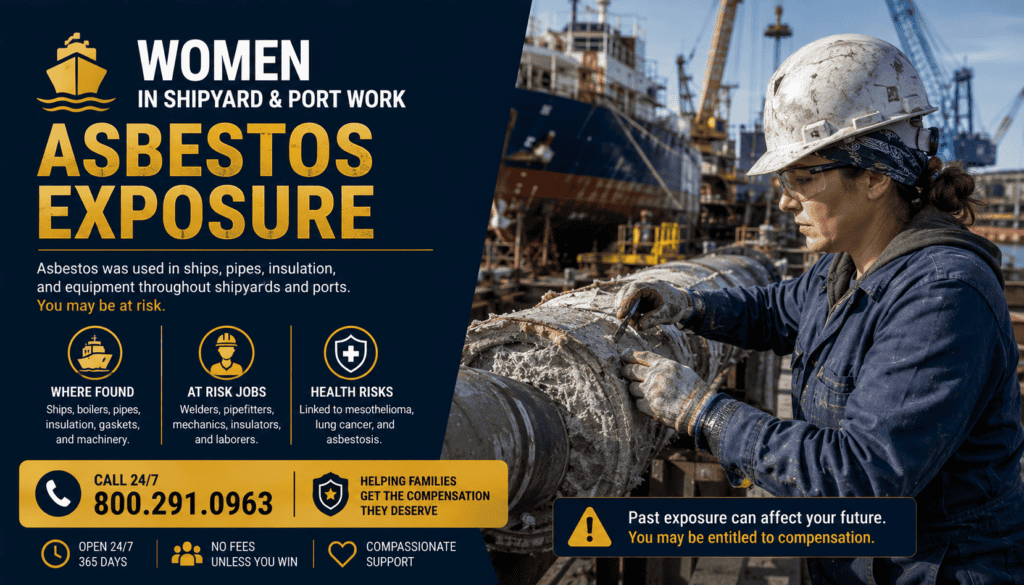
⚓ Women in Shipyard and Port Work Asbestos Exposure
Maritime facilities exposed women to asbestos dust from ships, equipment, and aging port infrastructure.
For much of the 20th century, U.S. shipyards and port facilities relied heavily on asbestos to insulate ships, protect against fire, and maintain durability in harsh marine environments. Women working in shipyards, docks, ports, and maritime support roles were exposed while performing administrative, clerical, healthcare, inspection, maintenance, and industrial duties—often without protective equipment or warnings.
Asbestos exposure in maritime settings was intense, airborne, and continuous. Fibers released from ships, machinery, and port buildings spread easily through enclosed spaces and dockside air. Decades later, many women who worked in shipyards or ports are being diagnosed with mesothelioma, lung cancer, ovarian cancer, and pleural disease, long after their maritime careers ended.
🧱 Why Asbestos Was Widely Used in Shipyards and Ports
Maritime operations required materials that could withstand fire, heat, moisture, and vibration—qualities asbestos provided.
Asbestos was used for:
-
🔥 Fireproofing ships and dock facilities
-
🧱 Thermal insulation in ship hulls and buildings
-
⚙️ Heat protection in engines, boilers, and turbines
-
⚡ Electrical insulation in wiring and panels
-
🛡️ Durability in corrosive marine environments
These uses created widespread exposure risks for women working nearby.
🚧 How Women Were Exposed in Shipyards and Ports
Exposure occurred during normal daily operations—not just ship repair.
🚢 Ships Under Construction or Repair
Women working near vessels were exposed to asbestos in:
-
Engine rooms and boiler spaces
-
Pipe insulation and gaskets
-
Fireproof bulkheads and panels
Cutting, sanding, and repairs released dense asbestos dust.
🏗️ Port Buildings and Dock Facilities
Women worked in:
-
Administrative offices
-
Warehouses and terminals
-
Maintenance shops and control rooms
Aging asbestos materials released fibers into indoor and dockside air.
🔧 Maintenance, Inspections, and Oversight
Asbestos was disturbed during:
-
Ship refits and overhauls
-
Electrical and mechanical repairs
-
Safety inspections and upgrades
Fibers traveled easily across shared workspaces.
🏢 Shipyard and Port Roles with Elevated Asbestos Risk
Women faced exposure across many maritime roles.
👩💼 Administrative & Clerical Staff
-
Office workers
-
Logistics and scheduling staff
-
Records and compliance personnel
Offices were often located inside asbestos-containing structures.
👩🔧 Technical, Inspection & Maintenance Roles
-
Inspectors and quality-control staff
-
Electricians and technicians
-
Safety and environmental monitors
These roles required proximity to asbestos-containing equipment.
👩⚕️ Healthcare & Support Roles
-
On-site medical staff
-
First-aid and safety personnel
-
Training and compliance workers
Exposure occurred simply by being present in contaminated environments.
👩 Women Most at Risk from Maritime Asbestos Exposure
Women commonly affected include those who:
-
Worked in shipyards or ports before the 1990s
-
Spent years on long-term maritime projects
-
Worked near ships under construction or repair
-
Were never warned about asbestos hazards
Exposure often lasted many years, even in non-industrial roles.
🩺 Health Risks Linked to Shipyard and Port Asbestos Exposure
Once inhaled or swallowed, asbestos fibers remain permanently in the body.
⚠️ Asbestos-Related Diseases in Women
-
Mesothelioma (pleural and peritoneal)
-
Asbestos-related lung cancer
-
Ovarian cancer (linked to asbestos exposure)
-
Pleural plaques and thickening
Women in maritime work are frequently diagnosed decades later due to long latency periods.
⏳ Why Illness Appears Long After Maritime Work Ends
Asbestos diseases develop slowly and silently.
-
⏱️ Latency period: 20–50 years
-
Early symptoms often mistaken for other conditions
-
Diagnosis frequently occurs after retirement
Many women never connect illness to shipyard or port work without legal investigation.
⚖️ Legal Options for Women Exposed in Shipyards and Ports
Women diagnosed with asbestos-related illness from maritime work may qualify for compensation.
🧾 Available Compensation Paths
-
⚖️ Mesothelioma lawsuits against asbestos manufacturers
-
🏦 Asbestos trust fund claims
-
🎖️ VA-related claims when exposure connects to naval facilities of the U.S. Navy
-
👨👩👧 Wrongful death lawsuits for families
Claims are filed against manufacturers and suppliers, not shipyards or ports themselves.
🧑⚖️ How a Mesothelioma Lawyer Can Help Women
Maritime asbestos cases require specialized investigation. An experienced asbestos lawyer can:
-
🔍 Identify asbestos products used in ships and port facilities
-
📂 Match employment records to asbestos-use timelines
-
🏦 File multiple asbestos trust fund claims
-
⚖️ Pursue lawsuits in favorable jurisdictions
-
👨👩👧 Represent surviving spouses and families
Most cases are handled on a contingency basis — no upfront cost.
⌛ Statute of Limitations for Shipyard & Port Asbestos Claims
Deadlines vary by state and typically begin:
-
🩺 At medical diagnosis, or
-
⚰️ At death for wrongful death claims
Acting quickly helps preserve all compensation options.
❓ Frequently Asked Questions (FAQs)
❓ Can non-industrial port work cause mesothelioma?
Yes. Environmental exposure in shipyards is well documented.
❓ Do women need proof of specific ships or products?
Not personally—lawyers often already have this evidence.
❓ Are shipyards sued?
No. Claims target asbestos manufacturers and suppliers.
❓ Can families file after a loved one passes away?
Yes. Wrongful death claims are common.
❓ Is it too late to take action?
Often no. Most deadlines begin at diagnosis.
📞 Get Help for Women Exposed to Asbestos in Shipyards and Ports
If you worked in a shipyard or port facility and were later diagnosed with mesothelioma or another asbestos-related illness, help is available now.
📌 You May Be Eligible For:
-
Significant financial compensation
-
Asbestos trust fund payments
-
VA-related benefits when applicable
-
Wrongful death compensation
📞 Call 800-291-0963 for a free, confidential case review
⏱️ No upfront costs • Maritime-focused claims • Nationwide representation
The docks built commerce — your health deserves justice.