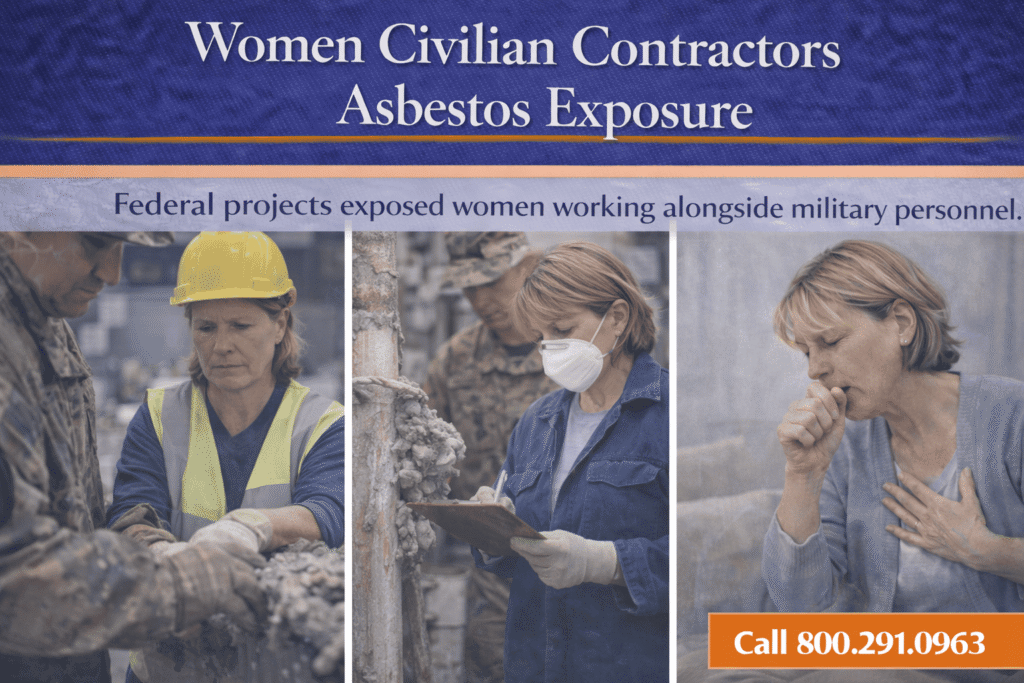
🏗️ Women Civilian Contractors Asbestos Exposure
Federal and military construction projects exposed women working alongside service members to asbestos-containing materials.
For decades, women worked as civilian contractors on U.S. military bases, shipyards, federal buildings, hospitals, laboratories, and overseas installations. These projects relied heavily on asbestos for insulation, fireproofing, and durability. While not enlisted, civilian women were exposed in the same hazardous environments as military personnel—often without warnings, training, or protective equipment.
Asbestos exposure among women civilian contractors was widespread, prolonged, and poorly documented. Many are now being diagnosed—years or decades later—with mesothelioma, lung cancer, ovarian cancer, and pleural disease, long after their federal contract work ended.
🧱 Why Asbestos Was Common on Federal and Military Projects
Federal construction and maintenance standards historically favored asbestos for cost and performance.
Asbestos was used for:
-
🔥 Fireproofing of structures and vessels
-
🧱 Thermal insulation in buildings and pipelines
-
⚙️ Heat resistance in machinery and power systems
-
⚡ Electrical insulation in panels and wiring
-
🛡️ Durability in harsh operational environments
Civilian contractors worked directly with—or adjacent to—these materials daily.
🚧 How Women Civilian Contractors Were Exposed to Asbestos
Exposure occurred during routine contract work.
🏢 Working Inside Asbestos-Containing Facilities
Women worked in:
-
Military offices and administrative buildings
-
Hospitals, clinics, and laboratories
-
Warehouses and maintenance facilities
Aging asbestos materials released fibers into indoor air.
🔧 Construction, Renovation, and Maintenance Projects
Asbestos was disturbed during:
-
Building renovations
-
Pipe and insulation replacement
-
Electrical and HVAC upgrades
Dust often spread throughout occupied areas.
🚢 Shipyards, Ports, and Industrial Sites
Women working near naval and maritime projects were exposed to asbestos used in:
-
Ship insulation
-
Engine rooms and boiler spaces
-
Dockside power and utility systems
These environments had high fiber concentrations.
🏢 Civilian Contractor Roles with Elevated Asbestos Risk
Women faced exposure across many contract roles.
👩🔧 Technical and Skilled Trades
-
Electricians
-
Pipefitters
-
Mechanics
-
Inspectors
👩💼 Administrative and Professional Roles
-
Engineers and planners
-
Project managers
-
Clerical and records staff
Office and planning spaces were often inside asbestos-containing buildings.
👩⚕️ Medical, Scientific, and Support Roles
-
Healthcare contractors
-
Lab technicians
-
Environmental and safety staff
Even non-manual roles faced environmental exposure.
👩 Women Most at Risk Among Civilian Contractors
Women commonly affected include those who:
-
Worked on federal or military contracts before the 1990s
-
Spent years on long-term projects
-
Worked in older facilities or shipyards
-
Were never warned about asbestos hazards
Exposure often lasted many years across multiple sites.
🩺 Health Risks Linked to Asbestos Exposure in Civilian Contractors
Once inhaled or swallowed, asbestos fibers remain permanently in the body.
⚠️ Asbestos-Related Diseases in Women
-
Mesothelioma (pleural and peritoneal)
-
Asbestos-related lung cancer
-
Ovarian cancer (linked to asbestos exposure)
-
Pleural plaques and thickening
Many women are diagnosed long after leaving federal contract work.
⏳ Why Illness Appears Long After Contract Work Ends
Asbestos diseases develop slowly.
-
⏱️ Latency period: 20–50 years
-
Early symptoms often misattributed to aging or other conditions
-
Diagnosis commonly occurs after retirement
Employment records are often fragmented, making legal help essential.
⚖️ Legal Options for Women Civilian Contractors
Women diagnosed with asbestos-related disease from contract work may qualify for compensation.
🧾 Available Compensation Paths
-
⚖️ Mesothelioma lawsuits against asbestos manufacturers
-
🏦 Asbestos trust fund claims
-
👨👩👧 Wrongful death lawsuits for families
-
🎖️ VA-related claims when exposure connects to facilities of the U.S. military
Claims are filed against manufacturers and suppliers, not the government.
🧑⚖️ How a Mesothelioma Lawyer Can Help Women Contractors
Civilian contractor cases require detailed exposure reconstruction. An experienced asbestos lawyer can:
-
🔍 Identify asbestos products used on federal and military sites
-
📂 Match work histories to asbestos-use timelines
-
🏦 File multiple trust fund claims
-
⚖️ Pursue lawsuits in favorable jurisdictions
-
👨👩👧 Handle wrongful death and survivor claims
Most cases are handled on a contingency basis — no upfront cost.
⌛ Statute of Limitations for Civilian Contractor Asbestos Claims
Deadlines vary by state and typically begin:
-
🩺 At medical diagnosis, or
-
⚰️ At death for wrongful death claims
Delays can permanently eliminate legal rights.
❓ Frequently Asked Questions (FAQs)
❓ Are civilian contractors treated differently than military personnel?
No. Eligibility depends on exposure and diagnosis, not enlistment.
❓ Can I file a claim if I worked for multiple contractors?
Yes. Exposure across multiple jobs can strengthen a case.
❓ Are federal agencies sued?
No. Claims target asbestos manufacturers and suppliers.
❓ Can families file after a contractor passes away?
Yes. Wrongful death claims are common.
❓ Is it too late to file?
Often no. Most deadlines begin at diagnosis.
📞 Get Help for Women Civilian Contractors Exposed to Asbestos
If you worked as a civilian contractor on military or federal projects and were later diagnosed with an asbestos-related illness, help is available now.
📌 You May Be Eligible For:
-
Significant financial compensation
-
Asbestos trust fund payments
-
Wrongful death benefits for families
-
Nationwide legal representation
📞 Call 800-291-0963 for a free, confidential case review
⏱️ No upfront costs • Contractor-focused claims • Nationwide representation
You helped build the nation — your health deserves justice.