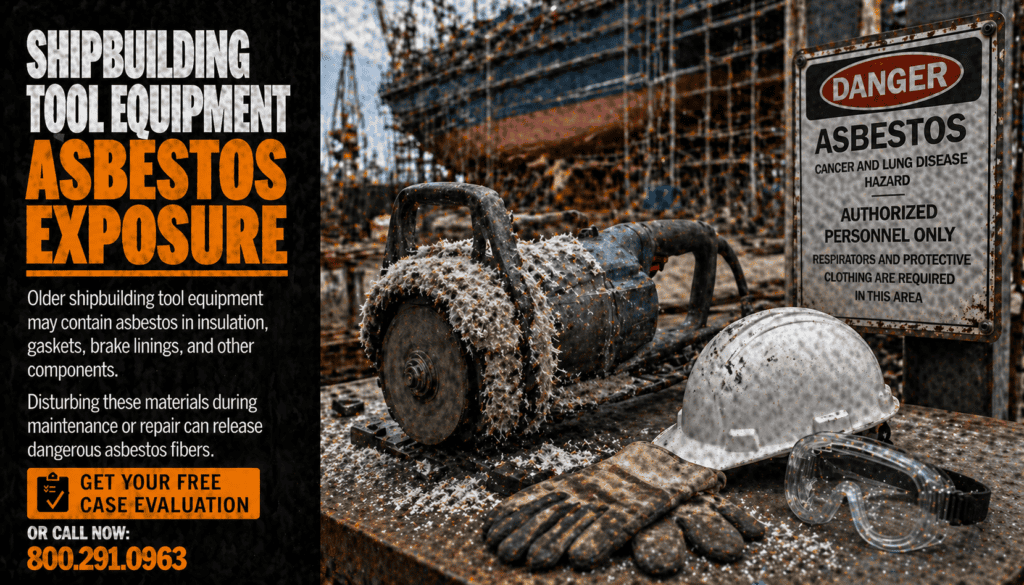
Shipbuilding Tool Equipment Asbestos Exposure
Shipbuilding and ship-repair workers have long used drills, saws, grinders, welding equipment and other hand or power tools. The tool itself did not need to contain asbestos to create a potential exposure pathway: tool work could disturb asbestos-containing insulation, gaskets, packing, fireproofing or other materials on older vessels.
Using a shipbuilding tool does not prove asbestos exposure. The material being worked on, vessel age, location, task, frequency, duration, ventilation and dust-control practices all matter.
Shipbuilding Tool Equipment Asbestos Exposure Overview
OSHA recognizes ship construction, repair and overhaul as activities in which asbestos-containing components may be encountered. Historically, asbestos was used aboard ships in applications such as pipe and boiler insulation, machinery-space insulation, fire-resistant materials, gaskets and other components.
Potential exposure was especially relevant when workers removed, repaired, cut, drilled, sawed, scraped or otherwise disturbed asbestos-containing material. Modern tool use around non-asbestos materials should not be treated as evidence of asbestos exposure.
Shipbuilding Tools and Equipment
Exposure investigations may consider powered and hand-operated tools used for vessel construction, repair, overhaul and removal work, including:
- drills and drilling equipment;
- grinders and abrasive wheels;
- saws and cutting tools;
- scrapers and material-removal tools;
- welding and fabrication equipment; and
- portable electrical tools used in machinery and outfitting work.
OSHA specifically addresses hand- and power-operated tools such as saws, scorers, abrasive wheels and drills when their use on asbestos-containing material could release fibers above regulated limits.
Asbestos-Containing Ship Materials Near Tool Work
Depending on the vessel, system, component and era, shipbuilding or repair tools could be used near materials that historically included:
- pipe, fitting and boiler insulation;
- machinery insulation and lagging;
- gaskets on piping connections;
- valve packing;
- fire-resistant sheets and bulkhead materials;
- certain electrical wiring or insulating materials; and
- mastics, cloth and other insulation-system components.
Not every ship or component contained asbestos, and the presence of a tool near a vessel does not establish that asbestos-containing material was disturbed.
Cutting, Drilling, Grinding and Repair Tasks
Potential fiber release is more plausible when asbestos-containing material is physically disturbed. OSHA has identified sawing, tearing, cutting and scraping during removal as important potential exposure activities in shipyard work.
Relevant tasks may include drilling through insulated surfaces, grinding or cutting adjacent materials, scraping gaskets, removing lagging, opening machinery for repair or using tools during overhaul work. The specific material and task should be documented rather than assuming the tool itself caused asbestos exposure.
Need help reviewing historical shipbuilding or ship-repair work? Call 800.291.0963. Live chat available 24/7, 365 days a year. Submit Your Case.
Shipyard and Vessel Work Areas
Tool work could occur in engine rooms, boiler areas, machinery spaces, pipe runs, electrical areas, living spaces, decks, fabrication shops and other shipyard locations.
OSHA notes that historical shipyard asbestos exposure occurred during shipbuilding and repair and that current asbestos activity aboard older vessels is often associated with repair and maintenance of machinery and plumbing insulation. Confined or enclosed spaces can also affect how airborne contaminants accumulate.
Workers Potentially Involved
Potentially relevant workers may include shipfitters, machinists, welders, electricians, pipefitters, boilermakers, insulators, maintenance workers and other personnel performing construction, repair or overhaul tasks.
A trade name or shipyard assignment alone does not establish exposure. An investigation should identify the vessel, compartment, tools used, material disturbed, coworkers nearby, dates, duration and work practices.
Possible secondhand asbestos exposure also requires evidence of an actual pathway, such as asbestos-containing dust carried away on clothing, shoes, tools or belongings.
Evidence That May Help Reconstruct Exposure
- vessel name, class, construction date and repair dates;
- shipyard and contractor records;
- work orders, overhaul records and maintenance logs;
- vessel drawings and machinery-space plans;
- tool and task descriptions;
- equipment manufacturer, model and serial information;
- parts lists, gasket records and insulation specifications;
- asbestos surveys, abatement records or hazardous-material inventories;
- historical photographs;
- employment, union or military records;
- coworker or supervisor statements; and
- laboratory analysis of surviving material where appropriate.
OSHA recommends reviewing vessel drawings and maintenance or repair logs when identifying hazardous materials during shipbreaking. Similar historical records can help reconstruct where asbestos-containing materials may have been present during earlier ship work.
Health, Legal and Compensation Considerations
Asbestos exposure is associated with mesothelioma, asbestos-related lung cancer, asbestosis and other asbestos-related disease. Shipyard employment or tool use does not by itself diagnose disease or establish individual medical causation.
Depending on the evidence and circumstances, legal options may be available after documented exposure to specific asbestos-containing ship materials or components. Deadlines and eligibility are case-specific, and compensation is not guaranteed.
Related Equipment and Exposure Resources
These resources cover related shipyard tools, machinery, electrical equipment and asbestos exposure evidence.
Tools, Fabrication and Repair Equipment
- Grinder Equipment Asbestos Exposure
- Welding Equipment Asbestos Exposure
- Fabricating Equipment Asbestos Exposure
- Electrical Equipment Asbestos Exposure
- Gasket Equipment Asbestos Exposure
Shipyard and Transportation Resources
- Automotive, Brake & Transportation Equipment Asbestos Exposure
- Shipyard Electrical Equipment Asbestos Exposure
- Ship Engine Equipment Asbestos Exposure
- Military Ships Asbestos Exposure
- Equipment Asbestos Exposure
Other Asbestos Exposure Resources
Shipbuilding Tool Equipment Asbestos Exposure FAQs
Did shipbuilding tools themselves contain asbestos?
Some historical equipment components may warrant investigation, but an important exposure pathway was tool use that disturbed asbestos-containing ship materials. The specific tool and material should be identified.
Could drilling create asbestos exposure in shipyards?
Potentially, if drilling disturbed asbestos-containing insulation, fireproofing or another material. Drilling non-asbestos material does not create asbestos exposure.
Could grinding or abrasive tools disturb asbestos?
Yes, if they were used on or next to asbestos-containing material. OSHA specifically addresses abrasive wheels and other tools capable of releasing asbestos fibers.
Where was asbestos historically used on ships?
Historical applications included pipe and boiler insulation, machinery insulation, fire-resistant materials, gaskets, packing and certain electrical materials.
Did every older ship contain the same asbestos products?
No. Materials varied by vessel, construction period, specifications, repairs and replacement products.
Can a shipyard job title prove asbestos exposure?
No. The actual vessel, work area, task, material disturbed, dates and work conditions are needed to reconstruct a plausible pathway.
What records can help document shipbuilding exposure?
Vessel drawings, repair logs, work orders, parts records, asbestos surveys, photographs, employment records and coworker statements may help.
Does shipbuilding asbestos exposure automatically qualify someone for compensation?
No. Eligibility depends on exposure evidence, medical information, jurisdiction and other case-specific circumstances. Compensation is not guaranteed.
Get Help Reviewing Shipbuilding Tool Equipment Asbestos Exposure
If you or a family member has been diagnosed with mesothelioma, asbestos-related lung cancer or another asbestos-related disease and you are trying to reconstruct shipbuilding or ship-repair exposure, we can help organize information that may be relevant.
Call 800.291.0963 to discuss the vessel, shipyard, tools, work area, materials, job duties and years of possible exposure you remember. Live chat is available 24/7, 365 days a year. Submit Your Case using the form below.
Prior exposure does not automatically establish a legal claim. Eligibility depends on the evidence, diagnosis, jurisdiction and other circumstances, and compensation is not guaranteed.
⚕️ Legal & Medical Information Disclaimer
This page provides general educational information and is not medical or legal advice. The information does not establish asbestos exposure, diagnosis, causation, liability, claim eligibility or compensation. Medical concerns should be discussed with a qualified healthcare professional, and legal questions should be reviewed with a qualified attorney.