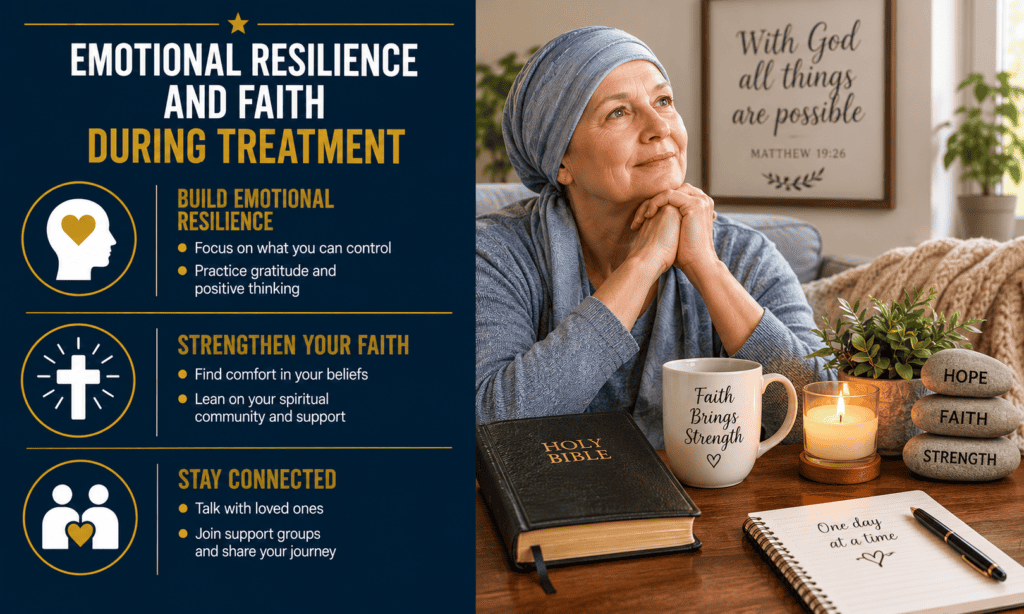
Emotional Resilience and Faith During Mesothelioma Treatment
Practical emotional, spiritual and family support during cancer care—without pressure to feel positive or follow any particular belief.
Mesothelioma treatment can bring uncertainty, physical symptoms, changing routines and difficult decisions. Emotional resilience does not mean remaining cheerful, avoiding fear or managing everything alone. It means having room for your feelings and finding support that helps you navigate the next decision. Faith may be a source of comfort for some people; others find meaning through family, nature, reflection or no spiritual practice at all. Every approach deserves respect.
What Emotional Resilience Really Means
Resilience is not a personality test or a measure of how hard you fight cancer. A person can feel frightened, angry or exhausted and still be coping. Cancer-related symptoms, financial stress and treatment effects can make ordinary tasks harder. Ask the care team to address these practical burdens rather than expecting willpower to solve them.
| Resilience can look like | It does not require |
|---|---|
| Asking for help with appointments | Handling every appointment alone |
| Naming fear or grief honestly | Staying upbeat all day |
| Adjusting goals as energy changes | Following a rigid routine |
| Accepting counseling or spiritual care | Belonging to a religion |
Choose goals small enough for the day you are having: one question for the doctor, one phone call, or a quiet conversation with someone you trust.
Common Emotions During Treatment
Fear before scans, frustration with fatigue, sadness about lost independence, anger, uncertainty and moments of hope can coexist. These responses do not predict treatment outcomes. A change in mood can also be influenced by pain, sleep disruption, medications and other treatable problems; tell your team what has changed.
| Experience | A helpful first step |
|---|---|
| Worry before results | Ask when results will arrive and who will call |
| Feeling overwhelmed | Request a social worker or patient navigator |
| Anger or sadness | Tell a trusted person without needing to fix the feeling |
| Isolation | Ask about a group or one-to-one peer connection |
There is no required emotional timeline. If a suggestion feels unhelpful, you can decline it and try something else.
Faith, Spirituality and Personal Meaning
Faith and spirituality are personal and not interchangeable. Some people pray, attend services or speak with clergy. Others find meaning in music, relationships, meditation, nature or the values they want to live by. A diagnosis may strengthen beliefs, raise doubts or change them. None of these responses is a failure.
| If this matters to you | Possible support |
|---|---|
| Prayer or religious rituals | Ask whether a faith leader can visit or call |
| Questions about meaning or doubt | Speak with an interfaith hospital chaplain |
| Nonreligious reflection | Journal, listen to music or spend time outdoors when feasible |
| Privacy | Tell staff you prefer not to discuss spiritual matters |
Hospital chaplains commonly support people from different faiths and people without religious beliefs. You may ask the oncology team for spiritual care without accepting any particular doctrine. Spiritual practices may provide comfort, but they are not substitutes for evidence-based mesothelioma treatment and cannot guarantee remission or survival.
Practical Coping Strategies That Fit Treatment
Start with one or two practices that do not worsen symptoms. Breathlessness may make certain breathing exercises uncomfortable; check with the clinical team before trying them. Short relaxation sessions, listening to a favorite song, gentle movement if cleared by your clinician, or writing down one concern may be more manageable than a demanding routine.
| Situation | Low-pressure option |
|---|---|
| Waiting for an infusion | Bring music, a book or a support person if permitted |
| Low energy | Schedule one priority and allow rest |
| Too many decisions | Ask the team to explain the next decision in plain language |
| Unwanted advice | Say: “I need listening, not solutions, today.” |
Supportive techniques can complement medical care. They should not delay evaluation of worsening symptoms or replace prescribed treatment.
Need help now? Call 800.291.0963 / Live chat available 24/7, 365 days a year / Submit Your Case.
Build an Emotional and Practical Support Team
Different people can help with different needs. Your oncologist manages cancer treatment; oncology social workers may help with distress, resources and practical barriers; counselors and psychologists provide mental health care; palliative care teams can address symptoms and quality of life alongside cancer-directed treatment. A chaplain or trusted community leader can address spiritual concerns if requested.
| Support person | What to ask |
|---|---|
| Oncology nurse | Who should I call when symptoms or anxiety worsen? |
| Social worker or navigator | What support groups and transportation resources exist? |
| Counselor or psychologist | Could counseling help with persistent worry or sadness? |
| Palliative care clinician | Can we improve pain, breathlessness or sleep? |
| Chaplain or chosen spiritual leader | Can we discuss meaning, doubt or rituals without pressure? |
For care coordination, see Your Mesothelioma Care Team and Traveling for Mesothelioma Treatment.
Support for Family Caregivers
Caregivers may manage appointments, medication lists, household work and emotional conversations while experiencing their own fear and fatigue. Ask the patient what kind of help they want rather than assuming. If the patient prefers private conversations with clinicians or spiritual advisers, respect that choice.
| Caregiver need | Practical action |
|---|---|
| Time to rest | Ask relatives for a defined task or respite period |
| Clear information | Keep a shared question list with patient permission |
| Emotional outlet | Speak with a counselor, friend or caregiver group |
| Faith or cultural needs | Request support aligned with your own beliefs, not imposed on the patient |
Caregivers can find additional guidance in the National Cancer Institute caregiver resources. If you are helping with appointments, see Preparing for Doctor Appointments Together.
When to Seek Professional Emotional Support
Tell your care team when fear, sadness, anxiety, sleeplessness or spiritual distress is persistent, worsening, or interfering with eating, treatment, relationships or everyday activities. Ask for a mental health evaluation rather than assuming distress is inevitable. Treatable pain and other physical symptoms can contribute, too.
| What you notice | What to do |
|---|---|
| Ongoing anxiety, depression or panic | Tell the oncology team and ask about counseling |
| Severe pain, insomnia or breathlessness | Contact the treating team promptly for assessment |
| Feeling unable to cope with spiritual questions | Request a chaplain or counselor who respects your beliefs |
| Thoughts of self-harm or immediate danger | Seek emergency help immediately; in the U.S., call or text 988 for crisis support |
If symptoms are urgent or you feel unsafe, do not wait for a routine appointment or use a website contact form for emergency care. Support can be appropriate at diagnosis, during treatment and when treatment goals change.
Create a Personal Emotional Support Plan
Write down the people, activities and clinical contacts you would like available on difficult days. Keep the plan flexible and revisit it after a new treatment, scan or change in symptoms.
| Plan item | Your answer |
|---|---|
| One person I can contact | Name and preferred way to reach them |
| A calming activity that works for me | A brief, comfortable option |
| A question for my care team | One concern to discuss at the next visit |
| Spiritual or nonreligious preference | Support I welcome—or do not want |
| When I will seek extra help | Symptoms or feelings that prompt a call |
Bring this plan to appointments if you wish. You can also review Managing Sleep Problems During Treatment and Managing Fatigue During Chemotherapy and Radiation for practical symptom-related discussions.
Frequently Asked Questions
Does resilience mean staying positive all the time?
No. Fear, sadness and frustration can be normal responses. Resilience can include asking for help, resting and making room for difficult feelings.
Can faith cure mesothelioma?
No faith practice has been established as a cure for mesothelioma. Spiritual support may offer comfort and meaning, but it does not replace medical treatment.
What if I am not religious?
You can seek meaning through relationships, values, nature, creative activities or secular counseling. You can decline spiritual discussions.
Can I ask for a hospital chaplain if I have no religion?
Yes. Many hospital chaplains offer support to people of different faiths and those without religious beliefs; ask what is available at your center.
When should I ask for a counselor?
Ask whenever distress feels difficult to manage, persists, worsens or interferes with daily life or care. You do not have to wait for a crisis.
How can family help without pressuring me?
Tell them whether you want listening, company, help with tasks or privacy. They can ask what is useful instead of insisting on optimism.
Is palliative care only for the end of life?
No. Palliative care can address symptoms, emotional distress and quality of life alongside cancer-directed treatment.
What should I tell my oncologist about my beliefs?
Share only what you want, especially preferences that affect treatment choices, rituals, support people or care goals. Your team should respect your wishes.
Medical and Support Sources
These primary medical resources provide further information about coping and spiritual support; they do not claim that faith or emotional resilience cures cancer.
Support and Next Steps
Call 800.291.0963 to discuss mesothelioma-related questions. Live chat is available 24/7, 365 days a year. Submit Your Case through our website. No compensation or case result is guaranteed.
⚕️ Legal & Medical Information Disclaimer
This page offers general information, not personalized medical, mental health or legal advice. Consult qualified clinicians for treatment or distress and an attorney for legal questions. Seek emergency help for immediate danger.