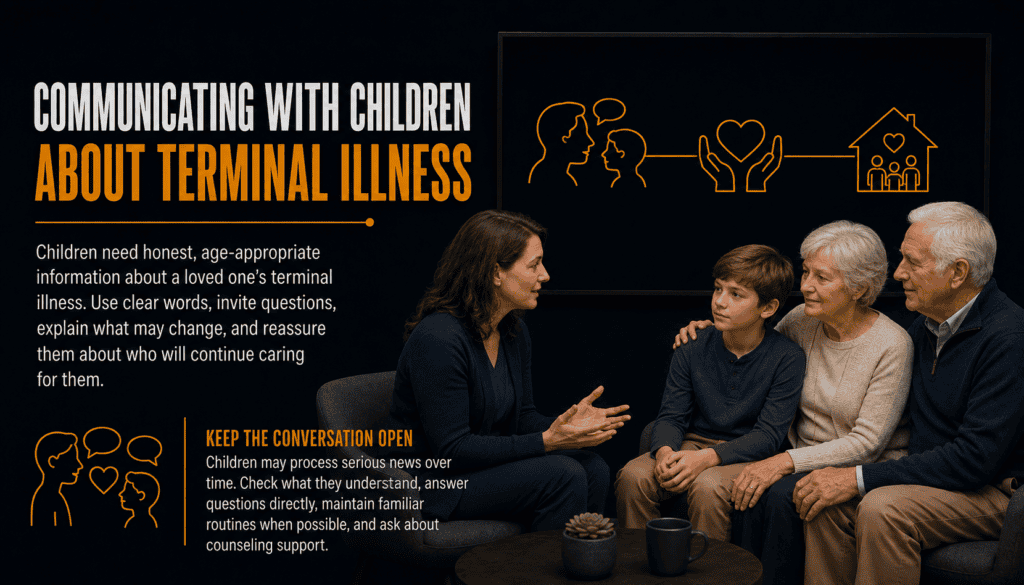
Communicating With Children About Terminal Illness
When someone in a family has advanced mesothelioma or another terminal illness, children need truthful, manageable explanations and dependable care. This guide offers conversation examples, practical planning, and ways to find extra support; adapt every suggestion to your child and family.
How to begin the conversation
Children often notice changes before adults explain them. Choose a quiet moment, sit at their level, and ask what they have already noticed. Use a few clear sentences, then pause. A parent, guardian, or trusted adult who knows the child should lead whenever possible.
| First step | What to say or do |
|---|---|
| Ask | “What have you noticed about how Dad is feeling?” |
| Explain | “The doctors found a very serious illness called mesothelioma.” |
| Pause | “What questions do you have right now?” |
| Reassure | “You did not cause this, and you cannot catch it.” |
Use honest, age-appropriate words
Explain what is known and distinguish it from what is uncertain. If a person is dying, say “dying” or “will die” rather than relying only on “going to sleep” or “going away,” which may confuse or frighten children. You do not need to share every medical detail at once.
| Age or stage | Approach |
|---|---|
| Preschool | Brief, concrete explanations; repeat often; explain who will care for them. |
| School age | Invite specific questions about treatment, changes, and daily routines. |
| Teen | Offer more detail, privacy, choices, and opportunities to speak with another trusted adult. |
| Any age | Check understanding instead of assuming one conversation is enough. |
Answer difficult questions
A child may ask whether someone will die, when it will happen, or whether other family members will become ill. Answer the question they actually ask, without promises you cannot keep. It is acceptable to say “I do not know” and explain what the care team has said.
| Question | Possible response |
|---|---|
| “Are they going to die?” | “This illness is very serious. The doctors do not think they can make it go away, and we are worried they may die.” |
| “When?” | “We do not know exactly. We will tell you when we learn more.” |
| “Did I cause it?” | “No. Nothing you said, thought, or did caused this.” |
| “Who will take care of me?” | Name the adult, place, and next routine as specifically as possible. |
Make room for different reactions
Children may cry, ask practical questions, seem angry, play, or change the subject. None of these reactions alone tells you how deeply they care. Validate feelings without requiring a particular response; return to the conversation later.
| Reaction | Supportive response |
|---|---|
| Silence | Offer company and another chance to talk later. |
| Anger | Name the feeling and keep boundaries calm. |
| Playfulness | Allow normal play; do not interpret it as indifference. |
| Repeated questions | Answer patiently with consistent language. |
Protect routines and a sense of safety
Explain what will change today and what will stay the same. Identify who will handle school pickup, meals, bedtime, and emergency contacts. Ask permission before sharing details with teachers, while recognizing that school staff may be important allies.
| Area | Family plan |
|---|---|
| School | Choose a contact and agree on what information to share. |
| Home | Post a simple daily schedule and caregiver contact. |
| Visits | Explain medical equipment and what the child may see before a visit. |
| Choices | Offer manageable choices, such as a drawing, phone call, or visit. |
Prepare for illness progression and death
If the patient becomes weaker, sleeps more, or enters hospice, describe visible changes plainly and explain that comfort-focused care aims to reduce suffering. Before a hospital or hospice visit, tell children what they might see and let them decide whether to participate when feasible. After a death, use direct language, repeat that the child is cared for, and explain the next few days.
| Situation | What to explain |
|---|---|
| More fatigue | “They may sleep much more and may not be able to talk for long.” |
| Hospice | “The team is focusing on comfort and helping with symptoms.” |
| Visit | Describe the room, equipment, and how the person may look. |
| After death | “Their body stopped working. They died. Here is who will be with you tonight.” |
Know when to seek additional help
Consider a pediatrician, school counselor, child-life specialist, social worker, or grief counselor if distress is persistent, interferes with daily life, or a child asks for extra support. Seek immediate emergency help for threats of self-harm or imminent danger. In the United States, call or text 988 for suicide or emotional crisis support; call 911 for immediate danger.
| Concern | Next step |
|---|---|
| Ongoing sleep or school difficulties | Discuss with a pediatrician or qualified child mental health professional. |
| Child wants someone outside family | Offer a school counselor, social worker, or therapist. |
| Family needs communication support | Ask the oncology or palliative care team about social work and child-life services. |
| Immediate danger | Call local emergency services; in the U.S., 911. |
Family checklist and trusted resources
Prepare a brief shared plan: what the child knows, their questions, which adults are available, daily routines, and what updates you will share. Revisit the plan as circumstances change. For additional guidance, consult the National Cancer Institute, the American Cancer Society, and the patient’s oncology or palliative care team.
| Checklist item | Record |
|---|---|
| Child’s understanding | What they have heard and what they believe. |
| Key adults | Primary caregiver, backup caregiver, school contact. |
| Upcoming changes | Appointments, home care, visits, or funeral plans if relevant. |
| Follow-up | When and with whom the child can talk again. |
Frequently Asked Questions
Should I tell my child the diagnosis?
Generally, clear and developmentally appropriate information helps children make sense of changes. Ask the care team for help with wording if needed.
Is it better to avoid the word “death”?
Use clear words such as “die” and “death” when discussing death. Euphemisms alone can cause confusion, particularly for younger children.
What if I cry during the conversation?
It is okay to show sadness and explain it. Reassure children that adults will continue caring for them.
Should children visit a dying parent or grandparent?
Explain what they may see, offer a choice where possible, and provide a supportive adult before, during, and after a visit.
What if my child does not ask questions?
Do not force a discussion. Keep the door open, check in later, and offer other ways to communicate such as drawing or writing.
How much detail should teenagers receive?
Offer truthful information, ask how much detail they want, respect reasonable privacy, and invite them to speak with a trusted professional.
How do I explain uncertainty about timing?
Say that no one knows the exact timing and promise updates rather than a specific date or outcome.
When should I ask for professional help?
Seek support when distress persists, daily functioning changes, or a child requests it. Treat any immediate safety concern as urgent.
Related Mesothelioma Support
Explore mesothelioma support, caregiver and family resources, and mesothelioma and mental health. For discussions about end-of-life care, see mesothelioma hospice care.
Trusted Medical and Family Resources
For general cancer communication guidance, consult the National Cancer Institute and American Cancer Society. For U.S. crisis support, visit 988 Suicide & Crisis Lifeline. These are organization homepages; individual guidance and links should be reviewed before publication.
Get Support for Your Family
Call 800.291.0963. Live chat is available 24/7, 365 days a year. Submit Your Case using the form below.