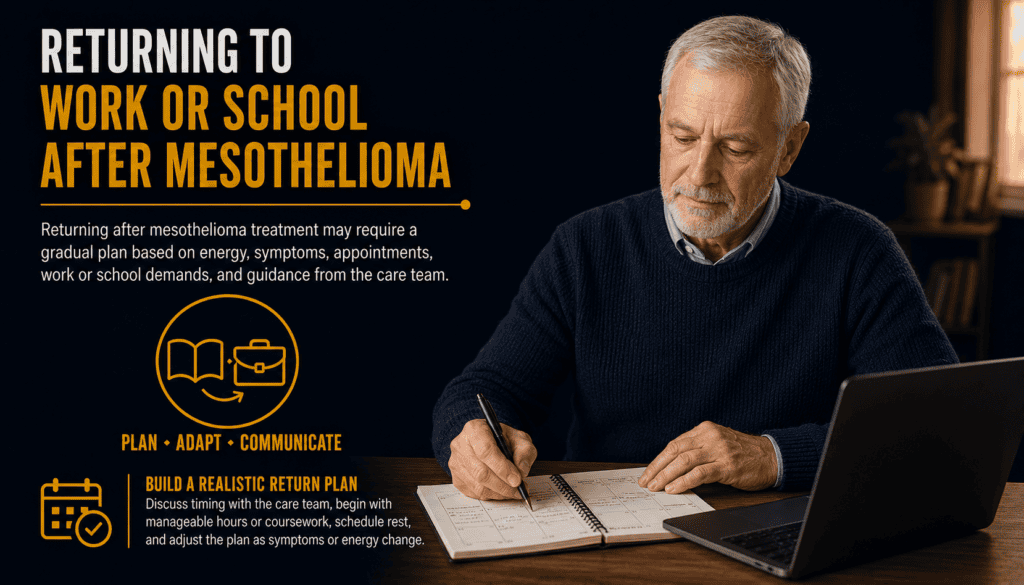
Returning to Work or School After Mesothelioma
A practical, flexible guide for patients, students and families
Going back to work or school after a mesothelioma diagnosis can raise questions about health, finances, independence and identity. This guide offers planning steps and questions to discuss with your care team, employer or school. There is no single right timetable.
Deciding whether to return
Returning to work or school after mesothelioma is an individual decision, not a recovery milestone everyone must meet. Discuss your goals, symptoms, treatment schedule and potential exposure to infections or physical hazards with your oncology team. Some people return gradually, some change responsibilities, and others decide not to return.
| Decision factor | Questions to ask |
|---|---|
| Health | What does my care team recommend? |
| Motivation | Am I choosing this for myself? |
| Flexibility | Can I reduce or change responsibilities? |
Assessing readiness with your care team
Ask your care team about fatigue, breathlessness, pain, concentration, mobility, treatment side effects and any restrictions. Request a written description of functional limitations rather than assuming a fixed return date. A rehabilitation or occupational therapy referral may help identify workable adjustments.
| Symptom | Potential adjustment |
|---|---|
| Fatigue | Shorter shifts and scheduled breaks |
| Breathlessness | Seated tasks and fewer stairs |
| Concentration | Written instructions and reduced multitasking |
Planning a return to work
Explore reduced hours, remote work, flexible start times, seated tasks, rest breaks, nearby parking, reduced lifting and time off for appointments. Agree on a trial period and a review date. You can share practical restrictions without disclosing every detail of your diagnosis to coworkers.
| Work challenge | Possible discussion |
|---|---|
| Commute | Remote or hybrid arrangements |
| Appointments | Flexible scheduling |
| Physical tasks | Temporary duty changes |
Returning to school or college
Ask a school counselor or disability-services office about reduced course loads, remote participation, accessible classrooms, deadline flexibility, recorded lessons and medical absences. For younger students, a parent or guardian can coordinate with school staff and the medical team. Do not assume a particular accommodation is automatic.
| School challenge | Possible support |
|---|---|
| Missed classes | Recorded lessons or notes |
| Fatigue | Reduced course load |
| Mobility | Accessible classrooms |
Understanding leave and accommodations
In the United States, eligibility for workplace accommodations or protected leave depends on the law, employer and individual circumstances. The ADA may require reasonable accommodations for eligible workers, and the FMLA provides qualifying employees of covered employers with job-protected leave. California may have additional protections. Ask HR or a qualified employment professional about your specific situation; school accommodations follow different rules.
| Topic | Where to seek guidance |
|---|---|
| Work accommodations | Employer HR and EEOC information |
| Medical leave | Employer leave administrator and U.S. Department of Labor |
| School support | School disability services |
Managing fatigue and symptoms
Plan demanding activities for your most reliable time of day, build in breaks, avoid overexertion and keep essential medicines and emergency contact details accessible. Tell your oncology team if fatigue or breathing symptoms worsen; do not simply push through new symptoms. Ask whether rehabilitation or symptom-focused care could help.
| During the day | Practical strategy |
|---|---|
| Before | Prioritize tasks and pack supplies |
| Midday | Rest, hydrate as directed and reassess |
| After | Record symptoms to discuss with your team |
Considering finances and alternatives
Compare expected pay or tuition costs with transportation, insurance, benefits, caregiving needs and treatment expenses. Before changing hours or resigning, ask the relevant benefits administrator how employment may affect disability benefits or insurance. A social worker can help identify resources; avoid assuming every program uses the same income rules.
| Financial question | Who can clarify |
|---|---|
| Health coverage | Plan administrator |
| Disability benefits | Relevant program or benefits counselor |
| School costs | Financial-aid office |
Creating a flexible return plan
Write down your goals, current limitations, proposed schedule, contact person, backup transportation and reassessment date. Decide in advance what changes would trigger a pause. A successful plan can mean continuing, scaling back, switching formats or stopping when health needs change.
| Plan element | Example |
|---|---|
| Initial schedule | Two short days, if medically appropriate |
| Review | Meet after two weeks |
| Pause trigger | Worsening symptoms or team advice |
Frequently asked questions
These answers provide general information. Your care team and the relevant school, employer or benefits program can explain individual requirements.
Can I work during mesothelioma treatment?
Some people can, but treatment effects and job demands vary. Ask your oncology team to review your situation and restrictions.
How soon can I return after surgery?
There is no universal timetable. Your surgical team should assess healing, breathing, mobility and job or school demands.
Do I have to tell coworkers about my diagnosis?
You generally do not need to share all medical details with coworkers. Discuss any necessary documentation and confidentiality procedures with HR or an appropriate adviser.
Can I request shorter hours?
You can request a modified schedule. Whether an employer must provide it depends on applicable law and the specific circumstances.
What if I cannot keep up with school?
Contact school disability services or a counselor early to discuss accommodations, reduced enrollment or medical leave.
Will returning to work affect disability benefits?
It may. Rules vary by program; confirm with the relevant benefits administrator before making a change.
What if my symptoms get worse?
Stop or reduce activities as appropriate and contact your medical team. Seek urgent care for severe or sudden breathing difficulty, chest pain or other emergency symptoms.
Is choosing not to return a failure?
No. Prioritizing treatment, comfort, family or other goals is a valid personal decision.
Related support resources
Official resources to consult
For medical and legal questions, consult these authoritative organizations and confirm current program rules directly.
Get support for your next steps
Call 800.291.0963 · Chat 24/7, 365 days a year · Submit Your Case using the form below.
⚕️ Legal & Medical Information Disclaimer
This information is educational and does not replace medical, legal, employment or benefits advice. Decisions about activity, leave, accommodations and benefits depend on individual circumstances. Consult your care team and qualified professionals.