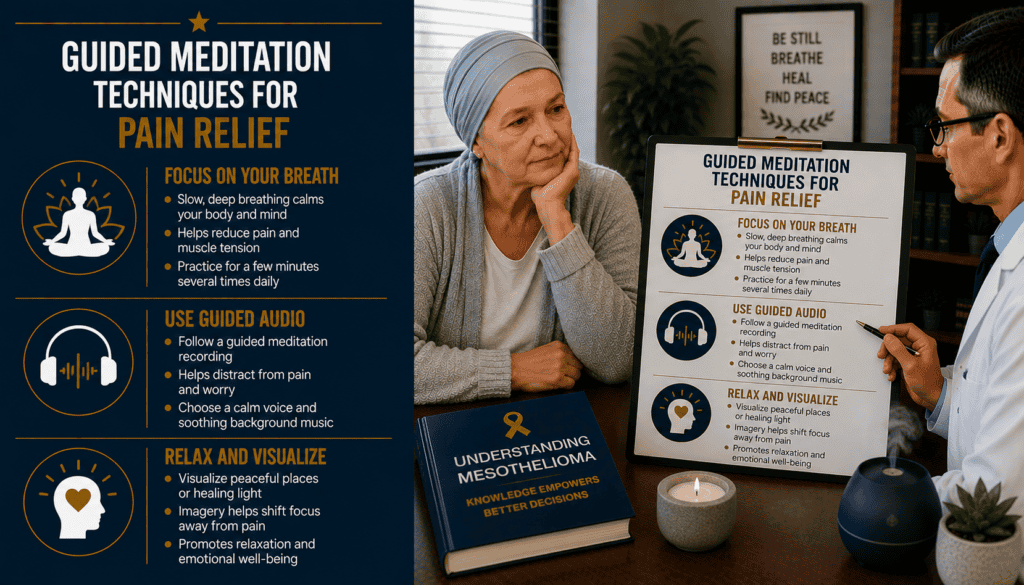
Guided Meditation Techniques for Pain Relief During Mesothelioma Treatment
A patient-centered guide to gentle mind–body strategies for coping with pain alongside prescribed cancer care.
Key takeaway: Guided meditation may help some people feel calmer and cope with pain, but it does not treat mesothelioma, eliminate the cause of pain or replace medication, procedures or a medical assessment. You do not need to meditate successfully, remain positive or endure uncontrolled pain to be a good patient.
What Guided Meditation Can—and Cannot—Do
Guided meditation uses spoken prompts to direct attention toward breathing, sensory details, an imagined place or a compassionate phrase. It is one optional component of supportive care. Research on mindfulness and related practices in people with cancer suggests potential improvements in distress and some symptoms, but effects vary, studies differ, and results should not be interpreted as proof that meditation treats mesothelioma or reliably reduces severe cancer pain.
Pain can come from cancer itself, procedures, surgery, nerve irritation or other conditions. A clinician should evaluate new or worsening pain rather than assuming it is stress-related. Learn about managing chronic pain after treatment.
| Meditation may support | Meditation cannot replace |
|---|---|
| Relaxation and a sense of control | An assessment of new or worsening pain |
| Coping with distress while waiting for care | Prescribed pain medicines or indicated procedures |
| Sleep routines and short rest periods | Treatment for cancer, pleural fluid or infection |
| A caregiver–patient moment of connection | Urgent care for alarming symptoms |
How Pain, Stress and Attention Interact
Pain is a physical experience shaped by many factors. Anxiety, poor sleep and muscle tension can make pain harder to cope with, while pain itself can disrupt sleep and increase worry. Meditation may change how a person responds to discomfort, without implying that pain is imaginary or caused by attitude.
| What you notice | Possible supportive response | Medical follow-up |
|---|---|---|
| Tension when anticipating a scan | Brief grounding or a recorded practice | Tell the team if anxiety disrupts daily life |
| Pain increases with movement | Choose a supported position; do not force stretching | Ask whether pain medication or rehabilitation needs adjustment |
| Pain interrupts sleep | Use a short calming audio as one part of a sleep routine | Report persistent nighttime pain or breathlessness |
If breathing is difficult, focus on a sound or the contact of your feet with the floor instead of taking deep breaths. Read about managing sleep problems during treatment.
Prepare for a Comfortable, Safe Session
Ask your oncology or palliative-care team whether meditation is appropriate for you, particularly after surgery or when symptoms are changing. Choose a chair, bed or recliner that supports your body. Keep prescribed oxygen in place and do not change its flow. Place a phone or call button within reach. Begin with one to three minutes; stopping early is completely acceptable.
| Preparation | Patient-friendly option |
|---|---|
| Position | Sit or recline with pillows; avoid positions that worsen pain or breathing |
| Eyes | Open, lowered or closed—whatever feels safest |
| Attention | A familiar voice, music, sound or sensation rather than breath if breathing feels uncomfortable |
| Duration | One to three minutes initially; longer only if comfortable |
| Support | Ask a caregiver to remain nearby if you are weak, dizzy or at risk of falling |
Meditation does not require breath-holding, forceful inhalation, painful postures, fasting or stopping medication. If a practice causes panic, dizziness or distress, stop and use a simpler grounding activity.
Five Guided Meditation Techniques to Try
These options are invitations, not assignments. Select one based on comfort and preferences. None requires a special product or paid app.
| Technique | How to try it | When to modify or skip |
|---|---|---|
| Five-senses grounding | Name one thing you can see, hear, feel, smell and taste, skipping unavailable senses. | Avoid sensory prompts that trigger nausea or distress. |
| Gentle body awareness | Notice supported areas such as hands or feet without scanning painful areas. | Skip body scans if they intensify pain or anxiety. |
| Safe-place imagery | Imagine a familiar peaceful location, including sounds and colors. | Choose a neutral image if memories are upsetting. |
| Compassionate phrases | Silently repeat: “This is difficult. I deserve care. I can ask for help.” | Use your own words or skip affirmations entirely. |
| Sound-focused attention | Listen to quiet music, a voice or ordinary room sounds. | Avoid headphones if you need to hear staff or alarms. |
Gentle movement, yoga and breathing exercises have different physical demands; do not assume they are interchangeable with seated meditation. See breathing exercises and pulmonary rehabilitation for medically guided activity considerations.
Need help now? Call 800.291.0963 / Live chat available 24/7, 365 days a year / Submit Your Case.
A Gentle Five-Minute Guided Meditation Script
You may read this aloud, record it in your own voice or ask someone you trust to read it. Pause or stop whenever you wish. Keep breathing normally; there is no need to take deep breaths.
Find a position that supports you. You may keep your eyes open. Notice where the chair or bed holds your body. Listen to one sound in the room. You do not have to change your pain or make any feeling disappear.
Notice your hands resting. If that feels comfortable, let your shoulders soften a little. If it does not, leave them exactly as they are. Imagine a place where you feel at ease—or simply look at an object in front of you.
Silently say, “I can take this moment one step at a time.” Allow a few ordinary breaths to pass. If your mind wanders to symptoms or worries, that is normal. Gently return to the sound or object you chose.
Before finishing, notice the room around you. Move only as comfortably as you can. If you need help with pain or another symptom, you can ask for it now.
The script is an optional relaxation exercise, not a medical intervention or substitute for pain treatment. If reading it feels unhelpful, another coping strategy may suit you better.
Build a Flexible Practice Around Treatment
A flexible practice may be more realistic than a rigid daily target during chemotherapy, radiation, surgery recovery or hospitalization. Choose a time when you are relatively comfortable; a few minutes count. It is fine to skip a day, change techniques or stop altogether.
| Situation | Optional plan | Practical reminder |
|---|---|---|
| Before an appointment | One minute of five-senses grounding | Write down questions; meditation does not replace asking them |
| During a treatment-day rest | Two minutes of safe-place imagery | Follow staff instructions and maintain access to the call button |
| After a difficult conversation | Listen to a familiar voice or sound | Ask for counseling or spiritual support if desired |
| At bedtime | A short, low-volume audio | Report persistent pain, breathlessness or insomnia |
A simple log can record “practice used,” “felt helpful, neutral or unhelpful,” and “symptoms to report.” Avoid treating pain scores as a test of whether you meditated correctly. See a balanced daily routine during treatment.
Safety, Limitations and When to Contact Your Care Team
Contact your cancer team promptly for new, persistent or worsening pain; pain that prevents sleep or daily activities; medication side effects; or distress that interferes with functioning. Ask for palliative-care support early—palliative care can accompany cancer-directed treatment and is not the same as hospice.
Seek emergency medical help for severe or sudden breathing difficulty, chest pain, fainting, new confusion, new weakness or other rapidly worsening symptoms. Do not meditate through an emergency or delay urgent evaluation.
| Concern | Action |
|---|---|
| New or worsening pain | Call the treating team for assessment and a pain-plan review |
| Dizziness or panic during practice | Stop; open eyes and orient to the room; tell a clinician if it persists |
| Shortness of breath | Stop breath-focused exercises; seek urgent help if severe or sudden |
| Uncontrolled pain despite medication | Request timely review by oncology or palliative care |
| Hopelessness or thoughts of self-harm | Seek immediate help from emergency services or a local crisis service |
Discuss any supplements, sedating products or devices marketed as meditation aids with the team before use; some can interact with medications or affect alertness.
How Caregivers Can Help Without Adding Pressure
Caregivers can offer a choice: “Would a short recording, quiet company or no activity feel best?” Ask permission before touching, guiding breathing or turning on audio. Respect the patient’s beliefs and preferences, including a wish not to meditate. Humor, art, prayer, conversation or silence may be more welcome on some days.
| Helpful caregiver action | Avoid |
|---|---|
| Offer two simple options and accept “no” | Insisting that relaxation will fix pain |
| Help position pillows or reach the call button | Changing oxygen settings or medications |
| Ask what the patient wants to hear | Imposing religious language or positive affirmations |
| Write down symptoms for the care team | Attributing new symptoms to anxiety without evaluation |
Caregivers also deserve breaks and support. Learn who can help on the mesothelioma care team.
Frequently Asked Questions
Can guided meditation cure mesothelioma?
No. Guided meditation is a supportive coping technique, not a treatment for mesothelioma or a substitute for oncology care.
Does meditation always reduce cancer pain?
No. Some people report improved coping or less distress, but pain outcomes vary. Uncontrolled pain needs medical assessment and treatment.
What if focusing on my breathing makes me anxious?
Use sounds, a visible object or contact with the chair instead. Stop any technique that worsens breathlessness, dizziness or panic.
How long should a beginner meditate?
Start with one to three comfortable minutes, or less. There is no required duration, and skipping practice is acceptable.
Can I meditate while using prescribed oxygen?
A gentle, non-breath-holding practice may be possible, but follow your clinician’s instructions and never change or remove oxygen to meditate.
Is meditation the same as palliative care?
No. Meditation may be one optional supportive tool. Palliative care is a clinical service that addresses symptoms, communication and quality of life alongside appropriate cancer treatment.
Should I stop pain medication if meditation helps?
No. Do not stop, reduce or change prescribed medication without discussing it with your treating clinician.
Can a spouse or caregiver lead a session?
Yes, if the patient wants it. Keep it brief, ask permission, avoid pressure and stop if the patient becomes uncomfortable.
Medical Sources and Further Reading
For background on cancer pain, complementary approaches and supportive care, consult these authoritative resources. Their recommendations are general; ask your own care team how they apply to you.
Get Help With Mesothelioma Questions
Call 800.291.0963. Live chat is available 24/7, 365 days a year. Submit Your Case.
Information about legal options is not a promise of eligibility, compensation or a particular result. Speak with qualified medical and legal professionals about your circumstances.
⚕️ Legal & Medical Information Disclaimer
This page provides general educational information, not individual medical or legal advice. Always consult your treating team before changing pain management, and consult a qualified attorney about legal questions.