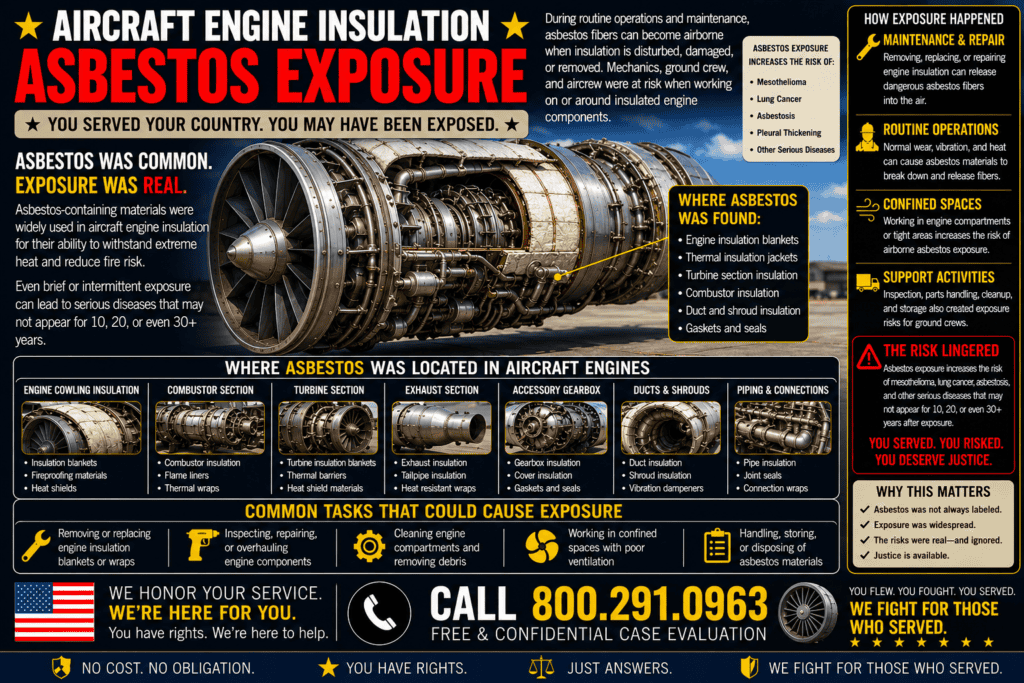
🔥 Aircraft Engine Insulation Asbestos Exposure
Aircraft engine insulation contained high levels of asbestos to control heat, vibration, and fire risk—exposing mechanics, engine technicians, inspectors, and flight-line personnel during inspections, tear-downs, and overhauls.
Military aircraft engines generate extreme temperatures. Jet turbines, exhaust assemblies, turbochargers, and auxiliary power units (APUs) routinely operate at heat levels that would destroy unprotected metal components. For decades, aircraft manufacturers relied on asbestos-based insulation to protect engines, airframes, and surrounding systems.
As a result, engine insulation was one of the most dangerous asbestos exposure sources in military aviation. Removing, repairing, or disturbing this insulation released microscopic fibers directly into the breathing zone of workers. Many veterans and civilian aviation workers are now diagnosed with mesothelioma, lung cancer, asbestosis, and pleural disease decades after exposure while supporting aircraft operations for the United States military.
🧱 Why Aircraft Engine Insulation Used Asbestos
Aircraft engines required insulation materials that could survive extreme conditions.
Asbestos was used because it:
-
🔥 Withstood continuous, intense engine heat
-
⚙️ Insulated turbines, exhausts, and power units
-
🧯 Provided fire protection around fuel and oil lines
-
🔩 Reduced vibration damage to engine housings
-
🛑 Protected nearby structural components
-
💲 Extended engine service life
These properties made asbestos a standard insulation material in military aircraft engines for decades.
⚙️ Where Asbestos Was Found in Aircraft Engine Insulation
Asbestos insulation surrounded nearly every high-heat engine component.
Common asbestos locations included:
-
🔥 Engine nacelle insulation blankets
-
⚙️ Turbine and compressor housing insulation
-
🛢️ Oil line and fuel line insulation
-
🔥 Exhaust duct and afterburner insulation
-
🧱 Firewall and bulkhead insulation
-
⚙️ Auxiliary power unit (APU) insulation
Over time, heat and vibration caused these materials to crack, fray, and release fibers.
👷 Who Was Exposed to Engine Insulation Asbestos
Exposure primarily affected engine-related personnel.
High-risk roles included:
-
🧑🔧 Aircraft engine mechanics and technicians
-
🧰 Powerplant and turbine specialists
-
🧪 Inspectors and quality-control personnel
-
🧯 Flight-line and ground support crews
-
🏗️ Hangar maintenance workers
-
🔌 Electricians working near insulated engine bays
Many worked inches away from deteriorating insulation for years at a time.
🛠️ Engine Maintenance Tasks That Released Asbestos
Aircraft engine work produced some of the highest asbestos fiber levels in aviation.
Common exposure activities included:
-
🔥 Removing or replacing insulation blankets
-
⚙️ Engine tear-downs and overhauls
-
🛢️ Servicing fuel, oil, and exhaust systems
-
🔧 Cutting, drilling, or sanding insulated panels
-
🧹 Cleaning debris from engine compartments
-
🏗️ Re-insulating engines after repairs
Disturbing aged insulation released fibers that remained airborne for hours.
✈️ Flight Line & Engine Heat Asbestos Exposure
Exposure extended beyond maintenance bays.
Asbestos exposure occurred when:
-
✈️ Engines ran during ground testing
-
🌬️ Exhaust airflow dispersed insulation fibers
-
🧹 Dust settled on uniforms and tools
-
🧰 Fibers were carried between aircraft
Flight-line personnel were often exposed without direct contact.
🏢 Hangars & Engine Shops
Engine insulation work was often performed indoors.
Hangars and engine shops frequently contained:
-
🧱 Asbestos fireproofing on walls and beams
-
🪵 Vinyl asbestos floor tiles and mastics
-
🌬️ Poor ventilation trapping airborne fibers
-
🧯 Fire-resistant coatings near test areas
These conditions allowed asbestos dust to accumulate and re-circulate.
⚠️ Why Aircraft Engine Insulation Exposure Was Especially Dangerous
Engine-related asbestos exposure was severe because:
-
❌ Insulation contained very high asbestos concentrations
-
❌ Heat and vibration degraded materials rapidly
-
❌ Work occurred close to breathing zones
-
❌ Confined spaces trapped fibers
-
❌ Exposure was frequent and long-term
Many aviation workers inhaled asbestos daily throughout their careers.
🫁 Diseases Linked to Aircraft Engine Insulation Exposure
Medical research links this exposure to:
-
Mesothelioma (pleural and peritoneal)
-
Asbestos-related lung cancer
-
Asbestosis
-
Pleural plaques and pleural thickening
Symptoms often appear 20–50 years after exposure, long after service ends.
⏳ Long Latency Period in Engine Insulation Cases
Typical disease progression includes:
-
⏱️ Exposure during aircraft engine work
-
⏱️ Decades without symptoms
-
⏱️ Progressive lung or tissue damage
-
⏱️ Diagnosis later in life
This latency often delays recognition of engine-related asbestos exposure.
⚖️ Legal Responsibility for Engine Insulation Asbestos Exposure
Claims do not sue the military or federal government.
Instead, claims target:
-
🏭 Aircraft engine manufacturers
-
🏭 Insulation and fireproofing suppliers
-
🏭 Turbine and exhaust component makers
-
🏭 Companies that failed to warn workers
Many responsible companies later established asbestos trust funds.
🧑⚖️ How a Lawyer Can Help Engine Insulation Asbestos Victims
An experienced asbestos lawyer can:
-
🔍 Identify aircraft engines and insulation systems
-
📂 Reconstruct maintenance and duty histories
-
🏭 Link exposure to specific manufacturers
-
🏦 File asbestos trust fund claims
-
⚖️ Pursue lawsuits against solvent companies
-
🏛️ Coordinate VA disability benefits
-
👨👩👧 Handle wrongful death claims
You do not need to know product names—engine asbestos records already exist.
❓ Frequently Asked Questions (FAQs)
❓ Did aircraft engine insulation contain asbestos?
Yes. Engine insulation used asbestos extensively for heat resistance.
❓ I didn’t remove insulation—was I still exposed?
Yes. Heat and airflow released fibers into nearby work areas.
❓ Can I file a claim decades later?
Yes. Most asbestos claims begin at diagnosis.
❓ Can I receive VA benefits and file lawsuits?
Yes. These compensation options are separate.
❓ Can families file claims?
Yes. Wrongful death claims are available.
📞 Help for Aircraft Engine Insulation Asbestos Exposure Victims
If you worked on or around military aircraft engine insulation and were later diagnosed with mesothelioma, lung cancer, or another asbestos-related disease, you may still have strong legal options today.
📌 You May Be Eligible For:
-
Asbestos trust fund compensation
-
Product-liability lawsuits
-
VA disability benefits
-
Wrongful death claims for families
📞 Call 800-291-0963 for a free, confidential aircraft engine asbestos exposure review
⏱️ No upfront costs • Aviation-focused cases • Nationwide representation
Protecting engines shouldn’t have cost you your health.