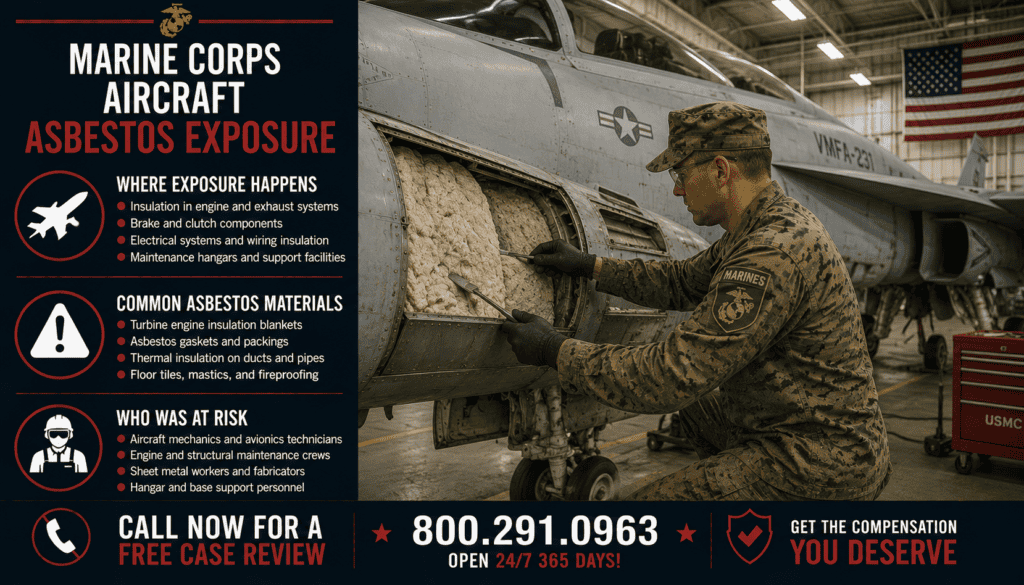
🦅✈️ Marine Corps Aircraft Asbestos Exposure
U.S. Marine Corps aircraft incorporated asbestos insulation, brakes, heat shields, wiring, gaskets, and fireproofing—exposing pilots, crew chiefs, mechanics, and aviation support personnel during amphibious operations, flight-line maintenance, and aircraft overhauls.
Marine Corps aviation operates in some of the harshest environments in the military. Aircraft are launched from expeditionary airfields, forward operating bases, amphibious assault ships, and austere landing zones. To meet intense heat, friction, vibration, fire risk, and corrosion demands, the United States Marine Corps relied heavily on asbestos-containing materials across aircraft systems and aviation facilities.
As Marine aircraft aged and required constant maintenance, asbestos-containing components deteriorated. Brake wear, engine servicing, insulation removal, avionics upgrades, and rapid field repairs released airborne asbestos fibers into hangars, flight lines, and confined shipboard spaces. Many Marine veterans and civilian aviation workers are now being diagnosed with mesothelioma, lung cancer, asbestosis, and pleural disease decades after exposure.
🧱 Why Marine Corps Aircraft Used Asbestos
Marine aviation faced extreme operational stresses.
Asbestos was widely used because it:
-
🔥 Resisted intense engine and exhaust heat
-
🛑 Withstood friction in brakes and landing systems
-
⚡ Insulated electrical wiring and avionics
-
🧯 Provided fireproofing for shipboard and expeditionary use
-
🌡️ Performed under temperature extremes and vibration
-
💲 Reduced failure rates in combat environments
These properties made asbestos standard in Marine Corps aircraft design and maintenance.
⚙️ Where Asbestos Was Found in Marine Corps Aircraft
Asbestos was integrated throughout aircraft systems.
Common asbestos-containing components included:
-
🛑 Brake linings and landing gear assemblies
-
🔥 Engine insulation and exhaust heat shields
-
⚡ Electrical wiring insulation and avionics housings
-
🧱 Cockpit insulation and fire barriers
-
🔩 Gaskets, seals, and packing materials
-
🌬️ Environmental control and ventilation systems
Combat operations and rapid repairs accelerated asbestos breakdown.
👷 Who Was Exposed in Marine Corps Aviation
Exposure extended far beyond pilots.
High-risk groups included:
-
🧑✈️ Marine pilots and aircrew
-
🧑🔧 Crew chiefs and aircraft mechanics
-
🔌 Avionics and electrical technicians
-
🛠️ Structural and sheet-metal repair crews
-
🛬 Flight-line and hangar personnel
-
🧯 Fire, crash, and emergency response teams
Many Marines worked daily around aircraft under high-tempo conditions.
🛠️ Maintenance Tasks That Released Asbestos
Routine Marine aviation maintenance disturbed asbestos materials.
Common exposure activities included:
-
🛑 Brake inspections and replacements
-
🔥 Engine tear-downs and exhaust repairs
-
⚡ Electrical rewiring and avionics upgrades
-
🧰 Removing insulation and heat shields
-
🧹 Cleaning debris from flight decks and ramps
-
🏗️ Aircraft retrofits and battle-damage repairs
Even brief field repairs could release airborne asbestos fibers.
🚢 Amphibious & Shipboard Aviation Exposure
Marine aviation often operated from ships.
Exposure increased aboard:
-
🚢 Amphibious assault ships
-
🏢 Enclosed hangar bays
-
🌬️ Poorly ventilated maintenance spaces
-
🧱 Compartments lined with asbestos fireproofing
Jet exhaust and equipment vibration re-aerosolized asbestos below deck.
🏗️ Expeditionary Airfields & Forward Bases
Marine aviation also operated from temporary locations.
High exposure occurred at:
-
🏕️ Expeditionary airfields with older structures
-
🧰 Field maintenance shelters
-
🧱 Converted facilities with asbestos insulation
-
🌬️ Poorly controlled dust environments
These locations often lacked any asbestos controls or protective gear.
⚠️ Why Marine Corps Aircraft Asbestos Exposure Was Especially Dangerous
Exposure severity was high because:
-
❌ Aircraft contained multiple asbestos systems
-
❌ Operations occurred in confined shipboard spaces
-
❌ Field repairs disturbed friable materials
-
❌ Protective respiratory equipment was rarely available
-
❌ Exposure accumulated over long deployments
Many Marines inhaled asbestos without ever being warned of the risk.
🦅 U.S. Marine Corps Aircraft Asbestos Exposure
U.S. Marine Corps aircraft were built, operated, and maintained during decades when asbestos was widely used in military aviation systems. From World War II through the late 1970s, asbestos was installed in brake assemblies, engine compartments, exhaust insulation, fireproof panels, wiring coatings, gaskets, and high-temperature seals. Marine aviation mechanics, crew chiefs, avionics technicians, and flight-line personnel were most at risk when replacing brake pads, servicing landing gear, repairing engines, or working inside aging hangars where deteriorating asbestos insulation became airborne. Carrier deployments and expeditionary airfields further increased exposure risks during heavy maintenance cycles.
🦅 U.S. Marine Corps Aircraft With Asbestos Exposure
🛩️ F/A-18 Hornet (Marine Variant)
Brake servicing, engine heat shielding, and high-temperature gasket replacement disturbed asbestos-containing components during maintenance.
🛩️ F-35B Lightning II
Exposure risks are primarily tied to legacy hangar insulation and older base fireproofing materials during facility work.
🛩️ AV-8B Harrier II
Vertical takeoff brake systems and high-heat engine insulation created exposure risks during overhaul cycles.
🛩️ F-4 Phantom II (Marine Service)
Engine heat barriers, friction materials, and cockpit fireproof panels released asbestos fibers during servicing.
🛩️ A-6 Intruder (Marine Service)
High-temperature engine compartments and brake assemblies contained asbestos insulation disturbed during repairs.
🛩️ EA-6B Prowler (Marine Service)
Avionics insulation, landing gear brake systems, and engine heat shields exposed maintenance crews.
🛩️ F-8 Crusader (Marine Service)
Brake linings and engine-area insulation released asbestos dust during routine maintenance.
🛩️ A-4 Skyhawk (Marine Service)
Frequent brake replacement and exhaust insulation servicing created asbestos exposure risks.
🛩️ OV-10 Bronco
Landing gear brake systems and engine gaskets contained asbestos materials disturbed during inspections.
🚁 CH-46 Sea Knight
Rotorcraft insulation, brake components, and engine heat shielding released asbestos fibers during overhaul.
🚁 CH-53 Sea Stallion
Heavy-lift brake systems and high-temperature engine insulation exposed Marine aviation mechanics.
🚁 CH-53E Super Stallion
Engine-area heat protection and landing gear servicing disturbed asbestos materials during maintenance cycles.
🚁 UH-1N Huey (Marine Variant)
Legacy insulation, fireproofing panels, and brake servicing created asbestos exposure risks.
🚁 AH-1 Cobra (Marine Variant)
Engine insulation and friction materials released asbestos fibers during helicopter servicing.
🚁 AH-1Z Viper
Exposure risks typically related to older maintenance facilities and insulation materials on base.
🚁 UH-1Y Venom
Most exposure risks stem from legacy hangar infrastructure and older fireproofing materials.
🚁 H-34 Seahorse (Marine Service)
Engine gaskets, insulation blankets, and brake linings exposed mechanics during maintenance.
🚁 CH-37 Mojave (Marine Support)
Heavy transport brake systems and engine-area insulation disturbed asbestos during repairs.
🛩️ C-130 Hercules (Marine Variant)
Landing gear brake maintenance and engine heat shielding replacement released asbestos fibers.
🛩️ KC-130 Hercules
Frequent cargo and refueling operations required brake servicing and gasket replacement, disturbing asbestos materials.
🛩️ R4D Skytrain (Marine Service)
WWII-era insulation, fireproof panels, and friction materials exposed Marine aviation crews.
🛩️ F4U Corsair (Marine Service)
Brake systems and engine insulation contained asbestos materials disturbed during overhaul.
🛩️ F6F Hellcat (Marine Service)
World War II-era fireproofing panels and friction materials released airborne asbestos fibers.
🛩️ AD Skyraider (Marine Service)
Landing gear brake servicing and engine insulation removal created exposure risks.
🛩️ T-28 Trojan (Marine Trainer)
Brake linings and wiring insulation disturbed asbestos during repeated training maintenance cycles.
🛩️ T-34 Mentor (Marine Trainer)
Training aircraft brake servicing and engine gasket replacement released asbestos fibers.
🛩️ F-5 Freedom Fighter (Marine Adversary Units)
Brake systems and high-heat insulation materials exposed maintenance personnel.
🛩️ F-9 Cougar (Marine Service)
Jet engine insulation and brake assemblies contained asbestos materials disturbed during servicing.
🛩️ A-3 Skywarrior (Marine Support Roles)
Engine heat shields and landing gear servicing released asbestos fibers.
🛩️ FJ-4 Fury
Brake systems and exhaust insulation created asbestos exposure risks during maintenance.
🛩️ PBJ Mitchell (Marine WWII Service)
Engine heat shielding and fireproof materials contained asbestos disturbed during overhaul.
🛩️ SBD Dauntless (Marine WWII Service)
Brake linings and engine-area insulation released airborne asbestos fibers.
🛩️ SB2C Helldiver (Marine Service)
World War II-era insulation and friction materials exposed aviation mechanics.
🚁 HRS-1 Helicopter
Rotorcraft engine insulation and brake systems contained asbestos materials disturbed during servicing.
🚁 HR2S Mojave Helicopter
Heavy-lift rotorcraft insulation and friction components exposed Marine aviation maintenance crews.
🫁 Diseases Linked to Marine Corps Aircraft Asbestos Exposure
Medical research links Marine aviation exposure to:
-
Mesothelioma (pleural and peritoneal)
-
Asbestos-related lung cancer
-
Asbestosis
-
Pleural plaques and pleural thickening
Symptoms typically appear 20–50 years after exposure.
⏳ Long Latency Period in Marine Aviation Cases
Typical disease progression includes:
-
⏱️ Exposure during Marine aviation service
-
⏱️ Decades without noticeable symptoms
-
⏱️ Progressive lung or tissue damage
-
⏱️ Diagnosis later in life
Many Marines never connect illness to aircraft service.
⚖️ Legal Responsibility for Marine Corps Aircraft Asbestos Exposure
Claims do not sue the Marine Corps or federal government.
Instead, claims focus on:
-
🏭 Aircraft manufacturers
-
🏭 Brake, insulation, and gasket suppliers
-
🏭 Electrical and avionics component manufacturers
-
🏭 Companies that failed to warn users
Many responsible companies later established asbestos trust funds.
🧑⚖️ How a Lawyer Can Help Marine Aviation Victims
An experienced asbestos lawyer can:
-
🔍 Identify aircraft types and deployment history
-
📂 Reconstruct duty stations and job roles
-
🏭 Match exposure to specific manufacturers
-
🏦 File asbestos trust fund claims
-
⚖️ Pursue lawsuits against solvent companies
-
🏛️ Coordinate VA disability benefits
-
👨👩👧 Assist families with wrongful death claims
You don’t need maintenance logs—Marine aviation asbestos databases already exist.
❓ Frequently Asked Questions (FAQs)
❓ I worked on flight lines, not inside aircraft—was I exposed?
Yes. Brake dust, exhaust insulation, and maintenance debris contaminated flight lines.
❓ Does shipboard service increase exposure?
Yes. Enclosed hangar bays trapped airborne asbestos fibers.
❓ Can I file a claim decades later?
Yes. Claims typically begin at diagnosis.
❓ Can I receive VA benefits and lawsuit compensation?
Yes. These are separate recovery options.
❓ Can families file claims?
Yes. Wrongful death claims are available.
📞 Help for Marine Corps Aircraft Asbestos Exposure Victims
If you served around Marine Corps aircraft and were later diagnosed with mesothelioma, lung cancer, or another asbestos-related disease, you may still have strong legal options today.
📌 You May Be Eligible For:
-
Asbestos trust fund compensation
-
Product-liability lawsuits
-
VA disability benefits
-
Wrongful death claims for families
📞 Call 800-291-0963 for a free, confidential Marine aviation asbestos exposure review
⏱️ No upfront costs • Amphibious aviation cases • Nationwide representation
Serving in the air and at sea should never have cost your health.