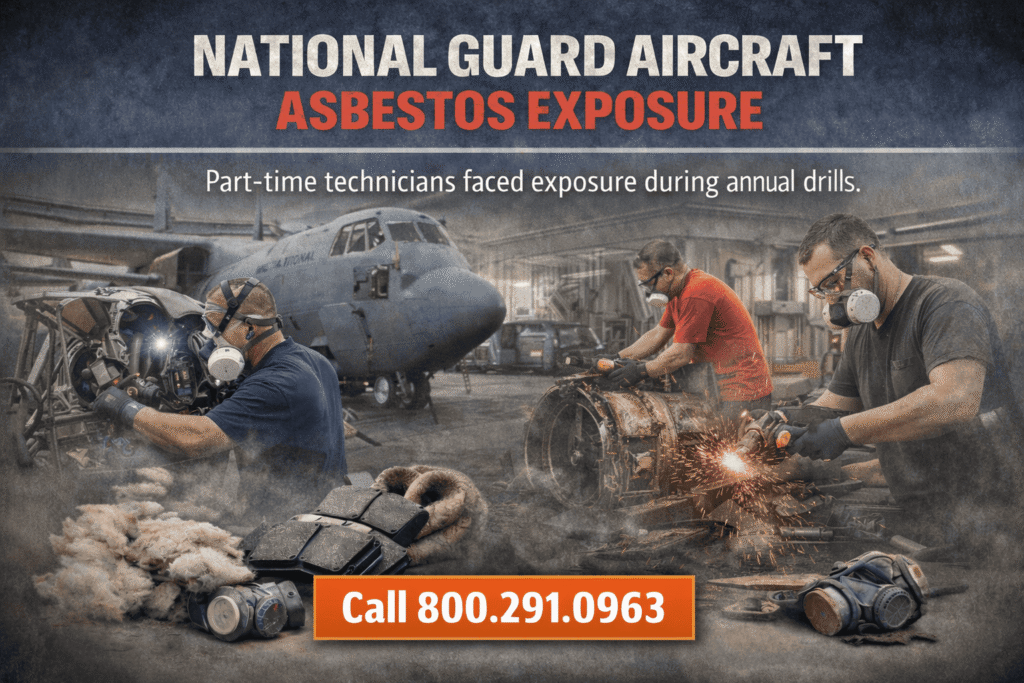
🛩️🛡️ National Guard Aircraft Asbestos Exposure
National Guard aircraft and aviation facilities incorporated asbestos insulation, brakes, heat shields, wiring, gaskets, and fireproofing—exposing pilots, crew chiefs, mechanics, and part-time technicians during training drills, maintenance cycles, and emergency deployments.
National Guard aviation units operate a wide mix of aircraft—often older airframes transferred from active-duty service. These aircraft and their supporting facilities were built during peak asbestos-use decades. To manage heat, friction, fire risk, and durability, the National Guard of the United States relied heavily on asbestos across aviation systems and infrastructure.
Although many Guard members served part-time, exposure occurred repeatedly during drills, annual training, extended activations, and emergency response missions. As aircraft aged, asbestos-containing components deteriorated. Brake wear, engine servicing, insulation removal, avionics upgrades, and facility repairs released airborne asbestos fibers into hangars, flight lines, and maintenance shops. Many Guard veterans are now being diagnosed with mesothelioma, lung cancer, asbestosis, and pleural disease decades after exposure.
🧱 Why National Guard Aircraft Used Asbestos
Guard aircraft were designed to meet the same standards as active-duty fleets.
Asbestos was widely used because it:
-
🔥 Resisted engine and exhaust heat
-
🛑 Withstood friction in brakes and landing systems
-
⚡ Insulated wiring and avionics
-
🧯 Provided fireproofing for aircraft and hangars
-
🌡️ Performed under extreme temperature changes
-
💲 Extended service life of aging airframes
These benefits made asbestos standard across National Guard aviation assets.
⚙️ Where Asbestos Was Found in National Guard Aircraft
Asbestos was embedded throughout aircraft systems.
Common asbestos-containing components included:
-
🛑 Brake linings and landing gear assemblies
-
🔥 Engine, exhaust, and heat-shield insulation
-
⚡ Electrical wiring insulation and avionics housings
-
🧱 Cockpit insulation and fire barriers
-
🔩 Gaskets, seals, and packing materials
-
🌬️ Environmental control and ventilation systems
Older aircraft often contained higher concentrations of friable asbestos.
👷 Who Was Exposed in National Guard Aviation
Exposure extended beyond pilots.
High-risk groups included:
-
🧑✈️ National Guard pilots and aircrew
-
🧑🔧 Crew chiefs and aircraft mechanics
-
🔌 Avionics and electrical technicians
-
🛠️ Structural and airframe repair crews
-
🛬 Flight-line and hangar personnel
-
🧯 Fire, crash, and emergency response teams
Many Guard members worked around aircraft for years despite part-time status.
🛠️ Maintenance Tasks That Released Asbestos
Routine Guard aviation maintenance disturbed asbestos materials.
Common exposure activities included:
-
🛑 Brake inspections and replacements
-
🔥 Engine and transmission servicing
-
⚡ Electrical rewiring and avionics upgrades
-
🧰 Removing insulation and heat shields
-
🧹 Cleaning debris from ramps and hangars
-
🏗️ Aircraft modernization and retrofits
Drill weekends often involved intense maintenance with limited protective gear.
🏢 Hangars & Aviation Facilities
Many Guard units used older facilities.
High exposure occurred in:
-
🏢 Aging hangars with asbestos fireproofing
-
🧱 Maintenance buildings with asbestos flooring and walls
-
🌬️ Poorly ventilated aircraft bays
-
🧯 Utility rooms with insulated piping
Fibers accumulated and were re-aerosolized during repeated training cycles.
🚨 Emergency Response & Disaster Missions
Guard aviation often supported domestic emergencies.
Exposure increased during:
-
🌪️ Disaster response aircraft operations
-
🔥 Firefighting aviation missions
-
🧹 Debris-filled environments
-
🏗️ Temporary maintenance setups
Emergency deployments frequently bypassed asbestos safety controls.
⚠️ Why National Guard Aircraft Asbestos Exposure Was Especially Dangerous
Exposure severity was high because:
-
❌ Aircraft were often older models
-
❌ Facilities contained aging asbestos materials
-
❌ Maintenance was compressed into short training windows
-
❌ Protective respiratory equipment was rarely issued
-
❌ Exposure accumulated over long Guard careers
Many Guard members inhaled asbestos without realizing the long-term risk.
🛩️ National Guard Aircraft Asbestos Exposure
National Guard aviation units operated and maintained a wide range of fixed-wing aircraft and helicopters from the 1930s through the late 1970s when asbestos was heavily used in military equipment. Asbestos was commonly installed in brake systems, engine insulation, heat shields, wiring, gaskets, cockpit fire barriers, and hangar infrastructure. During inspections, overhauls, part replacements, and base renovations, microscopic asbestos fibers were released into the air — placing mechanics, crew chiefs, flight line personnel, and maintenance teams at risk of long-term exposure.
🛩️ National Guard Aircraft With Asbestos Exposure
✈️ C-130 Hercules
Brake systems, engine heat shielding, exhaust insulation, and high-temperature gaskets exposed maintenance crews during repairs and overhaul cycles.
✈️ C-17 Globemaster III
Landing gear servicing, thermal insulation removal, and legacy hangar materials created exposure risks during maintenance operations.
✈️ C-5 Galaxy
Heavy cargo operations required frequent brake and engine servicing, disturbing asbestos-containing insulation and seals.
✈️ C-21 Learjet
Brake dust, engine-area insulation, and wiring materials exposed avionics and flight-line technicians during component replacement.
✈️ C-12 Huron
Avionics insulation, engine gaskets, and high-heat components created exposure risks during inspections and repair work.
✈️ C-141 Starlifter
Transport aircraft brake maintenance and insulation removal released asbestos fibers during service operations.
✈️ C-131 Samaritan
Cabin insulation, fire barriers, and brake systems exposed medical transport crews and mechanics during aging aircraft repairs.
⛽ KC-135 Stratotanker
Landing gear brake servicing and high-temperature seal replacement disturbed asbestos materials in engine and duct systems.
⛽ KC-46 Pegasus
Exposure risks more often came from legacy base insulation and maintenance facilities rather than the modern airframe.
🛩️ A-10 Thunderbolt II
Frequent brake replacement, engine heat shielding, and gasket servicing exposed maintainers to asbestos dust.
🛩️ OA-10 Variant
Similar brake and engine-area maintenance tasks released asbestos fibers during repair cycles.
🛩️ F-16 Fighting Falcon
High-performance brake systems and engine insulation created exposure risks during overhaul and part replacement.
🛩️ F-15 Eagle
Brake dust, thermal insulation, and high-temperature sealing materials exposed ground crews during servicing.
🛩️ F-35 Lightning II
Exposure risks primarily stem from older hangar insulation and fireproofing materials encountered during facility upgrades.
🛩️ F-4 Phantom II
Legacy jet insulation, engine heat barriers, and friction materials exposed mechanics during heavy maintenance.
🛩️ A-7 Corsair II
Brake systems and heat-resistant materials released asbestos during replacement and repair operations.
🎓 T-33 Shooting Star
Training aircraft brake servicing and wiring insulation maintenance disturbed asbestos materials.
🎓 T-43 Trainer
Seal replacements and avionics repairs exposed technicians to aging insulation materials.
🎓 CT-39 Sabreliner
Engine-area insulation and landing gear servicing released asbestos fibers during maintenance.
🚁 HH-60 Pave Hawk
Transmission-area heat protection and insulation materials posed exposure risks during rescue helicopter servicing.
🚁 MH-60 Variant
Fire barriers, sealing compounds, and heat-resistant components disturbed asbestos during overhaul cycles.
🚁 H-3 Rescue Helicopter
Legacy insulation, engine gaskets, and heat shields exposed crews during rotorcraft maintenance.
🚁 UH-60 Black Hawk
Brake servicing, engine insulation removal, and gasket replacement created asbestos exposure risks.
🚁 CH-47 Chinook
Heavy lift operations required frequent brake and heat-system maintenance, disturbing asbestos materials.
🚁 AH-64 Apache
High-heat zones and engine insulation repairs exposed aviation mechanics to asbestos fibers.
🚁 UH-72 Lakota
Exposure risks largely came from legacy maintenance facilities and older insulation materials on base.
🚁 OH-58 Kiowa
Rotorcraft insulation, seals, and friction materials were disturbed during inspection and overhaul.
🚁 UH-1 Iroquois (Huey)
Aging helicopter insulation and fireproofing materials exposed crews during repairs.
✈️ C-27J Spartan
Brake servicing and heat-resistant sealing materials disturbed asbestos during maintenance.
🎯 MQ-9 Reaper
Primary exposure risk came from older control facilities and base infrastructure containing asbestos materials.
🛩️ F-22 Raptor
Exposure risks typically related to legacy hangars and industrial fireproofing during renovation projects.
🔥 AC-130 Variant
High-heat systems required insulation and sealing materials that historically contained asbestos.
🛩️ HC-130 Rescue Variant
Frequent brake servicing and engine-area repairs released asbestos fibers.
🚁 H-1 Series Helicopters
Older rotary-wing aircraft insulation and fire barriers exposed maintenance crews during repairs.
✈️ U-2 Reconnaissance Aircraft (Guard Support Roles)
High-temperature insulation and gasket materials exposed specialized maintenance personnel.
🫁 Diseases Linked to National Guard Aircraft Asbestos Exposure
Medical research links this exposure to:
-
Mesothelioma (pleural and peritoneal)
-
Asbestos-related lung cancer
-
Asbestosis
-
Pleural plaques and pleural thickening
Symptoms typically appear 20–50 years after exposure.
⏳ Long Latency Period in Guard Aviation Cases
Typical disease progression includes:
-
⏱️ Exposure during Guard service and drills
-
⏱️ Decades without symptoms
-
⏱️ Progressive lung or tissue damage
-
⏱️ Diagnosis later in life
Many veterans never connect illness to part-time aviation service.
⚖️ Legal Responsibility for National Guard Aircraft Asbestos Exposure
Claims do not sue the National Guard or federal government.
Instead, claims focus on:
-
🏭 Aircraft manufacturers
-
🏭 Brake, insulation, and gasket suppliers
-
🏭 Electrical and avionics manufacturers
-
🏭 Companies that failed to warn users
Many responsible companies later established asbestos trust funds.
🧑⚖️ How a Lawyer Can Help National Guard Aviation Victims
An experienced asbestos lawyer can:
-
🔍 Identify aircraft models and Guard unit assignments
-
📂 Reconstruct drill schedules and maintenance duties
-
🏭 Match exposure to specific manufacturers
-
🏦 File asbestos trust fund claims
-
⚖️ Pursue lawsuits against solvent companies
-
🏛️ Coordinate VA disability benefits
-
👨👩👧 Assist families with wrongful death claims
You don’t need drill records—aviation asbestos databases already exist.
❓ Frequently Asked Questions (FAQs)
❓ I was part-time—does that reduce my risk?
No. Repeated exposure over years still causes serious disease.
❓ Were Guard aircraft older than active-duty aircraft?
Often yes, increasing asbestos deterioration risk.
❓ Can I file a claim decades later?
Yes. Claims typically begin at diagnosis.
❓ Can I receive VA benefits and lawsuit compensation?
Yes. These options are separate.
❓ Can families file claims?
Yes. Wrongful death claims are available.
📞 Help for National Guard Aircraft Asbestos Exposure Victims
If you served around National Guard aircraft and were later diagnosed with mesothelioma, lung cancer, or another asbestos-related disease, you may still have strong legal options today.
📌 You May Be Eligible For:
-
Asbestos trust fund compensation
-
Product-liability lawsuits
-
VA disability benefits
-
Wrongful death claims for families
📞 Call 800-291-0963 for a free, confidential National Guard aircraft asbestos exposure review
⏱️ No upfront costs • Guard-focused aviation cases • Nationwide representation
Part-time service should never have caused lifelong harm.