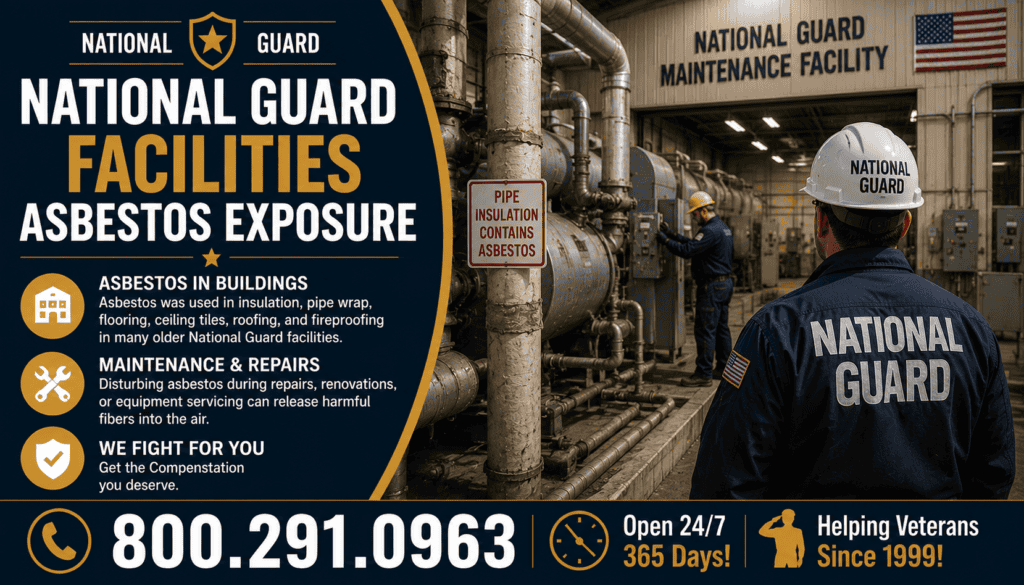
National Guard Facilities Asbestos Exposure
National Guard personnel trained, worked, maintained equipment, and responded to emergencies from military facilities throughout the United States. Many of these buildings were constructed or renovated during decades when asbestos-containing materials were routinely used for insulation, fireproofing, heat protection, and structural durability.
Older armories, aircraft hangars, maintenance shops, warehouses, power facilities, medical buildings, and base housing could contain asbestos in boilers, steam pipes, HVAC systems, electrical components, roofing, flooring, ceiling materials, cement products, and fire-resistant construction materials.
When these products deteriorated or were disturbed during repairs, renovations, demolition, or equipment maintenance, microscopic asbestos fibers could enter the air. National Guard members, civilian employees, contractors, and family members may have inhaled or carried these fibers without knowing they were dangerous.
Because asbestos-related illnesses often take decades to develop, veterans may not connect a recent diagnosis of mesothelioma, asbestos-related lung cancer, or asbestosis with work performed during earlier National Guard service.
🏢 National Guard Facilities That May Have Contained Asbestos
Asbestos was used throughout many types of military facilities because it resisted heat, fire, chemicals, moisture, and electrical current. The amount and location of asbestos varied depending on a building’s age, purpose, construction, and maintenance history.
Personnel assigned to National Guard bases may have worked inside administrative buildings, maintenance shops, utility areas, barracks, and support structures containing asbestos products.
Older National Guard armories commonly housed personnel, weapons, vehicles, communications equipment, and mechanical systems. Asbestos could be present in floor tile, ceiling panels, roofing, pipe insulation, boilers, and fire-resistant wall materials.
Training activities conducted inside National Guard training facilities may have brought service members into contact with aging buildings, mechanical rooms, maintenance areas, and damaged construction materials.
Mechanics working in National Guard vehicle maintenance facilities could have encountered asbestos in brake components, clutches, gaskets, insulation, and repair equipment.
Aviation personnel assigned to National Guard aircraft hangars may have worked around asbestos-insulated piping, heating equipment, fireproofing products, aircraft components, and maintenance machinery.
Additional exposure may have occurred in National Guard storage warehouses, National Guard power facilities, National Guard medical facilities, National Guard emergency operations centers, and National Guard base housing.
🧱 Where Asbestos Was Found Inside Military Buildings
Asbestos-containing materials were often hidden behind walls, above ceilings, beneath flooring, or inside mechanical systems. Personnel may not have known that a product contained asbestos unless it was labeled, tested, or identified during a building inspection.
Common asbestos-containing building materials included:
🔹 Pipe and boiler insulation
🔹 Floor tiles and flooring adhesive
🔹 Ceiling tiles and acoustic panels
🔹 Roofing felt and shingles
🔹 Cement wallboard and siding
🔹 Fireproof doors and wall materials
🔹 HVAC duct insulation
🔹 Electrical panels and arc shields
🔹 Gaskets, packing, and heat-resistant seals
🔹 Spray-applied fireproofing
Materials in good condition may not release significant fibers. The risk increased when asbestos products were cut, drilled, sanded, removed, crushed, damaged, or allowed to deteriorate.
🔧 Equipment Used Inside National Guard Facilities
Mechanical equipment was another important source of exposure. Systems designed to operate under high temperatures frequently contained asbestos insulation, gaskets, packing, heat shields, and electrical components.
Personnel maintaining National Guard boiler equipment may have disturbed asbestos while removing insulation, replacing gaskets, opening access panels, or repairing steam systems.
National Guard generator equipment could contain heat-resistant insulation, wiring components, gaskets, and protective materials.
Workers servicing National Guard HVAC equipment may have encountered asbestos around furnaces, ductwork, air handlers, insulation, and heating systems.
Exposure was also possible while repairing National Guard electrical equipment, National Guard pump equipment, and National Guard heavy machinery.
Explore the broader National Guard Equipment Asbestos Exposure resource for information about equipment, components, and maintenance activities associated with exposure.
👷 National Guard Personnel With Higher Exposure Risks
Anyone entering an older asbestos-containing building could have been exposed, but personnel who repaired equipment or maintained facilities generally faced greater risks.
National Guard mechanics frequently worked with military vehicles, generators, pumps, brakes, clutches, and other mechanical systems containing asbestos components.
National Guard aircraft mechanics could encounter asbestos while servicing aircraft brakes, engine systems, heat shields, wiring, gaskets, and hangar equipment.
National Guard engineers and National Guard maintenance workers may have disturbed asbestos during building repairs, utility work, renovation, demolition, or emergency restoration.
National Guard electricians often worked around asbestos-containing electrical panels, wiring insulation, arc shields, switchgear, and fire-resistant materials.
Other potentially exposed groups included National Guard heavy equipment operators, National Guard medical personnel, and National Guard logistics personnel.
Learn more through the National Guard Personnel and Jobs Asbestos Exposure resource.
⚠️ How Asbestos Fibers Became Airborne
Asbestos exposure usually occurred when a product was disturbed and released fibers into the surrounding air. These fibers are too small to be seen without specialized equipment.
Activities that could release asbestos fibers included:
🔹 Removing old pipe insulation
🔹 Repairing boilers or furnaces
🔹 Replacing valves, gaskets, or packing
🔹 Cutting wallboard or ceiling panels
🔹 Drilling through asbestos-containing materials
🔹 Sanding floor tiles or adhesive
🔹 Renovating older armories and maintenance shops
🔹 Demolishing damaged military buildings
🔹 Cleaning dusty equipment or work clothing
🔹 Responding to fires, floods, storms, or structural damage
Poor ventilation in boiler rooms, utility spaces, hangars, and maintenance shops could allow airborne fibers to remain concentrated for extended periods.
🚨 Emergency Response and Disaster-Related Exposure
National Guard units frequently respond to natural disasters, fires, floods, storms, and damaged infrastructure. These missions may place personnel inside older civilian and military buildings where asbestos-containing materials have been broken apart.
During National Guard disaster response, personnel may clear debris, enter damaged buildings, restore utilities, or operate heavy equipment in contaminated areas.
National Guard flood response can disturb flooring, wallboard, insulation, and other asbestos-containing products inside water-damaged structures.
National Guard fire response may expose personnel to asbestos fibers released when fire, heat, or structural collapse damages older construction materials.
Additional information is available in the National Guard Emergency Response Asbestos Exposure guide.
🏠 Secondhand Exposure Affecting National Guard Families
Asbestos exposure was not always limited to the service member. Fibers could collect on uniforms, boots, tools, equipment, hair, and personal belongings.
When contaminated clothing was taken home, spouses or family members could inhale asbestos while washing uniforms, cleaning work areas, or handling dusty belongings. This is commonly known as household, take-home, or secondhand exposure.
Families concerned about this type of exposure can review the National Guard Family Secondhand Asbestos Exposure resource.
🫁 Health Risks Linked to Asbestos Exposure
Inhaled asbestos fibers can become trapped in the lungs or surrounding tissue. Over time, these fibers may cause inflammation, scarring, and cellular damage.
National Guard veterans exposed decades ago may later develop:
🔹 Mesothelioma
🔹 Asbestos-related lung cancer
🔹 Asbestosis
🔹 Pleural plaques
🔹 Pleural thickening
🔹 Pleural effusion
🔹 Other asbestos-related respiratory conditions
These illnesses may not appear until 20 to 50 years after exposure. A veteran’s exposure history, military occupation, assigned facilities, equipment, and civilian employment may all be important when evaluating potential causes.
Learn more about these conditions through the National Guard Asbestos Exposure Health Risks guide and the National Guard Asbestos Exposure Timeline.
📄 Documenting National Guard Asbestos Exposure
Proving exposure may require examining where a veteran served, what duties were performed, which buildings were entered, and what products or equipment were handled.
Helpful records may include:
🔹 Military service records
🔹 Unit assignments
🔹 Duty station records
🔹 Occupational specialty information
🔹 Maintenance logs
🔹 Building renovation records
🔹 Equipment manuals
🔹 Statements from coworkers
🔹 Medical records
🔹 Employment history after military service
Veterans may not remember the brand name of an asbestos product. Detailed information about the facility, occupation, equipment, and work practices can still help identify likely exposure sources.
The National Guard Equipment Manufacturers guide may also help identify companies associated with products used in military facilities.
⚖️ Legal Options for National Guard Veterans
National Guard veterans diagnosed with an asbestos-related illness may have multiple compensation options. Eligibility depends on the individual’s diagnosis, exposure history, military status, product identification, and filing deadlines.
A National Guard mesothelioma lawsuit may seek compensation from companies that manufactured or supplied asbestos-containing products.
Eligible individuals may also file National Guard asbestos trust fund claims against trusts established by bankrupt asbestos companies.
Some veterans may qualify for VA benefits for National Guard asbestos exposure, depending on qualifying service and evidence connecting the illness to military exposure.
Families who lost a loved one may be able to pursue a National Guard asbestos wrongful death lawsuit.
Because filing periods vary, veterans and families should review the National Guard asbestos statute of limitations as soon as possible after a diagnosis or death.
📚 Additional National Guard Asbestos Resources
Understanding asbestos exposure may require reviewing military facilities, occupations, equipment, aircraft, vehicles, emergency operations, and legal options together.
Continue researching through the National Guard Asbestos Exposure parent resource and our collection of Articles About National Guard Asbestos Exposure.
These resources are designed to help veterans and families understand where exposure may have occurred, which diseases are associated with asbestos, and what steps may be available after a diagnosis.
📞 Free National Guard Asbestos Case Evaluation
If you or a loved one served in the National Guard and were later diagnosed with mesothelioma, asbestos-related lung cancer, asbestosis, or another asbestos-related disease, your military service and facility history may help identify potential exposure sources.
Call 800.291.0963
☎️ Free case evaluation
🗂️ Help investigating exposure history
💰 Information about asbestos trust funds
🎖️ Guidance involving potential VA benefits
⚖️ Review of available legal options
🕐 Open 24/7, 365 days a year
Speaking with an experienced mesothelioma team can help you understand your rights, identify companies connected to asbestos products, and determine whether compensation may be available.