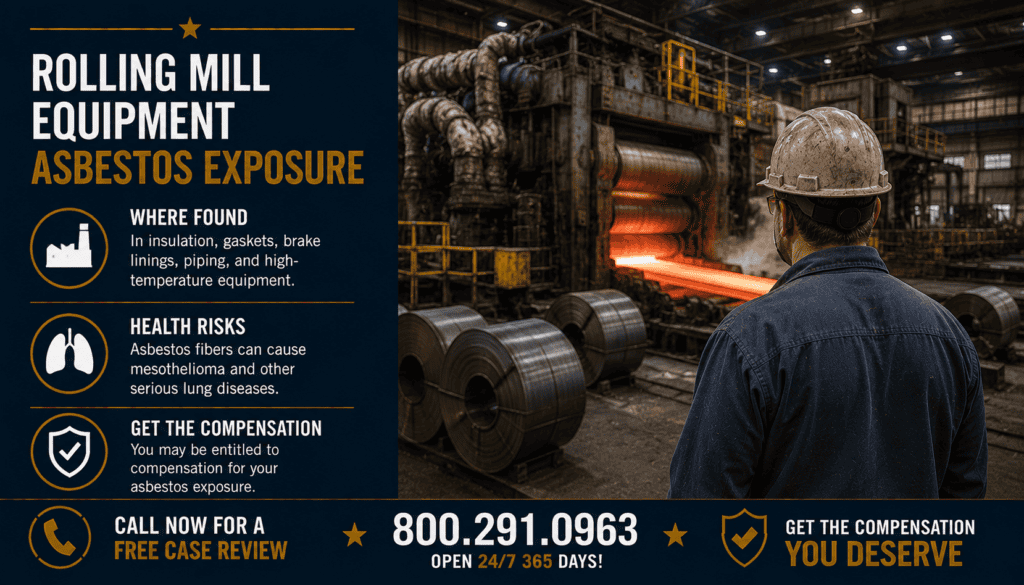
Rolling Mill Equipment Asbestos Exposure
Some older rolling mill equipment may have incorporated asbestos-containing insulation, brake or clutch materials, gaskets, electrical components or other heat-resistant parts used in high-temperature metal processing.
Not every rolling mill machine contained asbestos. Whether asbestos was present depends on the manufacturer, equipment design, component, year, operating conditions and maintenance history.
Rolling Mill Equipment Asbestos Exposure Overview
Rolling mills were used to compress, shape and reduce heated or cold metal between rotating rolls in steel mills, aluminum plants and other metal-processing facilities.
Potential asbestos exposure could have involved thermal insulation, friction assemblies, gaskets, electrical insulation or nearby furnaces and steam systems rather than the rolling process itself.
Operating rolling mill equipment does not by itself prove asbestos exposure.
Asbestos-Containing Rolling Mill Components
Depending on the machine, manufacturer and year, asbestos-containing materials may have been used in:
- thermal insulation near high-temperature equipment;
- certain brake or clutch friction components;
- gaskets and packing in mechanical or fluid systems;
- electrical insulating materials;
- heat shields and insulating pads; and
- nearby insulated piping, furnaces or boilers.
The possible asbestos source could have been part of the rolling mill, a replacement component or surrounding process equipment.
Where Rolling Mill Equipment Was Used
Rolling mill equipment was common in steel mills, metal-processing plants, aluminum facilities and heavy manufacturing operations.
These workplaces often included reheating furnaces, boilers, steam lines, electrical equipment and other high-temperature systems. Determining a possible exposure source requires identifying the actual materials present and how they were disturbed.
Heat, Friction and Insulation Applications
Historical asbestos use was often associated with heat resistance, fire protection and friction control. Around rolling mills, potential asbestos-containing materials could have been used in insulation, friction assemblies, gaskets, heat barriers or nearby process systems.
When asbestos-containing material was present, deterioration, cutting, scraping, grinding, replacement or removal could have created a more plausible pathway for fiber release.
Maintenance, Repair and Disturbance Pathways
Potential fiber release is more plausible when asbestos-containing materials are physically disturbed. Relevant activities could include:
- removing or replacing machine insulation;
- servicing brake or clutch assemblies;
- scraping or replacing gaskets;
- repairing insulated piping near the mill;
- overhauling motors, bearings or drive systems;
- working near furnace or boiler insulation; and
- cleaning dust and debris after maintenance.
Rolling or shaping metal does not itself establish asbestos exposure. Actual exposure depends on asbestos content, material condition, disturbance, frequency, duration, proximity, ventilation and cleanup practices.
Trying to identify asbestos around older rolling mill equipment? Call 800.291.0963. Live chat available 24/7, 365 days a year. Submit Your Case.
Workers and Workplaces Linked to Rolling Mills
Potentially relevant workers may include rolling mill operators, steelworkers, millwrights, maintenance mechanics, industrial electricians, machinists, pipefitters and plant maintenance personnel.
Relevant workplaces may include steel mills, aluminum plants, metal-processing facilities, heavy manufacturing plants and industrial maintenance areas.
A job title or presence near rolling mill equipment does not by itself establish asbestos exposure.
Evidence That May Identify Asbestos-Containing Materials
Useful evidence may include:
- equipment manufacturer, model and serial number;
- service manuals and parts lists;
- maintenance and overhaul records;
- purchase orders and invoices;
- engineering drawings and equipment inventories;
- labels or packaging for friction materials, gaskets or insulation;
- historical photographs;
- asbestos surveys and abatement records;
- employment, union or military records;
- coworker or supervisor statements; and
- laboratory analysis of surviving material where appropriate.
Identifying a rolling mill manufacturer may help narrow the investigation, but it does not automatically establish asbestos content, exposure or legal responsibility.
Health, Legal and Compensation Considerations
Asbestos exposure is associated with mesothelioma, asbestos-related lung cancer, asbestosis and other asbestos-related disease. Working with rolling mill equipment does not diagnose disease or establish individual medical causation.
Depending on the evidence and circumstances, legal options may be available after documented exposure to specific asbestos-containing insulation, friction materials, gaskets or nearby process systems.
A legal review may consider equipment and product identification, job duties, frequency and duration, worksite, diagnosis, jurisdiction and filing deadlines. Compensation is not guaranteed.
Related Equipment and Exposure Resources
Use these related pages to explore metalworking machinery, thermal systems and other possible asbestos exposure sources.
Metalworking and Fabrication Equipment
- Metalworking, Fabricating & Welding Equipment Asbestos Exposure
- Fabricating Equipment Asbestos Exposure
- Presses & Stamping Equipment Asbestos Exposure
- Welding Equipment Asbestos Exposure
- Mill Equipment Asbestos Exposure
- Lathe Equipment Asbestos Exposure
- Ladles, Crucibles & Pouring Equipment Asbestos Exposure
- Grinder Equipment Asbestos Exposure
Industrial Heat and Machinery Resources
- Insulation, Fireproofing & Heat Protection Equipment Asbestos Exposure
- Boilers, Heating & Thermal Equipment Asbestos Exposure
- Manufacturing Machinery Equipment Asbestos Exposure
- Contractor Equipment & Machinery Asbestos Exposure
- Equipment Asbestos Exposure
Other Asbestos Exposure Resources
Rolling Mill Equipment Asbestos Exposure FAQs
Did all older rolling mill equipment contain asbestos?
No. Asbestos use varied by manufacturer, equipment design, component and year.
Where might asbestos have been present around rolling mills?
Potential sources could include thermal insulation, friction components, gaskets, electrical insulation, heat barriers or nearby furnace and boiler systems.
Could rolling mill brakes or clutches contain asbestos?
Some historical friction materials used asbestos, depending on the component, manufacturer and year.
Could furnace or boiler insulation be an asbestos source?
Potentially. Certain historical thermal insulation products used on high-temperature industrial systems contained asbestos.
Could rolling mill maintenance disturb asbestos?
Potentially, if maintenance involved asbestos-containing insulation, friction materials, gaskets or nearby thermal systems.
Can equipment age prove asbestos content?
No. Age may help identify a historical period, but records or material evidence are needed to determine whether asbestos was actually present.
Does identifying the rolling mill manufacturer prove asbestos exposure?
No. Evidence must connect a specific asbestos-containing material to actual work activities and a plausible exposure pathway.
Does rolling mill asbestos exposure automatically qualify someone for compensation?
No. Eligibility depends on exposure evidence, medical information, jurisdiction and other case-specific circumstances. Compensation is not guaranteed.
Get Help Reviewing Rolling Mill Equipment Asbestos Exposure
If you or a family member has been diagnosed with mesothelioma, asbestos-related lung cancer or another asbestos-related disease and you are trying to identify older rolling mill equipment or nearby thermal systems, we can help organize information that may be relevant.
Call 800.291.0963 to discuss what you remember about the equipment, components, manufacturer, worksite, job duties and years of possible exposure. Live chat is available 24/7, 365 days a year. Submit Your Case using the form below.
Prior exposure does not automatically establish a legal claim. Eligibility depends on the evidence, diagnosis, jurisdiction and other circumstances, and compensation is not guaranteed.
⚕️ Legal & Medical Information Disclaimer
This page provides general educational information and is not medical or legal advice. The information does not establish asbestos exposure, diagnosis, causation, liability, claim eligibility or compensation. Medical concerns should be discussed with a qualified healthcare professional, and legal questions should be reviewed with a qualified attorney.