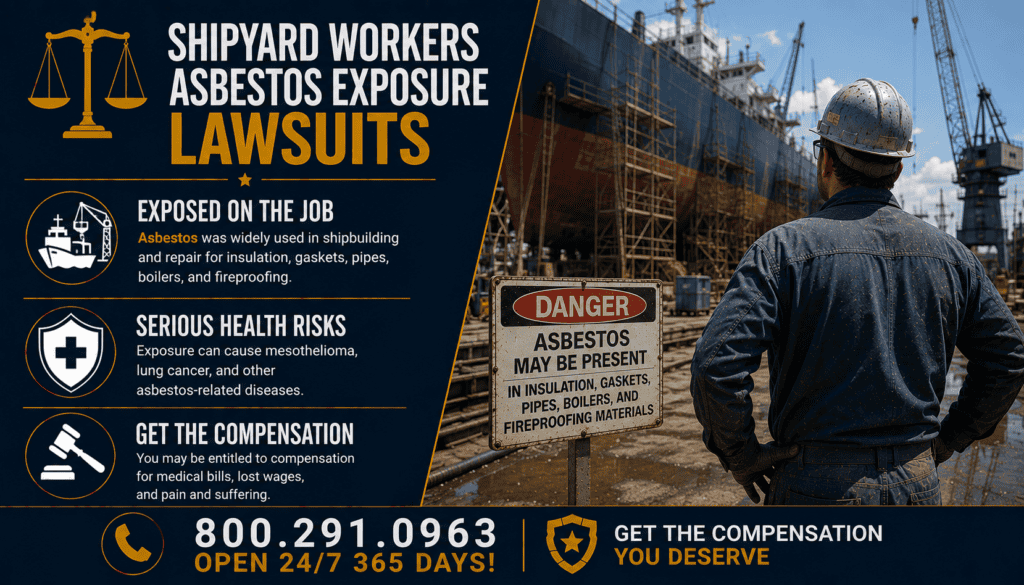
Shipyard Workers Asbestos Exposure Lawsuits
Shipyard workers build, repair, maintain and dismantle vessels while working alongside welders, machinists, pipe trades, electricians, insulators, riggers and cleanup crews. NIOSH identifies asbestos as a shipyard chemical hazard, and CDC surveillance identifies shipbuilding and repair among industrial operations where hazardous occupational asbestos exposure historically occurred.
Shipyard employment alone does not prove asbestos exposure, liability or eligibility for compensation. OSHA has a shipyard-specific asbestos standard covering vessel demolition and salvage, asbestos removal, and vessel construction, alteration, repair, maintenance and renovation involving asbestos. A potential lawsuit requires evidence connecting the worker’s actual vessel, shipyard, trade and materials to asbestos exposure and a diagnosed disease.
Shipyard Workers and Occupational Asbestos Exposure
Shipyard workers perform many different jobs in dry docks, repair yards, fabrication shops, piers and vessel compartments. NIOSH lists shipbuilding, repair, maintenance and dismantling activities such as welding and steel cutting, machining, plumbing, electrical work, rigging, coating work and cleanup.
OSHA’s 29 CFR 1915.1001 specifically regulates asbestos exposure in shipyard employment. Covered work includes demolition or salvage of vessels where asbestos is present, removal or encapsulation of asbestos-containing materials, vessel repair and maintenance involving asbestos, installation of asbestos products, emergency cleanup, and transportation, disposal, storage and housekeeping involving asbestos.
CDC’s malignant mesothelioma mortality analysis provides strong industry-level evidence. Among the industries evaluated, ship and boat building and repairing had the highest significantly elevated proportionate mortality ratio for malignant mesothelioma. This population-level association does not establish the exposure source or causation for an individual worker.
Readers can also review shipyard, maritime and dock workers asbestos exposure, welders asbestos exposure and pipefitters asbestos exposure.
Asbestos Materials Shipyard Workers May Have Encountered
Potential historical asbestos sources depended on the vessel, construction date, system and repair history. OSHA’s shipyard standard defines thermal-system insulation as insulation applied to pipes, fittings, boilers, breeching, tanks, ducts and other components to control heat transfer.
- Older asbestos-containing pipe and fitting insulation
- Boiler and steam-system insulation where confirmed
- Asbestos-containing gaskets and packing in mechanical systems where documented
- Sprayed or troweled asbestos-containing surfacing and fireproofing materials
- Older asbestos-containing wallboard, floor or deck materials, roofing, siding or mastics where confirmed
- Asbestos-containing materials in shipyard shops, buildings and utility systems
OSHA requires thermal-system insulation and sprayed or troweled surfacing materials in vessels and vessel sections constructed no later than 1980 to be treated as presumed asbestos-containing material unless the presumption is properly rebutted. Certain asphalt or vinyl flooring or decking installed no later than 1980 also must be treated as asbestos-containing unless appropriately determined otherwise under the standard.
These regulatory presumptions do not mean every shipboard material contained asbestos. Vessel specifications, product records, asbestos surveys, laboratory analysis and repair documentation can provide more specific evidence.
How Shipyard Asbestos Exposure Could Occur
Potential exposure could occur when confirmed or presumed asbestos-containing materials were removed, cut, drilled, scraped, repaired or disturbed during shipbuilding, overhaul or dismantling.
- Insulation work: removing or repairing asbestos-containing thermal-system insulation
- Pipe and boiler work: disturbing insulation on pipes, fittings, boilers and steam systems
- Mechanical repair: removing asbestos-containing gaskets or packing where documented
- Vessel overhaul: opening structures or systems containing installed asbestos materials
- Shipbreaking: dismantling vessel sections where asbestos or presumed asbestos-containing material remained
- Adjacent-trade work: working near asbestos removal when fibers migrated outside inadequate containment
- Cleanup: handling asbestos waste, debris or contaminated dust
OSHA specifically addresses multi-employer shipyard worksites. Employers performing asbestos work must inform other employers about the asbestos work and regulated areas, and employers with workers adjacent to regulated areas have duties intended to prevent exposure from migrating fibers.
Welding fumes, metals, paints, solvents, fuels and other shipyard contaminants are separate hazards. NIOSH identifies these alongside asbestos, so a claim should identify the actual asbestos-containing source rather than treating all shipyard dust as asbestos.
Shipyard Trades, Vessels and Repair Work
Exposure histories are strongest when they identify the worker’s trade, vessel, compartment and tasks rather than relying only on the broad term “shipyard worker.”
Insulators and Laggers
Workers installing or removing historical thermal insulation could have direct contact with asbestos-containing material. OSHA classifies removal of thermal-system insulation or surfacing ACM or presumed ACM as Class I asbestos work.
Pipefitters, Steamfitters and Plumbers
Shipboard piping can pass through engine rooms, boiler spaces and other compartments. Workers may have needed access to insulated pipes, fittings or valves during repair and overhaul.
Boilermakers and Boiler Personnel
OSHA specifically includes boilers within its definition of systems that can carry thermal-system insulation. The particular insulation must still be identified or properly presumed under the standard.
Machinists and Maintenance Mechanics
Mechanical personnel may dismantle pumps, valves or equipment and replace gaskets or packing. Some historical components contained asbestos, but component-specific evidence is important.
Welders and Metal Workers
Welding and steel cutting are common shipyard tasks. Welding fumes are not asbestos; potential asbestos exposure requires a separate ACM source, such as insulation or another material disturbed during access or nearby work.
Shipbreaking and Salvage Workers
OSHA expressly covers demolition and salvage of vessels and vessel sections where asbestos is present. Dismantling can expose previously enclosed or inaccessible legacy materials.
NIOSH has also documented historical asbestos use at a naval shipyard. Its Portsmouth Naval Shipyard investigation reported that an insulation shop had previously been used to prepare and store asbestos insulation material, even though asbestos was no longer being used there at the time of the evaluation.
Related resources include insulators and laggers asbestos exposure, pipefitters asbestos exposure, boilermakers asbestos exposure, machinists asbestos exposure and welders asbestos exposure.
Secondary or Household Exposure
CDC recognizes take-home asbestos exposure as a potential pathway when fibers are carried from asbestos-related workplaces. A household claim still requires evidence about the shipyard worker’s asbestos source, tasks, contaminated clothing or other pathway and frequency of contact.
Need help now? Call 800.291.0963
Live chat available 24/7, 365 days a year.
Submit Your Case
Mesothelioma and Other Asbestos-Related Health Risks
OSHA’s medical-surveillance guidance for shipyard asbestos states that epidemiologic studies of occupationally exposed workers show a definite association between asbestos exposure and increased incidence of lung cancer, pleural and peritoneal mesothelioma, and asbestosis.
CDC reported 45,221 U.S. deaths with malignant mesothelioma listed as an underlying or contributing cause during 1999–2015. In the subset with industry and occupation information, ship and boat building and repairing had the highest significantly elevated industry proportionate mortality ratio, 6.7 with a 95% confidence interval of 4.3–9.9.
CDC also explains that mesothelioma can develop decades after first causative exposure. This long latency is one reason a legal investigation may need employment, vessel and product evidence from work performed many years earlier.
These statistics do not establish that every shipyard worker was exposed or that a particular shipyard caused an individual’s disease. Medical questions should be discussed with a qualified healthcare professional.
Documenting a Shipyard Exposure History
A potential shipyard asbestos lawsuit generally requires evidence identifying where the worker was employed, the vessels and areas worked, the asbestos-containing materials involved and the circumstances of exposure.
- Employment evidence: employer, contractor, union, payroll, W-2 and Social Security earnings records
- Vessel evidence: ship name, hull number, class, owner, operator and repair dates when known
- Shipyard evidence: yard name, dry dock, pier, shop and work area
- Trade evidence: insulation, pipe, boiler, welding, machining, electrical, demolition or cleanup duties
- Material evidence: vessel specifications, asbestos surveys, laboratory reports, abatement records and product documentation
- Exposure evidence: air monitoring, regulated-area records, industrial-hygiene files and employer exposure records
- Witness evidence: coworkers, supervisors and adjacent trades who can describe materials and work practices
OSHA requires shipyard building, vessel and facility owners to determine the presence, location and quantity of ACM or presumed ACM before covered work begins and to communicate relevant information to employers and workers under the standard. Historical records created through these duties can be useful when available.
Questions That Can Strengthen a Shipyard Claim History
Which vessels did the worker repair? What years? Which shipyard and dry dock? Did the worker enter boiler rooms or engine spaces? Was insulation removed from pipes? Were asbestos-regulated areas established? Were particular manufacturers or products identified? These details can help move a history from general shipyard employment toward a specific exposure account.
Shipyard Worker Lawsuits, Trust Funds and Compensation
A shipyard worker diagnosed with mesothelioma or another asbestos-related disease may have potential legal or compensation options when evidence supports occupational asbestos exposure and applicable legal requirements are satisfied. Potential avenues can include claims against legally responsible companies and asbestos bankruptcy trust claims.
A lawsuit generally requires more than proof of shipyard employment. Relevant issues can include identification of asbestos-containing materials or products, exposure circumstances, potentially responsible companies, medical diagnosis, causation standards, jurisdiction and filing deadlines.
Asbestos trust funds have separate medical and exposure requirements. Depending on the trust, evidence may be needed connecting the worker to a covered company’s product, shipyard, vessel, operation or approved site during a qualifying period. Shipyard employment alone does not establish trust eligibility.
Potential evidence includes Social Security and employment records, union records, vessel histories, shipyard files, product and supplier documents, specifications, asbestos surveys, industrial-hygiene records, photographs, coworker statements and medical records. Maritime asbestos cases can involve fact-specific legal questions, so applicable law and filing deadlines should be reviewed individually.
Related Shipyard, Maritime and Trade Resources
Maritime work: Shipyard, Maritime & Dock Workers Asbestos Exposure
Pipe and boiler trades: Pipefitters Asbestos Exposure · Steamfitters Asbestos Exposure · Boilermakers Asbestos Exposure
Insulation and mechanical work: Insulators & Laggers Asbestos Exposure · Maintenance Mechanics Asbestos Exposure · Machinists Asbestos Exposure
Authoritative Sources
This page was researched using OSHA and CDC/NIOSH government sources specific to shipyard asbestos exposure, shipyard work practices and malignant mesothelioma mortality.
- OSHA — 29 CFR 1915.1001, Asbestos in Shipyard Employment
- OSHA — Shipyard Asbestos Medical Surveillance Guidelines
- NIOSH — Shipyards: Maritime Safety and Health
- CDC/NIOSH — Malignant Mesothelioma Mortality, United States, 1999–2015
- NIOSH — Portsmouth Naval Shipyard Health Hazard Evaluation 85-21-1654
- NIOSH — Workplace Exposure to Asbestos
Shipyard Workers Asbestos Exposure Lawsuit FAQ
Were all shipyard workers exposed to asbestos?
No. Exposure depended on the vessel, shipyard, era, trade, materials and work performed. Shipyard employment alone does not prove asbestos exposure.
Does OSHA specifically regulate asbestos in shipyards?
Yes. OSHA’s 29 CFR 1915.1001 covers asbestos exposure in shipyard employment, including vessel demolition, repair, maintenance, renovation, asbestos removal and related work.
Does shipyard employment alone establish an asbestos lawsuit?
No. A potential claim generally requires evidence of asbestos exposure, disease and other elements required by applicable law.
What records can help document shipyard asbestos exposure?
Employment and Social Security records, union files, vessel histories, shipyard records, specifications, asbestos surveys, exposure-monitoring records and coworker statements can help reconstruct exposure.
Can coworkers help establish an old shipyard exposure history?
Potentially. Coworkers may help identify vessels, trades, products, insulation, repair tasks and work conditions when documentary records are incomplete.
Did CDC find elevated mesothelioma mortality associated with shipbuilding and repair?
Yes. In CDC’s 1999–2015 analysis, ship and boat building and repairing had the highest significantly elevated industry proportionate mortality ratio among the industries evaluated. This does not prove causation in an individual case.
Can shipyard workers qualify for asbestos trust fund claims?
Some may qualify if they satisfy a trust’s medical and exposure requirements and can connect their work to a covered asbestos source, company or qualifying site. Employment alone does not establish eligibility.
Is compensation guaranteed in a shipyard asbestos case?
No. Compensation depends on the facts, evidence, applicable law, filing requirements and other circumstances. Compensation is not guaranteed.
Get Help Reviewing a Shipyard Worker Asbestos Claim
Call 800.291.0963
Live chat is available 24/7, 365 days a year.
Prior shipyard work does not automatically prove asbestos exposure, disease causation, liability, claim eligibility or compensation. Each situation depends on the shipyard, vessels, dates, materials, trade, tasks, potentially responsible parties, medical evidence and applicable legal requirements. Compensation is not guaranteed.
⚕️ Legal & Medical Information Disclaimer
This page provides general educational information and is not medical or legal advice. The information does not establish asbestos exposure, diagnosis, causation, liability, claim eligibility or compensation. Medical concerns should be discussed with a qualified healthcare professional, and legal questions should be reviewed with a qualified attorney.