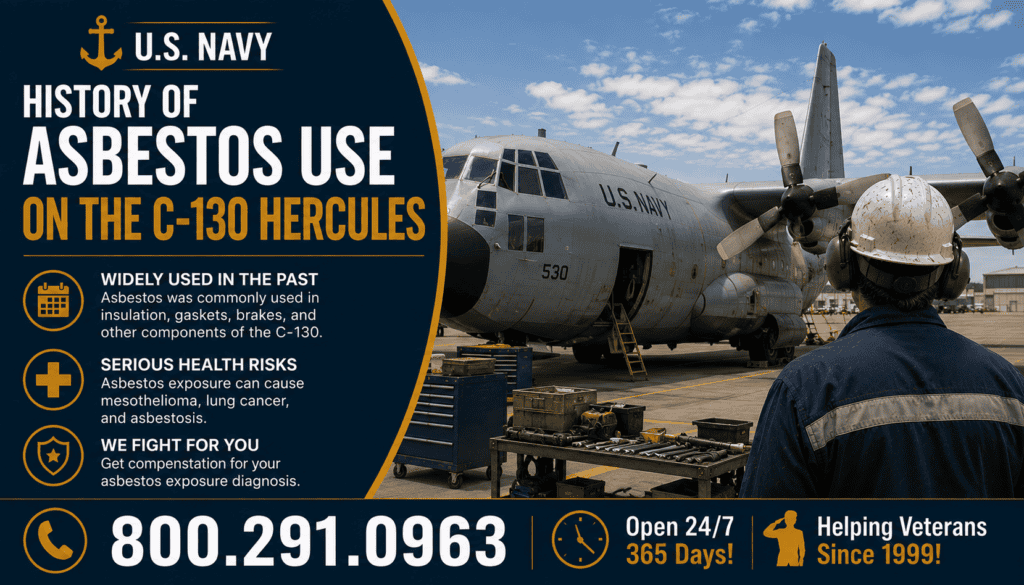
History of Asbestos Use on the C-130 Hercules
The history of asbestos use on the C-130 Hercules overlaps with an era when asbestos-containing friction products, gaskets, insulation, sealing materials, and other heat-resistant products were widely used in military equipment. The C-130 entered service in the 1950s, so historical exposure research should connect the veteran’s actual service period and maintenance duties with the aircraft components and materials encountered.
C-130 maintenance personnel may have worked around legacy brake materials, high-temperature systems, exhaust components, electrical insulation, gaskets, seals, and thermal barriers, but the aircraft’s name or age alone does not prove that a particular component contained asbestos. Variants, replacement parts, depot overhauls, modifications, suppliers, and service dates make period-specific technical and maintenance records especially important.
History of Asbestos Use on the C-130 Hercules
The C-130 Hercules entered U.S. military service during an era when asbestos was widely used for heat resistance, insulation, sealing, and friction applications. VA confirms that military asbestos-containing materials historically included friction products and heat-resistant materials such as brakes, gaskets, valves, cements, adhesives, and coverings. The site’s military-aircraft research identifies C-130 maintenance areas including brake pads, thermal insulation, heat shields, electrical wiring insulation, and high-temperature gaskets and seals.
The C-130’s long service history makes exposure research more complicated than simply identifying the aircraft. Variants, replacement parts, depot overhauls, modifications, suppliers, and service dates could change the materials present. Use the C-130 Hercules Asbestos Exposure parent page for the aircraft overview and the C-130 Hercules asbestos article hub for supporting component and maintenance research.
C-130 Service Era and Historical Asbestos Use
The C-130 first flew in the 1950s, when asbestos-containing products were widely used throughout military and industrial equipment. VA’s Veterans Health Library identifies asbestos use in military friction products and heat-resistant fabrics, including brakes and gaskets. This historical overlap makes early C-130 maintenance a legitimate area for product and component research.
Historical overlap is not the same as aircraft-specific proof. A veteran’s service dates should be matched to the aircraft variant, component, maintenance task, and available product records. The Asbestos Products Used on the C-130 Hercules page provides the product-level research path.
C-130 Components Relevant to Historical Research
Several aircraft systems deserve closer investigation when they match the veteran’s actual duties. These include:
- Aircraft Brake Systems Asbestos Exposure — legacy friction materials and brake-maintenance dust.
- Aircraft Heat Shield Asbestos Exposure — thermal barriers around high-temperature aircraft areas.
- Aircraft Exhaust System Asbestos Exposure — heat-resistant gaskets, seals, barriers, and exhaust maintenance.
- Aircraft Electrical Wiring Insulation Asbestos Exposure — historical heat-resistant electrical insulation.
- Aircraft Fuel System Asbestos Exposure — seals, gaskets, and related fluid-system maintenance.
Component, manufacturer, part number, variant, and service period should be documented whenever records permit.
How C-130 Maintenance Could Create Exposure
VA explains that asbestos is most hazardous when asbestos-containing material becomes friable or is disturbed and fibers are released into the air. For C-130 personnel, the historical exposure question therefore centers on whether maintenance disturbed an asbestos-containing component during removal, replacement, cleaning, scraping, cutting, inspection, repair, or overhaul.
Work could occur in different environments. Veterans performing launch, recovery, turnaround, wheel, brake, or ramp duties can review Flight-Line Asbestos Exposure. Personnel working primarily inside maintenance buildings can review Aircraft Hangar Asbestos Exposure.
Replacement Parts, Overhauls and Material Changes
The C-130’s long operational life means that original materials may have been removed, rebuilt, substituted, or upgraded. Depot maintenance, technical-order changes, modification programs, component overhaul, and new procurement contracts could alter what material was installed on an aircraft.
This is why a broad statement that asbestos was historically used in military aviation is less useful than time-specific evidence. The strongest research connects the veteran’s service period and maintenance assignment with technical, supply, overhaul, or manufacturer documentation for the component actually handled.
Records for Reconstructing C-130 Asbestos History
Useful evidence can include personnel files, AFSC/MOS/rating information, squadron and unit assignments, duty stations, technical orders, maintenance manuals, illustrated parts information, work-center records, supply documents, depot overhaul records, part numbers, manufacturer information, and credible firsthand statements.
The Military Records & Documentation for Asbestos Exposure hub provides the broader evidence pathway. Veterans who remember working around C-130 aircraft but cannot identify the exact source can use Veterans Help With Identifying Asbestos Exposure to reconstruct duties and locations before drawing product-specific conclusions.
Historical C-130 Exposure and VA Claims
VA states that a veteran may be eligible for disability compensation based on asbestos exposure when the veteran has a health condition caused by asbestos exposure and had contact with asbestos during military service. VA identifies medical records, service records listing the veteran’s job or specialty, and a doctor’s statement connecting military asbestos exposure with the health condition as required evidence.
A C-130 assignment can help define where to investigate, but aircraft assignment alone does not establish asbestos exposure. Veterans researching the benefit process can continue to the VA Benefits & Claims for Veterans With Mesothelioma hub.
Frequently Asked Questions
Why is the C-130’s service history important to asbestos research?
The aircraft entered service during a period when asbestos-containing friction, gasket, insulation, and heat-resistant products were widely used. Its long service life also means components could change repeatedly.
Did every C-130 Hercules contain the same asbestos materials?
No. Variants, production dates, replacement parts, suppliers, modifications, and overhaul programs could change the materials installed.
Which C-130 systems should be investigated first?
Start with systems the veteran actually serviced, such as brake systems, heat shielding, exhaust systems, electrical wiring insulation, or fuel systems.
Why does replacement-part history matter?
A component present when an aircraft was manufactured may not have been present during a veteran’s later service. Conversely, older inventory could sometimes remain in use after newer materials became available.
What records can establish the relevant period?
Personnel files, unit assignments, technical orders, maintenance and supply records, overhaul documentation, part numbers, manufacturer information, and firsthand statements can help.
Where can I find more C-130-specific research?
Use the Articles About Asbestos on the C-130 Hercules Aircraft child hub.
Confirmed Sources
Build a Time-Specific C-130 Exposure History
Document the veteran’s C-130 variant, squadron or unit, duty station, service dates, maintenance specialty, work location, systems serviced, suspected components, and any known part or manufacturer information. Then compare those facts with technical, maintenance, supply, and overhaul records from the same period. Continue through the C-130 Hercules Asbestos Exposure parent page or the Military Aircraft Asbestos Exposure hub for broader aircraft research.
Call 800.291.0963 for a no-obligation case evaluation and to speak with a real person 24/7, 365 days a year. Mesothelioma Help Center is not a law firm or medical provider and does not determine VA eligibility.
Disclaimer: General information only—not legal or medical advice. This website is not a law firm. Exposure, VA eligibility, liability and deadlines vary by case and jurisdiction. Do not disturb suspected asbestos. Past results do not guarantee future outcomes.