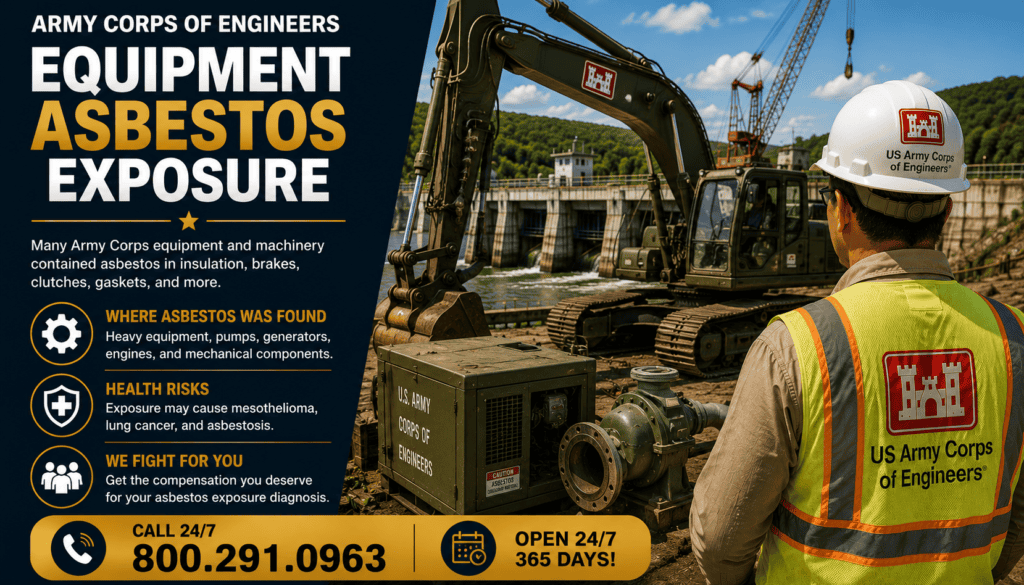
⚙️ Army Corps of Engineers Equipment Asbestos Exposure
Older Army Corps of Engineers projects used boilers, pumps, generators, electrical systems, and machinery that sometimes incorporated asbestos-containing parts. Workers who repaired or removed these components could encounter airborne fibers.
This article explains equipment-related exposure, identifies useful historical records, and connects Army Corps workers and veterans to related information about construction materials, asbestos diseases, and potential claims.
⚙️ Equipment And Asbestos Exposure
The U.S. Army Corps of Engineers planned and managed construction and infrastructure projects involving dams, locks, military installations, power facilities, and government buildings. Older equipment at some of these sites incorporated asbestos-containing insulation, gaskets, packing, electrical barriers, and friction components. The relevant risk depended on the product, installation date, working conditions, and whether fibers became airborne.
Workers who repaired machinery, supervised contractors, inspected mechanical systems, or renovated facilities may have encountered dust from disturbed asbestos products. Start with the broader U.S. Army Corps of Engineers Asbestos Exposure overview to understand the relationship between projects, contractors, and the equipment used on site.
Why Equipment Details Matter
An equipment name alone does not establish exposure. A steam pump could have contained a replacement gasket from one manufacturer and packing from another. An electrical cabinet might have used an insulating panel that differed by model year. An accurate work history therefore identifies the site, room or work area, manufacturer, maintenance procedure, and years involved.
The Army Corps of Engineers Projects & Facilities Asbestos Exposure section helps connect individual equipment systems to project settings. The Army Corps of Engineers Occupations Asbestos Exposure section provides additional context about the tasks of engineers, mechanics, electricians, welders, and inspectors.
🔥 Boilers, HVAC And Heat Systems
Boilers And Heating Equipment
Boilers, steam lines, furnace doors, refractory brick, access panels, and pipe insulation were potential asbestos sources at older institutional and industrial facilities. During boiler repairs, workers could remove damaged insulation, scrape hardened gaskets, or break apart refractory materials. These actions mattered more than merely walking past intact equipment.
The Army Corps Boiler Equipment Asbestos Exposure page covers boiler components, repair procedures, and documentation useful for identifying installed products. A maintenance log describing a particular gasket or insulation replacement may be more informative than a general description of the boiler room.
HVAC And Mechanical Rooms
Heating and ventilation work could disturb insulated ducts, heat exchangers, mechanical-room pipe coverings, and fire-resistant materials around air handlers. Older materials were not necessarily asbestos-containing, and a visual inspection cannot reliably determine composition. Renovation records, building specifications, and laboratory results where available are more useful.
For heating, ventilation, and air-conditioning systems, see Army Corps HVAC Equipment Asbestos Exposure. Workers should also document nearby trades: a mechanic may have been exposed when a different crew removed insulation or performed demolition in the same confined room.
💧 Pumps, Valves And Water Infrastructure
Pumps In Dams And Flood-Control Systems
Pumps moved water, fuel, and other fluids through locks, pumping stations, treatment plants, and industrial facilities. Packing around pump shafts and gaskets at flanged joints sometimes contained asbestos. Repacking a pump required opening the equipment, removing worn material, cleaning contact surfaces, and fitting replacements. The material composition varied by supplier and era.
Read Army Corps Pump Equipment Asbestos Exposure for pump-specific tasks. Work orders may identify pump models, replacement packing, procurement codes, or recurring maintenance cycles, all of which help reconstruct a historical exposure scenario.
Valves, Seals And Steam Distribution
Valve bonnets, flange gaskets, and stem packing were other potential sources. Repairs to high-temperature or pressurized lines could involve cutting insulation and scraping seals. Crews sometimes worked beside one another during planned outages, making the location and timing of neighboring work important.
The Army Corps Valve Equipment Asbestos Exposure article examines valve maintenance in more detail. Project drawings can identify valve locations; purchase orders and parts lists may identify the actual sealing materials used.
⚡ Electrical Systems And Generators
Generators And Power Equipment
Hydroelectric plants and backup power systems contained generators, switchgear, turbines, and associated controls. Depending on equipment design and age, asbestos-containing components could have included heat-resistant gaskets, insulating boards, arc barriers, or thermal protection. Electricians and maintenance workers were potentially exposed when they dismantled, cleaned, or replaced such materials.
See Army Corps Generator Equipment Asbestos Exposure for generator maintenance and Army Corps Electrical Equipment Asbestos Exposure for switchgear, panels, and other electrical components. Product manuals and dated photographs may help establish what was installed at a particular facility.
Electrical Work Versus Incidental Presence
The strongest exposure histories distinguish hands-on tasks from general presence in a building. Cutting an older insulating board, removing a panel, or cleaning debris after repairs is different from operating modern equipment without disturbing insulation. The Army Corps Electricians Asbestos Exposure page discusses these occupational distinctions.
🚜 Heavy Machinery And Welding Equipment
Construction And Earthmoving Machinery
Army Corps projects used bulldozers, graders, cranes, trucks, and other machinery. Some older friction systems and engine components used asbestos-containing brake linings, clutches, gaskets, or heat shielding. Exposure was particularly relevant when workers removed, abraded, or cleaned components during maintenance, rather than during routine vehicle operation.
The Army Corps Heavy Machinery Asbestos Exposure article addresses machinery systems. Related equipment and vehicle pages include Bulldozers – Army Corps of Engineers, Cranes – Army Corps of Engineers, and Road Graders – Army Corps of Engineers. These connections help workers narrow down the machine types they handled.
Welding And Adjacent Trades
Welders working near older boilers, steam pipes, or industrial equipment could encounter asbestos-containing heat blankets, insulation, or fire-resistant boards. Exposure could also arise when nearby crews stripped thermal insulation to prepare an area for repairs. The Army Corps Welding Equipment Asbestos Exposure article describes these circumstances, while Army Corps Welders Asbestos Exposure focuses on the occupation.
🏗️ Army Corps Construction Material Manufacturers Asbestos Use
The U.S. Army Corps of Engineers historically oversaw military construction, dams, flood-control projects, power facilities, and other infrastructure that sometimes incorporated asbestos-containing construction materials. Manufacturers supplied insulation, cement products, roofing, flooring, fireproofing, gaskets, and other materials that could contain asbestos. Construction workers, engineers, inspectors, equipment operators, and maintenance personnel may have encountered asbestos fibers when these products were installed, cut, drilled, repaired, or removed.
Identifying asbestos exposure associated with Army Corps construction projects often requires examining the manufacturers, products, job sites, and years of employment involved. Historical purchasing records, construction specifications, contractor documents, and employment histories may help establish whether asbestos-containing materials were present. The detailed article examines construction material manufacturers, potential occupational exposure risks, asbestos-related diseases, and legal options for qualifying workers and veterans.
Read more about Army Corps Construction Material Manufacturers Asbestos Use, including historical construction products, manufacturers, occupational exposure, and potential asbestos compensation claims.
Why Manufacturers And Contractors Matter
A project owner, the general contractor, the equipment manufacturer, and the supplier of a replacement product may all be different organizations. For that reason, product identification should not be inferred from the Army Corps name alone. Specifications, invoices, construction submittals, change orders, and maintenance records can help identify suppliers and installation periods.
For additional context on building and infrastructure work, see Army Corps of Engineers Construction Projects Asbestos Exposure and Army Corps Construction Inspectors Asbestos Exposure. Inspectors may have documented installations or renovations even when they did not handle a product themselves.
📍 Where Exposure May Have Occurred
The most useful exposure account identifies a specific activity in a specific location. Older facilities often contained a mix of original and replacement components, so exposure should not be assumed simply because a building or machine was constructed before a particular date.
| Work Area Or Equipment | Why Exposure May Have Occurred |
|---|---|
| Boiler rooms | Crews removed thermal insulation, refractory lining, or gaskets during shutdowns. |
| Pump stations | Mechanics extracted worn shaft packing and scraped gasket surfaces. |
| Electrical rooms | Workers opened older switchgear and replaced heat-resistant barriers or panels. |
| Hydroelectric powerhouses | Generator and turbine servicing involved insulated systems and sealing materials. |
| Construction sites | Cutting fireproofing, cement board, or insulated materials could release dust. |
| Vehicle repair bays | Mechanics handled older brake, clutch, gasket, or heat-shield components. |
| Maintenance workshops | Adjacent repairs and cleanup could disturb accumulated material and debris. |
The Army Corps Dam Projects Asbestos Exposure and Army Corps Power Plant Projects Asbestos Exposure pages describe two different project settings. Site-specific documents are necessary before attributing a particular asbestos product to either location.
📁 Records And Evidence
People diagnosed many years after employment may not remember equipment models or product brands. A practical starting point is a chronological list of projects, employers, contractors, work areas, duties, and coworkers. Supporting documents can then be compared against the periods and locations in that history.
| Record Or Evidence | What It Can Establish |
|---|---|
| Employment and personnel records | Dates, employers, occupations, and assignments at specific projects. |
| Procurement records and invoices | Suppliers, part descriptions, and materials purchased for a project. |
| Equipment manuals and parts lists | Model numbers, maintenance procedures, and specified replacement components. |
| Construction drawings and specifications | Equipment locations, insulation requirements, and design changes. |
| Maintenance logs and work orders | Repairs performed, materials removed, and dates of component replacement. |
| Inspection reports and photographs | Visible equipment configurations, renovations, and nearby work activities. |
| Coworker statements | Corroboration of shared duties, products, and conditions at the site. |
| Medical and pathology records | Diagnosis and relevant medical findings; they do not by themselves identify a workplace product. |
The Army Corps Maintenance Workers Asbestos Exposure page can help identify the maintenance activities to document. Where possible, retain original records and distinguish firsthand recollections from information obtained later.
⚖️ Health Risks, Compensation And FAQs
Mesothelioma And Asbestos-Related Lung Cancer
Asbestos exposure is an established cause of mesothelioma and can cause lung cancer. Disease risk depends on the nature and extent of exposure and other factors. A diagnosis does not automatically identify the source, manufacturer, or legally responsible party. People with concerning symptoms should seek medical evaluation rather than relying on an occupational history alone.
The Army Corps Asbestos Exposure Health Risks page provides more information about health effects. Medical records, pathology reports, imaging, and a carefully documented exposure history may all be relevant to later decisions.
Compensation, Trust Funds And Veterans Benefits
Potential legal options depend on diagnosis, state law, product identification, employment relationships, and filing deadlines. Some eligible claimants may pursue asbestos trust claims or other civil remedies. VA benefits require separate eligibility criteria; civilian Army Corps employment alone does not establish military veteran status.
Review Army Corps of Engineers Mesothelioma Lawsuit, Army Corps Asbestos Trust Fund Claims, and Army Corps Asbestos Statute of Limitations for claim-specific information. Veterans may also consult Army Corps VA Benefits for Mesothelioma about the separate VA process.
Frequently Asked Questions
Did every Army Corps project use asbestos?
No. Product use varied by facility, project, time period, manufacturer, and later renovations. Records are needed to identify materials at an individual site.
Can an inspector have been exposed without installing equipment?
Possibly. An inspector could have been near work that disturbed asbestos-containing materials, but the circumstances and exposure route need documentation.
Do old equipment records identify the product manufacturer?
Sometimes. Parts lists, invoices, procurement records, and maintenance logs may reveal manufacturers or suppliers, but missing records can limit certainty.
Are civilian employees automatically eligible for VA compensation?
No. VA eligibility is governed by military service and other criteria; civilian employment with the Army Corps is not by itself qualifying service.
Why do filing deadlines matter?
Time limits differ by jurisdiction and claim type. A qualified attorney can explain the deadlines that may apply to a particular diagnosis and circumstances.
Summary
Army Corps equipment exposure histories are most persuasive when they connect the person, project, task, material, and timeframe. Boilers, pumps, valves, generators, electrical systems, machinery, and construction materials each have different documentation needs. The newly linked construction-material manufacturers article provides an additional route for identifying products used in infrastructure projects.
📚 Confirmed Sources
For background on asbestos health risks and occupational exposure, consult the National Cancer Institute, OSHA asbestos resources, and U.S. Environmental Protection Agency. These general references do not establish which products were used at a specific Army Corps facility.
Find out if you may qualify for asbestos compensation today.
Call 800.291.0963 — Help is available 24/7/365. 25+ years of experience.
This information is educational, not medical or legal advice. Mesothelioma Help Center is not a law firm or medical provider and does not determine legal or VA eligibility.