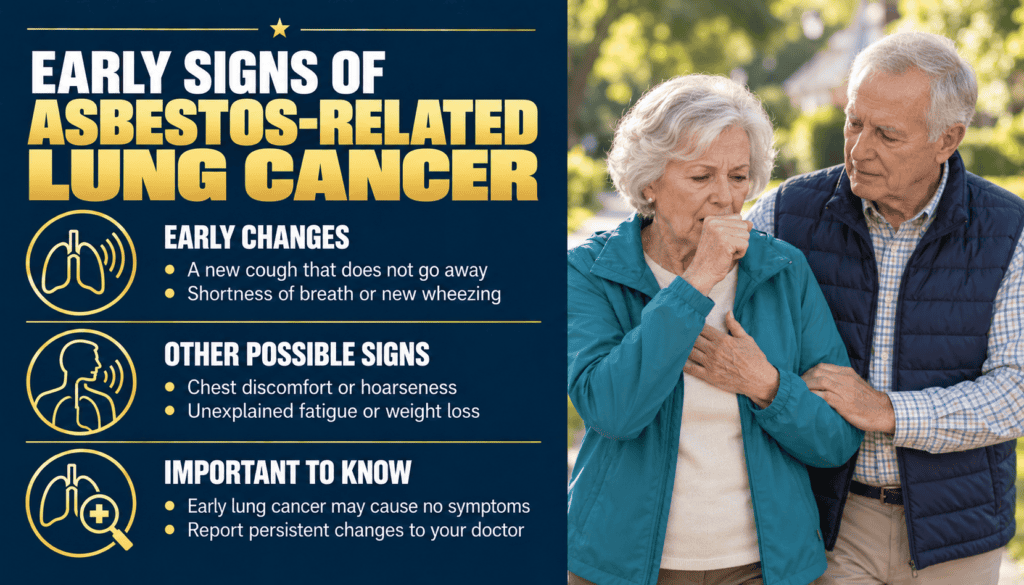
Early Signs of Asbestos-Related Lung Cancer
Early asbestos-related lung cancer may cause few or no noticeable symptoms. When warning signs do appear, they are often subtle and can resemble common respiratory problems, smoking-related illness, infections, or other conditions. A persistent cough, increasing shortness of breath, chest discomfort, fatigue, unexplained weight loss, or recurring respiratory infections can warrant medical evaluation.
There is no single early symptom that proves lung cancer is present or that asbestos caused it. The connection to asbestos usually depends on a documented exposure history combined with a confirmed lung cancer diagnosis.
This page is part of the Asbestos Lung Cancer Symptoms & Diagnosis hub. For a broader symptom overview, see Asbestos Lung Cancer Symptoms. People with a long occupational or military exposure history may also benefit from reviewing Asbestos Lung Cancer Causes & Risk and the Asbestos Lung Cancer Latency Period.
⚠️ Common Early Warning Signs
Early-stage lung cancer can be difficult to recognize because symptoms may be mild, intermittent, or absent. When symptoms do occur, they may include:
- A new cough that does not go away
- A noticeable change in a long-standing cough
- Mild but persistent shortness of breath
- Chest discomfort or pressure
- Unexplained fatigue
- Reduced appetite
- Unintentional weight loss
- Hoarseness
- Repeated bronchitis or pneumonia
- Blood-streaked sputum
These symptoms are nonspecific and can be caused by many other conditions. Their importance increases when they persist, worsen, or occur in someone with significant smoking or occupational exposure history.
🤧 Persistent or Changing Cough
A persistent cough is one of the most common symptoms associated with lung cancer, but it is also common with infections, allergies, reflux, chronic bronchitis, asthma, and other conditions.
People who already have a smoker’s cough or chronic respiratory condition should pay attention to a change from their usual pattern. A cough that becomes more frequent, deeper, more painful, or accompanied by blood, shortness of breath, or weight loss should be discussed with a healthcare professional.
A cough alone cannot establish asbestos-related lung cancer. Diagnosis requires medical testing, and asbestos causation requires a separate review of the exposure history.
💨 Early Breathing Changes
Some people notice that ordinary activities become slightly more difficult before they recognize obvious shortness of breath. Climbing stairs, walking uphill, or performing familiar physical work may require more effort than before.
Breathing changes can have many causes, including chronic obstructive pulmonary disease, heart disease, infection, anemia, asbestosis, pleural disease, and other conditions. A gradual decline in breathing capacity therefore deserves medical assessment rather than self-diagnosis.
| Possible Change | What to Notice | Why It Matters |
|---|---|---|
| Reduced exercise tolerance | Routine activity causes more breathlessness than before | May signal a new respiratory or cardiovascular problem |
| Wheezing | New or persistent whistling during breathing | Can occur with airway narrowing from many causes |
| Breathlessness at rest | Difficulty breathing without exertion | Requires prompt medical evaluation |
🫁 Chest Discomfort and Pain
Early lung cancer can sometimes cause chest discomfort, pressure, or pain, although this symptom is not specific to cancer. Muscle strain, reflux, infections, heart disease, and other conditions can also cause chest symptoms.
Persistent pain that worsens with breathing, coughing, or movement should be discussed with a healthcare professional. Severe or sudden chest pain—especially with major breathing difficulty, fainting, sweating, or other acute symptoms—may require emergency care.
⚖️ Fatigue, Appetite Loss, and Unexplained Weight Loss
Some people with lung cancer develop general symptoms before severe respiratory problems appear. Persistent fatigue, reduced appetite, weakness, or unintentional weight loss can occur as cancer affects metabolism and overall health.
These signs are highly nonspecific. They can result from infection, thyroid problems, depression, medication effects, digestive disorders, chronic heart or lung disease, and many other medical conditions.
Concern increases when these symptoms occur together with persistent cough, breathing changes, or a substantial history of smoking or occupational asbestos exposure.
🦠 Recurring Bronchitis or Pneumonia
Repeated respiratory infections can occasionally be an early clue that a lung abnormality needs further investigation. A tumor can sometimes partially block an airway, making it easier for infection to recur in the same region.
Repeated bronchitis or pneumonia does not mean a person has lung cancer. However, infections that repeatedly return, fail to resolve as expected, or recur in the same lung area may prompt a physician to order additional imaging.
🔎 Why Early Lung Cancer Signs Are Often Missed
Early signs are easy to overlook because they overlap with common illnesses and age-related changes. A former construction worker may assume shortness of breath is simply part of getting older. A smoker may consider a cough normal. A veteran may not connect a respiratory problem with work performed aboard a ship or at a base decades earlier.
| Early Sign | Common Alternative Explanation |
|---|---|
| Persistent cough | Cold, allergies, smoking, reflux, chronic bronchitis |
| Shortness of breath | Aging, COPD, asthma, heart disease, deconditioning |
| Fatigue | Poor sleep, stress, medication effects, chronic illness |
| Weight loss | Diet change, digestive problems, other illness |
| Chest discomfort | Muscle strain, reflux, respiratory infection |
The purpose of recognizing early warning signs is not to assume cancer, but to avoid dismissing persistent changes that deserve evaluation.
👷 Why an Asbestos Exposure History Matters
Asbestos-related lung cancer can develop after a long latency period, which means exposure may have occurred decades before symptoms appear. Workers and veterans may therefore need to review jobs or assignments from early adulthood.
Relevant histories can include shipyard work, construction, insulation, industrial maintenance, power generation, refinery work, mechanical repair, railroad work, military service, demolition, boiler work, pipe work, and other settings where asbestos-containing materials may have been disturbed.
Important details include:
- Employers and years worked
- Jobsites and military duty stations
- Specific job duties
- Materials, machinery, and equipment encountered
- Nearby trades performing dusty work
- Renovation, maintenance, repair, or demolition activities
- Coworker and witness information
Not every product, workplace, ship, building, or machine contained asbestos. Composition varied by manufacturer, model, component, product, era, and location. A credible exposure history should be based on evidence whenever possible.
🏥 When to Get Medical Evaluation
Persistent or worsening respiratory symptoms should be evaluated by a qualified healthcare professional, particularly when a person has a significant history of cigarette smoking, asbestos exposure, or both.
A physician may review symptoms and risk factors and determine whether chest imaging or other testing is appropriate. If an abnormality is found, additional testing may be needed to determine whether cancer is present.
People with symptoms should not rely solely on screening recommendations. Screening is intended for eligible people without symptoms, while diagnostic evaluation addresses symptoms or abnormal findings that already exist.
Already diagnosed with lung cancer after possible asbestos exposure? Call 800.291.0963 or Submit Your Case. Live help is available 24/7, 365 days a year.
❓ Frequently Asked Questions
What is usually the first sign of asbestos-related lung cancer?
There is no single first sign. Some people have no early symptoms, while others notice a persistent cough, breathing changes, chest discomfort, fatigue, or another nonspecific symptom.
Can early asbestos lung cancer have no symptoms?
Yes. Early lung cancer can sometimes be found before symptoms develop, including through screening or imaging performed for another reason.
Does a persistent cough mean I have asbestos lung cancer?
No. Cough has many common causes. A persistent or changing cough should be medically evaluated, especially if other warning signs or major risk factors are present.
Can shortness of breath be an early warning sign?
Yes, but shortness of breath is also caused by many non-cancer conditions. A new or worsening change in breathing should be discussed with a healthcare professional.
Can repeated pneumonia be related to lung cancer?
It can sometimes prompt further investigation, particularly when infection repeatedly affects the same area. Most respiratory infections are not caused by cancer.
Are early signs of asbestos lung cancer different from smoking-related lung cancer?
No reliable symptom pattern separates asbestos-related lung cancer from lung cancer associated with smoking or other causes. Exposure history must be evaluated separately.
How long after asbestos exposure can early symptoms appear?
Asbestos-related lung cancer can develop after a long latency period, often decades after earlier exposure. The exact timeline varies by individual.
What should I tell my doctor about old asbestos exposure?
Describe your employers, military service, jobsites, dates, tasks, materials, equipment, nearby trades, and any known asbestos-related work. Even decades-old exposure can remain relevant.
📞 Early Lung Cancer Warning Signs After Asbestos Exposure?
If you are experiencing persistent symptoms, seek medical evaluation. If you or a family member has already been diagnosed with lung cancer after years in construction, shipyards, industrial work, military service, mechanical trades, or another potentially exposed setting, documenting older asbestos exposure can also be important.
Call 800.291.0963 to discuss jobs, worksites, military assignments, equipment, and materials that may be relevant to an asbestos lung cancer investigation. Live help is available 24/7, 365 days a year.
Submit Your Case for a case-specific review of potential asbestos exposure and legal options. Eligibility depends on diagnosis, exposure evidence, responsible companies or trusts, jurisdiction, and applicable deadlines.
For additional legal information, visit Lung Cancer Asbestos Lawsuit.
⚕️ Legal & Medical Information Disclaimer
This page provides general educational information only. It does not establish a diagnosis, medical causation, legal liability, VA eligibility, or entitlement to compensation. Consult qualified medical and legal professionals for advice about your specific situation.