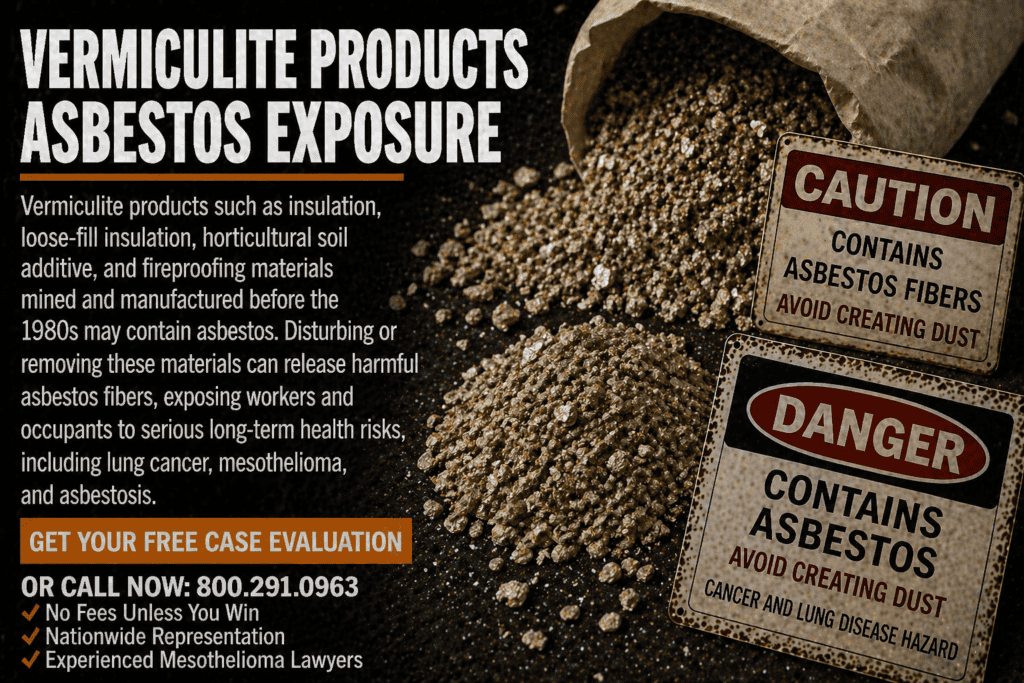
Vermiculite Products Asbestos Exposure
Vermiculite is a naturally occurring mineral that expands when heated and has been used in insulation, construction and horticultural products. Vermiculite itself is not asbestos. The major historical concern in the United States involves vermiculite ore mined near Libby, Montana, which was naturally contaminated with amphibole asbestos and related fibrous minerals.
Not all vermiculite is contaminated with asbestos. Source mine, product type and time period are important when evaluating a possible historical exposure.
Vermiculite and Asbestos Contamination
Expanded vermiculite is lightweight, fire resistant and useful as insulation or an absorbent material. Historical asbestos concerns arose because vermiculite from the Libby deposit was contaminated with naturally occurring amphibole asbestos.
This distinction matters: vermiculite should not automatically be described as an asbestos product. The exposure concern is asbestos-contaminated vermiculite from particular sources, especially historical Libby material.
Libby, Montana Vermiculite History
The Libby, Montana mine supplied a large share of vermiculite sold in the United States during much of the twentieth century. The ore deposit also contained asbestos, resulting in contamination of vermiculite distributed to processing facilities and products around the country.
Historical Libby vermiculite was commonly associated with the Zonolite name, including vermiculite attic insulation. A brand or product name can help guide research, but the complete product and property history should still be reviewed.
Vermiculite Attic and Wall Insulation
Loose-fill vermiculite was widely used as attic and wall insulation. It commonly appears as lightweight, pebble-like material and can range in color from gray-brown to silver-gold.
Because much historical U.S. vermiculite insulation came from Libby, suspected older vermiculite insulation should not be disturbed casually. Cutting into walls, moving attic insulation, remodeling or removal can disturb contaminated material and create airborne dust.
For related information, see Insulation Products Asbestos Exposure and Wall Insulation Equipment Asbestos Exposure.
Other Historical Vermiculite Products and Uses
Vermiculite has also been used in construction aggregates, soil amendments, horticultural products, packaging and other commercial applications. Historical contamination concerns depend on the source of the vermiculite rather than the product category alone.
Some older garden or agricultural products containing vermiculite may therefore warrant source-specific investigation, but ordinary modern gardening products should not be assumed to contain asbestos.
See Gardening Products Asbestos Exposure and Agricultural Products Asbestos Exposure.
How Asbestos Exposure from Vermiculite Could Occur
Potential exposure is more plausible when asbestos-contaminated vermiculite is handled or disturbed in a way that creates airborne dust.
- mining or processing contaminated vermiculite ore;
- handling or bagging vermiculite at processing facilities;
- pouring or installing loose-fill insulation;
- moving stored items through contaminated attic insulation;
- cutting into insulated walls or ceilings;
- renovating buildings containing vermiculite insulation;
- removing contaminated insulation; and
- cleaning dust or debris from disturbed material.
Actual exposure depends on contamination, work activity, dust generation, frequency, duration, proximity, ventilation and protective measures.
Trying to identify historical vermiculite or insulation exposure? Call 800.291.0963. Live chat available 24/7, 365 days a year. Submit Your Case.
Workers, Residents and Household Exposure Pathways
Potentially relevant groups may include vermiculite miners, mill and processing workers, insulation installers, construction workers, remodelers, electricians, maintenance workers and abatement personnel.
Residents could also encounter contaminated vermiculite during renovation, attic access or other activities that disturb loose-fill insulation.
Historical household exposure may be investigated when contaminated dust was actually carried home on work clothing, shoes, tools or belongings. A family relationship alone does not establish secondhand exposure.
Evidence That May Identify Contaminated Vermiculite
Historical identification may involve:
- product or brand names;
- bags, labels or packaging;
- property construction and renovation dates;
- insulation installation records;
- purchase orders and invoices;
- mine or supplier information;
- processing-facility and employment records;
- historical photographs;
- asbestos inspection or abatement records;
- coworker, contractor or resident statements; and
- professional assessment or testing when appropriate.
Do not disturb suspected vermiculite simply to identify it. Professional evaluation may be appropriate when material must be assessed or removed.
For broader research methods, see Product Research, Identification & Legal Resources for Asbestos Exposure and Products Most Commonly Linked to Workplace Asbestos Exposure.
Health, Legal and Compensation Considerations
Inhalation exposure to asbestos is associated with mesothelioma, asbestos-related lung cancer, asbestosis and other asbestos-related disease. The presence of vermiculite in a home or workplace does not establish a diagnosis, individual exposure dose or medical causation.
Depending on the evidence and circumstances, legal options may be available after documented exposure to asbestos-contaminated vermiculite.
A legal review may consider product source, brand, property or workplace, processing facility, work duties, exposure pathway, frequency and duration, diagnosis, jurisdiction and filing deadlines.
Identifying a product, mine operator, supplier or other company does not automatically establish legal responsibility. Liability is case-specific.
Any trust or compensation program has its own eligibility and documentation requirements. Compensation is not guaranteed.
Vermiculite Asbestos Exposure FAQs
Is vermiculite the same thing as asbestos?
No. Vermiculite is a separate mineral. The historical concern is that some vermiculite, especially material mined near Libby, Montana, was contaminated with asbestos.
Did all vermiculite contain asbestos?
No. Asbestos contamination depended on the source of the vermiculite. Not all vermiculite deposits or products were contaminated.
Was Zonolite vermiculite insulation associated with Libby material?
Yes. Historical Libby vermiculite was commonly sold as Zonolite insulation.
Can disturbing vermiculite attic insulation release asbestos fibers?
Potentially, when the vermiculite is asbestos-contaminated and disturbance creates airborne dust.
Should suspected vermiculite insulation be disturbed for testing?
It should not be disturbed casually. Professional assessment is appropriate when evaluation or removal is needed.
Could vermiculite processing workers have been exposed?
Potentially. Historical workers who handled contaminated Libby vermiculite at mines, mills or processing facilities could encounter asbestos-containing dust.
Could gardening products containing vermiculite involve asbestos?
Some historical vermiculite products have raised contamination concerns, but modern or ordinary gardening products should not automatically be assumed to contain asbestos.
Does a history of vermiculite exposure automatically qualify someone for compensation?
No. Eligibility depends on source identification, actual exposure, medical evidence, jurisdiction and other case-specific circumstances. Compensation is not guaranteed.
For related information, see Insulation Products Asbestos Exposure, Wall Insulation Equipment Asbestos Exposure, Gardening Products Asbestos Exposure, Agricultural Products Asbestos Exposure, Consumer, Household & Commercial Products Asbestos Exposure, and the main Asbestos Exposure in Products guide.
Get Help Reviewing Vermiculite Exposure
If you or a family member has been diagnosed with mesothelioma, asbestos-related lung cancer or another asbestos-related disease and you are trying to identify historical vermiculite insulation, processing work or another possible Libby-related exposure pathway, we can help organize the information that may be relevant.
Call 800.291.0963 to discuss what you remember about the product, property, workplace, processing facility and years of possible exposure. Live chat is available 24/7, 365 days a year. Submit Your Case using the form below.
Prior exposure does not automatically establish a legal claim. Eligibility depends on the evidence, diagnosis, jurisdiction and other circumstances, and compensation is not guaranteed.
⚕️ Legal & Medical Information Disclaimer
This page provides general educational information and is not medical or legal advice. The information does not establish asbestos exposure, diagnosis, causation, liability, claim eligibility or compensation. Medical concerns should be discussed with a qualified healthcare professional, and legal questions should be reviewed with a qualified attorney.