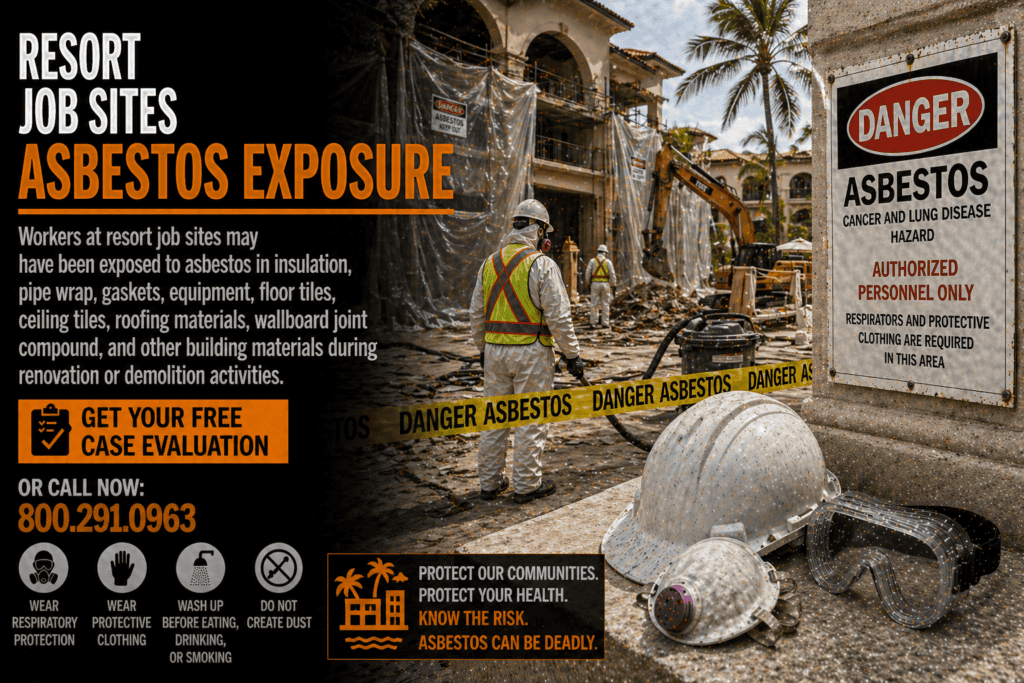
🏗️ Resort Job Sites Asbestos Exposure
Resort Job Sites included work where insulation, fireproofing, gaskets, flooring, or other building and mechanical materials sometimes contained asbestos. The concern is not the name of a facility alone: it is whether specific products were present and disturbed while employees performed construction, maintenance, repairs, or demolition.
If you worked at these sites and have been diagnosed with mesothelioma or asbestos-related lung cancer, the information below explains the work areas worth documenting, the medical records to keep, and compensation options that may apply to you or your family.
🏭 Where Asbestos Was Found
Guest Buildings and Mechanical Chases
At guest buildings and mechanical chases, crews may have encountered insulated piping, pumps, valves, and mechanical connections. Exposure depended on the age and composition of installed materials, the scope of work, and whether dust was generated. Site plans, purchase records, contractor logs, and photographs can help identify what was installed at the time.
Central Laundry and Boiler Plants
At central laundry and boiler plants, crews may have encountered older thermal insulation, fire-resistant coatings, and equipment enclosures. Exposure depended on the age and composition of installed materials, the scope of work, and whether dust was generated. Site plans, purchase records, contractor logs, and photographs can help identify what was installed at the time.
Restaurants and Kitchen Service Areas
At restaurants and kitchen service areas, crews may have encountered ceiling assemblies, duct insulation, and floor systems. Exposure depended on the age and composition of installed materials, the scope of work, and whether dust was generated. Site plans, purchase records, contractor logs, and photographs can help identify what was installed at the time.
Renovation of Guest Rooms and Common Areas
At renovation of guest rooms and common areas, crews may have encountered roofing products, wall materials, and service penetrations. Exposure depended on the age and composition of installed materials, the scope of work, and whether dust was generated. Site plans, purchase records, contractor logs, and photographs can help identify what was installed at the time.
Workers in related settings can also review Hotels Asbestos Exposure and Hotel Job Sites Asbestos Exposure for work-area descriptions that may help identify comparable tasks without assuming that any particular site contained asbestos.
👷 Workers and Daily Jobs
Maintenance and Plant Mechanics
Maintenance and Plant Mechanics sometimes worked close to asbestos-containing materials while inspecting and repairing older machinery, piping, or insulated enclosures. Whether an individual was exposed requires details about the actual products, dates, job assignments, and work methods—not simply a job title.
Pipefitters and Plumbing Crews
Pipefitters and Plumbing Crews sometimes worked close to asbestos-containing materials while opening joints, replacing gaskets, or working near thermal insulation. Whether an individual was exposed requires details about the actual products, dates, job assignments, and work methods—not simply a job title.
Electricians and Equipment Installers
Electricians and Equipment Installers sometimes worked close to asbestos-containing materials while routing cable or opening service spaces alongside other trades. Whether an individual was exposed requires details about the actual products, dates, job assignments, and work methods—not simply a job title.
Construction and Renovation Contractors
Construction and Renovation Contractors sometimes worked close to asbestos-containing materials while removing worn components and rebuilding existing structures. Whether an individual was exposed requires details about the actual products, dates, job assignments, and work methods—not simply a job title.
Occupation guides for Hotel Boiler Rooms & Mechanical Systems Asbestos Exposure, Hotel Pipe Insulation, Valves & Gaskets Asbestos Exposure, and Hotel HVAC & Ventilation Systems Asbestos Exposure can help families reconstruct the work history of employees and subcontractors.
🧱 Products and Equipment
Thermal Insulation and Pipe Coverings
Pipe elbows, boilers, tanks, and hot-water or steam lines sometimes used asbestos insulation for heat control. The relevant evidence includes manufacturer identification, installation dates, and maintenance procedures. Not every product of these types contained asbestos.
Gaskets, Packing, and Friction Materials
Older valves, pumps, compressors, and mechanical equipment sometimes used asbestos-containing seals or packing. The relevant evidence includes manufacturer identification, installation dates, and maintenance procedures. Not every product of these types contained asbestos.
Fireproofing and Building Finishes
Some sprayed coatings, wall assemblies, flooring, mastics, and ceiling products contained asbestos. The relevant evidence includes manufacturer identification, installation dates, and maintenance procedures. Not every product of these types contained asbestos.
Replacement Parts and Maintenance Debris
Removal, scraping, grinding, and dry cleanup could disturb residues left by earlier installation or repair work. The relevant evidence includes manufacturer identification, installation dates, and maintenance procedures. Not every product of these types contained asbestos.
For equipment- and site-specific detail, see Hotel Flooring, Ceiling Tiles & Adhesives Asbestos Exposure, Hotel Maintenance & Engineering Staff Asbestos Exposure, and Electricians Asbestos Exposure.
🌫️ How Exposure Occurred
Cutting or Removing Installed Materials
Sawing, drilling, scraping, and removing certain asbestos-containing products could release airborne fibers. A task-based exposure history should identify where the work occurred, who performed it, and what controls were used. Current safety practices should follow applicable asbestos rules rather than attempting to disturb suspected materials.
Working Beside Other Trades
A worker could be nearby while insulation or other materials were disturbed by contractors. A task-based exposure history should identify where the work occurred, who performed it, and what controls were used. Current safety practices should follow applicable asbestos rules rather than attempting to disturb suspected materials.
Repairing Aging Equipment
Opening valves, pumps, and insulated equipment could disturb old gaskets, packing, or coverings. A task-based exposure history should identify where the work occurred, who performed it, and what controls were used. Current safety practices should follow applicable asbestos rules rather than attempting to disturb suspected materials.
Cleaning Up Dust and Debris
Dry sweeping or handling contaminated waste could resuspend settled dust. A task-based exposure history should identify where the work occurred, who performed it, and what controls were used. Current safety practices should follow applicable asbestos rules rather than attempting to disturb suspected materials.
Related job-site discussions include Plumbers Asbestos Exposure, Boilermakers Asbestos Exposure, and Renovation Job Sites Asbestos Exposure.
🩺 Mesothelioma After Workplace Exposure
Recognizing a Diagnosis
Mesothelioma may develop many years after asbestos exposure. Symptoms such as persistent shortness of breath or chest discomfort have multiple possible causes and need medical assessment. The Mesothelioma Diagnosis guide explains how imaging, tissue sampling, and pathology review can be used to confirm a diagnosis.
Specialist Care and Treatment Planning
People with a confirmed diagnosis can discuss their pathology findings, disease stage, and treatment goals with a specialist. See Mesothelioma Treatments for an overview of treatment approaches; decisions depend on individual health and clinical findings.
Information Families Can Preserve
Keep pathology reports, imaging records, discharge summaries, and a chronological list of employers and job sites. Family members may be able to help identify former coworkers, contractors, and documents that the patient no longer has.
🫁 Asbestos-Related Lung Cancer
Understanding Possible Occupational Causes
Asbestos is an established cause of lung cancer. Smoking also increases lung-cancer risk, and both exposures can be relevant. A physician should evaluate the diagnosis and exposure history. See Asbestos Lung Cancer Lawsuits for information about potential legal options.
Medical Records and Exposure History
Preserve the lung-cancer pathology report, imaging, treatment records, smoking history, and the dates and nature of work involving possible asbestos materials. A clear chronology helps medical and legal professionals assess the information without presuming causation.
Questions to Ask After Diagnosis
Ask which records confirm the diagnosis, whether a specialist review is appropriate, and what documents could establish the materials used at each job site. Medical decisions should be guided by qualified clinicians.
Organizing a Reliable Exposure Timeline
Write a separate entry for each employer and work location, even if two projects were part of the same complex. Include approximate start and end dates, job duties, departments, shifts, and whether you worked indoors, outdoors, or aboard equipment. Add the names of coworkers who may remember the work. If you cannot recall a product brand, describe the shape, location, color, packaging, and how it was used without guessing. A careful account is more useful than a list of products that might have been present.
Understanding the Limits of Site Descriptions
An industry guide identifies common historical materials and work processes; it does not prove that a particular building, vessel, or project used an asbestos product. Dates matter because materials, suppliers, and work practices changed. Medical diagnoses also require professional assessment. Keep these questions separate: what disease was diagnosed, what work took place, what material was present, and who supplied or disturbed it. Each question may require different records and witnesses.
Protecting Yourself During Current Work
If you are currently involved in maintenance or renovation and suspect asbestos, do not scrape, cut, collect samples, or remove the material yourself. Notify the responsible site manager and use qualified professionals following applicable federal, state, and local requirements. For past work, use existing records, memories, and official documents instead of revisiting unsafe locations. This approach protects workers and preserves a more dependable account of what happened.
🔎 Additional Worksite Details to Document
Resort Maintenance Departments
Large resorts may maintain central plants serving guest buildings, pools, restaurants, and laundry facilities. Maintenance engineers and contractors can have very different work histories from housekeeping or front-desk staff. Identify the department and actual tasks.
Laundry and Kitchen Equipment
Commercial laundry equipment, boilers, and kitchen service systems may have used high-temperature insulation and mechanical seals. Whether those components contained asbestos depends on the equipment, manufacturer, and period of service.
Seasonal Remodels and Expansions
Hotels and resorts often renovate rooms, corridors, kitchens, and amenities in phases. Maintenance staff may work beside outside demolition and construction crews. Keep dates of closures, remodels, and property expansions when reconstructing possible exposure.
Multiple Buildings and Properties
A resort may operate separate lodges, restaurants, service buildings, and staff housing. A worker’s actual location matters. Employment at the resort does not establish that every building or department contained asbestos.
How Families Can Reconstruct Employment
Collect payroll records, job descriptions, union information, names of supervisors, and any photographs showing mechanical rooms or renovations. Hotel ownership may have changed; older contractor or facilities records can help connect a job to the correct property and time.
📋 Work History and Evidence
Employment and Union Records
Collect employer names, payroll records, union memberships, job classifications, and approximate dates. Even partial information can be useful when records from older projects are incomplete. Avoid handling suspected asbestos materials to create evidence.
Site Plans and Equipment Records
Identify the building, work zone, machine, ship, or project phase; note suppliers and subcontractors. Even partial information can be useful when records from older projects are incomplete. Avoid handling suspected asbestos materials to create evidence.
Coworkers and Witnesses
Write down names and contact details of people who remember the same work and materials. Even partial information can be useful when records from older projects are incomplete. Avoid handling suspected asbestos materials to create evidence.
Medical Documentation
Retain diagnostic pathology, imaging reports, and treatment summaries in one accessible file. Even partial information can be useful when records from older projects are incomplete. Avoid handling suspected asbestos materials to create evidence.
⚖️ Compensation and Legal Options
Mesothelioma and Lung Cancer Claims
People diagnosed with asbestos-related disease may wish to discuss product identification, responsible parties, state filing deadlines, and available evidence with a qualified attorney. The Mesothelioma Lawsuit guide describes common claim pathways; eligibility depends on the facts and applicable law.
Bankruptcy Trust Funds
Some asbestos manufacturers established bankruptcy trusts for qualifying claims. Review What Are Asbestos Trust Funds? to understand why product and employment records matter. Trust criteria and payment values differ, and compensation is not guaranteed.
Veterans, Contractors, and Family Claims
Military service, civilian contracting, and employment with multiple companies can create different documentation and claim questions. Veterans may have separate VA benefits to explore, while surviving family members may have rights under applicable law.
📚 Confirmed Sources
These federal sources explain recognized asbestos hazards and applicable workplace or building-management rules. They do not establish exposure at any specific job site.
- OSHA — Asbestos Overview
- OSHA — Construction Asbestos Standard
- EPA — Information for Building Owners and Managers
❓ Frequently Asked Questions
Was Asbestos Used at Resort Job Sites?
Some older insulation, equipment parts, and building products used at facilities of this kind contained asbestos. A specific site and product history is needed to determine what was present.
Does Working at One of These Sites Prove Exposure?
No. Job title and location alone do not prove exposure. The materials, work methods, proximity, and dates matter.
Can Family Members Be Affected?
Contaminated work clothing has historically been a potential source of take-home exposure; individual risk depends on the circumstances.
What Should Someone Do After a Diagnosis?
Seek specialist medical advice, preserve medical and employment records, and consider discussing possible legal options with qualified counsel.
Are There Filing Deadlines?
Yes. Deadlines and eligibility rules vary by jurisdiction and type of claim; prompt individualized legal advice can help clarify options.
🧭 Summary
Asbestos exposure at these job sites depended on actual materials and work activities. People with mesothelioma or asbestos-related lung cancer can benefit from coordinated medical care, preserved employment records, and timely information about possible claims. A clear account of the specific job site, tasks, and products is more useful than assumptions based on an industry label.
GET THE COMPENSATION YOU DESERVE
Find out if you may qualify for asbestos compensation today.
Call 800.291.0963 or Submit Your Case Here.
25+ years of experience. Help is available 24/7/365.
Disclaimer: Mesothelioma Help Center is not a law firm or medical provider and does not determine legal or VA eligibility. This information is not individualized medical or legal advice.