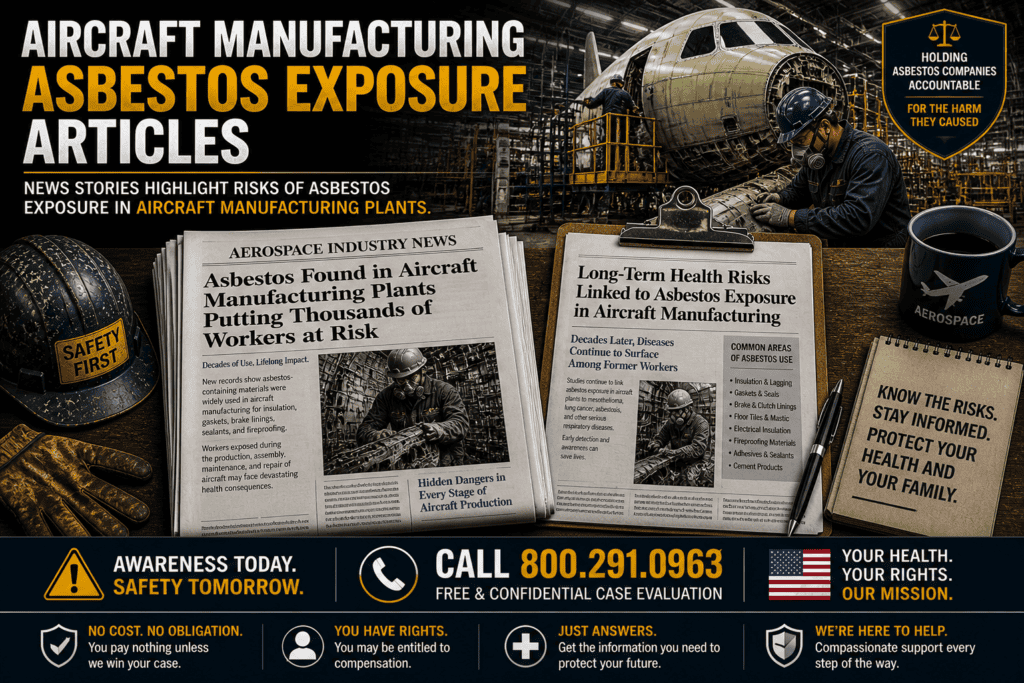
✈️Aircraft Manufacturing Asbestos Exposure Articles
Aircraft manufacturing facilities were among the most asbestos-intensive industrial environments of the 20th century. Extreme heat, vibration, fire-resistance requirements, and high-performance engineering led aircraft manufacturers to rely heavily on asbestos-containing materials. Asbestos was widely used in aircraft engines, braking systems, insulation, electrical components, fireproofing, and production facilities.
Workers involved in aircraft assembly, engine manufacturing, maintenance, and plant operations were routinely exposed to airborne asbestos fibers—often without warnings or protective equipment. Decades later, many former aircraft manufacturing workers have developed mesothelioma, lung cancer, and asbestosis due to prolonged occupational exposure.
This hub organizes Aircraft Manufacturing Asbestos Exposure Articles into focused categories to help workers and families understand exposure sources, high-risk job roles, and legal options.
✈️ Aircraft Manufacturing Facilities Asbestos Exposure
Aircraft factories and assembly plants used asbestos extensively throughout production floors, testing areas, and utility systems.
Aircraft Assembly Plants Asbestos Exposure
Large assembly facilities used asbestos insulation, fireproofing, and soundproofing throughout production lines.
Aircraft Engine Manufacturing Facilities Asbestos Exposure
Engine plants relied on asbestos for heat shielding, gaskets, and insulation around high-temperature components.
Aircraft Parts & Component Manufacturing Asbestos Exposure
Facilities producing brakes, clutches, wiring, and control systems used asbestos materials during fabrication.
🔧 Aircraft Components & Materials Asbestos Exposure
Asbestos was incorporated into many aircraft components due to its durability, heat resistance, and friction control.
Aircraft Engines & Exhaust Systems Asbestos Exposure
Asbestos insulation and heat shields were used around engines and exhaust assemblies.
Aircraft Brakes & Friction Materials Asbestos Exposure
Brake pads, linings, and clutch components released asbestos dust during machining and testing.
Aircraft Electrical Systems Asbestos Exposure
Electrical wiring, panels, and control boxes contained asbestos insulation disturbed during installation and repair.
Aircraft Insulation, Fireproofing & Soundproofing Asbestos Exposure
Sprayed insulation and fireproofing materials released fibers during cutting, drilling, and retrofits.
👨🏭 Aircraft Manufacturing Occupations Asbestos Exposure
Many aircraft manufacturing jobs involved direct and repeated contact with asbestos-containing materials.
Aircraft Mechanics & Technicians Asbestos Exposure
Mechanics serviced engines, brakes, and systems containing asbestos components.
Aircraft Assemblers & Production Workers Asbestos Exposure
Assembly line workers handled asbestos-containing parts daily during aircraft construction.
Aircraft Maintenance & Repair Workers Asbestos Exposure
Maintenance crews disturbed asbestos while servicing machinery, tools, and factory systems.
🏗️ Aircraft Manufacturing Renovation & Environmental Exposure
Older aircraft plants created especially dangerous asbestos exposure conditions during upgrades and closure.
Aircraft Manufacturing Plant Renovation Asbestos Exposure
Modernization projects disturbed hidden asbestos in walls, ceilings, ducts, and piping.
Aircraft Manufacturing Demolition Asbestos Exposure
Demolition of hangars and factories released concentrated asbestos dust into the air.
⚖️ Aircraft Manufacturing Asbestos Exposure Lawsuits
Workers and families have pursued legal action for asbestos-related diseases linked to aircraft manufacturing.
Aircraft Manufacturing Mesothelioma Lawsuit
Lawsuits filed by aircraft workers diagnosed with mesothelioma from occupational asbestos exposure.
Aircraft Manufacturing Asbestos Trust Funds
Compensation through trust funds created by bankrupt asbestos product manufacturers.
Aircraft Manufacturing Wrongful Death Lawsuit
Legal claims filed by families after fatal asbestos-related illnesses.
⚠️ Why Aircraft Manufacturing Asbestos Exposure Was So Dangerous
Aircraft manufacturing combined several high-risk factors:
-
High heat and friction breaking down asbestos materials
-
Confined workspaces trapping fibers
-
Continuous vibration releasing asbestos dust
-
Long shifts with daily exposure over many years
Because asbestos diseases have long latency periods, many diagnoses occur decades after exposure.
❓ Aircraft Manufacturing Asbestos Exposure FAQs
Did aircraft manufacturers really use asbestos?
Yes. Asbestos was widely used in engines, brakes, insulation, wiring, and fireproofing.
Which workers were most at risk?
Mechanics, assemblers, engine technicians, electricians, maintenance crews, and insulators.
Can claims still be filed years later?
Yes. Most claims are filed after diagnosis, not at the time of exposure.
Are family members eligible for compensation?
Yes. Secondary exposure and wrongful death claims may apply.
Free Case Evaluation – Aircraft Manufacturing Asbestos Exposure
If you or a loved one worked in aircraft manufacturing and later developed mesothelioma or another asbestos-related disease, legal compensation may still be available.
✔️ Free case review
✔️ No upfront legal fees
✔️ Nationwide asbestos law support
📞 Call 800-291-0963 today to explore your legal options.