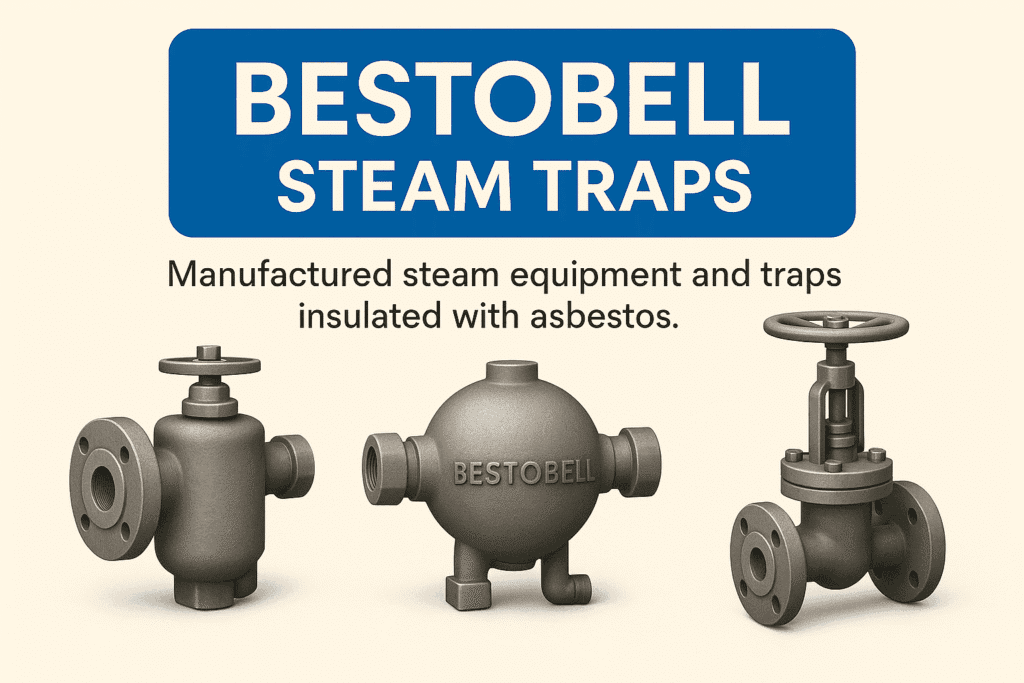
Bestobell Steam Traps Asbestos Exposure: Workers, Gaskets & Claims
Bestobell Steam is a long-established steam-trap and steam-specialty brand used in industrial steam systems. Federal appellate records confirm that a Bestobell Steam division distributed Bestobell steam traps and related products in the United States during the 1980s, and that Richards Industries acquired the division’s assets in 1986 and became the exclusive U.S. distributor. Current Bestobell Steam products continue to include thermodynamic, thermostatic, bimetallic and sanitary steam traps.
Older secondary asbestos sources have alleged asbestos-containing gaskets in historical Bestobell steam traps, but the primary company and court records located for this rebuild did not establish a reliable universal asbestos-use period, a complete historical asbestos-product list, or a Bestobell-specific exposure total. For accuracy, this page treats historical gasket asbestos content as a product- and date-specific issue requiring evidence. No Bestobell-specific §524(g) asbestos personal-injury trust was confirmed from the primary records reviewed.
🏢 Bestobell Steam History
Bestobell’s history involves multiple entities and geographic markets. Bestobell AquaTronix states that its Canadian operation began in 1953 as the Canadian office of Bestobell Mobrey, a UK manufacturer serving petrochemical, power and shipbuilding industries. In the United States, a 1989 Fourth Circuit decision documents a Bestobell Steam division of General Connectors Corporation and its distribution of steam traps.
Documented Timeline
| Date / Period | Documented Event |
|---|---|
| 1953 | Bestobell AquaTronix states that the Canadian office of Bestobell Mobrey was established, serving petrochemical, power and shipbuilding markets. |
| 1979 | Federal appellate records state that Valtrol’s exclusive distributorship relationship involving Bestobell steam traps dated to November 1979. |
| March 1984 | Fourth Circuit records describe formation of General Connectors’ Bestobell Steam division. |
| October 1984 | Valtrol and the Bestobell Steam division executed a renewed exclusive distributorship agreement covering steam traps and related products. |
| August 1986 | Federal appellate record identifies the division’s last steam-trap shipment to Valtrol. |
| November 1986 | General Connectors discontinued its steam-trap division and sold the division’s assets to Richards Industries. |
| After 1986 | Richards Industries became the exclusive U.S. distributor of Bestobell steam traps according to the Fourth Circuit. |
| Current | Bestobell Steam operates as a division of Richards Industries and markets multiple steam-trap product families. |
For broader equipment research, see Industrial Equipment Manufacturers & Asbestos Exposure.
⚙️ Bestobell Steam Traps, Gaskets & Components
A steam trap removes condensate and non-condensable gases from a steam system while limiting loss of live steam. Because traps must be opened or rebuilt during maintenance, internal sealing components can become important in historical exposure investigations. Current Bestobell documentation shows maintainable traps with gaskets and replaceable internals, but current gasket specifications must not be used as proof of what older products contained.
Documented Bestobell Product Categories
| Product Category | Verified Information |
|---|---|
| Delta Element steam traps | Bestobell states that its Delta Element technology was developed more than 40 years ago to address steam loss and trap failure. |
| Thermostatic / thermodynamic traps | Current Bestobell product families include M, GM, DM and related Delta Element trap series. |
| Thermodynamic disc traps | Current product line includes disc-style steam traps for industrial steam applications. |
| Float & thermostatic traps | Bestobell markets F&T steam-trap products. |
| Sanitary / clean-steam traps | Current BTCS and DTCS products serve clean-steam applications. |
| Steam-trap stations | Current Total Trap product line integrates steam-trap station components. |
| Gaskets | Current Bestobell technical literature documents gasketed trap construction; for example, a current DM25 data sheet specifies flexible graphite. |
Historical Asbestos Verification Status
| Question | Research Finding |
|---|---|
| Were historical Bestobell steam traps alleged to contain asbestos gaskets? | Yes, secondary asbestos sources make this allegation. |
| Did primary records reviewed establish that every Bestobell trap contained asbestos? | No. |
| Was a universal asbestos-use end date confirmed from primary records? | No; no date is presented as verified. |
| Can current gasket materials prove historical composition? | No. Current technical literature describes present materials, not necessarily historical materials. |
| What should a claim investigation establish? | The specific trap model, date, gasket/component composition and claimant’s actual work with or near the product. |
👷 Workers & Industries Associated With Steam Traps
Bestobell’s own history and current product materials place its equipment in steam-intensive industries. Workers servicing traps can include pipefitters, steamfitters, plumbers, boiler-room mechanics and industrial maintenance personnel. Historical asbestos exposure should be attributed only when the particular gasket or other disturbed material can be shown to have contained asbestos.
Potentially Exposed Worker Groups
| Worker Group | Potential Historical Activity |
|---|---|
| Pipefitters / steamfitters | Installing, isolating, removing and servicing steam traps. |
| Boiler-room mechanics | Maintaining steam and condensate systems. |
| Industrial maintenance workers | Opening, rebuilding and replacing traps and sealing components. |
| Plumbers | Servicing commercial steam-heating systems. |
| Power-plant workers | Maintaining steam distribution and condensate-return equipment. |
| Petrochemical workers | Servicing steam tracing and process-steam systems. |
| Shipbuilding / marine workers | Bestobell’s official Canadian history identifies shipbuilding as an early served industry. |
| Nearby trades | Potential bystander exposure if verified asbestos-containing components were disturbed nearby. |
Relevant Industries & Applications
| Industry / Setting | Bestobell Connection |
|---|---|
| Petrochemical | Identified in Bestobell’s official history and current industry coverage. |
| Power | Identified as an early Bestobell market and a current industry category. |
| Shipbuilding / marine | Official history identifies shipbuilding; current Bestobell materials continue to serve marine applications. |
| Process plants | Steam traps are used for process and space-heating applications. |
| Food & beverage | Current Bestobell sanitary traps are designed for clean-steam systems. |
| Facilities / commercial heating | Steam traps support steam-heating and condensate-management systems. |
See High-Risk Jobs Asbestos Exposure and Job Site Asbestos Exposure.
Need help now? Call 800.291.0963
Live chat is available 24/7, 365 days a year.
Submit Your Case
🔧 How Bestobell Steam-Trap Exposure Could Occur
If a historical Bestobell trap contained an asbestos gasket or other asbestos-containing sealing component, maintenance could disturb the material. A defensible exposure analysis should identify both the product and the task rather than assuming exposure from brand presence alone.
Potential Maintenance Pathways
| Task | Potential Exposure Issue |
|---|---|
| Opening a steam trap | Could expose internal gasket or sealing materials. |
| Removing an old gasket | Aged material could tear or adhere to metal surfaces. |
| Scraping gasket residue | Mechanical cleaning could create dust if the historical gasket contained asbestos. |
| Rebuilding a trap | Replaceable internals and sealing materials may be handled during overhaul. |
| Replacing a trap | Disconnecting old equipment can disturb flange gaskets supplied by Bestobell or third parties. |
| Steam-line maintenance | Nearby piping insulation or flange materials may involve other asbestos-product manufacturers. |
| Cleanup | Debris from verified asbestos-containing components could be re-suspended. |
Asbestos-Related Health Conditions
| Condition | General Relationship to Asbestos |
|---|---|
| Mesothelioma | A rare cancer strongly associated with asbestos exposure. |
| Lung cancer | Occupational asbestos exposure can increase lung-cancer risk. |
| Asbestosis | Progressive pulmonary fibrosis caused by inhaled asbestos fibers. |
| Pleural disease | Asbestos exposure can cause pleural plaques, thickening and other abnormalities. |
A Bestobell steam trap at a worksite does not by itself establish asbestos exposure.
⚖️ Bestobell Corporate History & Current Claim Status
The clearest primary corporate record located is the Fourth Circuit’s 1989 Valtrol v. General Connectors decision. It confirms the U.S. Bestobell Steam division’s distribution activity and the 1986 asset sale to Richards Industries. That commercial decision does not establish asbestos liability or successor liability for any particular asbestos claim; those questions depend on the relevant product, entity, transaction documents and governing law.
Current Claim Structure
| Issue | Verified Status |
|---|---|
| Bestobell steam-trap business | Documented historically and continues today under the Bestobell Steam brand. |
| 1986 asset transaction | Fourth Circuit states General Connectors sold Bestobell Steam division assets to Richards Industries. |
| Richards Industries relationship | Became exclusive U.S. distributor after the 1986 transaction; current Bestobell Steam identifies itself as a Richards Industries division. |
| Bestobell-specific §524(g) asbestos trust | No such trust confirmed from primary records reviewed. |
| Trust payment percentage | Not applicable. |
| Scheduled disease values | Not applicable. |
| Potential civil claim | Requires product-specific exposure, entity and jurisdictional analysis. |
Claim Questions Requiring Evidence
| Question | Why It Matters |
|---|---|
| Which Bestobell entity supplied the trap? | Bestobell’s corporate/distribution history includes multiple entities. |
| When was the trap manufactured or installed? | Historical component composition can change over time. |
| Did the gasket actually contain asbestos? | Primary records reviewed do not support a universal asbestos-content assumption. |
| Was the gasket original or replacement? | Replacement material could have been supplied by another company. |
| Did the claimant personally disturb it? | Frequency, proximity and work method are important exposure facts. |
📊 Documented Bestobell Records
The available primary record is stronger for Bestobell’s steam-trap business and corporate history than for historical asbestos composition. This page preserves that distinction instead of converting unverified secondary allegations into confirmed facts.
Primary Records Used
| Record | What It Establishes |
|---|---|
| Valtrol, Inc. v. General Connectors Corp., 884 F.2d 149 (4th Cir. 1989) | Bestobell Steam division, steam-trap distribution, 1979 distributorship history, 1986 cessation and asset sale to Richards Industries. |
| Bestobell AquaTronix official history | Canadian Bestobell operation established in 1953 as office of UK-based Bestobell Mobrey serving petrochemical, power and shipbuilding. |
| Bestobell Steam official product site | Current steam-trap product families and Richards Industries relationship. |
| Bestobell current technical data | Current construction details; e.g., DM25 uses a flexible-graphite gasket. Current materials are not treated as proof of historical composition. |
Statistics & Claims We Do Not Invent
| Category | Verified Status |
|---|---|
| Total Bestobell workers exposed to asbestos | No reliable company-wide total confirmed. |
| Total Bestobell asbestos lawsuits | No authoritative cumulative total confirmed from primary records reviewed. |
| Universal asbestos-use period | Not confirmed from primary records reviewed. |
| Universal 1984 asbestos cutoff | Not presented as confirmed because the primary records reviewed did not verify it. |
| Bestobell-specific asbestos trust assets | Not applicable; no §524(g) trust confirmed. |
| Bestobell trust payment percentage | Not applicable. |
📋 Bestobell Claim Evidence & Product Identification
A Bestobell claim should begin with identification of the specific trap and historical component rather than a general statement that all Bestobell products contained asbestos. Product literature, maintenance records and firsthand testimony can be especially important.
Evidence That May Help Document Exposure
- Medical documentation establishing an asbestos-related disease.
- Employment, union, Social Security, military or maritime records.
- Bestobell steam-trap nameplates, model numbers and serial numbers.
- Historical Bestobell manuals, catalogs and parts lists.
- Plant, ship or building mechanical-equipment schedules.
- Maintenance and rebuild records identifying gasket replacement.
- Invoices, packaging or storeroom records identifying replacement gasket materials.
- Evidence establishing the composition of the particular historical gasket.
- Coworker testimony describing trap maintenance and dust-generating work.
- Evidence identifying third-party flange gaskets, insulation or other asbestos products encountered nearby.
Separate asbestos trust claims may exist for qualifying exposure to products made by bankrupt manufacturers encountered in the same steam system or workplace. Each trust has independent requirements. Compensation is not guaranteed.
❓ Frequently Asked Questions
What are Bestobell steam traps?
They are devices used in steam systems to discharge condensate and non-condensable gases while limiting the loss of live steam. Bestobell currently offers several trap technologies and configurations.
How long has Bestobell been associated with steam equipment?
Bestobell’s Canadian operation dates to 1953, and a federal appellate decision documents a U.S. Bestobell Steam distributorship relationship for steam traps dating to 1979.
Did Bestobell steam traps contain asbestos?
Historical asbestos sources have alleged asbestos-containing gaskets in older Bestobell traps. However, the primary records reviewed for this rebuild did not establish that every Bestobell trap contained asbestos or confirm a universal asbestos-use period. A claim should identify the specific product and gasket.
Who acquired the U.S. Bestobell Steam division?
The Fourth Circuit states that General Connectors discontinued its Bestobell Steam division in November 1986 and sold the division’s assets to Richards Industries, which became the exclusive U.S. distributor of Bestobell steam traps.
Does Richards Industries still have a Bestobell Steam business?
Yes. Bestobell Steam’s current official site identifies the business as a division of Richards Industries.
Does Bestobell have an asbestos bankruptcy trust?
No Bestobell-specific §524(g) asbestos personal-injury trust was confirmed from the primary records reviewed.
Does finding a Bestobell trap prove asbestos exposure?
No. The trap model, date, gasket composition, maintenance activity and personal exposure must be established.
What evidence may support a Bestobell steam-trap asbestos claim?
Medical records, work history, trap identification, historical manuals, maintenance records, gasket evidence and credible coworker testimony may help document exposure.
🧾 Bestobell Steam Traps Summary
| Detail | Information |
|---|---|
| Product focus | Steam traps and steam-system specialties |
| Canadian Bestobell history | Official history dates operation to 1953 |
| U.S. distributorship history | Federal appellate record dates Valtrol relationship to 1979 |
| 1986 transaction | Bestobell Steam division assets sold by General Connectors to Richards Industries |
| Current U.S. business | Bestobell Steam, a division of Richards Industries |
| Historical asbestos issue | Older asbestos allegations focus on gasket components; universal asbestos content not verified from primary records reviewed |
| Current gasket example | Current DM25 documentation specifies flexible graphite; not evidence of historical asbestos composition |
| Bestobell-specific asbestos trust | No §524(g) trust confirmed |
| Current trust payment percentage | Not applicable |
| Exposure totals | No reliable nationwide total confirmed |
📚 Confirmed Primary Sources
- U.S. Court of Appeals for the Fourth Circuit — Valtrol, Inc. v. General Connectors Corporation, 884 F.2d 149 (1989), documenting the Bestobell Steam division, steam-trap distributorship and 1986 sale of division assets to Richards Industries.
- Bestobell AquaTronix — official company history documenting the Canadian Bestobell operation beginning in 1953 and its petrochemical, power and shipbuilding markets.
- Bestobell Steam — official current product materials documenting Delta Element, thermodynamic, sanitary and other steam-trap product lines.
- Bestobell Steam / Richards Industries — current company information identifying Bestobell Steam as a Richards Industries division.
- Bestobell current DM25 technical data — present-day construction specification listing a flexible-graphite gasket; used only to describe current product construction, not historical asbestos content.
Submit Your Case
Call 800.291.0963
Live chat is available 24/7, 365 days a year.
Submit Your Case
Working around a Bestobell steam trap does not automatically establish asbestos exposure, disease causation, legal liability or compensation. The specific trap, date, gasket or other component, asbestos content, original or replacement status, work activity, exposure history and applicable law must be evaluated individually. Compensation is not guaranteed.
⚕️ Legal & Medical Information Disclaimer
This page provides general educational information and is not legal or medical advice. Consult a qualified healthcare professional about diagnosis and treatment and a qualified attorney about individual legal rights and filing deadlines.