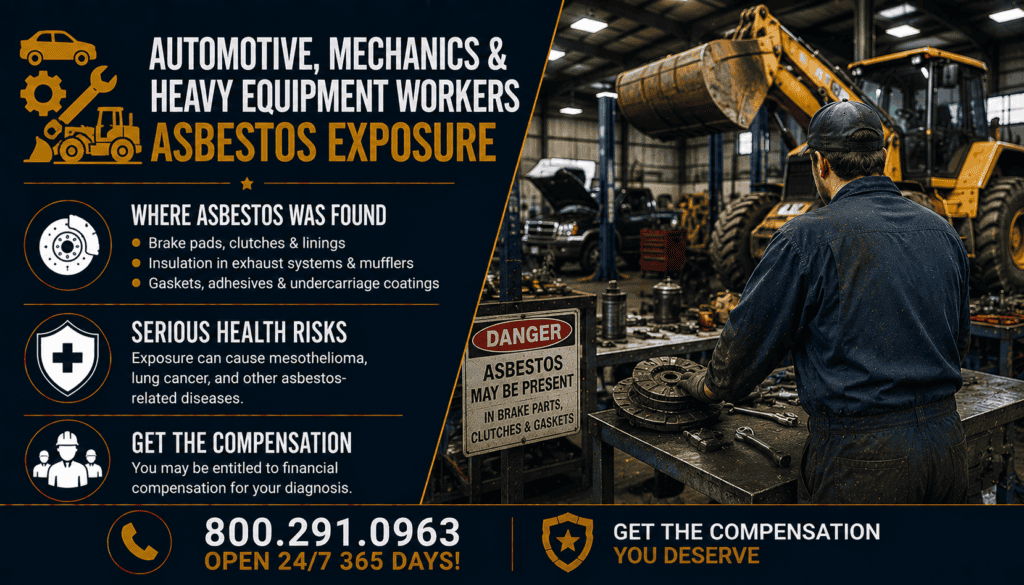
Automotive Mechanics & Heavy Equipment Workers Asbestos Exposure
Automotive mechanics, fleet technicians and heavy equipment workers have serviced brakes, clutches and other friction components on cars, trucks and machinery for decades. Some historical brake linings, clutch facings and related friction products contained asbestos, creating a potential exposure pathway when asbestos-containing parts were inspected, disassembled, cleaned, repaired or replaced.
OSHA’s asbestos standard specifically regulates automotive brake and clutch work and requires engineering controls and work practices designed to reduce asbestos exposure. NIOSH also published dedicated guidance for controlling asbestos during brake-drum service. Not every brake or clutch contains asbestos, so a worker’s history should identify the vehicles or equipment, parts, era and maintenance methods involved.
Automotive Mechanics and Heavy Equipment Asbestos Exposure
Mechanics and equipment workers can service passenger vehicles, commercial trucks, buses, military vehicles, construction machinery, agricultural equipment and other mobile equipment. Potential asbestos exposure is most strongly documented in historical brake and clutch servicing involving asbestos-containing friction materials.
OSHA states that employees who repair and replace automotive brakes and clutches may be exposed to asbestos fibers. Its general-industry asbestos standard contains specific compliance methods for brake and clutch repair, and mandatory Appendix F sets out detailed controls for inspection, disassembly, repair and assembly.
NIOSH published Control of Asbestos Exposure During Brake Drum Service specifically to recommend engineering controls and work practices that reduce asbestos exposure during brake maintenance operations.
This does not mean every mechanic or heavy equipment worker was exposed. The strongest individual histories connect a worker to specific asbestos-containing parts and tasks capable of releasing fibers.
Asbestos in Older Brakes, Clutches and Friction Parts
OSHA’s technical information identifies automotive brake and clutch linings among products historically manufactured with asbestos. Potential mechanic exposure can involve:
- Older asbestos-containing drum brake linings and brake shoes
- Older asbestos-containing clutch facings
- Brake and clutch residue generated from asbestos-containing friction material
- Dust inside brake drums or clutch assemblies where asbestos-containing components were used
- Other older friction components where manufacturer, product or laboratory evidence confirms asbestos content
OSHA’s mandatory Appendix F describes two preferred control approaches: a negative-pressure enclosure with HEPA vacuuming and a low-pressure/wet-cleaning method. For facilities performing no more than five pairs of brakes or five clutches per week, the appendix also provides a specified wet method.
The Appendix F wet methods prohibit dry brushing. OSHA requires controls intended to contain, capture or wet asbestos-containing residue rather than disperse fibers into a worker’s breathing zone.
A component’s appearance alone is not a reliable way to determine asbestos content. Manufacturer information, packaging, service records, product literature and laboratory analysis can be more useful.
How Mechanics Could Encounter Asbestos
When brakes or clutches actually contained asbestos, certain maintenance practices could disturb accumulated friction residue or the asbestos-containing component itself.
- Brake inspection: opening drums or assemblies containing asbestos-bearing residue
- Brake replacement: removing and handling older asbestos-containing shoes or linings
- Clutch repair: disassembling and replacing asbestos-containing clutch facings
- Cleaning: disturbing brake or clutch dust during servicing
- Compressed-air cleaning: historically dispersing residue from assemblies when asbestos-containing components were present
- Grinding or fitting: mechanically altering confirmed asbestos-containing friction material
- Nearby work: sharing a shop where asbestos-containing brake or clutch residue was disturbed
NIOSH’s brake-service publication focused specifically on reducing exposure during brake maintenance. OSHA’s mandatory control requirements likewise address inspection, disassembly, repair and assembly operations involving materials containing asbestos.
Modern non-asbestos brakes and clutches should not be described as asbestos sources merely because they generate dust. The composition of the actual component matters.
Garages, Fleet Shops and Heavy Equipment Work Areas
A credible occupational history identifies the shop, employer, vehicle or equipment type, dates, parts serviced and work practices.
Automotive Repair Garages
Professional mechanics may perform repeated brake and clutch jobs. OSHA’s asbestos rule specifically addresses these operations and requires defined exposure-control practices when covered asbestos-containing materials are involved.
Truck and Bus Fleet Shops
Fleet mechanics can service larger brake and clutch systems on commercial vehicles. Historical asbestos exposure depends on whether the original or replacement components actually contained asbestos.
Heavy Equipment Maintenance Shops
Construction, mining and industrial equipment can use friction braking and clutch systems. OSHA has addressed application of its asbestos requirements to brake and clutch work on vehicles and machines beyond ordinary passenger automobiles.
Military Vehicle Maintenance
Mechanics working on older military vehicles may have serviced friction components similar to those used in civilian fleets. Exposure should be established with vehicle, part, time-period or other evidence rather than assumed from military maintenance work alone.
Public Works and Government Garages
Fleet maintenance can involve repeated brake and clutch servicing. OSHA’s requirements focus on controlling asbestos-containing residue through engineering controls and prescribed work practices.
Dealership and Specialty Repair Facilities
Dealership technicians and specialty brake or transmission workers may have performed frequent friction-component work. Frequency alone does not establish asbestos exposure; the parts and time period remain important.
Related resources include mechanics mesothelioma and asbestos exposure lawsuits, maintenance mechanics asbestos exposure, maintenance workers asbestos exposure, machine operators asbestos exposure and high-risk jobs asbestos exposure.
Secondary or Household Exposure
Historically, asbestos-containing brake or clutch residue could contaminate work clothing when controls were inadequate. A household exposure history should identify the mechanic, employer, time period, asbestos-containing friction work and how contaminated clothing or dust reached family members.
Need help now? Call 800.291.0963
Live chat available 24/7, 365 days a year.
Submit Your Case
Mesothelioma and Other Occupational Health Risks
Asbestos is a recognized occupational carcinogenic hazard. For automotive mechanics and heavy equipment workers, asbestos-related health concerns become relevant when evidence supports actual exposure to asbestos-containing friction products or another confirmed asbestos source.
Brake and clutch dust can contain materials other than asbestos. A dusty brake job by itself therefore does not establish asbestos exposure. The component’s composition, work method and time period are important.
OSHA’s dedicated brake-and-clutch requirements demonstrate that exposure from covered asbestos-containing friction-product servicing is a recognized occupational-control issue. The mandatory methods are designed to reduce release of asbestos fibers into workers’ breathing zones.
Medical questions about prior asbestos exposure, symptoms, screening or diagnosis should be discussed with a qualified healthcare professional.
Documenting a Mechanic or Equipment Worker Exposure History
A useful investigation identifies the employer, dates, shop, job title, vehicle or equipment type, friction components and maintenance practices.
- Employment evidence: repair shop, fleet, dealership, contractor, military unit, payroll, W-2, union and Social Security records
- Vehicle evidence: automobiles, trucks, buses, military vehicles or heavy equipment serviced
- Part evidence: brake shoes, linings, clutch facings, manufacturers, part numbers and packaging
- Task evidence: inspection, drum removal, brake replacement, clutch repair, grinding, cleaning or compressed-air use
- Material evidence: manufacturer literature, safety data, product catalogs, invoices and laboratory analyses
- Exposure evidence: industrial-hygiene monitoring, shop procedures, OSHA records and NIOSH research
- Witness evidence: mechanics, service managers, parts employees, fleet supervisors and coworkers
Historical invoices and parts records can be particularly useful because a mechanic may remember vehicle types and procedures but not whether a particular brake lining or clutch facing contained asbestos.
Questions That Can Strengthen an Exposure History
Which employer and years? What vehicles or equipment were serviced? How many brake or clutch jobs were performed? How were assemblies cleaned? Were linings ground or fitted? What brands or part numbers were used? Are old invoices, catalogs, service records or coworker statements available? These details can help define a specific exposure pathway.
Asbestos Lawsuits, Trust Funds and Compensation
An automotive mechanic or heavy equipment worker diagnosed with mesothelioma or another asbestos-related disease may have potential legal or compensation options when evidence supports occupational asbestos exposure and applicable requirements are met. Possible avenues can include claims involving legally responsible companies and asbestos bankruptcy trusts.
Mechanic employment alone does not establish liability or asbestos trust eligibility. Each claim has separate medical, exposure, company, product and filing requirements. Evidence connecting the worker to an asbestos-containing friction product or another covered asbestos source may be necessary.
Potential evidence includes employment and Social Security records, parts invoices, manufacturer catalogs, product packaging, service manuals, shop records, industrial-hygiene studies, military or fleet records, photographs, coworker statements and medical documentation. Applicable law and filing deadlines should be reviewed individually.
Related Mechanic and Maintenance Resources
Mechanics: Mechanics Mesothelioma, Asbestos Exposure & Lawsuits · Maintenance Mechanics Asbestos Exposure
Maintenance: Maintenance Workers Asbestos Exposure
Industrial work: Machine Operators Asbestos Exposure
Authoritative Sources
This page was researched using OSHA and NIOSH government sources. The strongest occupation-specific evidence is OSHA’s mandatory brake-and-clutch appendix and NIOSH’s dedicated publication on controlling asbestos exposure during brake-drum service.
- OSHA — Mandatory Appendix F for Automotive Brake and Clutch Work
- OSHA — 29 CFR 1910.1001 Asbestos Standard
- NIOSH — Control of Asbestos Exposure During Brake Drum Service
- OSHA — Evaluating and Controlling Asbestos Exposure
- OSHA — Inspection Procedures for Occupational Exposure to Asbestos
- OSHA — Substance Technical Information for Asbestos
Automotive and Heavy Equipment Asbestos Exposure FAQ
Did older automotive brakes contain asbestos?
Some did. OSHA identifies automotive brake and clutch linings among historical asbestos uses and has mandatory work practices for covered brake and clutch operations.
Did all brakes and clutches contain asbestos?
No. Asbestos content varied by manufacturer, product and era. Product records or testing are more reliable than assuming a component contained asbestos.
Could cleaning brake drums release asbestos fibers?
Yes, when asbestos-containing friction material or residue was present and disturbed. OSHA’s mandatory methods are designed to capture or wet residue and reduce fiber release.
Could heavy equipment mechanics encounter asbestos in brakes?
Potentially. Heavy machinery can use friction braking and clutch systems. The component and applicable work determine whether asbestos is present and what controls are required.
Does OSHA require special methods for covered brake and clutch work?
Yes. OSHA requires specified engineering controls and work practices, including preferred negative-pressure/HEPA and low-pressure/wet-cleaning methods, with other provisions described in mandatory Appendix F.
Is all brake dust asbestos?
No. Brake dust can contain multiple materials. An asbestos exposure history requires evidence that the serviced friction component contained asbestos.
What records can document a mechanic’s asbestos exposure?
Employment records, parts invoices, manufacturer catalogs, packaging, service records, fleet or military files, industrial-hygiene reports and coworker statements can help reconstruct exposure.
Can mechanics qualify for asbestos trust fund claims?
Some may qualify if they meet a trust’s medical and exposure criteria and can connect their work to a covered asbestos product, company or qualifying exposure period. Mechanic employment alone does not establish eligibility.
Get Help Reviewing a Mechanic Exposure History
Call 800.291.0963
Live chat is available 24/7, 365 days a year.
Prior automotive, fleet or heavy equipment maintenance work does not automatically prove asbestos exposure, disease causation, liability, claim eligibility or compensation. Each situation depends on the employer, dates, vehicles or equipment, friction products, maintenance practices, asbestos-content evidence, medical evidence and applicable legal requirements. Compensation is not guaranteed.
⚕️ Legal & Medical Information Disclaimer
This page provides general educational information and is not medical or legal advice. The information does not establish asbestos exposure, diagnosis, causation, liability, claim eligibility or compensation. Medical concerns should be discussed with a qualified healthcare professional, and legal questions should be reviewed with a qualified attorney.