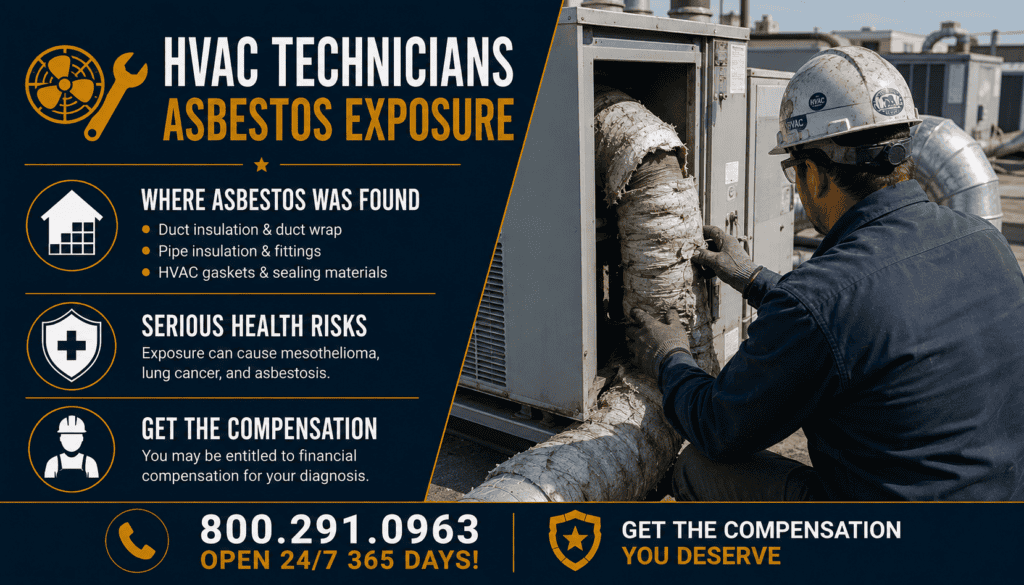
HVAC Technicians Asbestos Exposure
HVAC technicians may have encountered asbestos while servicing older heating, ventilation and air-conditioning systems in buildings containing asbestos thermal-system insulation. OSHA specifically defines thermal system insulation as asbestos-containing material applied to pipes, fittings, boilers, breeching, tanks, ducts and other structural components to prevent heat loss or gain.
Modern HVAC work does not automatically involve asbestos, and fiberglass duct insulation is not asbestos. Historical exposure depended on the building, era, system, material and task—particularly whether older asbestos-containing duct, pipe, boiler or mechanical insulation was cut, drilled, removed, damaged or otherwise disturbed during service or renovation.
HVAC Technician Work and Asbestos Exposure
HVAC technicians install, inspect, maintain and repair heating, cooling and ventilation equipment. Work may require access to mechanical rooms, ceilings, crawlspaces, utility areas, duct systems, piping and older heating equipment.
Asbestos becomes relevant when HVAC work affects confirmed or presumed asbestos-containing material. OSHA’s construction asbestos standard applies to repair, maintenance and renovation involving asbestos, and it classifies repair and maintenance operations that may disturb asbestos-containing material as Class III asbestos work.
For an individual technician, the strongest history identifies the specific building, HVAC system, insulation and task. Simply servicing an air conditioner, furnace or modern duct system does not establish asbestos exposure.
Readers can also review mechanical, pipe and HVAC trades asbestos exposure and high-risk jobs associated with asbestos exposure.
Asbestos-Containing HVAC and Mechanical Materials
OSHA’s asbestos standard expressly includes ducts within its definition of thermal system insulation. It also includes pipes, fittings, boilers, breeching and tanks—components HVAC technicians may encounter in older mechanical systems.
- Older asbestos-containing duct insulation or thermal wrapping where documented
- Asbestos-containing pipe and fitting insulation serving heating systems
- Older boiler and breeching insulation in mechanical rooms
- Insulation on tanks and other heated mechanical components
- Asbestos-containing surfacing or fireproofing encountered while accessing HVAC systems
- Other asbestos-containing building materials disturbed to reach ducts, piping or equipment
OSHA treats thermal-system insulation and surfacing material in buildings constructed no later than 1980 as presumed asbestos-containing material unless that presumption is properly rebutted. This does not mean every HVAC material in every older building contained asbestos.
Readers researching older mechanical spaces can also review insulators asbestos exposure and asbestos exposure in buildings.
How HVAC Technicians Could Be Exposed
Potential exposure could occur when confirmed or presumed asbestos-containing thermal insulation or surfacing material was disturbed during HVAC service, maintenance, repair or renovation.
- Duct access: cutting or disturbing older asbestos-containing insulation to reach ductwork or components
- Pipe service: removing insulation to repair heating pipes, valves or fittings
- Boiler work: servicing older heating equipment around asbestos-containing boiler or breeching insulation
- Drilling and cutting: penetrating asbestos-containing thermal insulation or surfacing material during installation or repair
- Renovation: opening ceilings or walls where legacy asbestos-containing materials are present
- Nearby asbestos work: working adjacent to insulators, maintenance crews or abatement workers disturbing asbestos-containing material
OSHA requires Class III asbestos work to use controls that minimize exposure. Where work involves drilling, cutting, abrading, sanding, chipping, breaking or sawing thermal-system insulation or surfacing material, OSHA requires additional isolation and control measures.
Related occupational pages include boilermakers asbestos exposure and pipelayers asbestos exposure.
HVAC Service, Maintenance and Renovation Work
HVAC technicians frequently perform maintenance rather than asbestos removal. OSHA distinguishes Class III repair and maintenance work from Class I removal of thermal-system insulation. The classification depends on the operation and material disturbed.
Before covered work begins, OSHA requires employers to identify the presence, location and quantity of asbestos-containing or presumed asbestos-containing material in areas where employees will work and to communicate relevant information and precautions.
Mechanical Rooms and Older Heating Systems
NIOSH has documented asbestos exposure concerns in boiler rooms and around hot-water pipe insulation. In one workplace investigation, NIOSH stated that precautions were needed when asbestos-insulated hot-water pipes were worked on. This supports a realistic HVAC maintenance scenario but does not mean every mechanical room had asbestos.
HVAC Systems During Asbestos Removal
OSHA requires HVAC systems in regulated areas to be isolated during Class I asbestos work so contaminated air does not migrate through the system. HVAC technicians should not be placed in a regulated asbestos-removal area without the training, controls and protection required for their work.
Fiberglass and Asbestos Are Different
Many HVAC systems use fibrous-glass insulation. Fiberglass is a different material and should not be described as asbestos. An asbestos exposure history should identify a separate asbestos-containing source through records, surveys, laboratory analysis or other reliable evidence.
Secondary or Household Exposure
If asbestos-containing duct, pipe or boiler insulation was heavily disturbed, fibers could historically contaminate clothing or equipment. Evaluating household exposure requires evidence about the asbestos source, task, dust conditions, clothing practices and frequency of contact. HVAC employment alone does not establish take-home exposure.
Need help now? Call 800.291.0963
Live chat available 24/7, 365 days a year.
Submit Your Case
Mesothelioma and Other Occupational Health Risks
OSHA and NIOSH recognize asbestos as a serious occupational health hazard. Occupational asbestos exposure is associated with malignant mesothelioma, lung cancer and asbestosis, and disease can develop many years after exposure.
HVAC technicians also face hazards separate from asbestos, including refrigerants, electrical hazards, heat, confined spaces, fibrous-glass irritation and other maintenance exposures. These should be evaluated separately rather than treating all HVAC insulation or dust as asbestos.
A mesothelioma diagnosis does not by itself establish which duct system, pipe insulation, boiler, employer or building caused asbestos exposure. Exposure-source evidence must be investigated separately.
Medical questions about occupational exposure, symptoms, screening or diagnosis should be discussed with a qualified healthcare professional.
Documenting an HVAC Technician Exposure History
HVAC technicians may service many buildings over a career. A useful historical investigation identifies older buildings and assignments where asbestos-containing thermal insulation or other asbestos-containing materials were documented and disturbed.
- Employment evidence: employer names, payroll records, W-2s, tax documents and Social Security earnings records.
- Union evidence: membership, apprenticeship, dispatch, pension and benefit records when available.
- Building evidence: addresses, construction dates, owners, mechanical plans and renovation records.
- HVAC evidence: service tickets, equipment records, duct drawings, boiler records and maintenance logs.
- Asbestos evidence: surveys, laboratory reports, abatement records and thermal-insulation specifications.
- Task evidence: drilling, cutting, insulation removal, duct access, boiler service, pipe repair and cleanup.
- Coworker evidence: HVAC technicians, pipefitters, plumbers, insulators, electricians and maintenance workers may help reconstruct conditions.
When product names are forgotten, record the building, approximate year, equipment being serviced, location of insulated ducts or piping, insulation condition, tools used and whether asbestos abatement occurred before or during the work.
Questions That Can Strengthen an HVAC Work History
Was the building constructed before 1981? Were ducts, heating pipes or boilers insulated? Did the technician cut or remove insulation to reach equipment? Was a ceiling or wall opened? Was an asbestos survey available? Were insulators or abatement workers present? These details can help identify a specific exposure scenario.
Asbestos Lawsuits, Trust Funds and Compensation for HVAC Technicians
An HVAC technician diagnosed with an asbestos-related disease may have potential legal or compensation options depending on the evidence and applicable law. Possible avenues can include claims involving legally responsible companies and asbestos bankruptcy trusts when their requirements are satisfied.
Occupation alone does not establish asbestos trust eligibility. Each trust has separate medical and exposure criteria, and evidence may be required connecting the technician to a covered asbestos-containing insulation product, company, operation or recognized jobsite during a qualifying period.
Useful evidence can include employment and union records, HVAC service tickets, mechanical drawings, asbestos surveys, contractor records, product documents, photographs, laboratory reports, coworker testimony and medical documentation. Filing deadlines vary by jurisdiction and claim type.
Related HVAC and Mechanical Trade Resources
Mechanical trades: Mechanical, Pipe & HVAC Trades Asbestos Exposure · Boilermakers Asbestos Exposure
Related occupations: Insulators Asbestos Exposure · Welders Asbestos Exposure
Jobsites and buildings: Industrial Construction Asbestos Exposure · Asbestos Exposure in Buildings
Authoritative Sources
This page was researched using OSHA and NIOSH primary sources with direct relevance to HVAC maintenance, ducts, thermal-system insulation and occupational asbestos exposure.
HVAC Technician Asbestos Exposure FAQ
Were all HVAC technicians exposed to asbestos?
No. Exposure depended on the building, era, HVAC system, insulation and tasks. Modern HVAC work does not automatically involve asbestos.
Could older duct insulation contain asbestos?
Yes. OSHA’s definition of thermal-system insulation specifically includes asbestos-containing material applied to ducts.
Could heating-pipe insulation contain asbestos?
Yes. OSHA specifically includes pipes and fittings in its thermal-system insulation definition, and NIOSH has documented asbestos-containing hot-water pipe insulation.
Could HVAC technicians encounter asbestos around boilers?
Potentially. OSHA identifies boiler insulation as a type of thermal-system insulation, and older mechanical rooms can contain asbestos-insulated boiler and piping systems.
Is fiberglass duct insulation asbestos?
No. Fiberglass and asbestos are different materials. An asbestos exposure requires evidence of an asbestos-containing source.
Could drilling or cutting old HVAC insulation create asbestos exposure?
Potentially, if the material contains asbestos. OSHA requires specific controls when Class III work drills, cuts, abrades, sands, chips, breaks or saws thermal-system insulation or surfacing material.
Can HVAC technicians qualify for asbestos trust fund claims?
Some may qualify, but each trust has separate medical and exposure requirements. Job title alone does not establish eligibility.
How can a retired HVAC technician document old exposure?
Employment and Social Security records, union files, service tickets, building records, mechanical plans, asbestos surveys, laboratory reports and coworker statements can help reconstruct older work.
Get Help Reviewing an HVAC Exposure History
Call 800.291.0963
Live chat is available 24/7, 365 days a year.
Prior work as an HVAC technician does not automatically prove asbestos exposure, disease causation, claim eligibility or compensation. Each situation depends on the buildings, dates, systems, insulation, tasks, work practices, medical evidence and applicable legal requirements. Compensation is not guaranteed.
⚕️ Legal & Medical Information Disclaimer
This page provides general educational information and is not medical or legal advice. The information does not establish asbestos exposure, diagnosis, causation, liability, claim eligibility or compensation. Medical concerns should be discussed with a qualified healthcare professional, and legal questions should be reviewed with a qualified attorney.