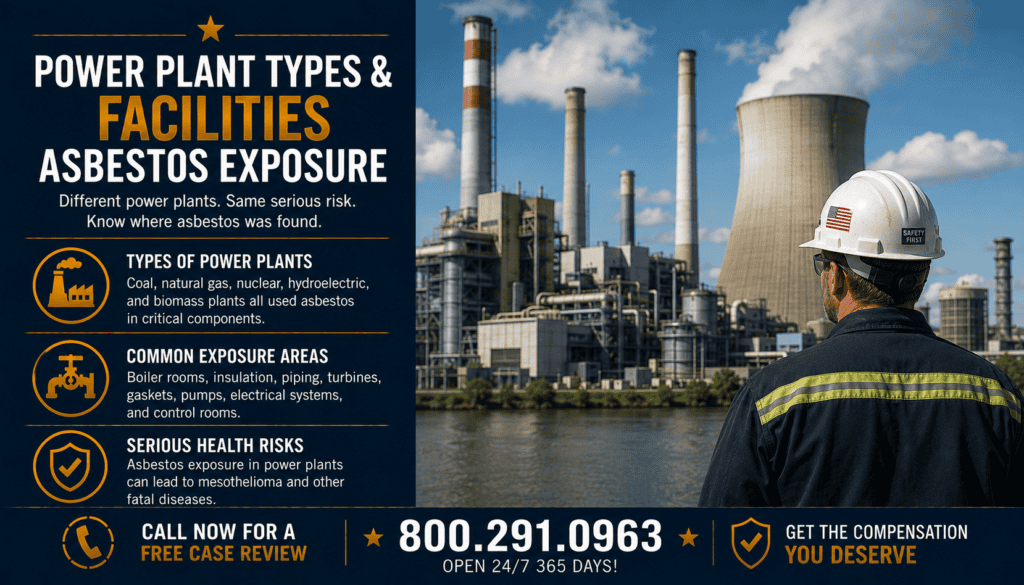
Power Plant Types & Facilities Asbestos Exposure
If you worked at a power plant site and later developed mesothelioma or asbestos-related lung cancer, you may be wondering whether older materials on the job played a part. This guide explains where asbestos may have been present and what you can do next.
Start with the jobs you remember. You do not need every date or product brand to begin putting your work history together, and your family can help.
Where Asbestos Exposure Happened
Not every power plant was built or operated the same way. A coal-fired steam station has a boiler, fuel-handling systems and turbine equipment. An older oil- or gas-fired steam plant may have similar high-temperature piping. Hydroelectric and newer generating facilities have different layouts. The plant type helps identify which equipment and historical materials deserve a closer examination.
You may remember coal-fired generating stations, oil- and gas-fired steam plants, turbine halls, boiler houses, control buildings and utility tunnels as familiar parts of your workday. But a plant or mill is not one uniform work area. Some crews spent their shifts operating equipment, while others came in during repairs or shutdowns. A worker who passed through a room during removal could have a different history from someone who spent years in a control room. Describe where you actually stood, what was happening and how often you were there.
On older power plant jobs, the most important details often come from ordinary memories: a noisy outage, a blocked walkway, dust on a workbench or a crew taking insulation off a line. Those memories are not laboratory proof. They do, however, give you a starting point for finding plans, surveys and work orders. If you worked at several locations, keep them separate so dates and equipment are not mixed together.
Older Materials and Equipment
In a conventional steam plant, hot steam travels through insulated piping to turbines before water returns through other systems. Some older thermal insulation and sealing products contained asbestos. A turbine-hall electrician could work beside a pipe repair without ever installing the insulation. Describe both your own task and any nearby work you remember.
Among the materials that may need review are boiler insulation, steam-pipe covering, turbine blankets, valve packing, gaskets and some older electrical insulation. Some older products used asbestos for resistance to heat and wear. Others did not. You cannot tell whether a material contained asbestos by looking at dust, touching a piece of insulation or knowing that a building was old. A reliable identification comes from appropriate records or qualified analysis. Workers familiar with this kind of equipment can also read about Power Plant Equipment & Systems.
What happened to a product matters too. An intact component left in place creates a different situation from insulation cut away during a repair. Activities such as boiler repairs, turbine overhauls, pipe replacement, valve maintenance, insulation removal and shutdown cleanup may have disturbed materials if asbestos was present. Describe the tool used, the size of the job and whether debris was swept, bagged or moved. Avoid guessing at an airborne fiber level; that requires proper assessment.
Who Worked Near the Materials
Generating stations often ran for decades, with new units added beside older ones. An asbestos survey for one building does not necessarily describe another. Write down the unit number or room if you know it. A plant map, outage schedule or old photograph can help you place your work within a much larger property.
The people working in and around these areas included boiler operators, turbine technicians, electricians, insulators, mechanics, plant operators and contractors. Not everyone handled the same products. A maintenance crew may have opened equipment while production employees kept another line running. Laborers or custodial workers might arrive afterward to move scrap and clear the floor. Your own duties, the nearby crews and the timing of each job help explain what happened. The Power Plant Mesothelioma Lawsuits & Claims page describes another setting where trades worked around older materials.
If you remember another trade removing material overhead or beside you, write down the location and approximate date. A coworker may recall the equipment or contractor name. It is also worth noting whether the job was a scheduled outage, emergency repair or long renovation. These differences can help identify the documents to request and avoid treating every shift as identical.
Workers often moved between departments as needs changed. A person hired for production may have helped with cleanup or shutdown work for a few days. Do not leave those assignments out because they were not part of your usual job title. At the same time, do not claim that every repair involved asbestos. A truthful timeline is stronger than a dramatic description that cannot be checked.
How to Rebuild Your Work History
Workers who moved between generating stations should keep a separate timeline for each one. A utility company might own several plants with similar names, while a contractor could have worked at all of them. The dates and specific areas matter more than assuming all utility jobs involved the same materials.
Begin a simple timeline with the plant name, generating unit, fuel type, contractor, outage year, maintenance area and former coworkers. Add approximate months or seasons if exact dates are gone. Save pay stubs, union papers, pension statements, job badges and any photographs you already own. If you worked for a contractor, record that company as well as the plant or mill. A family member can help organize the documents without trying to fill gaps by guessing. Records from related work are discussed under Electric Utility Job Sites.
Work orders, equipment manuals, maintenance invoices, asbestos surveys and project files can sometimes identify what was removed. Older records may be held by a successor company, former contractor, union or public archive. Keep copies of what you find and note where each document came from. If a former coworker remembers the same project, write down their account separately from your own.
You do not need to return to a closed site or disturb suspect materials to collect evidence. Old jobsite photographs and records are safer starting points. If you still work around questionable insulation or debris, follow current workplace procedures and raise the concern with the responsible safety personnel. Do not break off a sample or use dry sweeping to investigate it.
Mesothelioma After Years on the Job
Mesothelioma is a cancer associated with asbestos exposure. It can take decades to develop, which is why someone retired from a power plant job may only now be receiving a diagnosis. Breathlessness, chest pain and fluid around the lungs can occur, but these symptoms have other causes as well. A doctor must evaluate them. Diagnosis often involves scans and examination of tissue.
If you have mesothelioma, ask for copies of the pathology report, imaging results and treatment plan. Tell your care team about coal-fired generating stations, oil- and gas-fired steam plants, turbine halls, boiler houses, control buildings and utility tunnels, especially work around older insulation or maintenance jobs. Include other employers and industries in your history too. The goal is to give your doctors a complete picture while you get the care and support you need.
You may feel pressure to remember every detail of work from decades ago. You do not have to do that all at once. Start with the locations and coworkers that come to mind, then add records as you find them. Medical decisions should be made with your clinicians. Questions about whether particular companies may be legally responsible require a separate review of exposure evidence.
Asbestos-Related Lung Cancer
Asbestos exposure can cause lung cancer. Smoking is another major cause, and exposure to both asbestos and tobacco increases the risk more than either alone. A lung cancer diagnosis does not, by itself, identify which workplace or product contributed to the disease. Your medical team can review the pathology, imaging, smoking history and occupational details together.
Former workers should mention jobs involving boiler insulation, steam-pipe covering, turbine blankets, valve packing, gaskets and some older electrical insulation, particularly when those materials were cut or removed. If you had several jobs, do not focus only on the last one. Save your written diagnosis and any notes from specialists. A relative can help keep records in date order so you do not have to repeat your entire history at every appointment.
Other asbestos-related conditions are different from mesothelioma and lung cancer. Ask your clinician to explain unfamiliar words in a scan report rather than assuming that one condition proves another. If you are concerned about past exposure but have no diagnosis, speak with a healthcare professional about your history and whether any medical follow-up is appropriate.
Practical Steps for Workers and Families
If you are helping a spouse, parent or friend, begin with a short list of employers, coal-fired generating stations, oil- and gas-fired steam plants, turbine halls, boiler houses, control buildings and utility tunnels and the years worked. Ask what tasks they remember most clearly. Do not push for exact product names when none come to mind. Put medical papers in one folder and job records in another. That makes it easier to find a report when a doctor or attorney asks for it.
If you are the worker, you can ask someone you trust to make calls, copy papers and write down questions. You should not have to manage every record while dealing with treatment. The most helpful account explains what you personally did and saw. It is fine to say that you do not remember a date or brand; unanswered questions can be checked later.
If you are still employed, follow the site’s asbestos procedures and ask the appropriate safety professional about suspect materials. Do not cut, scrape or sample them yourself. For an exposure many years ago, your next step is usually to preserve the history you already have. You can also ask promptly about legal filing deadlines without waiting for a complete set of records.
Lawsuits, Trust Funds and Compensation
People diagnosed with mesothelioma or asbestos-related lung cancer may have legal options connected to historical asbestos products. A claim depends on the diagnosis, exposure history, product evidence, responsible parties and the law that applies. Working at a power plant site does not automatically mean compensation is available. A qualified attorney can explain what records would help evaluate your situation. The mesothelioma lawsuit guide explains general legal options.
Some asbestos manufacturers established bankruptcy trusts that review claims under their own rules. A lawsuit and a trust claim follow different procedures, and neither guarantees payment. State deadlines may be short or may start at different times depending on the circumstances. Ask about timing early, especially if treatment or a family illness has made it hard to gather records. You can also read about asbestos trust funds and the claims filing process.
If a loved one has died, relatives may have questions about wrongful-death or survivor claims. Who can file and when depends on state law. Preserve the worker’s employment history, medical reports and any correspondence you already have. You deserve a clear explanation of possible choices, costs and uncertainties, without promises about an award or pressure to make an immediate decision.
Frequently Asked Questions
Did Every Power Plant Use Asbestos?
No. Materials varied by plant type, unit, age and maintenance history.
Are Coal And Gas Plants The Same?
Not necessarily. Their equipment layouts and operating systems can differ, especially between older steam plants and newer units.
Could A Contractor Have Been Exposed During An Outage?
Yes, if the contractor worked near disturbed asbestos-containing materials. The task and product still need to be identified.
What If I Remember Only The Unit Number?
Record it. Unit numbers, outage schedules and plant maps can help narrow the work area.
Does A Dusty Turbine Hall Prove Asbestos Exposure?
No. Many kinds of dust are present in industrial workplaces. Material evidence matters.
Summary
If you worked at a power plant site, start with the jobs and materials you remember. Keep medical records and write down employers, coworkers and dates. You can ask for help with the paperwork and seek timely advice about filing deadlines. Your experience deserves to be heard in plain language.
Confirmed Sources
For established information about asbestos hazards and asbestos-related diseases, see OSHA’s workplace rules, the National Cancer Institute’s cancer information and the EPA’s asbestos guidance. These sources explain health risks and safe practices; your own work records help identify the materials at a particular job.
- OSHA: Asbestos in General Industry
- OSHA: Asbestos in Construction
- National Cancer Institute: Asbestos Exposure and Cancer Risk
- EPA: Learn About Asbestos
Find Out If You May Qualify
Find out if you may qualify for asbestos compensation today. Call 800.291.0963. Help is available 24/7/365. 25+ years of experience. Submit Your Case Here.
Disclaimer: This information should not be considered legal or medical advice. Mesothelioma Help Center is not a law firm or medical provider and does not determine legal or VA eligibility.