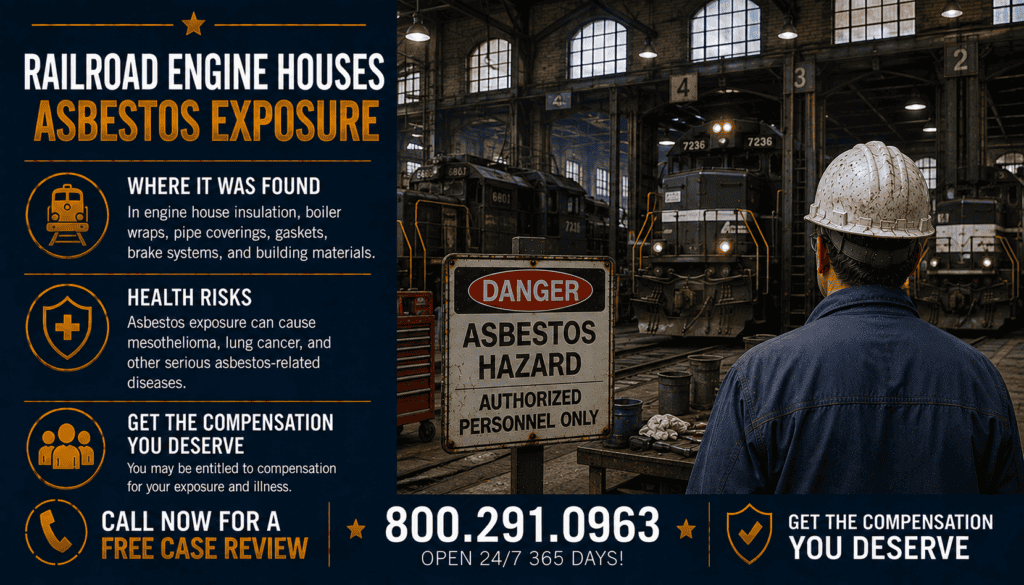
Railroad Engine Houses Asbestos Exposure
Railroad engine houses were places where locomotives were inspected, serviced and repaired. Some historical locomotive components and older building systems used asbestos-containing materials, especially in heat-resistant applications.
Workers diagnosed with mesothelioma or asbestos-related lung cancer may have questions about exposure in an engine house, even if they never handled insulation themselves.
🚉 What Engine House Workers Did
Engine houses provided sheltered areas for locomotive servicing and repair. Depending on the railroad and era, crews inspected engines, handled routine mechanical work, cleaned equipment, repaired systems and prepared locomotives for service.
An engine house could be a smaller structure than a roundhouse or a large multi-track building. Some served steam locomotives, others diesel units, and some operated during a transition between technologies. These differences matter when evaluating potential asbestos materials.
Working in an engine house does not by itself establish asbestos exposure. The type of equipment, the worker’s duties and the material disturbed are the central facts.
🔥 Insulation And Heat-Resistant Materials
Steam locomotive servicing involved high-temperature surfaces, including boilers and steam systems. Certain historical insulation products used asbestos because it resisted heat. Workers who removed or repaired those materials could have inhaled airborne fibers.
Older engine house buildings sometimes also had insulated piping, boilers or heating systems. Maintenance of those building components was a separate potential exposure pathway from work on the locomotives themselves.
For diesel operations, the materials and tasks could differ. A worker should describe the actual locomotive types and repairs rather than assuming steam-era asbestos uses applied to every engine house.
🔩 Pumps, Valves, Gaskets And Packing
Some historical locomotive mechanical systems used asbestos-containing sealing materials. During pump or valve repair, a worker might remove old packing, scrape a flange gasket or handle replacement components.
Exposure depended on the product and the method of removal. An intact non-asbestos gasket is not the same hazard as scraping an old asbestos-containing seal. Records of parts, manufacturers and repair periods may help clarify the distinction.
Mechanics, helpers and nearby workers could have different experiences of the same repair. Describing the task and proximity can help distinguish direct handling from nearby exposure.
👷 Engine House Jobs And Work Assignments
Engine house crews included machinists, mechanics, electricians, pipefitters, laborers and other railroad workers. A job title rarely captures every assignment over a long career.
Workers who performed railroad machinery repairs may have encountered mechanical seals; railroad electricians might have serviced electrical systems or worked beside insulation repairs. railroad car repairmen sometimes worked in neighboring facilities with different materials.
Temporary work in a shop during a major overhaul, shutdown or equipment shortage can be relevant even if the employee’s regular assignment was elsewhere.
🩺 Mesothelioma And Asbestos-Related Lung Cancer
Asbestos is an established cause of mesothelioma and lung cancer. These illnesses can emerge decades after a worker retires. A diagnosis should prompt appropriate medical care and a clear discussion of past occupational exposure with clinicians.
The mesothelioma diagnosis and mesothelioma treatments pages explain medical pathways. A lung cancer evaluation may also consider smoking and other occupational risks; the medical picture deserves individualized assessment.
If a loved one is undergoing treatment, preserving a simple work history can help without distracting from care. Family members often remember facility names, moves between railroads or union information.
⚖️ Legal Rights And Potential Compensation
Railroad workers may have different legal avenues from workers in other industries. Depending on the circumstances, FELA may be relevant to a claim involving a railroad employer. Other potential claims could involve manufacturers of asbestos-containing products.
Bankruptcy trust funds have separate eligibility criteria. A lawyer can evaluate whether a product or company linked to the engine house is covered by a trust and whether a civil claim is also available. See asbestos trust funds and mesothelioma claims .
Filing deadlines can be important even when exposure happened decades earlier. Seek a timely review rather than waiting until every product has been identified.
📞 Help For Workers And Their Families
Write down the railroad, engine house location, employment years, job title and the repairs performed. If possible, note locomotive models, major overhaul periods, contractors and coworkers who shared the shop.
Keep available medical records, pension statements, union records and photographs. Do not disturb suspect asbestos-containing material to prove an old exposure, and do not assume a closed facility means no claim can be considered.
A legal consultation should explain possible claim types, responsible parties, deadlines and fees in language the family can understand. The aim is to identify realistic options, not promise a settlement.
❓ Frequently Asked Questions
Were Diesel Engine Houses Free Of Asbestos?
Not necessarily. Some historical parts or building materials could contain asbestos, but specific products must be identified.
Could Workers Nearby Be Exposed?
Possibly, when asbestos-containing material was disturbed and dust spread to shared work areas.
Does An Old Diagnosis Date Matter?
Yes. Filing deadlines vary, so prompt legal review is important.
Can A Family Act After A Worker Dies?
Potentially, under survival or wrongful-death laws. Authority and deadlines depend on the circumstances.
What Information Is Useful First?
Railroad and engine house names, years, tasks, equipment and available medical records.
🔗 Related Help For Workers
These pages cover other jobs, facilities and legal questions that may be relevant to your work history. Each situation depends on the actual exposure and diagnosis.
- Railroad Asbestos Exposure
- Railroad Roundhouse Maintenance Shop Asbestos Exposure
- Railroad Repair Shops Asbestos Exposure
- Railroad Track Infrastructure Asbestos Exposure
- Railroad Brake Workers Asbestos Exposure
- Railroad Pipefitters And Boilermakers Asbestos Exposure
- Mesothelioma Filing Deadlines
- Secondhand Asbestos Exposure
🧭 Summary
Workers and families facing an asbestos-related diagnosis deserve clear information about the workplace, medical care and possible compensation. The facts of the job, the materials involved and applicable law determine which options may be available. Seek timely medical care and ask about claim deadlines without waiting for every historical detail to be resolved.
📚 Confirmed Sources
Get The Compensation You Deserve
Find out if you may qualify for asbestos compensation today. Call 800.291.0963 or Submit Your Case Here .
25+ years of experience. Help is available 24/7/365.
Disclaimer: Mesothelioma Help Center is not a law firm or medical provider and does not determine legal or VA eligibility. This information is not individualized medical or legal advice.