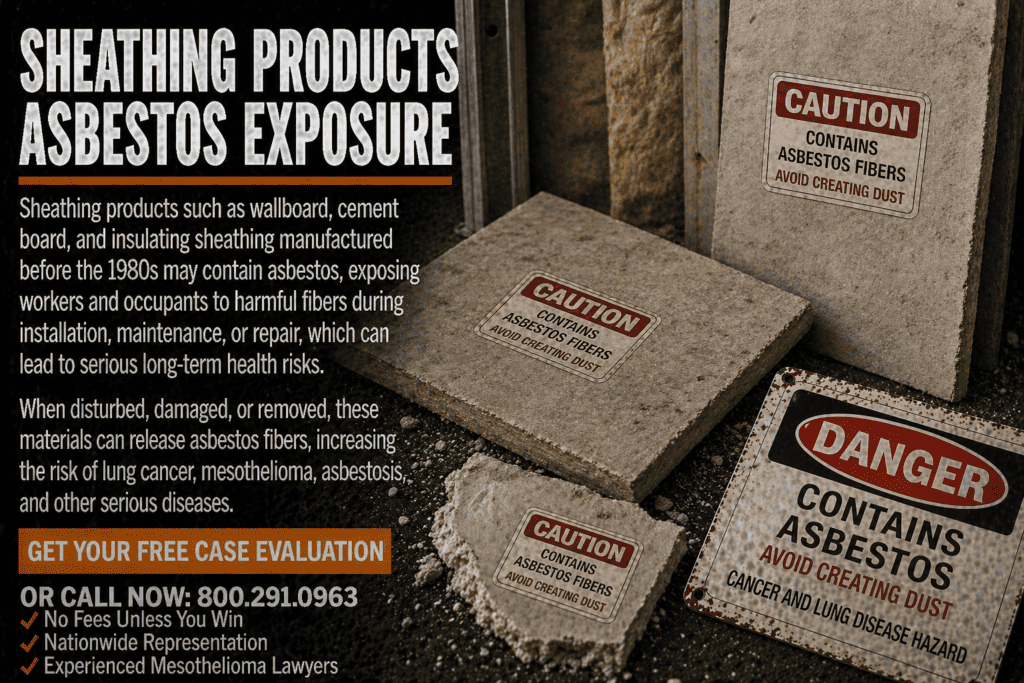
Sheathing Products Asbestos Exposure
Some historical sheathing products were manufactured with asbestos, especially certain asbestos-cement sheets and boards used as structural, fire-resistant, exterior or interior building panels. Many other sheathing products did not contain asbestos. The exact risk depends on the manufacturer, product line, composition, year, installation and work performed.
OSHA has documented asbestos-cement sheet as a major construction product and described flat asbestos-cement sheet as being used for wall lining, fire-resistant walls, curtain walls, industrial partitions, soffits, and interior or exterior decorative paneling. CDC/NIOSH has also identified historical construction exposure during installation of asbestos-cement sheets and architectural panels. EPA records confirm long-term use of flat and corrugated asbestos-cement sheet products in construction.
This guide explains the kinds of sheathing products that may be relevant, how fibers could become airborne during cutting, drilling, repair or demolition, which workers may have encountered them, and what evidence can help identify a historical product. For a broader overview, see Asbestos Exposure in Products.
Sheathing Products and Historical Asbestos Use
Sheathing is a broad term for boards or sheets attached to walls, roofs, partitions or structural framing to provide strength, weather protection, fire resistance, insulation, a finished surface or a base for other materials. Historical sheathing could be made from wood, fiberboard, gypsum, cement, mineral products or composite materials.
Asbestos-cement sheet became one important historical category. OSHA described asbestos-cement sheet as a construction material used in large residential buildings, electrical utilities, industrial plants, schools and hospitals. EPA historical records also document flat and corrugated asbestos-cement sheets and boards used in construction over many decades.
Those records establish that asbestos-containing sheathing products existed. They do not support assuming that plywood, ordinary fiberboard, gypsum sheathing or other non-asbestos boards contained asbestos merely because they were installed in an older building.
Types of Sheathing and Components That May Have Contained Asbestos
Depending on manufacturer, formulation and year, asbestos may historically have been associated with:
- flat asbestos-cement sheet used for wall lining or sheathing;
- corrugated asbestos-cement sheet used on walls or roofs;
- fire-resistant asbestos-cement boards;
- soffit and exterior panel products made from asbestos-cement sheet;
- industrial partition and curtain-wall panels;
- certain architectural or decorative asbestos-cement panels;
- backing or core layers within some laminated or composite products;
- sealants or caulking products around sheathing joints and penetrations; and
- adjacent materials such as mortar or cementitious products disturbed during installation or removal.
Many historical sheathing materials closely overlap with asbestos-cement products and paneling products. A single building assembly may therefore contain multiple sheet, panel, siding, soffit or backing materials that need to be identified separately.
Surface appearance is not a reliable way to determine asbestos content. Smooth gray board, colored cement sheet, fiberboard and other visually similar products can have very different compositions.
How Asbestos Exposure Could Occur
A potential exposure pathway requires asbestos-containing sheathing and work that releases fibers into the air. Cement-bound asbestos sheet is generally less friable when intact than loose insulation, but cutting, drilling, sawing, grinding or breaking the sheet can disturb the matrix and generate dust.
Potential disturbance could occur during tasks such as:
- sawing sheathing panels to fit walls, roofs or structural framing;
- drilling holes for fasteners, conduit, piping or fixtures;
- cutting openings for windows, doors, vents or electrical boxes;
- routing, grinding or shaping panel edges;
- removing nails, screws or anchors from brittle sheets;
- breaking damaged panels during repair;
- removing old sheathing during siding or roof replacement;
- demolishing walls or partitions containing asbestos-cement sheet; and
- dry sweeping or blowing dust created by cutting or removal.
OSHA’s construction guidance specifically notes that drilling and cutting installed asbestos-cement products can result in exposure to asbestos fibers if not performed carefully. Actual exposure depends on asbestos content, tools, dust generation, duration, frequency, proximity, ventilation, respiratory protection and cleanup practices.
Worked with older sheathing boards, cement sheets or structural panels? If you are trying to identify a historical product or reconstruct a possible asbestos exposure, Call 800.291.0963. Live chat available 24/7, 365 days a year. Submit Your Case.
Workers and Job Sites That May Have Encountered Sheathing
Workers who manufactured, cut, installed, repaired or removed historical sheathing products may have encountered asbestos-containing sheets. Job title alone does not establish exposure; the specific product and task matter.
Potentially relevant occupations may include carpenters, framers, siding installers, roofers, construction laborers, millworkers, panel installers, electricians, plumbers, HVAC workers, maintenance crews, remodelers and demolition workers.
Possible settings include houses, apartment buildings, schools, hospitals, factories, warehouses, power plants, utility buildings, agricultural buildings, industrial plants, military facilities and commercial structures.
CDC/NIOSH has documented historical direct exposure during installation of asbestos-cement sheets and architectural panels. Workers in nearby trades could also have been exposed when those materials were cut or installed on the same site.
Cutting, Repair and Removal Risks
Cutting and installation
Historical sheathing often had to be trimmed to fit framing, wall openings and roof lines. If the sheet contained asbestos, sawing or drilling could generate asbestos-containing dust. Power tools may create substantially more fine dust than low-dust work methods.
Fastening and penetrations
Installation and later maintenance can require drilling holes through sheathing for screws, bolts, conduit, pipe, vents or mechanical equipment. These tasks can disturb the full thickness of the material.
Repair and replacement
Damaged exterior or industrial sheathing may crack, weather or become brittle. Repairs can involve removing fasteners, cutting out sections or fitting replacement panels. Handling broken edges and accumulated debris can add to the dust generated.
Siding and roof work
Some asbestos-cement sheet served as wall, soffit or roof-related material. Removal during exterior renovations can overlap with siding, roofing, flashing and sealant work. Each material should be identified independently.
Demolition
Demolition can fracture large sheets into pieces and produce dust. Where older sheathing may contain asbestos, appropriate evaluation and asbestos work practices should be used before aggressive cutting, breaking or cleanup.
Evidence That May Identify Historical Sheathing Products
Installed sheathing is often hidden beneath siding, roofing or interior finishes, and manufacturer markings may be on the reverse side. Exposure reconstruction is stronger when multiple records identify the same product, time period and job site.
Useful evidence may include:
- manufacturer stamps or printed markings on sheet backs or edges;
- brand names, trade names or product numbers;
- original packaging, cartons or labels;
- manufacturer catalogs and technical data sheets;
- construction plans, wall sections and specifications;
- purchase orders, invoices and supplier records;
- contractor and subcontractor records;
- installation, maintenance or renovation records;
- photographs showing exposed sheets, markings or cutting methods;
- asbestos surveys, bulk-sample reports or abatement records;
- employer, union or military records documenting assignments;
- coworker or supervisor statements identifying the product and work; and
- qualified laboratory analysis of surviving material when appropriate.
Testing should distinguish the sheathing itself from siding, roofing, paint, adhesive, backing, sealant or other adjacent materials whenever those components can be separately sampled.
Medical and pathology records may document an asbestos-related diagnosis but do not identify which historical sheathing product was involved.
Secondhand Exposure and Health Risks
If cutting or breaking asbestos-containing sheathing generated dust that settled on work clothing, shoes, tools or belongings, fibers could potentially have been carried away from the job site. That is a possible secondhand exposure pathway, but family relationship alone does not prove exposure.
Asbestos exposure is associated with mesothelioma, asbestos-related lung cancer, asbestosis and other asbestos-related disease. Working with old sheathing does not diagnose disease and does not establish individual medical causation.
Anyone concerned about a historical occupational exposure should discuss their work history and health with a qualified healthcare professional.
Legal and Compensation Considerations
Depending on the evidence and circumstances, legal options may be available to a person diagnosed with an asbestos-related disease after documented exposure to a specific asbestos-containing sheathing, cement sheet, board or related product.
A legal review may consider the manufacturer, product line, composition, installation date, building or job site, work performed, frequency and duration of exposure, diagnosis, jurisdiction and applicable filing deadlines.
Identifying a manufacturer or supplier does not automatically establish legal responsibility. Liability is case-specific and depends on product evidence, exposure evidence and governing law.
Some matters may involve asbestos trust funds, but each trust has its own product, exposure and medical documentation requirements. Eligibility and compensation are not automatic or guaranteed.
Exposure that occurred decades ago does not by itself determine whether a claim is timely. Statutes of limitation and other deadlines vary by jurisdiction and circumstances and should be reviewed individually.
Sheathing Products Asbestos Exposure FAQs
Did all old sheathing contain asbestos?
No. Many historical sheathing products did not contain asbestos. Certain asbestos-cement sheets and boards did, so manufacturer, product type and year matter.
Were asbestos-cement sheets used as building sheathing?
Yes. OSHA documents flat asbestos-cement sheet used for wall lining, fire-resistant walls, curtain walls, industrial partitions, soffits and decorative paneling.
Could cutting asbestos-cement sheathing release fibers?
Yes. OSHA notes that drilling and cutting installed asbestos-cement products can result in asbestos-fiber exposure if the work is not performed carefully.
Could sheathing be used behind siding or other finishes?
Yes. Sheathing can be concealed behind siding, roofing, panels or interior finishes, which can make product identification difficult during later renovation.
Can you identify asbestos sheathing by appearance?
No. Color, texture and age are not reliable indicators. Historical product records or qualified laboratory analysis may be needed.
What evidence can identify old sheathing products?
Useful evidence can include manufacturer markings, catalogs, specifications, invoices, contractor records, photographs, asbestos surveys, laboratory reports and coworker testimony.
Could nearby workers be exposed while sheathing was cut?
Potentially, if asbestos-containing sheet generated airborne dust that reached nearby workers. Distance, ventilation, frequency and duration matter.
Does working with old sheathing automatically qualify someone for compensation?
No. Legal eligibility depends on identifying asbestos-containing material, establishing exposure, documenting diagnosis, jurisdiction and other case-specific evidence. Compensation is not guaranteed.
Get Help Reviewing Historical Sheathing Product Exposure
If you or a family member has been diagnosed with mesothelioma, asbestos-related lung cancer or another asbestos-related disease and you are trying to identify older sheathing boards, asbestos-cement sheets, structural panels or related materials from a workplace, construction project or military facility, we can help organize the product and exposure history that may be relevant.
Call 800.291.0963 to discuss what you remember about the sheathing, markings, building, job site and work performed. Live chat is available 24/7, 365 days a year. Submit Your Case using the form below.
Prior exposure does not automatically establish a legal claim. Eligibility depends on the evidence, diagnosis, jurisdiction and other circumstances, and compensation is not guaranteed.
⚕️ Legal & Medical Information Disclaimer
This page provides general educational information and is not medical or legal advice. The information does not establish asbestos exposure, diagnosis, causation, liability, claim eligibility or compensation. Medical concerns should be discussed with a qualified healthcare professional, and legal questions should be reviewed with a qualified attorney.