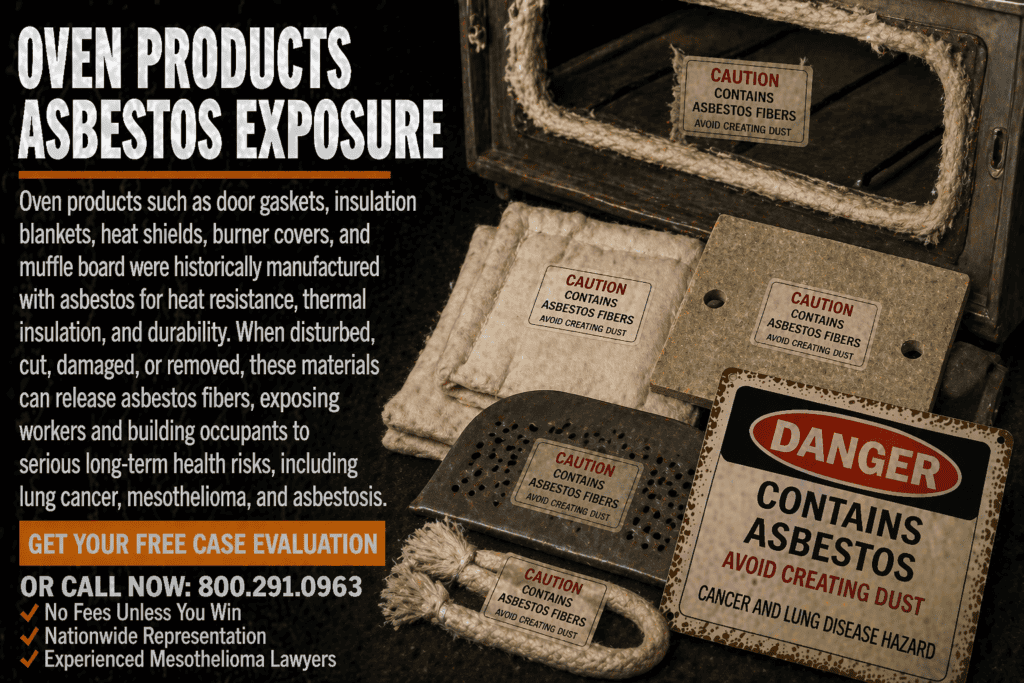
Oven Products Asbestos Exposure
Some older ovens and cooking appliances used heat-resistant materials that may have contained asbestos. Potential asbestos-containing components could include insulation, gaskets, wiring insulation, heat shields and other materials placed near high-temperature areas.
The metal oven body itself was not automatically asbestos-containing, and not every historical oven used asbestos-containing components. Manufacturer, model, production year, component type, repair history and replacement parts may all matter when determining whether asbestos was present.
Potential exposure is most plausible when asbestos-containing oven materials were cut, torn, scraped, removed, deteriorated or otherwise disturbed during appliance repair, servicing, renovation or disposal.
Oven Products and Historical Asbestos Concerns
Older residential and commercial ovens operated at high temperatures, so manufacturers often used heat-resistant insulation, seals and electrical materials around the oven cavity and heating system.
Some historical heat-resistant materials used in appliances contained asbestos. In an oven, asbestos concerns are generally associated with specific internal components rather than the steel or cast-metal housing.
Age alone cannot establish asbestos content. Similar-looking insulation, gaskets and wiring materials may have been made with asbestos or with non-asbestos substitutes depending on manufacturer and year.
Oven Components That May Have Contained Asbestos
Depending on manufacturer, model and year, asbestos-containing materials associated with older ovens may have included:
- thermal insulation around the oven cavity;
- insulating blankets or pads;
- door or access-panel gaskets;
- heat-resistant rope or sealing material;
- electrical wire insulation near high-temperature areas;
- heat shields or insulating boards;
- high-temperature tape or wrapping;
- insulation around gas or electric heating components; and
- other heat-resistant internal materials used during appliance assembly or repair.
These examples do not mean that every component of the same type contained asbestos. Product-specific evidence is important.
How Asbestos Exposure Could Occur From Oven Products
A potential exposure pathway requires asbestos-containing material and disturbance or deterioration that releases fibers. Simply cooking with or standing near an older oven does not by itself establish asbestos exposure.
Potential disturbance could occur during tasks such as:
- removing deteriorated insulation from around an oven cavity;
- replacing old door or access-panel gaskets;
- cutting heat-resistant rope, tape or insulation;
- repairing wiring insulated with asbestos-containing material;
- removing heat shields or insulating boards;
- disassembling an oven during major repair;
- demolishing a kitchen containing an older built-in oven;
- scraping or cleaning deteriorated heat-resistant material; and
- disposing of an old appliance after internal components have broken down.
Actual exposure depends on asbestos content, material condition, disturbance method, frequency, duration, proximity, ventilation and cleanup practices.
Repaired or dismantled older ovens? If you are trying to identify insulation, gaskets, wiring or other heat-resistant components that may have contained asbestos, Call 800.291.0963. Live chat available 24/7, 365 days a year. Submit Your Case.
Repair, Maintenance and Appliance-Service Exposure
Appliance repair workers may have had more direct contact with internal oven materials than ordinary users. Servicing could require removing panels, pulling out insulation, replacing wiring, changing gaskets or working around heating elements.
Potentially relevant workers may include appliance repair technicians, electricians, maintenance employees, installers, kitchen remodelers, demolition workers and manufacturing employees who assembled or repaired ovens.
Replacement history also matters. An oven may have been serviced many times, and replacement insulation, gaskets or wiring may have come from different manufacturers than the original appliance.
Evidence should distinguish the oven manufacturer from the manufacturer or supplier of replacement parts whenever possible.
Commercial Ovens and High-Heat Settings
Commercial ovens used in bakeries, restaurants, institutional kitchens, food-processing facilities and industrial settings may involve larger heating systems and more extensive insulation than residential appliances.
Potential asbestos-containing materials could have been used in insulation, gaskets, heat shields, electrical components or nearby high-temperature building materials.
Workers who routinely serviced commercial ovens, furnaces or heat-processing equipment may have encountered damaged heat-resistant materials during maintenance or shutdown work.
A commercial setting alone does not prove asbestos exposure. The exact equipment, component, service period and work activity matter.
Evidence That May Identify Asbestos-Containing Oven Components
Exposure reconstruction is strongest when evidence identifies the appliance, component, manufacturer, production or service period and the work performed.
Useful evidence may include:
- oven manufacturer, model and serial number;
- appliance manuals and illustrated parts lists;
- service and repair records;
- replacement-part invoices;
- insulation, gasket or wiring manufacturer information;
- historic appliance catalogs;
- photographs of the oven and internal components;
- property renovation records;
- work orders from commercial kitchens or facilities;
- laboratory analysis of surviving insulation, gasket or wiring material;
- employment or union records for appliance-service work; and
- coworker or household witness statements describing repairs and materials.
Medical and pathology records may document an asbestos-related diagnosis but do not establish which historical oven component was an exposure source.
Secondhand Exposure and Health Risks
If oven repair or appliance-service work disturbed asbestos-containing insulation, gaskets or wiring and fibers accumulated on clothing, shoes, tools or belongings, asbestos could potentially have been carried into another environment. This is a possible secondhand exposure pathway, but family relationship alone does not establish exposure.
Asbestos exposure is associated with mesothelioma, asbestos-related lung cancer, asbestosis and other asbestos-related disease. Using an older oven does not diagnose disease and does not establish individual medical causation.
Anyone concerned about historical appliance-related asbestos exposure should discuss the exposure history and health concerns with a qualified healthcare professional.
Legal and Compensation Considerations
Depending on the evidence and circumstances, legal options may be available to a person diagnosed with an asbestos-related disease after documented exposure to a specific asbestos-containing oven component or related heat-resistant material.
A legal review may consider the oven manufacturer, component manufacturer, distributor or supplier, repair history, years of exposure, work performed, frequency and duration, diagnosis, jurisdiction and filing deadlines.
Identifying an oven brand alone does not establish that asbestos-containing insulation, gaskets, wiring or replacement parts were present or that any particular company is legally responsible. Liability is case-specific and depends on product evidence, exposure evidence and governing law.
Some matters may involve asbestos trust funds, but each trust has its own product, exposure and medical documentation requirements. Eligibility is not automatic, and compensation is not guaranteed.
Exposure that occurred decades ago does not by itself determine whether a claim is timely. Statutes of limitation and other deadlines vary by jurisdiction and circumstances and should be reviewed individually.
Oven Products Asbestos Exposure FAQs
Did some old ovens contain asbestos?
Some older ovens may have used asbestos-containing insulation, gaskets, wiring insulation or heat-resistant internal components.
Did every older oven contain asbestos?
No. Materials varied by manufacturer, model, year and replacement history.
Could oven insulation contain asbestos?
Yes, some historical heat-resistant insulation used in appliances may have contained asbestos.
Could oven door gaskets contain asbestos?
Some historical high-temperature gasket or sealing materials may have contained asbestos, depending on manufacturer and year.
Can repairing an old oven create asbestos exposure?
Potentially, if repair work removes, cuts, scrapes or otherwise disturbs an asbestos-containing component.
Does normal cooking with an old oven prove exposure?
No. Exposure depends on whether asbestos-containing material was present and whether fibers were released or disturbed.
What evidence can identify asbestos in an older oven?
Useful evidence can include model numbers, parts lists, repair records, invoices, historic catalogs, laboratory reports and witness statements.
Does repairing an old oven automatically qualify someone for compensation?
No. Legal eligibility depends on product identification, asbestos-content evidence, exposure history, diagnosis, jurisdiction and other case-specific facts. Compensation is not guaranteed.
Get Help Reviewing Oven Product Exposure
If you or a family member has been diagnosed with mesothelioma, asbestos-related lung cancer or another asbestos-related disease and you are trying to identify older oven insulation, gaskets, wiring, heat shields or related materials from appliance repair, commercial kitchen work or remodeling, we can help organize the product and exposure history that may be relevant.
Call 800.291.0963 to discuss what you remember about the oven, manufacturer, component, repair work and years of possible exposure. Live chat is available 24/7, 365 days a year. Submit Your Case using the form below.
Prior exposure does not automatically establish a legal claim. Eligibility depends on the evidence, diagnosis, jurisdiction and other circumstances, and compensation is not guaranteed.
⚕️ Legal & Medical Information Disclaimer
This page provides general educational information and is not medical or legal advice. The information does not establish asbestos exposure, diagnosis, causation, liability, claim eligibility or compensation. Medical concerns should be discussed with a qualified healthcare professional, and legal questions should be reviewed with a qualified attorney.