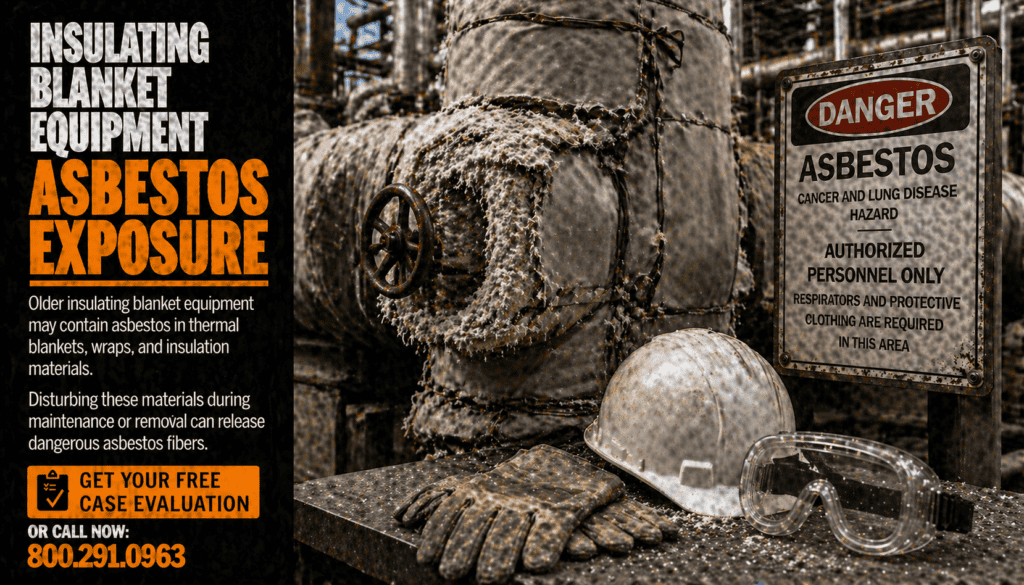
Insulating Blanket Equipment Asbestos Exposure
Some historical insulating blankets used around boilers, furnaces, piping and other high-temperature equipment contained asbestos because the mineral fibers could withstand heat and were incorporated into thermal insulation products.
Not every insulating blanket contained asbestos. Modern electrical insulating blankets may be made from rubber or other non-asbestos materials, and product identification should focus on the specific blanket, manufacturer, application and time period.
Insulating Blanket Asbestos Exposure Overview
Historical asbestos-containing thermal system insulation could include insulating blankets used on or around hot equipment. These blankets could form part of removable insulation systems, equipment coverings or thermal barriers.
Potential exposure was more plausible when an asbestos-containing blanket was cut, torn, frayed, handled repeatedly, removed or replaced. An intact material that remains undisturbed presents a different exposure situation than deteriorated or actively disturbed material.
Where Insulating Blankets Were Used
Historical thermal blankets could be used to reduce heat loss, protect nearby workers and equipment, or provide a removable heat-resistant covering. Applications could include:
- boilers and steam equipment;
- furnaces and other high-temperature machinery;
- hot piping and fittings;
- heat exchangers;
- industrial process equipment;
- removable equipment insulation; and
- specialized aircraft or industrial heat-protection applications.
The presence of a blanket near hot equipment does not by itself establish asbestos content.
Historical Asbestos Insulating Blanket Materials
Asbestos-containing thermal insulation historically appeared in several forms, including fibrous wrapping, felt, insulating cement and blankets. Boiler insulation could include asbestos insulating blankets beneath protective finishing materials.
Identification may require determining whether a blanket was an asbestos textile or another type of insulation. Color, texture or age alone is generally not enough to establish composition.
Boilers, Furnaces and High-Heat Equipment
Boilers and other high-temperature systems were common locations for thermal insulation. A removable insulating blanket could allow maintenance personnel to reach equipment while providing heat protection when the system was operating.
Repeated removal and reinstallation could damage an older asbestos-containing blanket, particularly at seams, fasteners, edges or areas exposed to abrasion.
Other historical insulation around the same equipment could include pipe covering, insulating cement, refractory material or rigid thermal barriers.
How Blanket Disturbance Could Release Asbestos Fibers
Potential fiber release depends heavily on the material’s condition and the work performed. Tasks of concern when asbestos-containing blankets were present could include:
- cutting blankets to fit equipment;
- removing blankets for maintenance;
- handling frayed or deteriorated fabric;
- tearing damaged sections away;
- brushing or shaking dusty blankets;
- reinstalling worn removable insulation; and
- cleaning debris after repair or replacement.
Actual exposure depends on asbestos content, material condition, frequency, duration, proximity, ventilation and work practices.
Trying to identify an older insulating blanket or thermal covering? Call 800.291.0963. Live chat available 24/7, 365 days a year. Submit Your Case.
Workers and Workplaces Linked to Insulating Blankets
Potentially relevant workers may include insulators, boilermakers, pipefitters, steamfitters, maintenance mechanics, millwrights, furnace workers and other personnel who installed, removed or worked beside thermal insulation.
Relevant settings may include power plants, factories, refineries, boiler rooms, mechanical rooms, shipyards and other facilities with high-temperature equipment.
A job title, facility or proximity to insulated machinery does not by itself prove asbestos exposure.
Evidence That May Identify Asbestos Insulating Blankets
Useful evidence may include:
- manufacturer and brand information;
- equipment model and serial numbers;
- service manuals and insulation specifications;
- parts lists and maintenance procedures;
- purchase orders and invoices;
- product labels or packaging;
- asbestos surveys and abatement records;
- historical photographs;
- employment, union or military records;
- coworker or supervisor statements; and
- qualified laboratory analysis of surviving material where appropriate.
Manufacturer identification can help narrow the investigation, but it does not by itself establish asbestos content, exposure or legal responsibility.
Health, Legal and Compensation Considerations
Asbestos exposure is associated with mesothelioma, asbestos-related lung cancer, asbestosis and other asbestos-related disease. Working around insulating blankets does not diagnose disease or establish individual medical causation.
Depending on the evidence and circumstances, legal options may be available after documented exposure to a specific asbestos-containing insulating blanket or related thermal material.
A legal review may consider product identification, manufacturer, equipment, workplace, work tasks, frequency and duration, diagnosis, jurisdiction and filing deadlines. Compensation is not guaranteed.
Related Equipment and Exposure Resources
For broader context, see Insulation, Fireproofing & Heat Protection Equipment Asbestos Exposure, Insulation Equipment Asbestos Exposure, Wall Insulation Equipment Asbestos Exposure, Fireproofing Equipment Asbestos Exposure, and the main Equipment Asbestos Exposure guide.
High-temperature equipment resources include Boilers, Heating & Thermal Equipment Asbestos Exposure, Steam Boiler Equipment Asbestos Exposure, Furnace Equipment Asbestos Exposure, and Heat Exchanger Equipment Asbestos Exposure.
Additional research may involve Asbestos Manufacturers, Asbestos Exposure in Products, Asbestos Exposure in High-Risk Jobs, Asbestos Exposure in Job Sites, and Secondhand Asbestos Exposure when the facts support those exposure pathways.
Insulating Blanket Equipment Asbestos Exposure FAQs
Did all older insulating blankets contain asbestos?
No. Blanket composition varied by manufacturer, purpose and year.
Were asbestos insulating blankets used on boilers?
Yes. Historical asbestos-containing thermal insulation included insulating blankets used on some boilers and other hot equipment.
Could removing an old insulating blanket release asbestos fibers?
Potentially, if the blanket contained asbestos and was deteriorated, torn, cut, frayed or otherwise disturbed.
Are modern electrical insulating blankets made with asbestos?
Electrical protective blankets used today may be rubber or other non-asbestos materials. A blanket’s specific composition should be identified rather than assumed from its name.
Could maintenance workers have encountered asbestos blankets?
Potentially. Workers who repeatedly removed or handled asbestos-containing thermal blankets could have disturbed the material.
Can a photograph prove that a blanket contained asbestos?
Usually not by itself. Photographs may support identification when combined with manufacturer, equipment, product or maintenance records.
Does identifying the blanket manufacturer prove asbestos exposure?
No. The evidence must connect the specific material and work circumstances to potential asbestos exposure.
Does insulating-blanket exposure automatically qualify someone for compensation?
No. Eligibility depends on exposure evidence, medical information, jurisdiction and other case-specific circumstances. Compensation is not guaranteed.
Get Help Reviewing Insulating Blanket Asbestos Exposure
If you or a family member has been diagnosed with mesothelioma, asbestos-related lung cancer or another asbestos-related disease and you are trying to identify historical insulating blankets or thermal coverings, we can help organize information that may be relevant.
Call 800.291.0963 to discuss what you remember about the blanket, equipment, manufacturer, workplace, job duties and years of possible exposure. Live chat is available 24/7, 365 days a year. Submit Your Case using the form below.
Prior exposure does not automatically establish a legal claim. Eligibility depends on the evidence, diagnosis, jurisdiction and other circumstances, and compensation is not guaranteed.
⚕️ Legal & Medical Information Disclaimer
This page provides general educational information and is not medical or legal advice. The information does not establish asbestos exposure, diagnosis, causation, liability, claim eligibility or compensation. Medical concerns should be discussed with a qualified healthcare professional, and legal questions should be reviewed with a qualified attorney.