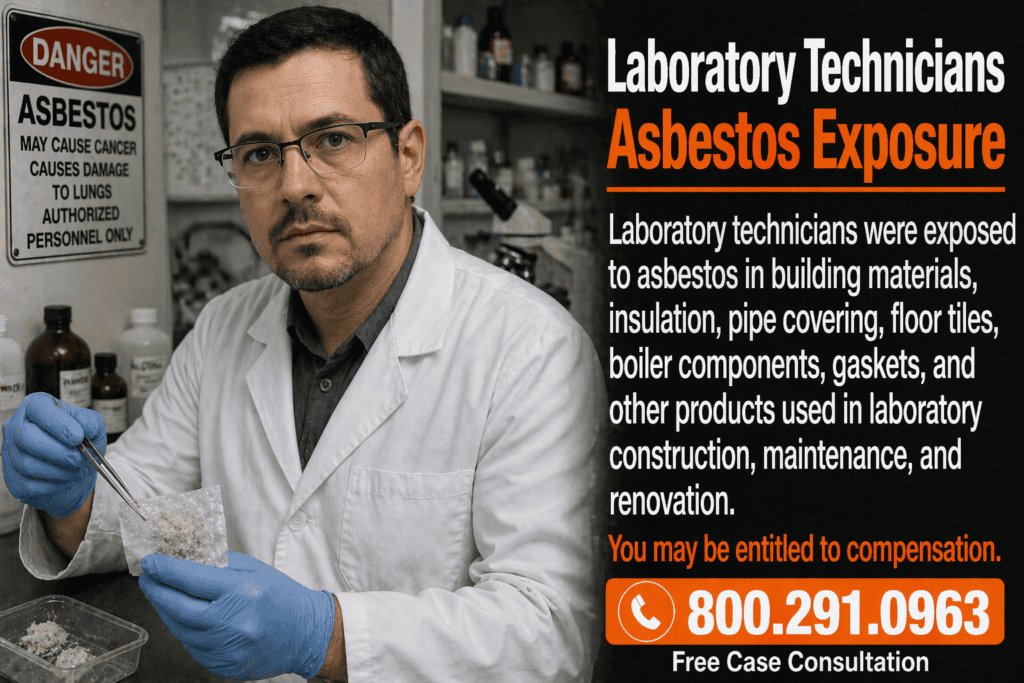
Laboratory Technicians Asbestos Exposure
Laboratory technicians may have worked in older hospital, university, research, industrial and technical laboratories where asbestos-containing building materials or heat-resistant equipment components were present. Potential exposure depended on the facility, materials, equipment, time period and whether asbestos was damaged, handled or disturbed—not simply on holding a laboratory job.
NIOSH evaluates workplace hazards by observing work processes, reviewing exposure information and measuring suspected contaminants when appropriate. That evidence-based approach is especially important for laboratory technicians because laboratories can contain many chemical, biological and physical hazards that are unrelated to asbestos.
Laboratory Technicians and Occupational Asbestos Exposure
Laboratory technicians can work in medical, hospital, research, academic, industrial, quality-control and government laboratories. Their duties may include preparing samples, operating instruments, maintaining work areas, handling chemicals and supporting research or testing.
Laboratory work itself does not establish asbestos exposure. A credible history identifies a specific asbestos-containing building material, laboratory item, equipment component or nearby maintenance activity and explains how fibers could have become airborne.
NIOSH’s Health Hazard Evaluation Program assesses workplace concerns using exposure records, observations, measurements and other evidence. Its Health Effects Laboratory Division also develops methods for assessing chemical, physical and biological occupational exposures.
Related resources include healthcare, laboratory and technical workers asbestos exposure, pharmacists asbestos exposure, nurses asbestos exposure and asbestos exposure in buildings.
Older Laboratories and Asbestos-Containing Materials
Laboratories located inside older hospitals, universities, industrial plants and institutional buildings may share the same historical asbestos concerns as other older facilities. OSHA’s hospital guidance identifies pipe and boiler insulation, HVAC duct insulation, floor and ceiling tile, electrical insulation, wallboard and related materials as potential asbestos sources.
Building Sources Worth Investigating When Confirmed
- Insulated steam and hot-water piping
- Boiler and mechanical-system insulation
- HVAC duct insulation
- Older floor or ceiling materials documented as asbestos-containing
- Wallboard, joint or spackling compounds containing asbestos
- Electrical or utility-system insulation
- Mechanical rooms and utility spaces serving laboratory areas
Age or appearance alone does not prove a material contains asbestos. Asbestos surveys, bulk-sample analyses, building specifications, operations and maintenance records and abatement files provide stronger evidence.
A laboratory technician who worked in a modern laboratory without documented ACM has a very different exposure history from a technician who worked through repeated renovation in an older building containing confirmed asbestos materials.
Laboratory Equipment and Heat-Resistant Materials
Historical laboratories sometimes used heat-resistant materials around high-temperature procedures and equipment. However, it is not accurate to assume that every heat-resistant pad, glove, mat, hood, furnace component or laboratory surface contained asbestos.
Evidence to Look for Before Identifying Laboratory Equipment as Asbestos-Containing
- Manufacturer specifications or catalogs
- Purchase and inventory records
- Product labels or safety documentation
- Laboratory standard operating procedures
- Industrial-hygiene or asbestos survey records
- Bulk-sample laboratory results
- Historical photographs supported by product identification
If a specific laboratory product is confirmed to contain asbestos, the technician’s tasks should then be reconstructed. Relevant questions include whether the material was intact, cut, scraped, brushed, replaced, broken or otherwise disturbed and how often the worker handled it.
Laboratory equipment should never be labeled asbestos-containing solely because it was old or exposed to heat.
Maintenance, Renovation and Bystander Exposure
Laboratory technicians may have potential bystander exposure when confirmed ACM was disturbed during maintenance, renovation or demolition near an occupied laboratory. OSHA’s asbestos standards address occupational exposure during work involving asbestos-containing materials, while OSHA’s hospital guidance warns about asbestos disturbance during renovation of older facilities.
Events Worth Reviewing
- Removal of asbestos-containing pipe insulation above laboratory ceilings
- HVAC repairs involving confirmed asbestos insulation
- Floor or ceiling removal involving ACM
- Wall demolition or remodeling near laboratory workstations
- Mechanical-system repairs in adjoining utility areas
- Emergency repairs that disturbed material later confirmed as asbestos
- Asbestos abatement performed while nearby laboratory areas remained occupied
A credible bystander history should identify the asbestos source, distance from the technician, timing of the disturbance, barriers or containment, ventilation conditions and whether air-monitoring or clearance records exist.
Workers performing direct building-system work may have different exposure circumstances. Related pages include maintenance workers asbestos exposure, HVAC technicians asbestos exposure, pipefitters asbestos exposure and maintenance mechanics asbestos exposure.
Need help now? Call 800.291.0963
Live chat available 24/7, 365 days a year.
Submit Your Case
Chemical, Biological and Physical Laboratory Hazards
NIOSH’s Health Hazard Evaluation Program investigates many types of workplace hazards, including solvents, metals, particulates, biological agents, infectious diseases, heat, noise, radiation and musculoskeletal stressors. Its laboratory researchers also study methods for identifying chemical, physical and biological occupational exposures.
Hazards That Should Be Distinguished From Asbestos
- Solvents and other laboratory chemicals
- Metals and laboratory particulates
- Biological agents and infectious materials
- Radiation and other physical agents
- Noise or heat from equipment
- Cleaning and disinfecting chemicals
- Ergonomic and repetitive-task stressors
These hazards can be serious but are not proof of asbestos exposure. Visible laboratory dust, chemical odors or respiratory symptoms should not be characterized as asbestos-related without evidence identifying asbestos fibers or an asbestos-containing source.
NIOSH notes that an HHE may involve observing work processes, reviewing exposure and illness reports, measuring exposures and, when needed, medical testing. Historical HHE reports can therefore be useful evidence if a particular laboratory or employer was evaluated.
Mesothelioma and Other Asbestos-Related Health Risks
NIOSH’s review of workplace asbestos exposure addresses the scientific evidence supporting prevention of occupational asbestos exposure. OSHA identifies asbestos as a serious occupational health hazard associated with mesothelioma, lung cancer and asbestosis.
Asbestos-related diseases can have long latency periods. A former laboratory technician may therefore need records from facilities, equipment or renovation projects dating back decades.
Laboratory employment, an older building or work around heat-resistant equipment alone does not establish asbestos exposure or disease causation. The asbestos-containing material, task, disturbance, frequency, duration, worker location and medical evidence should be evaluated individually.
Medical concerns involving past occupational asbestos exposure, symptoms, screening or diagnosis should be discussed with a qualified healthcare professional.
Documenting Laboratory Technician Asbestos Exposure
A useful exposure history connects laboratory employment to a specific facility, confirmed asbestos-containing material or product and credible exposure pathway.
- Employment: employer, laboratory, facility, years and job title
- Work location: building, floor, laboratory, department and workstation
- Materials: confirmed asbestos-containing building or laboratory products
- Equipment: manufacturer, model, component and documentation when equipment is involved
- Renovation: construction schedules, abatement files and contractor records
- Industrial hygiene: asbestos surveys, air samples and HHE reports
- Employment evidence: personnel files, Social Security records, union records when applicable and job descriptions
- Witnesses: coworkers, supervisors, researchers, maintenance employees and contractors
Questions That Can Strengthen an Exposure History
Which laboratory and years? What type of facility? Was asbestos documented in the building? Did the technician handle a product confirmed to contain asbestos? Were pipes, ceilings, floors or walls renovated nearby? Are surveys, product records, HHE reports, air samples, work orders or coworkers available?
Secondary or Take-Home Exposure
Take-home exposure may be relevant only when a technician first encountered asbestos occupationally and fibers contaminated clothing, shoes, hair or personal items. Routine laboratory work or ordinary laboratory dust does not establish asbestos contamination.
Lawsuits, Trust Funds and Compensation
A laboratory technician diagnosed with mesothelioma or another asbestos-related disease may have potential legal or compensation options when evidence supports occupational asbestos exposure and applicable requirements are met.
Laboratory employment alone does not establish exposure, causation, liability, trust eligibility or compensation. Depending on the evidence and jurisdiction, potential issues can involve asbestos-product manufacturers, equipment companies, insulation suppliers, contractors, premises-related parties, workers’ compensation systems or asbestos bankruptcy trusts.
Trust eligibility generally requires satisfying the individual trust’s medical and exposure criteria and connecting the claimant’s history to a covered company, product, facility or qualifying period. Compensation is not guaranteed.
Related Healthcare, Laboratory and Building Resources
Healthcare and laboratory work: Healthcare, Laboratory & Technical Workers Asbestos Exposure
Healthcare occupations: Nurses Asbestos Exposure · Pharmacists Asbestos Exposure
Building exposure: Asbestos Exposure in Buildings
Authoritative Sources
This page uses OSHA and NIOSH government evidence. NIOSH’s Health Hazard Evaluation Program provides a framework for evaluating actual workplace exposures through process observation, records and exposure measurement. NIOSH’s asbestos review supports the health-risk discussion, while OSHA guidance supports investigation of asbestos-containing materials in older healthcare and institutional facilities.
Laboratory Technicians Asbestos Exposure FAQ
Were all laboratory technicians exposed to asbestos?
No. Laboratory employment does not establish asbestos exposure. A specific asbestos-containing building material, product or equipment component and credible exposure pathway should be documented.
Could technicians in older laboratories encounter asbestos?
Potentially. Older facilities may contain asbestos insulation and other ACM. Exposure depends on the specific material, its condition and whether it was disturbed.
Did all old laboratory heat-resistant equipment contain asbestos?
No. Age and heat resistance are not enough to identify asbestos. Manufacturer records, product documentation, surveys or sampling should support identification.
Could laboratory renovation create asbestos exposure?
Potentially, if confirmed ACM was disturbed near an occupied laboratory. The source, location, containment, ventilation, timing and monitoring records should be investigated.
Are chemical and biological laboratory hazards asbestos exposure?
No. Solvents, metals, infectious agents, radiation and other laboratory hazards are distinct from asbestos and should be evaluated separately.
Can NIOSH investigate laboratory workplace hazards?
Yes. NIOSH’s Health Hazard Evaluation Program can evaluate workplace health concerns using observations, records, exposure measurements and other methods appropriate to the hazard.
What records can help document a laboratory technician’s asbestos exposure?
Asbestos surveys, product and equipment records, renovation files, HHE reports, air-monitoring data, employment records, work orders and coworker statements can help reconstruct exposure.
Can laboratory technicians qualify for asbestos trust claims?
Some may qualify if they satisfy a trust’s medical and exposure requirements and connect their exposure to a covered asbestos company, product, facility or qualifying period. Laboratory employment alone does not establish eligibility.
Get Help Reviewing Laboratory Technician Asbestos Exposure
Call 800.291.0963
Live chat is available 24/7, 365 days a year.
Prior employment as a laboratory technician does not automatically prove asbestos exposure, disease causation, liability, claim eligibility or compensation. Each situation depends on the facility, materials, equipment, work tasks, renovations, exposure evidence, medical evidence and applicable legal requirements. Compensation is not guaranteed.
⚕️ Legal & Medical Information Disclaimer
This page provides general educational information and is not medical or legal advice. The information does not establish asbestos exposure, diagnosis, causation, liability, claim eligibility or compensation. Medical concerns should be discussed with a qualified healthcare professional, and legal questions should be reviewed with a qualified attorney.