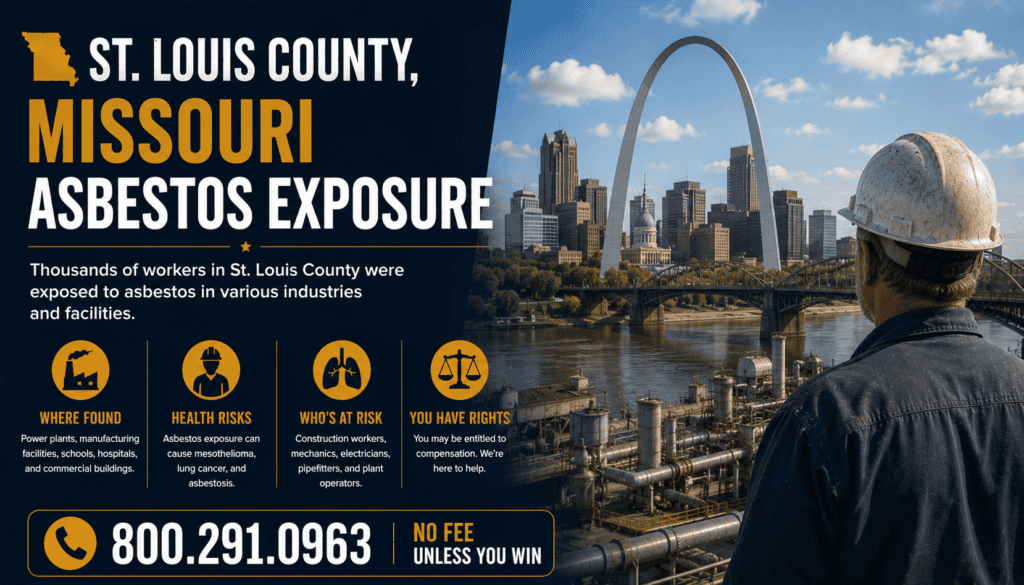
St. Louis County, Missouri Asbestos Exposure & Lawsuits
St. Louis County has been one of Missouri’s largest industrial, manufacturing, transportation, and construction centers for more than a century. Thousands of workers spent years around asbestos-containing insulation, boilers, steam pipes, electrical equipment, roofing materials, cement products, floor tiles, and industrial machinery. Many people who worked in these environments were unknowingly exposed to dangerous asbestos fibers that can cause mesothelioma, lung cancer, and other serious diseases decades later.
Today, former workers and families may investigate lawsuits, asbestos trust funds, and other compensation options after a diagnosis. The facts of each case—including work history, exposure evidence, products, employers, and applicable law—can affect which options may be available.
⚖️ Why St. Louis County Had High Asbestos Exposure
For decades, asbestos was considered an inexpensive, fire-resistant building material. It was widely used throughout St. Louis County in commercial buildings, factories, schools, hospitals, power plants, warehouses, manufacturing facilities, and public infrastructure.
Workers often handled asbestos without respirators or warning labels because the health risks were not fully disclosed for many years.
Some of the industries that commonly used asbestos included:
- Manufacturing
- Steel fabrication
- Chemical processing
- Automotive manufacturing
- Electrical equipment production
- Construction
- HVAC installation
- Plumbing
- Pipefitting
- Ship and railroad transportation
- Power generation
- Building maintenance
- Industrial maintenance
Many workers carried asbestos dust home on their clothing, exposing spouses and children through secondary asbestos exposure.
For county-level context, see Missouri Counties Asbestos Exposure & Lawsuits.
Learn more about statewide risks on our Missouri Asbestos Exposure Lawsuits page.
🏭 Major Industries That Used Asbestos in St. Louis County
St. Louis County’s economy depended on heavy industry throughout much of the twentieth century. Nearly every large industrial employer used equipment that contained asbestos.
Common industries included:
- Steel fabrication
- Automotive manufacturing
- Chemical manufacturing
- Petroleum storage
- Industrial construction
- Commercial construction
- Electrical manufacturing
- Heating and cooling systems
- Mechanical contracting
- Warehousing
- Rail transportation
- Utility services
- Food processing
- Public buildings
- Hospitals
- Schools
- Municipal facilities
Workers who repaired equipment were often exposed to even higher concentrations because asbestos insulation had to be removed before maintenance could begin.
Related Missouri resources include Missouri Industrial Asbestos Exposure and Missouri Industrial Machinery Asbestos Exposure.
🏢 Common St. Louis County Job Sites Where Asbestos Exposure Occurred
Workers may have encountered asbestos at hundreds of locations across the county.
Examples include:
- Manufacturing plants
- Steel fabrication facilities
- Automotive assembly plants
- Chemical plants
- Breweries
- Distribution centers
- Warehouses
- Public schools
- Colleges
- Hospitals
- Courthouses
- Office buildings
- Shopping centers
- Apartment complexes
- Utility plants
- Water treatment facilities
- Wastewater treatment plants
- Power substations
- Boiler rooms
- Mechanical rooms
Many buildings constructed before the early 1980s still contain asbestos materials that require professional removal before renovation or demolition.
🔧 Occupations With the Highest Risk
Workers in many different trades were regularly exposed to asbestos while installing, repairing, or removing insulation and industrial equipment.
Higher-risk occupations included:
- Pipefitters
- Steamfitters
- Electricians
- Boiler operators
- Maintenance mechanics
- HVAC technicians
- Plumbers
- Welders
- Millwrights
- Carpenters
- Insulators
- Laborers
- Construction workers
- Demolition crews
- Roofers
- Painters
- Sheet metal workers
- Engineers
- Power plant workers
- Industrial maintenance workers
Learn more in Missouri Workers & Occupational Asbestos Exposure. Related pages include Missouri Electricians Asbestos Exposure, Missouri Pipefitters Mesothelioma, and Missouri Construction Workers Mesothelioma.
🚂 Transportation and Railroad Exposure
St. Louis County has long served as one of the Midwest’s largest transportation hubs. Railroad workers often repaired locomotives, railcars, maintenance equipment, and mechanical systems that contained asbestos insulation.
Workers frequently encountered asbestos in:
- Brake systems
- Locomotive insulation
- Steam systems
- Pipe coverings
- Gaskets
- Packing materials
- Electrical panels
- Engine components
Years of repairing older equipment often resulted in repeated asbestos exposure.
Read more in our Missouri Railroad Asbestos Exposure guide.
🏗️ Construction Workers Faced Daily Exposure
Construction expanded rapidly throughout St. Louis County after World War II. Contractors routinely installed asbestos-containing building materials because they met fire codes and were inexpensive.
Construction workers commonly handled:
- Pipe insulation
- Boiler insulation
- Spray fireproofing
- Ceiling tiles
- Floor tiles
- Joint compound
- Roofing shingles
- Roofing felt
- Cement board
- Wallboard
- HVAC duct insulation
- Fire doors
Many workers had no idea the dust they breathed every day contained asbestos fibers.
⚠️ Asbestos Diseases May Take Decades to Develop
One of the most dangerous characteristics of asbestos exposure is its long latency period. Many people do not develop symptoms until 20 to 50 years after exposure occurred.
Common asbestos-related illnesses include:
- Mesothelioma
- Lung cancer
- Asbestosis
- Pleural plaques
- Pleural thickening
Early symptoms may include:
- Persistent cough
- Chest pain
- Shortness of breath
- Fatigue
- Unexplained weight loss
- Fluid around the lungs
Because symptoms often resemble less serious illnesses, many patients are diagnosed only after the disease has progressed.
Learn more on our Mesothelioma Symptoms page.
🏭 Major Employers Linked to Potential Asbestos Exposure
St. Louis County has long been home to many of Missouri’s largest employers. Throughout much of the twentieth century, asbestos was commonly used in factories, industrial facilities, commercial buildings, and public infrastructure because it resisted heat and fire.
Workers often encountered asbestos while installing, repairing, maintaining, or removing insulation and equipment. Even employees who did not directly work with asbestos-containing materials could be exposed when nearby maintenance or renovation disturbed aging insulation.
Some of the industries where asbestos exposure may have occurred include:
- Aerospace manufacturing
- Automotive manufacturing
- Steel fabrication
- Chemical production
- Electrical equipment manufacturing
- Food processing
- Beverage production
- Pharmaceutical manufacturing
- Printing facilities
- Warehousing
- Distribution centers
- Commercial construction
- Industrial maintenance
- Public utilities
Many employees worked at multiple industrial sites over long careers, increasing their cumulative asbestos exposure.
Learn more about Missouri workplaces on our Missouri Asbestos Exposure Lawsuits page.
✈️ Aerospace Manufacturing in St. Louis County
St. Louis County has been a major center for aerospace manufacturing for decades. Aircraft production facilities relied on asbestos because of its heat resistance and durability.
Workers may have encountered asbestos in:
- Aircraft brakes
- Engine insulation
- Fireproof panels
- Electrical systems
- Gaskets
- Sealants
- Heat shields
- Industrial ovens
- Pipe insulation
- Boiler systems
Maintenance crews, machinists, mechanics, electricians, welders, and insulation workers often experienced the highest exposure levels while repairing or replacing older equipment.
For statewide product research, see Missouri Asbestos Products and Missouri Industrial Asbestos Products.
🏗️ Commercial and Industrial Construction
Thousands of commercial buildings, schools, hospitals, office complexes, and industrial plants were built throughout St. Louis County during the years when asbestos products were widely used.
Construction workers frequently installed materials such as:
- Pipe insulation
- Steam pipe covering
- Spray-on fireproofing
- Cement products
- Floor tile
- Ceiling tile
- Joint compound
- Roofing materials
- Wallboard
- HVAC insulation
- Fire-resistant doors
- Mechanical insulation
Years later, renovation and demolition workers often disturbed these materials, releasing microscopic asbestos fibers into the air.
Related resources include Missouri Asbestos Products Used in Construction and Missouri Asbestos Insulation Products.
Learn more in our Missouri Construction Asbestos Exposure guide.
⚡ Utilities and Power Facilities
Power generation and utility operations required equipment capable of handling extremely high temperatures. Because of this, asbestos insulation was commonly installed around boilers, turbines, steam lines, pumps, and electrical equipment.
Workers at utility facilities may have handled:
- Boilers
- Steam pipes
- Turbines
- Pumps
- Electrical switchgear
- Valves
- Compressors
- Cooling systems
- Pipe insulation
- Electrical insulation
Maintenance shutdowns and equipment repairs often created the greatest risk because deteriorating insulation had to be removed before repairs could begin.
See Missouri Power Plant Asbestos Exposure, Missouri Power Plant Workers Mesothelioma, and Missouri Power Generation Equipment Asbestos Exposure for related statewide information.
🏥 Schools, Hospitals, and Government Buildings
Many public buildings constructed before the 1980s still contain asbestos materials. Although these materials are generally safest when left undisturbed, renovation, remodeling, or demolition projects can release hazardous fibers.
Buildings that may have contained asbestos include:
- Public schools
- Private schools
- Colleges
- Universities
- Hospitals
- Clinics
- Courthouses
- Police stations
- Fire stations
- Libraries
- Government offices
- Municipal buildings
Teachers, custodians, maintenance workers, electricians, plumbers, HVAC technicians, and outside contractors could all face exposure during repair projects.
🚛 Warehouses and Distribution Centers
St. Louis County has long been an important logistics hub because of its highway and rail connections. Large warehouses and distribution facilities often contained asbestos insulation in mechanical systems and building materials.
Potential exposure sources included:
- Boiler rooms
- Heating systems
- Steam pipes
- Industrial ovens
- Electrical rooms
- Ceiling materials
- Flooring
- Roofing systems
- Fireproof insulation
Maintenance employees were generally at the greatest risk because they worked directly around aging building systems.
For older public facilities, see Missouri Public & Government Buildings Asbestos Exposure.
👨👩👧 Secondary Asbestos Exposure
Many families developed asbestos-related illnesses without ever working around asbestos themselves.
Workers often returned home with asbestos fibers on:
- Work clothing
- Boots
- Jackets
- Gloves
- Hair
- Skin
- Tool bags
- Vehicles
Family members could inhale these fibers while:
- Washing contaminated clothing
- Hugging workers after work
- Cleaning vehicles
- Sweeping garages
- Handling work boots and equipment
This is known as secondary, household, or take-home asbestos exposure. Numerous mesothelioma cases have involved spouses and children who were exposed this way.
Learn more on our secondary or take-home asbestos exposure information.
⚖️ Missouri Asbestos Lawsuits
People diagnosed with mesothelioma or another asbestos-related disease may investigate compensation options connected to documented asbestos exposure.
Depending on the circumstances, a claim may involve:
- Personal injury lawsuits
- Wrongful death lawsuits
- Asbestos bankruptcy trust fund claims
- Multiple trust fund claims
- Veterans benefits for military exposure
- Workers’ compensation in certain situations
Related information is available at Missouri Wrongful Death Mesothelioma Lawsuits and Missouri Asbestos Trust Fund Claims.
Many successful cases involve exposure that occurred decades before a diagnosis.
💰 Compensation May Be Available
Every case is unique, but compensation may help cover losses such as:
- Medical bills
- Cancer treatments
- Lost income
- Reduced earning capacity
- Travel expenses
- Home health care
- Pain and suffering
- Loss of companionship
- Funeral expenses in wrongful death claims
Eligibility depends on factors such as where exposure occurred, the products involved, employment history, and available evidence.
For Missouri-specific legal topics, review Missouri Mesothelioma Lawsuits & Claims.
Learn more at Missouri Mesothelioma Lawsuits & Claims and Missouri Mesothelioma Statute of Limitations.
⏳ Missouri Statute of Limitations for Asbestos Lawsuits
Missouri law limits the amount of time a person has to file an asbestos lawsuit. Because mesothelioma and other asbestos diseases often develop 20 to 50 years after exposure, the filing deadline usually begins when the disease is diagnosed rather than when the exposure occurred.
The deadline that applies to your case depends on several factors, including:
- The type of asbestos-related disease
- The date of diagnosis
- Whether the claim is for personal injury or wrongful death
- Other legal factors specific to the case
Missing an applicable filing deadline can affect whether a claim may proceed. Because deadlines depend on the circumstances and applicable law, they should be investigated promptly after a diagnosis.
Learn more on our Missouri Mesothelioma Lawsuits & Claims page.
🏦 Asbestos Trust Funds
Many companies that manufactured or supplied asbestos-containing products later filed for bankruptcy. As part of the bankruptcy process, courts required these companies to establish asbestos trust funds to compensate current and future victims.
Today, dozens of active asbestos trust funds continue paying eligible claims.
A successful trust fund claim may require documentation such as:
- Medical records
- Pathology reports
- Employment history
- Military service records
- Witness statements
- Product identification
- Union records
- Social Security work history
Many workers qualify to file claims with more than one trust fund because they worked around products made by several different manufacturers during their careers.
Learn more by visiting our Missouri Asbestos Trust Fund Claims resource.
🎖️ Veterans Living in St. Louis County
Many St. Louis County residents served in the U.S. military before or after working in local industries. Veterans experienced some of the highest asbestos exposure rates because asbestos was widely used throughout every military branch for much of the twentieth century.
Veterans may have encountered asbestos while serving aboard ships, maintaining aircraft, repairing military vehicles, working in boiler rooms, or living in older military housing.
Military branches with significant historical asbestos use include:
- U.S. Navy
- U.S. Army
- U.S. Air Force
- U.S. Marine Corps
- U.S. Coast Guard
- Merchant Marine
In many cases, veterans may qualify for both VA benefits and compensation from asbestos lawsuits or trust funds.
Learn more on our U.S. Military Veterans Asbestos Exposure page.
📋 Steps to File a Missouri Asbestos Claim
If you have been diagnosed with mesothelioma or another asbestos-related disease, gathering information early can make the claims process easier.
Helpful records may include:
- Medical diagnosis and pathology reports
- Employment history
- Military service records
- Union membership information
- Social Security employment records
- Names of former employers
- Job site locations
- Coworker information
- Product information, if known
Additional investigation may help identify historical employers, job sites, asbestos-containing products, manufacturers, contractors, and other evidence connected to possible exposure.
❓ Frequently Asked Questions
Can I file a lawsuit if I worked in St. Louis County decades ago?
Yes. Mesothelioma and other asbestos diseases often appear decades after exposure. Many successful claims involve work performed in the 1960s, 1970s, or 1980s.
What if the company where I worked is no longer in business?
You may still qualify for compensation. Many former asbestos manufacturers established bankruptcy trust funds that continue paying eligible claims.
Can family members develop mesothelioma from asbestos?
Yes. Household members sometimes developed mesothelioma after repeated exposure to asbestos fibers carried home on contaminated work clothes, shoes, tools, or vehicles.
What diseases are linked to asbestos exposure?
Exposure may increase the risk of:
- Mesothelioma
- Lung cancer
- Asbestosis
- Pleural plaques
- Pleural thickening
- Other asbestos-related lung diseases
How long after exposure can symptoms appear?
Symptoms often develop 20 to 50 years after asbestos exposure. This long latency period is one reason many people are diagnosed after retirement.
What compensation may be available?
Depending on the facts of the case, compensation may include:
- Medical expenses
- Lost wages
- Future medical care
- Pain and suffering
- Wrongful death damages
- Asbestos trust fund payments
- Veterans benefits for eligible service members
What information can help document a St. Louis County exposure history?
Employment records, Social Security work histories, union records, military records, job-site information, equipment records, product information, and statements from former coworkers may help document where and how exposure occurred.
Where can I learn more about asbestos exposure in Missouri?
Visit our Missouri asbestos resource center:
Missouri Asbestos Exposure Lawsuits
Call 800.291.0963 — Open 24/7, 365 Days
MesotheliomaHelp.Center provides legal and medical information to help people affected by asbestos exposure understand historical exposure sources, compensation options, filing deadlines, and possible next steps.