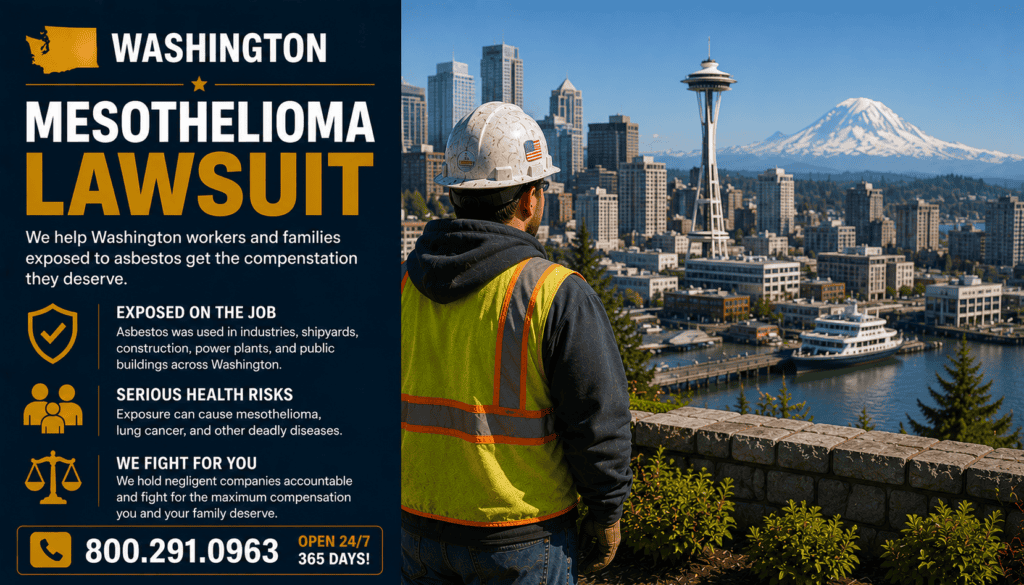
⚖️ Washington Mesothelioma Lawsuits
Washington workers and families affected by mesothelioma may be looking back decades to understand where asbestos exposure occurred. Shipyards and naval facilities, aerospace manufacturing, paper and lumber mills, aluminum and industrial plants, power generation and construction are especially important in the state’s occupational history. Older industrial, transportation, utility, construction and public-building systems used asbestos-containing insulation, gaskets, packing, fireproofing and other heat-resistant materials.
If you or a family member has been diagnosed with mesothelioma or asbestos-related lung cancer, a detailed history of jobs, work areas, equipment and products can help identify possible exposure sources and compensation options. Washington mesothelioma lawsuits can involve product manufacturers, suppliers, contractors, asbestos bankruptcy trusts or other potentially responsible companies depending on the individual history.
⚖️ Washington Mesothelioma Lawsuits Overview
Mesothelioma is strongly associated with asbestos exposure and often develops many years after fibers were inhaled or swallowed. A Washington worker can therefore be diagnosed after retirement or after a former plant, mill, shipyard, mine, railroad facility, construction site or military workplace has closed, changed ownership or been rebuilt.
A Washington mesothelioma lawsuit focuses on where and how a person encountered asbestos and which companies may bear legal responsibility. Historical exposure involved asbestos-containing materials used around boilers, piping, pumps, valves, furnaces, electrical systems, vehicles, machinery and older buildings.
Some workers handled asbestos-containing products directly. Others worked near pipe trades, insulators, mechanics, electricians or maintenance crews who removed insulation, opened equipment, scraped gaskets or replaced packing. Family members were also exposed in some circumstances when fibers left work on contaminated clothing or other items.
Every history is different. Job title, employer, facility, equipment, duties and years worked all matter. For broader geographic information, see Mesothelioma Lawsuits in All 50 States.
🏭 Where Asbestos Exposure Occurred in Washington
Washington’s occupational history includes industries that depended on high-temperature mechanical systems and older buildings. Asbestos was historically used for thermal insulation, fire resistance, sealing and durability. Exposure occurred when those materials deteriorated or were disturbed during maintenance, repair, renovation and demolition.
Shipyards and maritime facilities. Ship construction, repair and overhaul placed shipyard trades around boilers, steam piping, pumps, valves, engine spaces and older insulation. Puget Sound maritime history makes exact vessel, yard, craft and dates particularly useful.
Aerospace and manufacturing. Aircraft production and industrial manufacturing involved machinery, heat-resistant materials, older buildings and maintenance operations. Exposure should be tied to the task and material rather than presumed from employment alone.
Paper, lumber and aluminum operations. Mills and high-temperature industrial facilities used boilers, furnaces, steam systems, pumps and production equipment requiring regular maintenance.
Power generation and utilities. Hydroelectric, thermal and other generating facilities used mechanical systems with insulation and sealing materials; overhaul work disturbed older components.
Construction and building trades. Older commercial, residential, institutional and industrial buildings used asbestos-containing products that were disturbed during renovation and demolition.
| Washington Work Setting | Historical Materials or Systems | How Exposure Happened |
|---|---|---|
| Industrial facilities | Boilers, piping, pumps, valves, furnaces and insulation | Maintenance, shutdowns and repair |
| Power and utilities | Turbines, steam systems, gaskets, packing and insulation | Overhaul and component replacement |
| Construction | Insulation, flooring, roofing, fireproofing and joint compounds | Renovation, cutting, sanding and demolition |
| Transportation | Mechanical, friction, thermal and older building materials | Vehicle, equipment and facility maintenance |
| Public or military buildings | Pipe insulation, boilers, flooring and fire-resistant materials | Maintenance, repair and renovation |
Exposure histories often span several employers or industries. Maintenance employees moved among boiler rooms, production areas, utility spaces and shutdown projects. The useful details are the materials disturbed, the worker’s proximity, frequency of the work and the years involved.
Cleanup also mattered. Sweeping debris, handling discarded insulation or gasket material and working in dusty mechanical spaces could redistribute fibers after a repair was completed. Nearby employees could share the same air even when another trade performed the primary task.
👷 Washington Workers & Jobs With Asbestos Exposure
Workers who maintained high-temperature equipment or disturbed insulation and sealing materials faced increased asbestos exposure potential. These included mechanics, millwrights, pipefitters, boilermakers, insulators, electricians, construction workers, utility employees, transportation workers and industrial maintenance crews.
Mechanics and millwrights repaired pumps, valves, compressors, conveyors and production machinery. Older industrial equipment used gaskets and packing for sealing, while nearby piping and hot systems could be insulated.
Pipefitters and boilermakers worked on steam systems, boilers, valves and flanges. Opening equipment and piping required removal of old gaskets and insulation during some maintenance and overhaul work.
Electricians worked throughout plants, utilities, shipyards, mines and older buildings near mechanical systems, fire-resistant materials and renovation work. Broader occupation information is available at Asbestos Exposure in High-Risk Jobs.
Construction workers encountered older asbestos-containing building materials during repair, renovation and demolition. The significance of an exposure depends on the material, its condition and the work performed.
Veterans can review U.S. Military Veterans Asbestos Exposure. Military exposure should be tied to branch, occupation, duty station, buildings or equipment, service dates and the actual work performed.
🧱 Asbestos Products & How Exposure Happened
Asbestos was historically used because it resists heat and corrosion and can strengthen other materials. Federal occupational-safety guidance identifies historical use in pipe insulation, floor tile, building materials, vehicle brakes and clutches. Industrial workplaces also used asbestos-containing thermal insulation, gaskets and packing around equipment.
Thermal insulation covered steam lines, boilers, tanks, ducts and other hot systems. Aging insulation deteriorated, while repair and removal work broke material apart and released fibers when asbestos was present.
Gaskets sealed flanges, pumps, valves and machinery. Mechanics and pipe trades removed old gasket material from metal surfaces and installed replacements during maintenance.
Packing was used around moving components such as pump shafts and valve stems. Pulling older packing during repair disturbed the material.
Building materials included some floor tiles, roofing, fireproofing, joint compounds and insulation. Renovation and demolition workers encountered these products long after original installation.
Exposure did not require direct handling. Workers also breathed fibers released by another trade nearby, particularly in enclosed mechanical rooms, industrial departments and shared maintenance spaces. Household exposure occurred in some circumstances when fibers were carried away from work on contaminated clothing.
Original equipment and later replacement components should be considered separately. A pump, valve or boiler may have been made by one company while later gaskets, packing or insulation came from other suppliers. Product identification should follow the equipment, maintenance cycle and relevant years.
📍 Washington Cities, Counties & Local Exposure
Where a person lived and worked helps narrow a statewide exposure history into particular employers, facilities, industries and years. A city or county name alone does not establish asbestos exposure; the person’s actual workplace, department, occupation, equipment and dates provide the useful connection.
Seattle and King County. Shipyards, aerospace, construction, utilities, transportation and manufacturing are relevant to many work histories.
Tacoma and Pierce County. Maritime, paper, industrial, port, construction and transportation employment created diverse mechanical and building-maintenance histories.
Bremerton and Kitsap County. Naval shipyard and Navy histories are especially important; vessel, shop, trade, building and service dates help define the actual exposure circumstances.
Spokane and eastern Washington. Manufacturing, utilities, construction, transportation and military work can be relevant depending on the person’s employer, facility and duties.
Everett and Snohomish County. Aerospace, maritime, manufacturing and construction work are important occupational contexts.
Verified county resources include King County, Washington Asbestos Exposure Lawsuits and Spokane County, Washington Asbestos Exposure Lawsuits. The state hierarchy also includes Washington Asbestos Exposure Sites for broader jobsite context.
Workers often changed employers or traveled between projects, so a complete chronology can cross city and county lines. Closed or renamed facilities can still matter because mesothelioma’s long latency means exposure may have occurred decades before diagnosis.
| Local History Detail | Why It Matters |
|---|---|
| City and county | Narrows the search to local employers and facilities |
| Employer and workplace | Identifies the actual site rather than a broad industry |
| Years worked | Connects the history to the relevant equipment and product era |
| Occupation and department | Shows where the person worked and what tasks were performed |
| Maintenance or shutdown work | Identifies periods when older materials were disturbed |
Employment records, union records, former coworkers, photographs, equipment information and facility records can help clarify a decades-old history without assuming that everyone at a facility experienced the same exposure.
🫁 Mesothelioma & Asbestos Lung Cancer Claims
Mesothelioma and asbestos-related lung cancer are different diseases, although both are associated with asbestos exposure. A person diagnosed with either condition may need to reconstruct occupational, military or household exposure from decades earlier.
Mesothelioma is a cancer of the mesothelial lining and is strongly associated with asbestos. Pleural mesothelioma affects the lining around the lungs and is the most common form.
Asbestos-related lung cancer develops in lung tissue rather than the mesothelial lining. Smoking is an important lung-cancer risk factor, but asbestos is an independent occupational carcinogen. State-specific information is available at Washington Asbestos Lung Cancer Lawsuits.
A claim generally requires more than showing that someone worked in an industry historically associated with asbestos. Work history, job duties, products, equipment and potentially responsible companies help determine which legal or trust options may be relevant.
Medical records document diagnosis and treatment. Exposure history addresses where and how asbestos was encountered. Both can be important, but an occupational title or state residence by itself does not establish individual exposure or legal responsibility.
💼 Washington Lawsuits, Trust Funds & Compensation
People diagnosed with mesothelioma after Washington asbestos exposure may have more than one potential compensation route. Available options depend on exposure history, responsible companies, diagnosis, applicable law and other individual circumstances.
Mesothelioma lawsuits may seek compensation from companies alleged to be legally responsible for asbestos exposure. Depending on the facts, manufacturers, suppliers, contractors or other entities may be involved.
Asbestos bankruptcy trust claims may be available when a person’s exposure and medical history satisfy the requirements of a trust established by a former asbestos company. Each trust has separate criteria and documentation requirements.
Veterans benefits may be available to qualifying veterans when evidence connects a diagnosed condition to asbestos exposure during military service. VA benefits are separate from civil lawsuits and trust claims.
Wrongful-death claims may be available to eligible family members after an asbestos-related death. Who may file and the applicable deadline depend on governing law and individual circumstances.
No recovery amount is guaranteed. Another person’s verdict, settlement or trust payment does not determine a different case. Filing deadlines also depend on the type of claim, relevant dates, jurisdiction and other facts.
❓ Frequently Asked Questions
Where did asbestos exposure occur in Washington?
Historical exposure occurred in industrial, utility, transportation, construction, public-building and military settings. Individual exposure depends on the actual workplace, materials, duties and time period.
Which Washington workers faced increased asbestos exposure potential?
Workers maintaining high-temperature equipment or disturbing insulation and sealing materials included mechanics, millwrights, pipefitters, boilermakers, electricians, construction workers and industrial maintenance employees.
Could I have been exposed without handling asbestos myself?
Yes. Nearby insulation removal, gasket replacement and dusty maintenance could expose workers sharing the same area when asbestos-containing materials were disturbed.
Can asbestos exposure cause mesothelioma decades later?
Yes. Mesothelioma has a long latency period, so diagnosis can occur decades after exposure.
Is asbestos-related lung cancer the same as mesothelioma?
No. Lung cancer develops in lung tissue, while mesothelioma develops in mesothelial tissue, most often the lining around the lungs. Both are associated with asbestos exposure.
Can a Washington worker qualify for asbestos trust funds?
Possibly. Eligibility depends on whether the person’s exposure and medical history satisfy a particular asbestos bankruptcy trust’s requirements.
How long do I have to file a Washington mesothelioma lawsuit?
The applicable deadline depends on the claim, relevant dates, jurisdiction and individual circumstances. A single deadline should not be assumed for every case.
Is compensation guaranteed in a Washington mesothelioma lawsuit?
No. Eligibility and outcomes depend on diagnosis, exposure history, responsible entities, applicable law and other case-specific facts.
📚 Confirmed Sources & Summary
OSHA identifies asbestos as a recognized occupational hazard and documents historical uses in insulation, building materials and friction products. NIOSH and the National Cancer Institute identify asbestos exposure as a cause of mesothelioma and lung cancer.
- OSHA — Asbestos
- OSHA — 29 CFR 1910.1001 Asbestos
- NIOSH — About Asbestos
- National Cancer Institute — Asbestos Exposure and Cancer Risk
For Washington workers and families affected by mesothelioma, the starting point is the person’s actual exposure history: where they worked, what they did, which equipment or materials were nearby and whether asbestos-containing products were disturbed. Lawsuits, trust claims, veterans benefits and other compensation options then depend on individual circumstances.
☎️ Help After Washington Asbestos Exposure & Mesothelioma
If you or a family member worked around asbestos in Washington and has been diagnosed with mesothelioma or asbestos-related lung cancer, you can learn about potential compensation resources and information that may help identify responsible companies. Call 800.291.0963 or submit the form below.
Disclaimer: This content is provided for informational and educational purposes only. It is not intended to be legal or medical advice. Individual asbestos exposure histories, diagnoses, laws and circumstances vary.