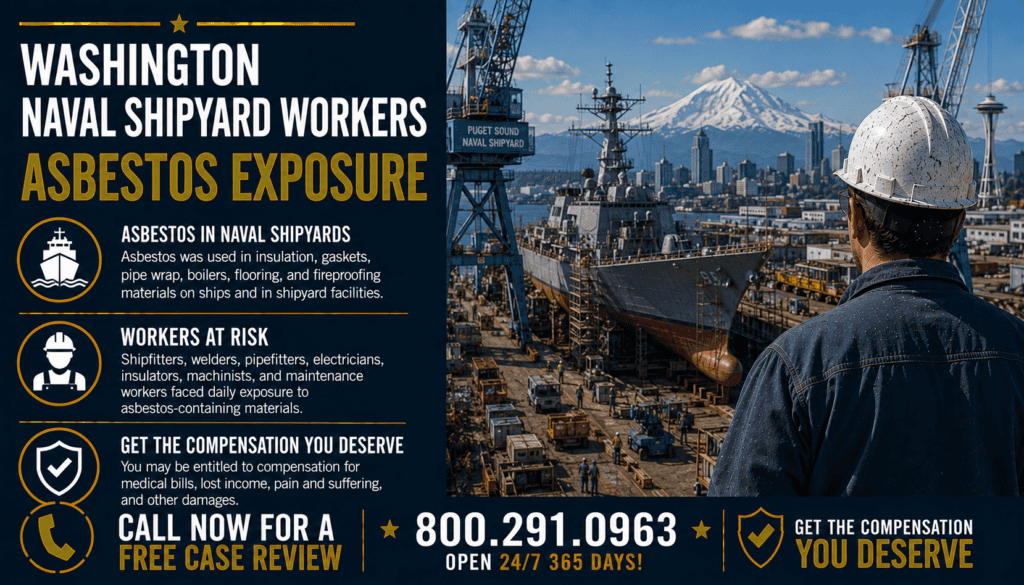
Washington Naval Shipyard Workers Asbestos Exposure
Washington naval shipyard workers have supported ship construction, repair, modernization, inactivation and maintenance across generations of Navy vessels. Historical asbestos research at Puget Sound Naval Shipyard should connect each worker to a specific shop, vessel, trade, task and period instead of treating the entire installation as a single exposure event.
Puget Sound Naval Shipyard in Bremerton has operated since the nineteenth century and expanded through major wartime and postwar repair programs. For workers later diagnosed with mesothelioma, Navy histories can establish industrial context while employment, product and witness records are needed to evaluate individual exposure.
Overview
The Navy established the Puget Sound facility in 1891. Its history includes ship construction, battle-damage repair, carrier modernization, submarine work and later nuclear-vessel maintenance and recycling. These changing missions matter because work practices, vessels and materials varied substantially by decade.
A historical facility description is only the first layer of an exposure investigation. The worker’s shop, craft, vessel assignment and specific maintenance activity must be identified before product research can be meaningful.
Related Washington research includes Puget Sound / Bremerton Naval Shipyard.
A useful companion resource is Washington Shipyard Workers Asbestos Exposure.
The Navy reports that Puget Sound Naval Shipyard expanded through both world wars, repaired battle-damaged vessels during World War II and later modernized carriers and supported submarine work. Those documented missions help identify periods of intensive repair activity but do not establish the materials encountered by any one employee.
Washington Workplaces and Industries
Potential work areas include dry docks, piers, shipboard machinery spaces, repair shops and shoreside industrial facilities. A machinist in a shop may have a different exposure history from an insulator aboard a vessel or a laborer assigned to cleanup.
Navy and federal records may help establish vessel availability periods, maintenance assignments and facility history. Personnel and payroll records, union or trade information, photographs and coworker testimony can then connect the individual worker to that broader history.
For a connected exposure history, review Washington Workers & Occupational Asbestos Exposure.
For broader context, see Washington Equipment & Machinery Asbestos Exposure.
Federal civilian records may differ from private-sector personnel files. Families can look for position descriptions, shop assignments, employment dates and other federal records that place a worker in a particular part of the installation. Contractor employees should separately identify their direct employer.
Dry-dock and overhaul schedules can help match a worker’s employment to a vessel undergoing major repair. When the vessel is known, technical manuals and ship histories may narrow the machinery and systems that were being serviced during that period.
How Exposure Could Occur
OSHA’s historical asbestos rulemaking notes extensive asbestos use on older ships, including insulation for steam and hot-water piping, boilers and tanks, with exposure potential during repair and removal. Those findings provide industry context, not proof for every Navy vessel or employee.
Document direct work and nearby work separately. Removing insulation, opening equipment, scraping old gaskets and cleaning debris involve different facts. Record frequency, duration, distance and whether the worker personally recognized a product or learned its identity from records.
Repair of older steam and mechanical systems may require access through insulation or removal of sealing materials. The evidence should identify the task actually performed and avoid converting OSHA’s industry-wide historical findings into a claim that every vessel contained the same products.
Work performed by adjacent trades should be recorded when it is based on firsthand observation. A machinist, electrician or laborer may describe insulation removal by another crew, but the account is stronger when the witness can identify the location, task, timing and basis for recognizing the material.
Products and Equipment
Naval vessels could undergo repeated overhauls, meaning installed components changed over time. Research should distinguish original construction materials from later replacement gaskets, packing, insulation and other consumables.
Technical manuals, ship specifications, procurement records and credible firsthand testimony can help identify manufacturers. Avoid assuming that an equipment maker manufactured every asbestos-containing component later installed on that equipment.
Related Washington research includes Washington Asbestos Products.
A useful companion resource is Washington Insulators Asbestos Exposure.
| Research Area | Useful Evidence |
|---|---|
| Equipment | Manuals, model numbers, maintenance records and specifications |
| Products | Labels, packaging, invoices, catalogs and firsthand testimony |
| Work history | Payroll, union, pension, military and Social Security records |
Government specifications can be valuable product evidence because they may identify approved materials for a period or application. They still need to be connected to the vessel, overhaul and work area relevant to the individual worker.
Military and Naval Work
Some Puget Sound Naval Shipyard workers were federal civilian employees; others may also have had Navy service. Keep civilian employment and active-duty exposure histories separate because different compensation systems and records may apply.
Veterans should preserve DD Form 214, ship assignments, rates and duty histories. Civilian workers should seek federal employment and shop records when available. A qualified adviser can evaluate which benefit or claim systems may apply to each period.
For a connected exposure history, review Washington Boilermakers Asbestos Exposure.
For broader context, see U.S. Navy Asbestos Exposure.
VA claims generally concern veterans’ service, while federal civilian employment raises different benefit and legal questions. A worker who had both careers should build two timelines so the supporting records and exposure theories remain distinct.
Evidence Needed for a Claim
Start with a dated employment history that identifies the employer, facility, department, trade, job duties and coworkers. Social Security earnings records, union files, pension records, W-2s, photographs and military documents can help corroborate a work history that may reach back several decades.
Product identification should be kept separate from general jobsite history. Useful evidence can include equipment manuals, specifications, purchase records, product labels, photographs and testimony from people who personally observed the work. When a manufacturer or product is uncertain, mark it as a research question rather than stating it as fact.
Medical records establish diagnosis and treatment; occupational records address where exposure may have occurred. Families should also preserve prior trust, VA, workers’ compensation and lawsuit submissions so that exposure histories can be reviewed consistently across different compensation routes.
Former coworkers can help describe tasks, work areas and products, but witness knowledge should be documented carefully. Record the person’s trade, years at the facility and the basis for what they remember. This makes a historical account easier to evaluate without overstating what a witness can actually establish.
| Record | What It Can Help Establish |
|---|---|
| Employment / union files | Employer, trade, dates and assignments |
| Maintenance / vessel records | Equipment, overhaul or project timing |
| Product documents | Manufacturer and material identification |
| Witness information | Tasks, proximity and work practices |
Deadlines, Trust Funds and Compensation
Washington filing rules depend on the type of claim and individual facts. Occupational-disease claims under the state’s workers’ compensation system have their own statutory requirements, while civil lawsuits, wrongful-death matters and bankruptcy trust submissions follow different rules. A generic online deadline should not substitute for individualized review.
Potential compensation may involve civil claims against legally responsible parties, qualifying asbestos bankruptcy trusts, workers’ compensation benefits or VA benefits for eligible veterans. Each route has separate proof requirements, and no settlement, verdict, trust payment or benefit is guaranteed.
Early investigation can preserve testimony and locate records before they disappear. A qualified Washington attorney can evaluate venue, defendants, trust disclosures, filing deadlines and the relationship between different potential claims.
Because naval shipyard histories may involve federal employment, military service and private manufacturers, more than one body of law can be relevant. Qualified counsel should determine which potential defendants, benefit systems and filing rules apply rather than assuming one Washington deadline controls every route.
Frequently Asked Questions
Does a Washington jobsite name prove asbestos exposure?
No. The investigation should connect the worker to a particular task, product, work area and period.
Why are old employment records important?
They can corroborate dates, employers, departments and coworkers when exposure occurred decades before diagnosis.
Can nearby trade work matter?
Potentially. Document the adjacent task, distance, frequency and material rather than assuming bystander exposure.
Can veterans pursue VA benefits?
Eligible veterans may be able to pursue VA benefits when service-related exposure and other requirements are established.
What if a product manufacturer entered bankruptcy?
A qualifying asbestos trust may exist, but each trust has its own exposure and documentation criteria.
Should prior claims be disclosed?
Preserve prior trust, workers’ compensation, VA and lawsuit records so qualified counsel can evaluate disclosure and coordination requirements.
How quickly should families investigate?
Prompt investigation can help preserve witnesses and records and allows counsel to evaluate applicable deadlines.
Is compensation guaranteed?
No. Eligibility and recovery depend on applicable law and evidence.
Confirmed Sources
A useful final review compares the work chronology against every supporting document and identifies gaps before conclusions are drawn. Dates that cannot be verified should remain approximate, and product names should not be added merely because they were used elsewhere in the same industry.
This evidence-first approach improves both accuracy and usefulness for families researching a decades-old occupational history. It also helps distinguish well-supported exposure periods from locations that require additional records or witness development.
Summary
Washington Naval Shipyard Workers Asbestos Exposure investigations are strongest when diagnosis, work history, product evidence and witness information are organized by date and source. Washington industrial and maritime history can provide useful leads, but individual exposure and legal responsibility require evidence specific to the person and claim.
Review Your Washington Exposure History
Call 800.291.0963 or use the form below to discuss available informational resources and potential next steps.
Disclaimer: This page provides general educational information and is not individualized legal or medical advice. Laws and claim requirements can change, and no outcome or compensation is guaranteed.