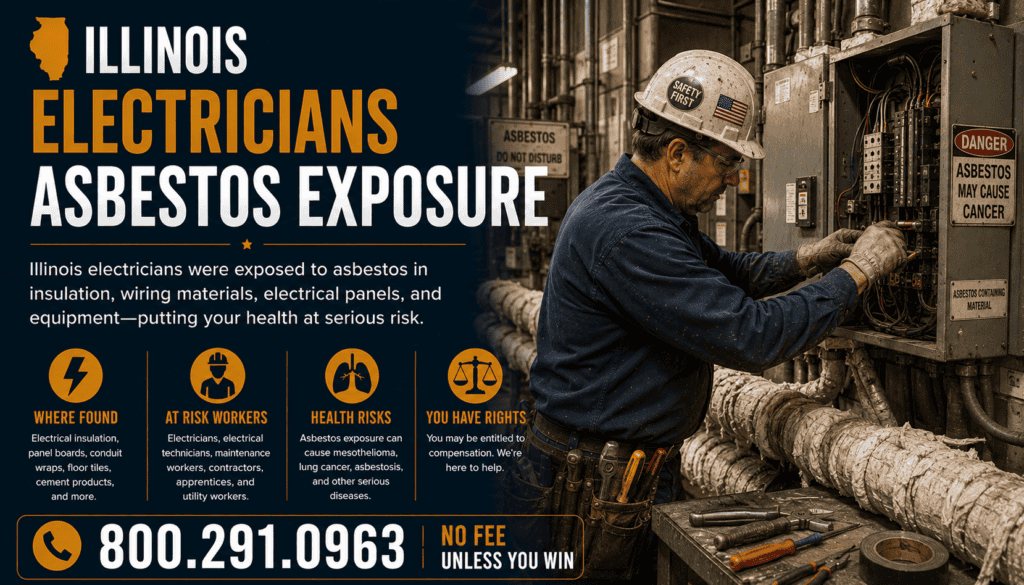
👷 Illinois Electricians and Asbestos Exposure
Electricians helped power Illinois homes, factories, schools, hospitals, commercial buildings, power plants, and industrial facilities throughout the twentieth century. Although electricians rarely installed asbestos insulation themselves, they frequently worked around asbestos-containing electrical equipment, insulated wiring, boilers, steam systems, conduit, electrical panels, and fireproof building materials.
For decades, asbestos was considered an essential component of electrical systems because it resisted heat, prevented electrical fires, and provided excellent insulation. Unfortunately, many Illinois electricians unknowingly inhaled asbestos fibers while installing, repairing, maintaining, or replacing electrical equipment in older buildings.
Many former Illinois electricians have since been diagnosed with mesothelioma, asbestos lung cancer, asbestosis, and other asbestos-related diseases decades after their occupational exposure. Electricians often experienced both direct exposure from asbestos-containing electrical products and bystander exposure while working alongside insulators, pipefitters, plumbers, boilermakers, and construction crews disturbing asbestos materials.
If you worked as an electrician anywhere in Illinois, you may also find our Illinois Asbestos Exposure Sites page helpful for identifying additional workplaces where asbestos exposure commonly occurred.
⚡ Illinois Electrical Industry History
Illinois experienced tremendous industrial and commercial growth throughout the twentieth century. Thousands of electricians installed electrical systems in nearly every type of structure across the state.
Major projects included:
- Manufacturing plants
- Steel mills
- Power plants
- Oil refineries
- Chemical facilities
- Commercial office buildings
- Hospitals
- Schools
- Universities
- Government buildings
- Airports
- Military installations
- High-rise buildings
- Apartment complexes
- Shopping centers
- Water treatment plants
- Wastewater treatment facilities
- Warehouses
From the 1930s through the late 1970s, asbestos-containing products were considered standard throughout the electrical industry because of their heat resistance and insulating properties.
Electricians regularly installed new electrical systems and later returned decades afterward to repair, modernize, or replace aging equipment that contained asbestos. Older Illinois commercial and public buildings frequently still contain asbestos materials that require regulated management during renovation projects.
🔥 Why Asbestos Was Used in Electrical Systems
Electrical systems generate heat, making fire protection and insulation essential.
Manufacturers incorporated asbestos into electrical products because it offered:
- Excellent heat resistance
- Fire resistance
- Electrical insulation
- Chemical resistance
- Moisture resistance
- Long service life
- High durability
- Low maintenance costs
Because of these advantages, asbestos became a common component in electrical equipment installed throughout Illinois.
Common asbestos-containing electrical products included:
- Electrical panels
- Switchgear
- Circuit breaker components
- Fuse boxes
- Arc chutes
- Wire insulation
- Electrical conduit insulation
- Generator insulation
- Motor insulation
- Cable insulation
- Electrical cloth
- Fireproof panels
- Electrical gaskets
- Heat shields
- Insulating boards
- Cement backer panels
- Electrical tape
- Terminal insulation
- Transformer insulation
- Control panels
Many electricians handled these products for years without knowing they contained asbestos. Wire insulation, arc chutes, switchgear, and older electrical components commonly incorporated asbestos because of its insulating and fire-resistant properties.
👷 How Illinois Electricians Were Exposed
Electricians often encountered asbestos throughout every phase of electrical construction, maintenance, and repair.
Common exposure activities included:
- Pulling electrical wire
- Installing conduit
- Replacing electrical panels
- Repairing switchgear
- Servicing generators
- Installing motors
- Upgrading electrical rooms
- Drilling walls
- Cutting ceilings
- Running conduit through insulation
- Removing electrical equipment
- Demolishing old electrical systems
- Renovating mechanical rooms
- Modernizing commercial buildings
These activities frequently disturbed asbestos-containing insulation, wall materials, ceiling products, pipe insulation, and electrical equipment.
Electricians also experienced significant bystander exposure while working near insulation crews, plumbers, pipefitters, steamfitters, HVAC technicians, and demolition workers performing asbestos-producing work nearby.
🏢 Commercial Buildings and Industrial Facilities
Commercial buildings presented numerous opportunities for asbestos exposure because electrical systems were installed throughout structures containing asbestos.
Electricians routinely worked inside:
- Office buildings
- Manufacturing plants
- Hospitals
- Schools
- Universities
- Warehouses
- Government buildings
- Shopping centers
- Hotels
- Apartment buildings
Electrical work often required entering boiler rooms, mechanical rooms, utility tunnels, ceiling spaces, and equipment rooms where asbestos insulation was heavily concentrated.
Workers employed inside manufacturing facilities should also review our Illinois Factory Workers Asbestos Exposure page.
⚙️ Electrical Rooms, Mechanical Rooms, and Utility Tunnels
Many electricians spent much of their careers working inside confined utility areas where asbestos-containing insulation surrounded equipment.
Common work locations included:
- Electrical rooms
- Switchgear rooms
- Boiler rooms
- Mechanical rooms
- Utility tunnels
- Pipe chases
- Equipment platforms
- Generator rooms
- Maintenance shops
- Control rooms
These areas frequently contained insulated steam pipes, boilers, pumps, valves, electrical equipment, and fireproof building materials.
Routine maintenance often disturbed deteriorating asbestos insulation, releasing fibers throughout enclosed workspaces.
🏭 Industrial Maintenance and Plant Shutdowns
Factory maintenance shutdowns often exposed electricians to significant amounts of asbestos.
Electrical crews commonly performed:
- Switchgear replacement
- Generator repairs
- Motor replacement
- Electrical upgrades
- Control panel modernization
- Lighting replacement
- Equipment wiring
- Emergency repairs
- Power distribution upgrades
- Plant renovations
During these projects, electricians worked alongside multiple trades performing insulation removal, boiler repairs, pipe replacement, and demolition work.
Asbestos fibers released by one trade frequently exposed everyone working in the same area.
👷 High-Risk Electrical Occupations
Many electrical occupations involved repeated asbestos exposure throughout a worker’s career.
Higher-risk occupations included:
- Commercial electricians
- Industrial electricians
- Maintenance electricians
- Power plant electricians
- Construction electricians
- Master electricians
- Apprentice electricians
- Journeyman electricians
- Electrical supervisors
- Electrical inspectors
- Instrument electricians
- Control system technicians
- Generator technicians
- Motor repair technicians
- Switchgear technicians
- Utility electricians
- Plant maintenance electricians
- Railroad electricians
- Municipal electricians
- Electrical contractors
Workers who remained in the electrical trade for decades often experienced repeated occupational exposure.
👨👩👧 Secondary (Take-Home) Asbestos Exposure
Many Illinois electricians unknowingly carried asbestos fibers home on their:
- Work clothing
- Boots
- Gloves
- Tool belts
- Hard hats
- Hand tools
- Personal vehicles
Family members could be exposed while:
- Washing dusty work clothes
- Cleaning work boots
- Vacuuming vehicles
- Handling contaminated tools
- Shaking uniforms
- Greeting workers returning home
Some spouses and children later developed mesothelioma after years of repeated secondary asbestos exposure despite never working in the electrical industry themselves.
Families researching occupational exposure should also review our Illinois Mesothelioma Lawsuits page to learn more about available legal options.
⚡ Asbestos-Containing Electrical Equipment and Materials Used by Illinois Electricians
For much of the twentieth century, asbestos was considered an essential component of electrical systems installed throughout Illinois. Manufacturers incorporated asbestos into electrical equipment because it could withstand extreme heat, resist electrical fires, insulate high-voltage components, and improve the durability of electrical systems.
As a result, Illinois electricians routinely worked around asbestos-containing electrical products while installing new systems, repairing aging equipment, upgrading buildings, and performing maintenance.
Common asbestos-containing electrical products included:
- Electrical panels
- Switchgear
- Circuit breaker components
- Fuse boxes
- Arc chutes
- Transformer insulation
- Generator insulation
- Motor insulation
- Wire insulation
- Electrical conduit insulation
- Cable insulation
- Terminal boards
- Insulating boards
- Fireproof electrical panels
- Electrical cloth
- Electrical tape
- Cement backer boards
- Electrical gaskets
- Heat shields
- Fire-resistant barriers
Many of these products remained in Illinois buildings for decades before renovation or modernization projects disturbed them.
Electricians who also worked on large construction projects should review our Illinois Construction Workers Mesothelioma page for additional occupational exposure information.
⚡ Electrical Panels and Switchgear
Electrical panels and switchgear frequently contained asbestos because they generated substantial heat and required fire-resistant insulation.
Common asbestos-containing components included:
- Switchgear insulation
- Arc chutes
- Panel insulation
- Heat barriers
- Electrical boards
- Insulating liners
- Fire-resistant backing
- Terminal insulation
Electricians commonly performed:
- Panel replacements
- Switchgear repairs
- Breaker replacement
- Panel upgrades
- Electrical troubleshooting
- Equipment modernization
Removing aging electrical equipment often disturbed deteriorated asbestos insulation inside panels and surrounding wall assemblies.
🔥 Generators, Motors, and Transformers
Large commercial and industrial facilities relied on generators, electric motors, and transformers that frequently incorporated asbestos-containing insulation.
Common equipment included:
- Backup generators
- Industrial generators
- Electric motors
- Transformers
- Motor control centers
- Distribution equipment
- Power cabinets
- Electrical control panels
Electricians routinely serviced:
- Generator windings
- Motor insulation
- Electrical bearings
- Cooling systems
- Wiring connections
- Transformer components
Repairing or rebuilding this equipment often released asbestos fibers from aging insulation materials.
💨 Boiler Rooms and Mechanical Rooms
Although electricians were not responsible for maintaining boilers, they frequently worked inside boiler rooms and mechanical rooms installing electrical controls, motors, lighting, and power systems.
These work areas commonly contained asbestos on:
- Boilers
- Steam pipes
- Pumps
- Valves
- Turbines
- Heat exchangers
- HVAC equipment
- Pipe insulation
- Block insulation
- Thermal cement
Electricians performing routine electrical work often breathed asbestos fibers released by insulation crews, pipefitters, plumbers, steamfitters, and maintenance mechanics working nearby.
🏭 Industrial Manufacturing Facilities
Illinois factories relied heavily on electricians to install, maintain, and repair electrical systems powering manufacturing equipment.
Industrial facilities commonly contained asbestos around:
- Production machinery
- Electrical motors
- Conveyor systems
- Hydraulic equipment
- Compressors
- Industrial furnaces
- Kilns
- Drying ovens
- Electrical substations
- Utility equipment
Electrical repairs frequently occurred while maintenance crews removed insulation, rebuilt boilers, replaced pumps, or repaired steam systems.
Workers inside manufacturing facilities should also review our Illinois Factory Workers Asbestos Exposure page.
🏢 Commercial Buildings, Schools, and Hospitals
Electricians regularly worked inside older commercial buildings where asbestos-containing building materials surrounded electrical systems.
Common work locations included:
- Office buildings
- Hospitals
- Schools
- Universities
- Courthouses
- Government buildings
- Hotels
- Shopping centers
- Apartment buildings
- Warehouses
Electrical upgrades often required cutting through asbestos-containing:
- Ceiling tiles
- Wall panels
- Drywall compound
- Fireproof barriers
- Pipe insulation
- Flooring materials
- Roofing systems
Many modernization projects exposed electricians to asbestos that had remained hidden for decades.
🔧 Renovation and Demolition Projects
Electrical renovations frequently occurred during major building remodeling projects.
Electricians commonly performed:
- Electrical rewiring
- Panel replacement
- Lighting upgrades
- Emergency power installation
- Fire alarm installation
- Communication system upgrades
- Generator replacement
- Service entrance replacement
- Equipment relocation
- Building modernization
During demolition work, electricians often removed electrical systems while insulation contractors and demolition crews disturbed asbestos-containing materials throughout the building.
This created significant airborne asbestos exposure for everyone on the project.
⚙️ Utility Tunnels and Confined Spaces
Many electricians spent years working inside confined spaces where asbestos insulation surrounded nearly every mechanical system.
Higher-risk work locations included:
- Utility tunnels
- Pipe chases
- Crawl spaces
- Mechanical rooms
- Electrical vaults
- Switchgear rooms
- Generator rooms
- Underground utility corridors
- Equipment platforms
- Maintenance tunnels
Poor ventilation allowed airborne asbestos fibers to remain suspended for extended periods, increasing the likelihood of inhalation.
👷 High-Risk Electrical Occupations
Many electrical specialties experienced repeated asbestos exposure throughout their careers.
Higher-risk occupations included:
- Industrial electricians
- Commercial electricians
- Construction electricians
- Maintenance electricians
- Power plant electricians
- Journeyman electricians
- Apprentice electricians
- Master electricians
- Electrical contractors
- Electrical supervisors
- Generator technicians
- Motor repair technicians
- Instrument electricians
- Utility electricians
- Plant maintenance electricians
- Switchgear technicians
- Control system technicians
- Railroad electricians
- Municipal electricians
- Electrical inspectors
Many electricians worked at hundreds of different job sites over several decades, increasing their cumulative asbestos exposure.
👨👩👧 Secondary (Take-Home) Asbestos Exposure
Electricians frequently carried asbestos fibers home on:
- Work clothing
- Boots
- Gloves
- Tool belts
- Hard hats
- Hand tools
- Personal vehicles
Family members could unknowingly inhale asbestos fibers while:
- Washing contaminated clothing
- Shaking dusty uniforms
- Cleaning boots
- Vacuuming vehicles
- Handling electrical tools
Some spouses and children later developed mesothelioma after years of repeated secondary asbestos exposure despite never working around asbestos themselves.
📋 Documenting Electrical-Related Asbestos Exposure
Many former electricians cannot remember every asbestos-containing electrical product they worked with decades ago. Fortunately, successful asbestos claims often rely on employment records, union records, building histories, maintenance records, coworker testimony, and historical evidence documenting asbestos use throughout electrical systems.
Helpful documentation may include:
- Employer records
- Employment dates
- Job titles
- Union membership records
- Project names
- Building locations
- Maintenance records
- Coworker statements
- Medical records
- Social Security employment history
Electricians should focus on identifying the types of buildings they worked in, the electrical equipment they serviced, and the mechanical areas where they performed work rather than attempting to remember every manufacturer or product name.