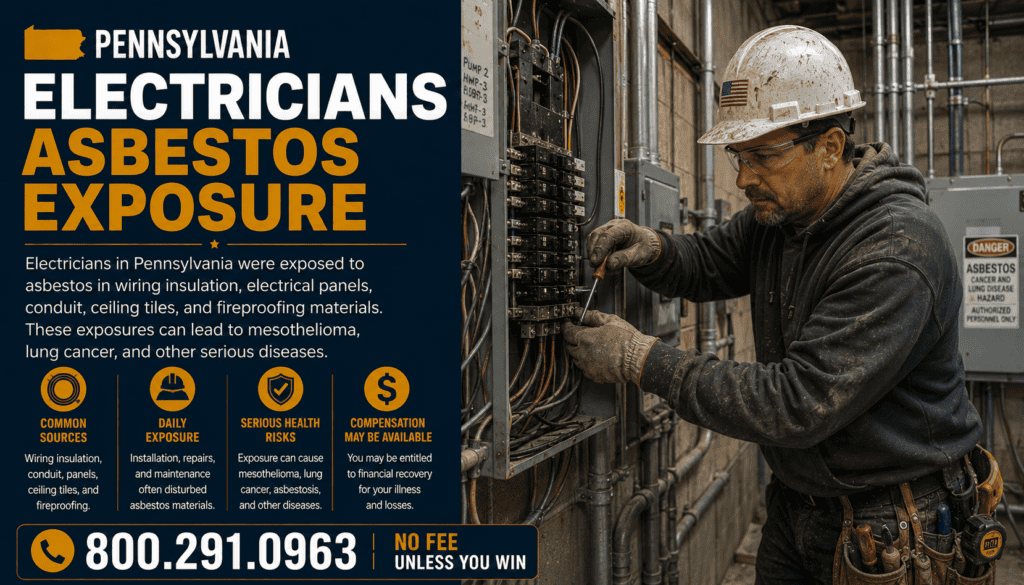
Pennsylvania Electricians Asbestos Exposure
🔌 Pennsylvania Electricians Faced Widespread Asbestos Exposure
Pennsylvania electricians helped install, repair, maintain, upgrade, and remove electrical systems in thousands of power plants, steel mills, factories, refineries, schools, hospitals, office buildings, government facilities, homes, military installations, and commercial properties throughout the state.
For much of the twentieth century, asbestos was widely used around electrical systems because it resisted heat, flames, electrical arcing, and chemical damage. Manufacturers added asbestos to electrical insulation, wiring, cable coverings, panel liners, arc chutes, switchgear, circuit breakers, motor components, generators, transformers, control equipment, fireproof boards, and many other products.
Electricians frequently handled these materials without knowing they contained asbestos. They could also be exposed while drilling into walls, ceilings, floors, and mechanical spaces that contained asbestos insulation, fireproofing, plaster, cement board, drywall compound, or other contaminated building materials.
Common electrical work that could release asbestos fibers included:
- Removing old electrical wiring
- Stripping heat-resistant cable insulation
- Opening electrical panels
- Replacing circuit breakers
- Repairing switchgear
- Servicing transformers
- Maintaining electric motors
- Cutting asbestos-containing conduit
- Drilling through fireproof wallboard
- Pulling wire through contaminated ceilings
- Working near insulated pipes and boilers
- Cleaning electrical rooms
- Replacing generators and controls
- Renovating older buildings
- Demolishing outdated electrical systems
These activities could release microscopic asbestos fibers into the surrounding air. Because the fibers were too small to see, electricians often inhaled them without realizing they were being exposed.
Many Pennsylvania electricians are now being diagnosed with mesothelioma, asbestos-related lung cancer, asbestosis, and other asbestos diseases because these illnesses commonly take 20 to 50 years to develop.
Learn more about occupational exposure throughout the state on our Pennsylvania Industrial Asbestos Exposure page.
⚡ Why Asbestos Was Used in Electrical Systems
Electrical systems can generate intense heat, sparks, electrical arcs, and fires. Manufacturers needed materials that could protect workers, equipment, buildings, and nearby combustible materials from these hazards.
Asbestos was widely used because it provided:
- Heat resistance
- Fire resistance
- Electrical insulation
- Arc resistance
- Chemical resistance
- Mechanical strength
- Moisture resistance
- Durability
- Low manufacturing costs
- Long service life
Asbestos-containing materials were often placed inside or around equipment to prevent heat and electrical sparks from spreading.
Electrical products that produced high temperatures required additional protection. Motors, generators, transformers, switchgear, control panels, and industrial electrical equipment frequently contained asbestos insulation or fireproof barriers.
The same properties that made asbestos useful also created serious hazards when electricians cut, drilled, scraped, removed, repaired, or replaced the products.
Old electrical insulation could become dry and brittle. Opening a panel or pulling deteriorated wiring could release fibers directly into an electrician’s breathing area.
Electricians also worked around asbestos used by other trades. Pipe insulation, boiler covering, fireproofing, ceiling materials, wallboard, flooring, roofing, and mechanical equipment could all contaminate electrical workspaces.
Additional information about asbestos-containing materials is available on our Pennsylvania Industrial Asbestos Products page.
👷 Pennsylvania Electrical Workers at Risk of Asbestos Exposure
Asbestos exposure affected many types of electrical workers. Some electricians directly handled asbestos-containing components, while others inhaled fibers released by nearby construction or maintenance work.
Electrical occupations at risk included:
- Industrial electricians
- Commercial electricians
- Residential electricians
- Construction electricians
- Maintenance electricians
- Power plant electricians
- Utility electricians
- Substation electricians
- Railroad electricians
- Steel mill electricians
- Manufacturing plant electricians
- Mine electricians
- Marine electricians
- Shipyard electricians
- Military electricians
- Motor repair technicians
- Generator technicians
- Transformer technicians
- Electrical linemen
- Cable installers
- Control technicians
- Instrumentation technicians
- Electrical inspectors
- Electrical supervisors
- Electrical engineers
- Apprentice electricians
- Electrical maintenance workers
- Building maintenance electricians
- Elevator electricians
- Transit system electricians
Many electricians changed employers, industries, and jobsites during their careers. One worker might install electrical systems at a power plant, repair motors in a steel mill, upgrade wiring in a school, and later maintain equipment inside an older hospital.
Each assignment could involve different asbestos-containing products and additional exposure sources.
Learn more about construction-related electrical exposure on our Pennsylvania Construction Asbestos Exposure page.
🔧 Electrical Products That Commonly Contained Asbestos
Asbestos was incorporated into a wide range of electrical products because it could resist high temperatures and reduce fire risks.
Pennsylvania electricians may have encountered asbestos in:
- Electrical wire insulation
- Cable insulation
- Cloth-covered wiring
- Braided electrical insulation
- Electrical panel liners
- Circuit breaker components
- Arc chutes
- Switchgear
- Switchboards
- Fuse boxes
- Fuse components
- Junction boxes
- Electrical conduit
- Conduit insulation
- Terminal boards
- Bus bars
- Electrical cabinets
- Motor insulation
- Generator insulation
- Transformer insulation
- Control panels
- Control boxes
- Electrical relays
- Electrical contactors
- Resistance heaters
- Heat shields
- Fireproof electrical boards
- Electrical tape
- Electrical paper
- Insulating blankets
- High-temperature gaskets
- Electrical packing
- Elevator control equipment
- Industrial oven controls
- Welding equipment
- Laboratory electrical equipment
Many of these components were installed inside enclosed cabinets or equipment housings. Electricians could release asbestos fibers when opening equipment, replacing parts, scraping insulation, blowing out dust, or cleaning cabinets.
Older electrical systems were especially hazardous when insulation became worn, cracked, frayed, or damaged by years of heat and vibration.
Related information is available through:
- Pennsylvania Industrial Asbestos Products
- Pennsylvania Asbestos Insulation Products
- Pennsylvania Construction Asbestos Exposure
🏭 Pennsylvania Jobsites Where Electricians Encountered Asbestos
Electricians worked in nearly every major Pennsylvania industry. Many of these facilities contained extensive asbestos insulation, fireproofing, electrical equipment, and building materials.
Common exposure locations included:
- Steel mills
- Power plants
- Electrical generating stations
- Substations
- Chemical plants
- Oil refineries
- Manufacturing facilities
- Paper mills
- Textile mills
- Glass plants
- Foundries
- Machine shops
- Coal mines
- Railroad repair facilities
- Locomotive shops
- Shipyards
- Airports
- Military installations
- Government buildings
- Schools
- Universities
- Hospitals
- Nursing homes
- Office buildings
- High-rise buildings
- Apartment buildings
- Public housing
- Commercial buildings
- Shopping centers
- Hotels
- Warehouses
- Water treatment plants
- Wastewater treatment plants
- Transit maintenance facilities
- Construction sites
- Renovation projects
- Demolition projects
Each type of workplace presented different electrical asbestos hazards.
Power plant electricians could encounter asbestos-insulated generators, turbines, cables, switchgear, boilers, steam pipes, pumps, and control equipment. Steel mill electricians maintained motors, furnaces, cranes, panels, substations, and production equipment surrounded by heat-resistant asbestos materials.
Electricians renovating a school or hospital might disturb asbestos floor tile, ceiling panels, fireproofing, drywall compound, pipe insulation, and electrical panel liners during the same project.
Learn more about facilities linked to occupational exposure on our Pennsylvania Asbestos Exposure Sites page.
💨 How Electricians Were Exposed to Airborne Asbestos Fibers
Electrical work often required electricians to open, cut, drill, remove, or replace materials that contained asbestos.
Common exposure activities included:
- Pulling old asbestos-insulated wiring
- Cutting electrical cable
- Stripping wire insulation
- Removing cloth-covered wiring
- Opening electrical panels
- Replacing arc chutes
- Repairing circuit breakers
- Servicing switchgear
- Cleaning control cabinets
- Repairing transformers
- Rewinding electric motors
- Maintaining generators
- Cutting electrical conduit
- Drilling holes through walls
- Cutting ceiling access points
- Entering pipe tunnels
- Working above suspended ceilings
- Installing wiring near boilers
- Sweeping electrical rooms
- Using compressed air to clean equipment
- Removing fireproof electrical boards
- Renovating older electrical systems
- Demolishing electrical equipment
Using compressed air was especially hazardous because it could blow accumulated asbestos dust from motors, panels, cabinets, and equipment into the worker’s breathing zone.
Electricians frequently worked in enclosed areas with limited ventilation, including:
- Electrical rooms
- Boiler rooms
- Mechanical rooms
- Basements
- Utility tunnels
- Crawl spaces
- Ceiling spaces
- Control rooms
- Motor rooms
- Generator rooms
- Substations
- Equipment vaults
Once disturbed, asbestos fibers could remain airborne long after the electrical work was completed. Other workers entering the area could also inhale the contaminated dust.
🔌 Electrical Wiring and Cable Insulation Exposure
Electrical wiring was a major source of asbestos exposure. Many older wires and cables were wrapped in heat-resistant insulation that could contain asbestos.
Electricians encountered this insulation while:
- Installing wiring
- Pulling cable
- Splicing wires
- Stripping insulation
- Replacing damaged cables
- Removing outdated wiring
- Repairing electrical circuits
- Upgrading building systems
- Rewiring industrial equipment
- Maintaining high-temperature machinery
As wiring aged, its outer covering could become dry, cracked, or brittle. Pulling old cable through conduit or removing it from panels could cause the insulation to break apart and release dust.
Industrial electrical cables used near boilers, furnaces, turbines, ovens, and other hot equipment often required additional heat protection. These cables were more likely to contain asbestos or to be surrounded by asbestos insulation.
Workers sometimes used knives, stripping tools, pliers, and other hand tools to remove cable coverings. This placed their faces and hands close to the asbestos-containing material.
Dust from damaged wiring could collect inside panels, conduit systems, electrical cabinets, and floor spaces. Electricians could disturb the settled dust during later repairs.
⚡ Electrical Panels, Switchgear, and Circuit Breakers
Electrical panels and switchgear often contained asbestos-based fire barriers designed to control heat and electrical arcing.
Asbestos could be present in:
- Panel backing
- Panel liners
- Arc chutes
- Insulating boards
- Circuit breaker components
- Fuse assemblies
- Heat shields
- Switchboard panels
- Terminal boards
- Electrical cabinets
- Control boxes
- Bus bar insulation
Electricians could be exposed while inspecting, repairing, upgrading, or replacing these systems.
High-risk tasks included:
- Removing panel covers
- Scraping damaged liners
- Replacing circuit breakers
- Repairing burned components
- Cleaning arc residue
- Drilling mounting holes
- Cutting insulating board
- Removing old switchgear
- Installing replacement panels
- Sweeping electrical rooms
Electrical equipment often accumulated dust over many years. Opening a cabinet or blowing out the equipment could release asbestos fibers that had settled inside.
Industrial electricians who regularly serviced switchgear and control systems may have experienced repeated exposure throughout their careers.
⚙️ Motors, Generators, Transformers, and Control Equipment
Large electric motors, generators, transformers, and control systems produced substantial heat and required fire-resistant insulation.
Asbestos-containing materials could be used in:
- Motor windings
- Generator insulation
- Transformer insulation
- Internal heat shields
- Electrical gaskets
- Terminal boards
- Control cabinets
- Brake systems
- Resistance equipment
- Insulating blankets
- High-temperature wiring
- Fireproof barriers
Electricians and motor repair technicians could release asbestos fibers while dismantling equipment, removing insulation, replacing windings, scraping gaskets, cleaning housings, or rebuilding components.
Power plant and industrial electricians frequently worked around generators and motors that operated continuously. Heat, vibration, and age could cause asbestos-containing insulation to deteriorate.
Maintenance workers sometimes cleaned this equipment with brushes, rags, vacuums, or compressed air. These methods could disturb accumulated asbestos dust.
Electrical workers also worked beside millwrights, machinists, pipefitters, boiler workers, and maintenance crews who disturbed asbestos-containing equipment nearby.
🔥 Boiler Rooms and Mechanical Spaces Increased Electrical Exposure
Electricians frequently installed and repaired electrical equipment inside boiler rooms and mechanical areas. These spaces often contained some of the largest amounts of asbestos found in industrial and commercial buildings.
Electricians could encounter asbestos around:
- Boilers
- Steam pipes
- Hot water pipes
- Turbines
- Pumps
- Valves
- Gaskets
- Packing
- Heat exchangers
- Furnaces
- HVAC systems
- Ductwork
- Control panels
- Motors
- Generators
- Lighting systems
- Electrical conduit
- Fireproof barriers
Electrical workers could inhale fibers released by pipefitters, steamfitters, insulators, boilermakers, HVAC workers, and maintenance employees.
A pipefitter removing asbestos insulation several feet away could contaminate the entire room. Electricians working on motors, panels, lighting, or control systems in the same space could inhale the dust.
Learn more about these exposure sources on our Pennsylvania Boiler Equipment Asbestos Exposure page.
🏗️ Construction, Renovation, and Demolition Exposure
Electrical contractors were involved in nearly every phase of construction. Electricians installed wiring during new construction and removed or upgraded electrical systems during renovations and demolition.
Electricians could disturb asbestos while:
- Cutting wall openings
- Drilling through ceilings
- Removing electrical panels
- Replacing old wiring
- Installing conduit
- Opening equipment shafts
- Entering crawl spaces
- Pulling cable through contaminated areas
- Removing lighting systems
- Dismantling control equipment
- Replacing fire alarms
- Installing communication systems
- Demolishing electrical rooms
Older buildings frequently contained asbestos in walls, ceilings, floors, insulation, fireproofing, roofing, plaster, and mechanical systems.
An electrician cutting an access hole could unknowingly drill through asbestos-containing wallboard, plaster, fireproofing, or insulation. Dust could fall directly onto the worker’s face, clothing, and tools.
Renovation and demolition workers faced additional hazards because asbestos materials were often already damaged, aged, and brittle.
Related information is available on our Pennsylvania Construction Workers Mesothelioma page.
🏠 Secondary Asbestos Exposure Affected Electricians’ Families
Pennsylvania electricians could unknowingly carry asbestos fibers home after working around contaminated electrical equipment and building materials.
Fibers could collect on:
- Work shirts
- Pants
- Coveralls
- Jackets
- Boots
- Gloves
- Tool belts
- Hard hats
- Hair
- Skin
- Hand tools
- Toolboxes
- Electrical equipment
- Personal vehicles
Spouses may have inhaled asbestos fibers while shaking out, sorting, or washing dusty work clothing. Children could be exposed while hugging a parent returning from work or playing near contaminated boots, tools, uniforms, or vehicles.
This type of exposure may be called:
- Secondary asbestos exposure
- Household asbestos exposure
- Take-home asbestos exposure
- Para-occupational asbestos exposure
Family members did not need to visit a power plant, steel mill, factory, or construction site to inhale dangerous asbestos fibers.
A spouse or child diagnosed with mesothelioma after household exposure may have potential legal rights based on the electrician’s employment and product history.
🩺 Diseases Linked to Electricians’ Asbestos Exposure
Pennsylvania electricians exposed to asbestos may later develop serious illnesses.
Diseases associated with asbestos exposure include:
- Mesothelioma
- Asbestos-related lung cancer
- Asbestosis
- Pleural plaques
- Pleural thickening
- Pleural effusions
- Other asbestos-related respiratory diseases
Mesothelioma is a rare cancer affecting the thin lining surrounding the lungs, abdomen, heart, or testes. Pleural mesothelioma, which develops around the lungs, is the most common form.
Asbestos-related lung cancer begins inside the lung tissue. Smoking can significantly increase the risk among asbestos-exposed workers, but a person does not need to smoke to develop asbestos-related lung cancer.
Asbestosis is a chronic lung-scarring disease caused by inhaled asbestos fibers. Symptoms may include shortness of breath, persistent coughing, chest tightness, fatigue, and reduced lung function.
Pleural plaques and pleural thickening affect the tissue surrounding the lungs and may indicate significant past asbestos exposure.
Former electricians should tell their doctors about all potential exposure, including:
- Electrical employers
- Construction contractors
- Industrial facilities
- Power plants
- Steel mills
- Electrical products
- Maintenance assignments
- Military electrical work
- Renovation projects
- Demolition projects
- Household exposure
⏳ Why Pennsylvania Electricians Are Diagnosed Decades Later
Asbestos-related diseases have a long latency period. Symptoms may not appear until 20 to 50 years after the original exposure.
An electrician exposed during the 1960s, 1970s, or 1980s may not receive a diagnosis until decades after retirement.
This delay can make it difficult to connect the illness to earlier electrical work.
Workers may no longer remember:
- Employer names
- Contractor names
- Project locations
- Equipment brands
- Product manufacturers
- Material suppliers
- Coworkers
- Dates of employment
- Specific electrical assignments
Historical employment records, Social Security earnings histories, union files, project documents, maintenance records, electrical equipment catalogs, and coworker statements may help reconstruct the exposure history.
A worker does not need to personally remember every asbestos product before beginning an investigation.
📚 Learn More About Pennsylvania Electricians Asbestos Exposure
Additional Pennsylvania resources include:
- Pennsylvania Asbestos Exposure Lawsuits
- Pennsylvania Construction Workers Mesothelioma
- Pennsylvania Construction Asbestos Exposure
- Pennsylvania Industrial Asbestos Exposure
- Pennsylvania Industrial Asbestos Products
- Pennsylvania Asbestos Insulation Products
- Pennsylvania Boiler Equipment Asbestos Exposure
- Pennsylvania Asbestos Exposure Sites
- Pennsylvania Asbestos Trust Fund Claims
- Pennsylvania Wrongful Death Mesothelioma Lawsuits
🔎 How Pennsylvania Electricians’ Asbestos Exposure Is Investigated
After a Pennsylvania electrician is diagnosed with mesothelioma, asbestos-related lung cancer, asbestosis, or another asbestos disease, an important step is identifying where the exposure occurred and which asbestos-containing products were involved.
Because asbestos diseases often develop 20 to 50 years after exposure, electricians may not remember every employer, contractor, jobsite, electrical product, or maintenance assignment from decades earlier.
A detailed exposure investigation may review:
- Social Security earnings records
- Union membership records
- Union dispatch records
- Apprenticeship records
- Employment applications
- Payroll documents
- Contractor records
- Construction records
- Maintenance records
- Electrical equipment manuals
- Product catalogs
- Purchase orders
- Project specifications
- Building blueprints
- Safety reports
- Military service records
- Medical records
- Pathology reports
- Coworker statements
- Historical photographs
These records may help identify where the electrician worked, what equipment was present, which asbestos-containing products were used, and which manufacturers or suppliers may have been responsible.
Many electricians worked at dozens of industrial, commercial, and construction sites during their careers. A complete investigation may reveal exposure involving several employers, jobsites, electrical products, and asbestos trust funds.
Learn more about occupational exposure on our Pennsylvania Electricians Asbestos Exposure page.
⚡ Electrical Jobsites Commonly Investigated in Pennsylvania
Electricians worked in nearly every major Pennsylvania industry and building type. Investigators may review industrial, construction, commercial, institutional, residential, military, and utility jobsites.
Common locations include:
- Steel mills
- Power plants
- Electrical generating stations
- Utility substations
- Chemical plants
- Oil refineries
- Manufacturing facilities
- Paper mills
- Textile mills
- Glass plants
- Foundries
- Machine shops
- Coal mines
- Railroad repair shops
- Locomotive facilities
- Shipyards
- Airports
- Military installations
- Government buildings
- Schools
- Universities
- Hospitals
- Nursing homes
- Office buildings
- High-rise buildings
- Apartment buildings
- Public housing projects
- Commercial properties
- Shopping centers
- Hotels
- Warehouses
- Water treatment plants
- Wastewater treatment plants
- Transit maintenance facilities
- Construction projects
- Renovation projects
- Demolition sites
Each type of facility presented different electrical asbestos hazards.
A power plant electrician may have worked around asbestos-containing generators, turbines, cables, switchgear, boilers, steam pipes, pumps, valves, and control equipment.
A steel mill electrician may have maintained motors, furnaces, cranes, panels, substations, production equipment, and high-temperature wiring surrounded by asbestos insulation and fireproofing.
An electrician renovating a school, hospital, or office building could encounter asbestos in electrical panels, walls, ceilings, floor tile, fireproofing, pipe insulation, HVAC systems, and drywall materials.
Learn more about Pennsylvania workplaces associated with asbestos exposure on our Pennsylvania Asbestos Exposure Sites page.
👷 Electrical Occupations Frequently Investigated
An asbestos investigation examines the electrician’s specific occupation, daily responsibilities, equipment assignments, employers, and proximity to other workers disturbing asbestos.
Electrical occupations frequently investigated include:
- Industrial electricians
- Commercial electricians
- Residential electricians
- Construction electricians
- Maintenance electricians
- Power plant electricians
- Utility electricians
- Substation electricians
- Steel mill electricians
- Railroad electricians
- Mine electricians
- Marine electricians
- Shipyard electricians
- Military electricians
- Motor repair technicians
- Generator technicians
- Transformer technicians
- Cable installers
- Electrical linemen
- Control technicians
- Instrumentation technicians
- Elevator electricians
- Transit electricians
- Electrical inspectors
- Electrical supervisors
- Electrical engineers
- Apprentice electricians
- Building maintenance electricians
Investigators may examine whether the worker installed, repaired, maintained, cleaned, or removed asbestos-containing electrical components.
They may also review whether the electrician worked near:
- Insulators
- Pipefitters
- Steamfitters
- Boilermakers
- Millwrights
- Machinists
- Carpenters
- Drywall workers
- Roofers
- HVAC technicians
- Demolition crews
- Industrial maintenance workers
An electrician did not need to personally handle an asbestos product to inhale dangerous fibers. Dust created by another trade could spread throughout electrical rooms, mechanical spaces, utility tunnels, boiler rooms, and construction areas.
💰 Financial Compensation May Be Available for Pennsylvania Electricians
Pennsylvania electricians diagnosed with mesothelioma, asbestos-related lung cancer, asbestosis, or another asbestos disease may qualify for financial compensation.
For decades, electricians worked around asbestos-containing electrical equipment, insulation, fireproofing, generators, transformers, switchgear, electrical panels, wiring, boilers, steam systems, and industrial machinery. Many were never warned that these products contained asbestos or that disturbing them could release microscopic fibers into the air.
Electricians may have been exposed while working in:
- Power plants
- Electrical generating stations
- Utility substations
- Steel mills
- Manufacturing facilities
- Chemical plants
- Oil refineries
- Paper mills
- Glass plants
- Textile mills
- Coal mines
- Railroad facilities
- Shipyards
- Airports
- Military installations
- Government buildings
- Schools
- Universities
- Hospitals
- Office buildings
- Apartment buildings
- Commercial buildings
- Construction projects
- Renovation projects
- Demolition projects
Many electricians worked for numerous employers throughout long careers. Exposure often occurred repeatedly over decades while installing, maintaining, repairing, upgrading, or removing electrical systems.
Compensation may be available through:
- Mesothelioma lawsuits
- Asbestos-related lung cancer lawsuits
- Asbestos trust fund claims
- Multiple asbestos trust fund claims
- Wrongful death lawsuits
- Other available asbestos-related legal claims
Financial compensation may help cover:
- Medical treatment
- Hospital expenses
- Surgery
- Chemotherapy
- Radiation therapy
- Immunotherapy
- Prescription medications
- Lost wages
- Reduced earning capacity
- Home healthcare
- Travel expenses
- Pain and suffering
- Funeral expenses
- Financial support for surviving family members
Because electricians frequently worked around products made by numerous manufacturers, a single investigation may identify multiple sources of asbestos exposure.
Learn more about available legal options on our Pennsylvania Asbestos Exposure Lawsuits page.
🏦 Pennsylvania Electricians May Qualify for Multiple Asbestos Trust Fund Claims
Many manufacturers of asbestos-containing electrical equipment and construction products later filed for bankruptcy and established asbestos trust funds to compensate people diagnosed with asbestos diseases.
Pennsylvania electricians may have encountered asbestos-containing products manufactured by numerous companies during a single career.
Trust fund investigations may involve manufacturers of:
- Electrical wire insulation
- Cable insulation
- Cloth-covered wiring
- Electrical panels
- Switchgear
- Circuit breakers
- Arc chutes
- Transformers
- Generators
- Electric motors
- Control panels
- Electrical cabinets
- Bus bar insulation
- Electrical tape
- Fireproof electrical boards
- Terminal boards
- High-temperature gaskets
- Electrical packing
- Boiler insulation
- Pipe insulation
- HVAC insulation
- Fireproofing
- Cement board
- Drywall products
- Ceiling materials
- Flooring materials
Evidence commonly reviewed includes:
- Employment records
- Union records
- Social Security earnings histories
- Contractor records
- Construction records
- Maintenance records
- Equipment manuals
- Product catalogs
- Purchase orders
- Project specifications
- Blueprints
- Coworker statements
- Medical records
- Pathology reports
- Proof of diagnosis
An electrician who worked in power plants, steel mills, factories, commercial buildings, schools, and industrial facilities may have encountered products manufactured by dozens of different companies.
As a result, some workers may qualify to pursue multiple asbestos trust fund claims.
Trust fund claims may also be available in addition to lawsuits involving companies that remain legally responsible.
Learn more by visiting our Pennsylvania Asbestos Trust Fund Claims page.
👨👩👧 Wrongful Death Claims for Pennsylvania Electricians
When an electrician dies from mesothelioma or another asbestos disease, surviving family members may have the right to pursue compensation.
A wrongful death investigation may review:
- Electrical employers
- Union records
- Contractor records
- Construction assignments
- Industrial maintenance records
- Pennsylvania jobsites
- Power plants
- Steel mills
- Manufacturing facilities
- Electrical products
- Product manufacturers
- Building owners
- Coworker testimony
- Medical records
- Death certificate
- Available asbestos trust funds
Depending on the circumstances, compensation may help cover:
- Funeral expenses
- Burial expenses
- Outstanding medical bills
- Lost financial support
- Loss of household services
- Loss of companionship
- Other damages permitted under Pennsylvania law
Even when an electrician worked for numerous employers over several decades, employment records, union files, maintenance documents, equipment records, and coworker statements may help reconstruct the exposure history.
Learn more on our Pennsylvania Wrongful Death Mesothelioma Lawsuits page.
📂 Records That May Support an Electrician’s Asbestos Claim
Because asbestos exposure often occurred decades before diagnosis, investigators frequently rely on historical records.
Helpful documents include:
- Social Security earnings histories
- Union membership records
- Union dispatch records
- Apprenticeship records
- Employment records
- Personnel files
- Payroll records
- W-2 forms
- Tax records
- Contractor records
- Maintenance logs
- Equipment service records
- Electrical project specifications
- Building blueprints
- Purchase orders
- Product invoices
- Equipment manuals
- Safety reports
- Military service records
- Medical records
- Pathology reports
- Coworker statements
These records may identify:
- Former employers
- Industrial facilities
- Commercial buildings
- Construction projects
- Equipment serviced
- Electrical products
- Product manufacturers
- Material suppliers
- Coworkers
- Available asbestos trust funds
- Additional legally responsible companies
Many Pennsylvania electricians belonged to unions or worked for contractors who maintained detailed employment records. These records may establish where the worker performed electrical work and what equipment was present.
🗣️ Coworker Testimony Can Help Identify Electrical Products
Former coworkers often provide valuable information when company records no longer exist.
Coworkers may remember:
- The electrical contractor
- Building owner
- Jobsite location
- Equipment manufacturers
- Product packaging
- Electrical panel brands
- Generator manufacturers
- Transformer manufacturers
- Cable insulation
- Switchgear equipment
- Dust conditions
- Maintenance procedures
- Safety practices
- Nearby construction trades
Witnesses may also describe how asbestos dust was released while electricians:
- Opened electrical panels
- Removed wiring
- Replaced circuit breakers
- Cleaned generators
- Repaired motors
- Replaced transformers
- Opened switchgear
- Blew out electrical cabinets
- Removed fireproof boards
- Renovated electrical rooms
This testimony may help connect an electrician’s diagnosis to specific asbestos-containing products and manufacturers.
⚙️ Power Plant and Industrial Electrical Claims
Power plant and industrial electricians often experienced repeated asbestos exposure because nearly every major mechanical and electrical system contained asbestos.
Investigations commonly examine work involving:
- Turbines
- Generators
- Boilers
- Steam systems
- Pumps
- Valves
- Electric motors
- Transformers
- Switchgear
- Control panels
- Cable systems
- Electrical substations
- Instrumentation
- Heat exchangers
- Industrial furnaces
These facilities often required electricians to work alongside:
- Pipefitters
- Steamfitters
- Insulators
- Boilermakers
- Millwrights
- Welders
- Machinists
- Maintenance mechanics
- HVAC technicians
Dust created by one trade could expose everyone working nearby.
Additional industrial information is available on:
🔨 Construction, Renovation, and Demolition Electrical Claims
Electricians frequently encountered asbestos during construction, renovation, and demolition projects.
High-risk activities included:
- Removing electrical systems
- Pulling old wiring
- Opening walls
- Drilling through ceilings
- Installing conduit
- Replacing electrical panels
- Removing lighting systems
- Dismantling switchgear
- Renovating electrical rooms
- Demolishing electrical equipment
Many older Pennsylvania buildings contained asbestos in:
- Fireproofing
- Pipe insulation
- Boiler insulation
- Wallboard
- Plaster
- Ceiling systems
- Floor tile
- Roofing materials
- HVAC systems
Electricians often disturbed these materials while completing electrical upgrades.
Learn more about construction-related exposure on our Pennsylvania Construction Workers Mesothelioma page.
🏠 Household Exposure Claims for Electricians’ Families
Electricians could unknowingly carry asbestos fibers home on:
- Clothing
- Boots
- Gloves
- Tool belts
- Hard hats
- Hair
- Skin
- Hand tools
- Toolboxes
- Personal vehicles
Family members may have inhaled fibers while:
- Washing work clothes
- Shaking out dusty uniforms
- Cleaning vehicles
- Handling work boots
- Hugging a parent returning home
This is commonly known as:
- Secondary asbestos exposure
- Household asbestos exposure
- Take-home asbestos exposure
- Para-occupational asbestos exposure
A spouse or child diagnosed with mesothelioma may have legal rights even if they never worked as an electrician.
Investigators may review the electrician’s employment history, jobsites, electrical products, work clothing, and years of exposure to determine how household contamination occurred.
⏳ Pennsylvania Filing Deadlines Make Early Investigation Important
Pennsylvania law limits the amount of time available to file asbestos-related personal injury and wrongful death claims.
The filing deadline may depend upon:
- Date of diagnosis
- Type of asbestos disease
- Date the disease was linked to asbestos
- Whether the injured worker is living
- Date of death
- Type of legal claim
Beginning an investigation early may help preserve:
- Employment records
- Union files
- Contractor records
- Electrical maintenance records
- Product evidence
- Equipment records
- Coworker testimony
- Medical documentation
Starting soon after diagnosis may improve the ability to identify responsible manufacturers, asbestos trust funds, and other legal claims.
Learn more on our Pennsylvania Mesothelioma Statute of Limitations page.
❓ Can Pennsylvania Electricians File a Mesothelioma Lawsuit?
Yes. Electricians diagnosed with mesothelioma or another asbestos disease may have legal claims if their illness can be linked to asbestos-containing products, equipment, jobsites, contractors, or manufacturers.
❓ Did Electricians Have to Handle Asbestos Directly?
No. Many electricians inhaled asbestos fibers released by nearby insulation work, boiler repairs, construction projects, demolition work, or maintenance performed by other trades.
❓ Can I File a Claim if My Electrical Work Was Decades Ago?
Possibly. Mesothelioma commonly develops decades after asbestos exposure. Historical employment records, union files, maintenance records, equipment documents, and coworker testimony may help reconstruct the exposure history.
❓ Can Electricians Qualify for Multiple Trust Fund Claims?
Yes. Because electricians often worked around products manufactured by numerous companies, some workers may qualify for claims through multiple asbestos trust funds.
❓ Can Family Members File Claims for Household Exposure?
Potentially. A spouse, child, or other household member diagnosed with mesothelioma after exposure to asbestos fibers carried home on work clothing, tools, or vehicles may have legal rights.
❓ How Long Do Pennsylvania Electricians Have to File a Claim?
Pennsylvania law establishes filing deadlines that vary depending on the diagnosis, type of claim, and other circumstances. Beginning an investigation as soon as possible helps preserve evidence and protect legal rights.
📚 Learn More About Pennsylvania Electricians Asbestos Exposure
Additional Pennsylvania resources include:
- Pennsylvania Asbestos Exposure Lawsuits
- Pennsylvania Construction Workers Mesothelioma
- Pennsylvania Industrial Asbestos Exposure
- Pennsylvania Industrial Asbestos Products
- Pennsylvania Asbestos Insulation Products
- Pennsylvania Boiler Equipment Asbestos Exposure
- Pennsylvania Asbestos Exposure Sites
- Pennsylvania Asbestos Trust Fund Claims
- Pennsylvania Wrongful Death Mesothelioma Lawsuits
- Pennsylvania Mesothelioma Statute of Limitations
📞 Free Case Evaluation
Call 800-291-0963
Why Families Contact Mesothelioma Help
- Free case evaluation
- Help identifying electrical equipment that contained asbestos
- Assistance reviewing Pennsylvania employment and union records
- Investigation of electrical manufacturers and asbestos products
- Help determining eligibility for asbestos trust fund claims
- Nationwide legal representation
- No upfront attorney fees
- No fees unless compensation is recovered