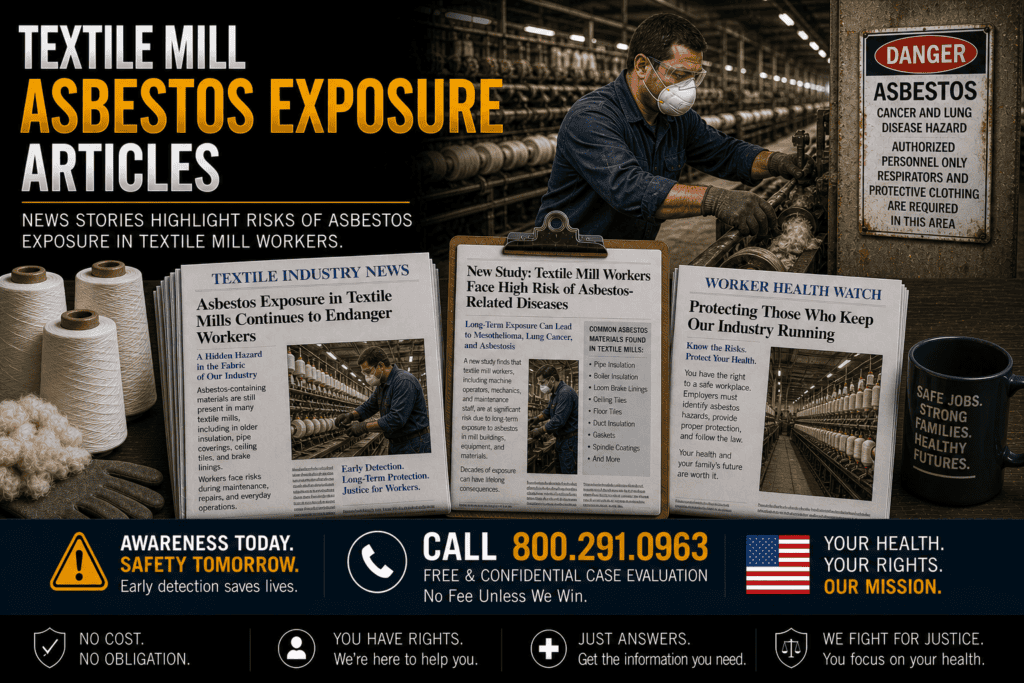
🏭Textile Mill Asbestos Exposure Articles
Textile mills were a significant but often overlooked source of occupational asbestos exposure throughout the 20th century. Many textile facilities wove asbestos fibers directly into fabrics used for fireproof clothing, insulation, gaskets, brake linings, and industrial textiles. Asbestos was valued for its strength, heat resistance, and durability—especially in mills producing protective or industrial-grade materials.
Textile workers inhaled asbestos fibers during spinning, carding, weaving, cutting, and finishing operations. Dust from raw asbestos fibers and asbestos-blended yarn spread easily throughout factories, contaminating work areas and machinery. Maintenance and repair work further disturbed asbestos materials. Decades later, many former textile workers have been diagnosed with mesothelioma, lung cancer, and asbestosis linked directly to asbestos exposure in textile mills.
This hub organizes Textile Asbestos Exposure Articles into focused categories to help workers and families understand where exposure occurred, who was at risk, and what legal options may be available.
🏭 Textile Mill Facilities Asbestos Exposure
Textile manufacturing facilities often processed raw asbestos fibers alongside traditional textile materials.
Textile Mills Asbestos Exposure
Textile mills used asbestos fibers in spinning, weaving, and fabric production for industrial and fire-resistant materials.
Asbestos Textile Manufacturing Plants Asbestos Exposure
Facilities dedicated to asbestos textiles produced cloth, rope, tape, and insulation products.
Textile Plant Boiler Rooms & Powerhouses Asbestos Exposure
Boilers, steam systems, and power equipment were insulated with asbestos materials.
🧵 Textile Production Processes & Materials Asbestos Exposure
Asbestos exposure occurred at multiple stages of textile manufacturing.
Spinning & Carding Operations Asbestos Exposure
Raw asbestos fibers became airborne during carding and spinning processes.
Weaving & Loom Operations Asbestos Exposure
Weaving asbestos-blended yarns released fibers into the air with every loom cycle.
Cutting, Sewing & Finishing Asbestos Exposure
Cutting and sewing asbestos fabrics generated fine dust that spread throughout workspaces.
Asbestos Textile Products & Industrial Fabrics Exposure
Workers handled asbestos cloth, rope, tape, and insulation products daily.
👷 Textile Worker Occupations Asbestos Exposure
Many textile mill job roles involved continuous asbestos exposure.
Textile Mill Workers & Machine Operators Asbestos Exposure
Operators inhaled asbestos dust while running looms, spinners, and finishing equipment.
Textile Mill Maintenance & Repair Workers Asbestos Exposure
Maintenance crews disturbed asbestos fibers while repairing looms, belts, and machinery.
Textile Mechanics & Electricians Asbestos Exposure
Mechanics and electricians encountered asbestos in equipment insulation and components.
🌫️ Textile Mill Environmental & Secondary Asbestos Exposure
Asbestos exposure often extended beyond production lines.
Textile Mill Dust & Airborne Asbestos Exposure
Fibers circulated through ventilation systems, contaminating entire facilities.
Secondary Asbestos Exposure from Textile Mills
Family members were exposed when workers carried asbestos fibers home on clothing and hair.
⚖️ Textile Asbestos Exposure Lawsuits
Textile workers and families have pursued legal action for asbestos-related diseases.
Lawsuits filed by textile workers diagnosed with mesothelioma due to occupational exposure.
Compensation through asbestos trust funds established by bankrupt asbestos textile manufacturers.
Textile Wrongful Death Lawsuit
Legal claims filed by families who lost loved ones to asbestos-related illnesses.
⚠️ Why Textile Asbestos Exposure Was So Dangerous
Textile mills created extreme asbestos exposure risks:
-
Direct handling of raw asbestos fibers
-
Continuous dust generation during spinning and weaving
-
Poor ventilation spreading fibers throughout facilities
-
Long shifts with daily exposure over many years
Because asbestos-related diseases have long latency periods, many diagnoses occur 20–50 years after exposure.
❓ Textile Asbestos Exposure FAQs
Did textile mills really use asbestos?
Yes. Many mills wove asbestos directly into fabrics for industrial, fire-resistant, and insulation products.
Which textile workers were most at risk?
Spinners, weavers, machine operators, maintenance workers, mechanics, and finishing workers.
Can claims still be filed decades after exposure?
Yes. Most asbestos claims are filed after diagnosis, not at the time of exposure.
Can families pursue compensation?
Yes. Secondary exposure and wrongful death claims may apply.
Free Case Evaluation – Textile Asbestos Exposure
If you or a loved one worked in a textile mill and later developed mesothelioma or another asbestos-related disease, legal compensation may still be available.
✔️ Free, confidential case evaluation
✔️ No upfront legal fees
✔️ Nationwide asbestos law support
📞 Call 800-291-0963 today to learn your legal options.