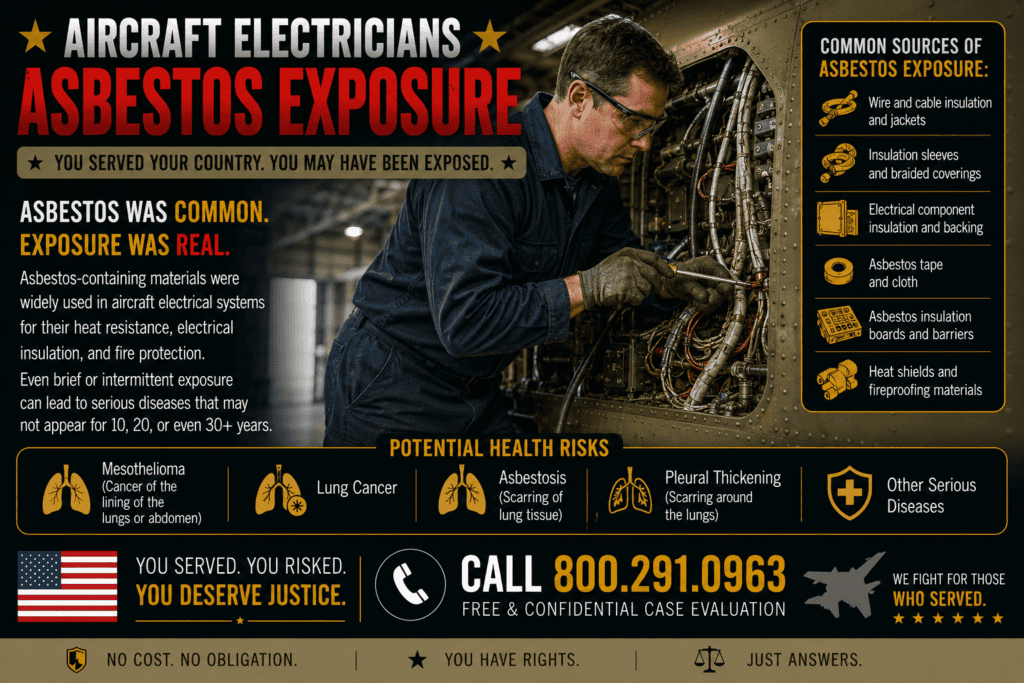
Aircraft Electricians Asbestos Exposure
Aircraft electricians asbestos exposure research should focus on the veteran’s service branch, installation or ship, unit or squadron, service dates, aircraft, electrical specialty, wiring or electrical systems, maintenance duties, and specific materials that may have been disturbed. VA recognizes asbestos as a military occupational hazard and explains that asbestos-containing material can pose a serious health risk when disturbed and fibers become airborne.
Veterans can strengthen an aircraft-electrician exposure history with personnel records, aircraft assignments, technical orders, wiring diagrams, engineering drawings, parts catalogs, part numbers, maintenance and modification records, procurement files, manufacturer information, overhaul records, and specific witness statements. Serving as an aircraft electrician alone does not establish asbestos exposure, so aircraft-, system-, component-, material-, task-, proximity-, location-, and date-specific evidence is important.
Aircraft Electricians Asbestos Exposure
Military aircraft electricians installed, inspected, tested, repaired, and replaced wiring, electrical equipment, controls, connectors, and related systems. Veterans who performed this work may need to investigate whether specific older insulating, heat-resistant, or adjacent materials used on the aircraft they serviced contained asbestos.
Serving as an aircraft electrician does not by itself prove asbestos exposure. A stronger history identifies the service branch, installation or ship, unit or squadron, service dates, aircraft, electrical system or component, maintenance task, material or part number, work location, and supporting personnel, technical, maintenance, procurement, manufacturer, or overhaul records.
Aircraft Electrician Duties to Investigate
Exposure research should focus on actual duties rather than assuming that every aircraft electrician encountered asbestos. Electrical work varied by service branch, aircraft, specialty, assignment, maintenance level, and time period.
- Inspecting and troubleshooting aircraft electrical systems
- Installing or replacing wiring and cable
- Repairing electrical panels, controls, and components
- Removing insulation, sleeves, or coverings where documented
- Working near other aircraft maintenance activities
Electrical Materials and Components to Investigate
The key question is whether reliable documentation identifies asbestos in a specific material associated with the veteran’s electrical work. Technical orders, wiring diagrams, illustrated parts catalogs, engineering drawings, procurement files, manufacturer documents, modification records, and overhaul files can help establish material composition.
- Wire or cable insulation where asbestos content is documented
- Heat-resistant sleeves or electrical coverings
- Electrical insulating materials
- Thermal barriers near electrical equipment
- Other components supported by technical or manufacturer records
Electrical Maintenance and Repair Work
VA explains that asbestos-containing material can pose a serious health risk when disturbed and fibers become airborne. Aircraft electrical work may therefore become relevant when a documented asbestos-containing material was cut, stripped, removed, scraped, repaired, replaced, or otherwise disturbed.
Document the aircraft, electrical system, component, task, tools, material condition, dust or debris, ventilation, cleanup method, frequency, duration, and nearby maintenance activities whenever those details are known.
Hangars, Electrical Shops and Flight-Line Areas
Aircraft electricians could work in cockpits, equipment compartments, hangars, electrical shops, maintenance bays, overhaul facilities, flight-line areas, or shipboard aviation spaces. Exposure research should identify the exact work location and distinguish aircraft-component sources from building materials or nearby maintenance work.
Separating potential sources can make an exposure history more precise and reduce unsupported assumptions about where asbestos contact occurred.
Aircraft Electricians and Nearby Aviation Trades
Potential exposure depends on actual duties and proximity to disturbed asbestos-containing material. Aircraft electricians may also have worked alongside avionics technicians, mechanics, structural personnel, engine crews, and other maintenance trades whose work disturbed different aircraft components or materials.
Military specialty or aircraft assignment alone is not proof of exposure. Aircraft model, electrical system, component, technical documentation, maintenance procedure, location, service dates, and nearby work can be important.
Documenting Aircraft Electrician Exposure
- DD214 and Official Military Personnel File records
- MOS, rating, AFSC, specialty, unit, squadron, and duty-station records
- Aircraft assignments and maintenance histories
- Technical orders, wiring diagrams, engineering drawings, and parts catalogs
- Inspection, modification, repair, and overhaul records
- Part numbers, procurement, manufacturer, and contractor records
- Training and qualification records
- Specific firsthand coworker statements
National Archives states that OMPFs can contain duty stations, assignments, training, qualifications, performance, and other personnel information useful for reconstructing a veteran’s military aviation duties.
Mesothelioma and Medical Follow-Up
Veterans concerned about possible asbestos exposure during aircraft electrical work should tell their health-care provider about the service branch, installation or ship, aircraft, electrical specialty, systems or components serviced, maintenance duties, and approximate exposure dates. VA states that symptoms associated with asbestos-related diseases often do not appear until 20 to 50 years after exposure.
Persistent shortness of breath, coughing, chest pain, unexplained weight loss, or other concerning symptoms should be evaluated by a qualified medical professional. An aircraft-electrician work history alone cannot diagnose disease.
VA Benefits, Trust Funds and Legal Options
VA states that veterans may file disability compensation claims for health problems they believe are related to asbestos exposure during military service, with claims decided case by case. Military personnel, assignment, technical, maintenance, product, and medical records can help document where a veteran worked and the circumstances being investigated.
Separate asbestos trust fund or civil claims may involve different requirements concerning products, manufacturers, contractors, exposure evidence, jurisdiction, and filing deadlines.
Frequently Asked Questions
Were all military aircraft electricians exposed to asbestos?
No. Exposure depends on the aircraft, materials, tasks, service period, work location, and whether documented asbestos-containing material was disturbed nearby.
Did every military aircraft use asbestos electrical insulation?
No. Materials varied by aircraft, electrical system, component, manufacturer, modification, and service period. Aircraft-specific technical and product records should be used to investigate asbestos content.
What records can identify electrical materials?
Technical orders, wiring diagrams, engineering drawings, illustrated parts catalogs, part numbers, procurement records, manufacturer information, modification files, and overhaul records can help identify materials.
What can military personnel files document?
National Archives states that OMPFs can contain duty stations, assignments, training, qualifications, performance, and other service-history information.
How long can asbestos-related symptoms take to appear?
VA states that symptoms associated with asbestos-related diseases often do not appear until 20 to 50 years after exposure.
Confirmed Sources
Review Your Aircraft Electrician Exposure History
Write down the service branch, military base or ship, unit or squadron, service dates, aircraft models, electrical specialty, wiring or electrical systems, components, part numbers, maintenance duties, work areas, contractors, and coworkers you remember. Preserve available service, training, technical, maintenance, procurement, manufacturer, modification, overhaul, and medical records and clearly distinguish documentation from recollection.
Call 800.291.0963 for a no-obligation case evaluation and to speak with a real person 24/7, 365 days a year. Mesothelioma Help Center is not a law firm or medical provider and does not determine VA eligibility.
Disclaimer: General information only—not legal or medical advice. This website is not a law firm. Exposure, VA eligibility, liability and deadlines vary by case and jurisdiction. Do not disturb suspected asbestos. Past results do not guarantee future outcomes.